Spotted Hillstream Loach
Gastromyzon punctulatus
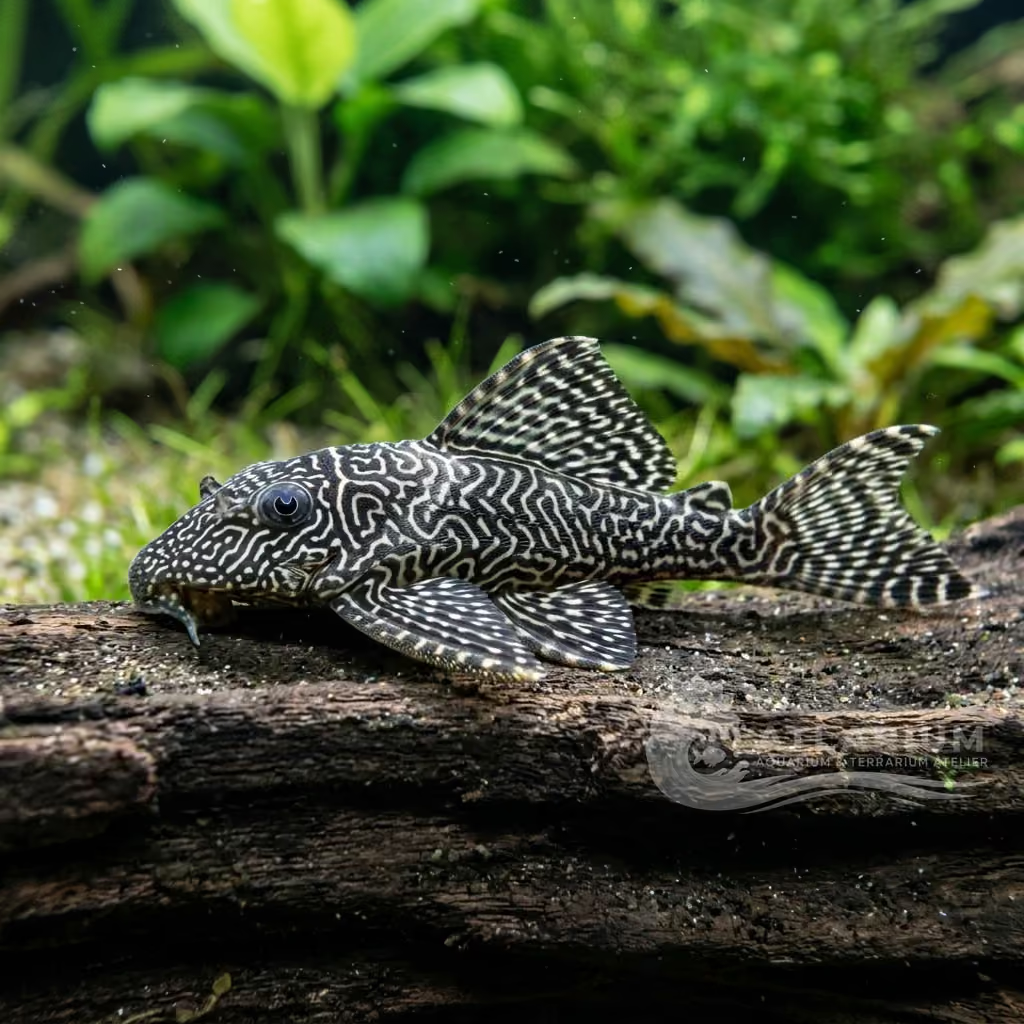
Prehistoric insect aesthetic: flattened and aerodynamic to withstand raging torrents. Brown background with constellations of yellow dots. It will die of starvation if placed in aseptic or warm aquariums.
Température de l’eau
20 - 24 °C
Valeur du pH
6.5 - 7.5
Type d'eau
Eau douce
Niveau dans le bac
Fond
Taille adulte
6 cm
Volume minimal du bac
>= 60 L
Groupe minimal
>= 1
GH
4 - 12 dGH
KH
2 - 6 dKH
TDS
80 - 240 ppm
Conductivité
125 - 375 uS/cm

Description de l'espèce
Geographical Origin and Habitat: Endemic to Borneo (Sarawak, Brunei). Shares mostly the habitats of the catenus cousins: wild mountain streams with smooth stony bottoms, roaring waterfalls and freezing high-altitude temperatures.
Taxonomy and Morphology: Spotted Hillstream Loach / Spotted Borneo Sucker (Gastromyzon punctulatus). Famous stream Balitorid. It has a flattened suction-cup discoid body, designed to reduce the friction of currents by 100%. They breathe from tiny dorsal gill vents.
Social Behavior: Sociable with each other. Absolutely comical: they defend the pebble they graze on by covering or bumping away opponents by pushing them, in totally harmless quarrels (they do not have real armor like Loricariids).
Coloration and Sexual Dimorphism: Unlike catenus (striped/reticulated), punctulatus presents, on a dark or deep olive green base, hundreds of very fine yellowish-white round spots on the head, which fade in the middle of the body. Tail splashed with blue or brick red.

Soins, reproduction et cohabitation
Aquarium Setup: A Hillstream Tank is needed. Filter that moves titanic litrages (up to 20 times the tank capacity hourly). No heater. Oxygen-rich water, banks with large round flat stones to expose to the light of the led tube.
Diet and Feeding: Specialized grazer. The ideal tank has stones covered with "Aufwuchs" and patina algae. Integration with special jellies for fish (Repashy), blanched zucchini or vegetable wafers that do not crumble quickly with the passage of the current.
Water Quality: They hate extreme heat. If the aquarium in summer goes to 28-30 degrees (82-86°F), oxygen saturation levels will collapse and the fish will slide off the glass dead in a few hours.
Compatibility and Cohabitation: Due to its very special need to have a cold water washing machine, it tolerates as companions only robust stream fish (Barbus, Danio kyathit, Botia dario or Rhinogobius). Never pair with pufferfish, labeos, discus or slow cyprinids.
Aquarium Breeding: Females swell if filled with eggs in the warm months; the male digs a tiny crevice among the cracks to fertilize them. Joyful but purely incidental event in a home aquarium.
Risks and Diseases: Malabsorption (death by starvation) in overly clinical and clean tanks lacking biological film (encrusting algae). In addition, medications (especially malachite green) block their skin pores.

Origine et répartition géographiques
Endemic to Borneo (Sarawak, Brunei). Shares mostly the habitats of the catenus cousins: wild mountain streams with smooth stony bottoms, roaring waterfalls and freezing high-altitude temperatures.
Origine
Europe, Méditerranée et Asie occidentaleAsie du Sud et du Sud-Est

Profil de poisson
- Tempérament
- Semi-aggressive
- They are remarkably peaceful fish that spend the vast majority of their time grazing for algae. They frequently engage in harmless, visually interesting territorial disputes with one another. They pose absolutely no threat to any other fish or invertebrates in the aquarium.
- Régime alimentaire
- Omnivore
- Their natural diet relies almost entirely on scraping biofilm and algae from submerged stones. An established tank with a healthy growth of aufwuchs is critical for their survival. Their diet should be supplemented with sinking algae wafers, spirulina tabs, and blanched vegetables.
- Espérance de vie
- 3-5 years
- Taille adulte
- 6 cm
- Ratio des sexes
- Group
- Females are noticeably plumper and have a broader body profile when viewed from above. Males often display subtle differences in the tuberculation on their heads. They should be kept in social groups of five or more to encourage their natural grazing and interaction behaviors.
- Fréquence d'alimentation
- Twice daily
- They graze continuously on the hardscape throughout the entire day. Supplemental feedings should be provided once daily to ensure they are getting complete nutrition. Ensure that competitive tank mates don't consume the sinking foods before the loaches have a chance to eat.
- Charge biologique
- Low to Medium
- The Spotted Hillstream Loach contributes a very minor bioload to the aquarium. Despite this, their extreme intolerance to poor water quality means powerful biological filtration is mandatory. Frequent water changes are necessary to keep the environment pristine and highly oxygenated.
- Courant
- Stagnant
- They strictly require highly oxygenated water with extremely strong, fast-moving currents. A river-manifold design or strategically placed powerheads are necessary to mimic their natural habitat. In stagnant or slow-moving water, they will quickly suffocate and perish.
- Risque de saut
- Yes
- While they rarely jump, their suction-cup-like bodies make them highly adept at climbing the aquarium glass. A tight-fitting lid is required to ensure they don't accidentally climb past the water line and out of the tank. Seal all small gaps around the perimeter of the lid.
- Reproduction
- Oviparous
- Successful breeding in the home aquarium is an extremely rare and celebrated event. Spawning is likely triggered by complex changes in diet, water temperature, and flow speed mimicking natural monsoons. They are believed to lay eggs in small pits dug into the gravel beneath river stones.
- Compatibilité et compagnons
- Peaceful
- They are ideal for specialized community tanks featuring other peaceful, current-loving fish. Suitable tank mates include fast-swimming danios and small, peaceful loaches. Avoid any large or aggressive bottom-feeders that would easily steal their food or cause them undue stress.
- Niveau dans le bac
- Bottom
- They are exclusive bottom-dwellers, clinging tightly to smooth river stones, glass, and broad plant leaves. They rarely swim freely in the open water column unless transitioning between grazing spots. The tank must be heavily hardscaped with smooth stones to replicate their natural environment.

Modèles et paramètres scientifiques
FishBase
Fenêtre sur les données scientifiques officielles de l’espèce
FishBase v25.04Données synchronisées le : 15/06/2026
- Niveau trophique
- 2,1 ± 0,1 se
- Singularité phylogénétique (PD50)
- 0.5
- Relation bayésienne longueur-poids
- a = 0.00646, b = 3.11
- VulnérabilitéVulnérabilité faible (10 / 100)

Espèces associées
Recommandations regroupées par proches parents, compagnons et soins similaires.