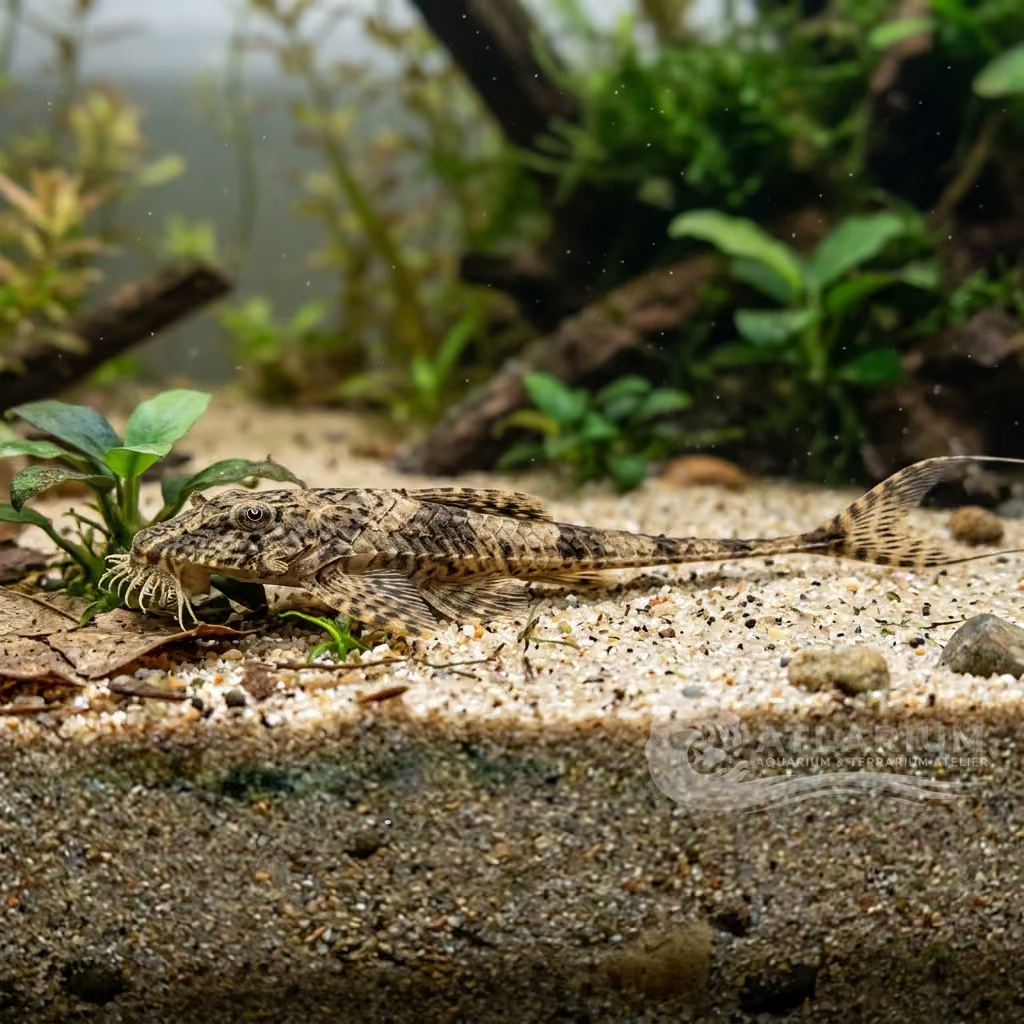
Wolf Fish / Traíra
Hoplias malabaricus
A prehistoric, armored freshwater monster. Reaches over 50 cm (20+ inches) of pure muscle and bone-crushing jaws. An incredibly aggressive, nocturnal apex predator that will literally bite the owner's hand. Only for serious 'Monster Fish' keepers with massive tanks.
Température de l’eau
22 - 28 °C
Valeur du pH
6 - 8
Type d'eau
Eau douce
Niveau dans le bac
Fond et milieu
Taille adulte
50 cm
Volume minimal du bac
>= 500 L
Groupe minimal
>= 1
GH
4 - 15 dGH
KH
2 - 7 dKH
TDS
80 - 295 ppm
Conductivité
125 - 461 uS/cm

Description de l'espèce
Geographical Origin and Habitat: Extremely widespread from Costa Rica down to Argentina. Survives everywhere: lakes, rivers, cold streams but particularly in muddy stagnant pools without oxygen (has auxiliary lungs).
Taxonomy and Morphology: Common Wolf Fish / Tararira (Hoplias malabaricus). The "lesser" cousin of the Aimara, but equally prehistoric. Cylindrical torpedo morphology, jaws full of retractable needle-like teeth. Grows "only" up to 50-60 cm (20-24 inches).
Social Behavior: Nocturnal ambush predator. Spends 90% of its time on the dark bottom motionless as a log, waiting. Unlike the Aimara, it is much more passive towards the aquarist and does not break the glass.
Coloration and Sexual Dimorphism: Mud color, gray/brown, with irregular camouflage shades to blend in with rotting vegetation. Opalescent or golden scary eyes. Males more tapered.

Soins, reproduction et cohabitation
Aquarium Setup: Large and wide tanks (min. 150 cm / 60 inches). Bottom possibly in sand for abrasions. It is a fish but with a deadly jump: watertight and heavy lids are the only guarantee not to find it dried out on the floor. Likes a lot of partial shade (woods and floating plants).
Diet and Feeding: Totally Carnivorous. Feeding it is easy but polluting: fish steaks, shelled shrimp, massive sinking pellets for carnivores. Less of a "chewer" than the aimara, it tends to swallow prey (or fingers) whole in a fraction of a second.
Water Quality: The immortal. A fish capable of surviving in nature in swamps that dry up by crawling in the mud breathing air. In the aquarium it forgives almost any nitrate surge or pH crash, but clean water prevents rot.
Compatibility and Cohabitation: Will swallow in the night any fish that fits in its mouth. It can (not always) be paired with very robust fish with a very high profile that it cannot swallow: large Astronotus, large Doradids (Megalodoras) and Pacus. Risk is always very high.
Aquarium Breeding: Very difficult due to space (ponds are needed). Males dig large pits (craters) in the mud, attract the female there to lay thousands of eggs and protect them fiercely by assaulting even birds (or humans) that approach the nest.
Risks and Diseases: Starvation from refusal of dry food. Many Wild specimens will let themselves starve rather than accept dead foods (frozen shrimp or pellets). The aquarist must arm himself with a lot of patience for weaning (wiggling the food).

Origine et répartition géographiques
Extremely widespread from Costa Rica down to Argentina. Survives everywhere: lakes, rivers, cold streams but particularly in muddy stagnant pools without oxygen (has auxiliary lungs).
Origine
Amérique du Sud hors AmazonieAmérique centrale et Caraïbes

Profil de poisson
- Tempérament
- Semi-aggressive
- This is a highly aggressive and territorial species that does not tolerate intruders in its space. They are notorious for being fiercely aggressive not only towards other fish, but occasionally towards the aquarist during tank maintenance. Extreme caution must be exercised when keeping this formidable predator.
- Régime alimentaire
- Omnivore
- In the wild, they are apex predators feeding almost exclusively on live fish and large invertebrates. In captivity, they can often be trained to accept frozen meaty foods such as whole shrimp, fish fillets, and mussels. A varied, high-protein carnivorous diet is essential for their long-term health and growth.
- Espérance de vie
- 9-15 years
- Taille adulte
- 50 cm
- Ratio des sexes
- Pair
- There are no easily identifiable external differences between males and females outside of the breeding season. Females may appear slightly more robust or rounder when actively carrying eggs. Due to their aggressive nature, keeping multiple individuals together to form pairs is highly risky.
- Fréquence d'alimentation
- Twice daily
- Juveniles should be fed a small meaty meal once every day or two. As they mature into large adults, feeding frequency should be reduced to once every two to three days. Overfeeding should be avoided to prevent excessive water fouling and obesity.
- Charge biologique
- Extreme
- This species produces a very high bioload due to its massive size and carnivorous diet. They consume large, messy meals which result in significant amounts of biological waste. Therefore, heavy filtration and frequent water changes are mandatory to maintain safe water parameters.
- Courant
- Stagnant
- They generally prefer areas with sluggish to moderate water movement, mimicking their natural calm river habitats. Strong currents should be avoided as they are ambush predators that rely on remaining stationary. Gentle surface agitation is sufficient for maintaining appropriate oxygen levels.
- Risque de saut
- Yes
- This fish is known to be a notorious jumper, especially when startled or hunting near the surface. They have powerful bodies capable of propelling them completely out of the aquarium. A tight-fitting and heavy or weighted lid is an absolute requirement to prevent fatal escapes.
- Reproduction
- Oviparous
- Breeding this species in home aquaria is exceptionally rare due to their extreme aggression and large space requirements. In their natural habitat, they construct shallow pits in the substrate where eggs are deposited. The male is highly protective of the nest and will aggressively guard the fry until they become independent.
- Compatibilité et compagnons
- Species only
- They are highly predatory and will readily consume any tank mate that fits into their mouth. It is highly recommended to keep this species in a dedicated species-only aquarium. If tank mates are absolutely necessary, they must be significantly larger and robust enough to avoid predation.
- Niveau dans le bac
- Middle/Bottom
- They are predominantly bottom-dwelling ambush predators that spend much of their time resting on the substrate. They will often hide among submerged wood, rocks, or dense vegetation waiting for prey. However, they will quickly strike upwards towards the middle or top levels when actively feeding.

Modèles et paramètres scientifiques
FishBase
Fenêtre sur les données scientifiques officielles de l’espèce
FishBase v25.04Données synchronisées le : 15/06/2026
- Niveau trophique
- 4,5 ± 0 se
- Résilience
- Faible (4,5 - 14 ans)
- Singularité phylogénétique (PD50)
- 0.5
- Relation bayésienne longueur-poids
- a = 0.00891, b = 3.1
- VulnérabilitéVulnérabilité élevée à très élevée (66 / 100)

Espèces associées
Recommandations regroupées par proches parents, compagnons et soins similaires.