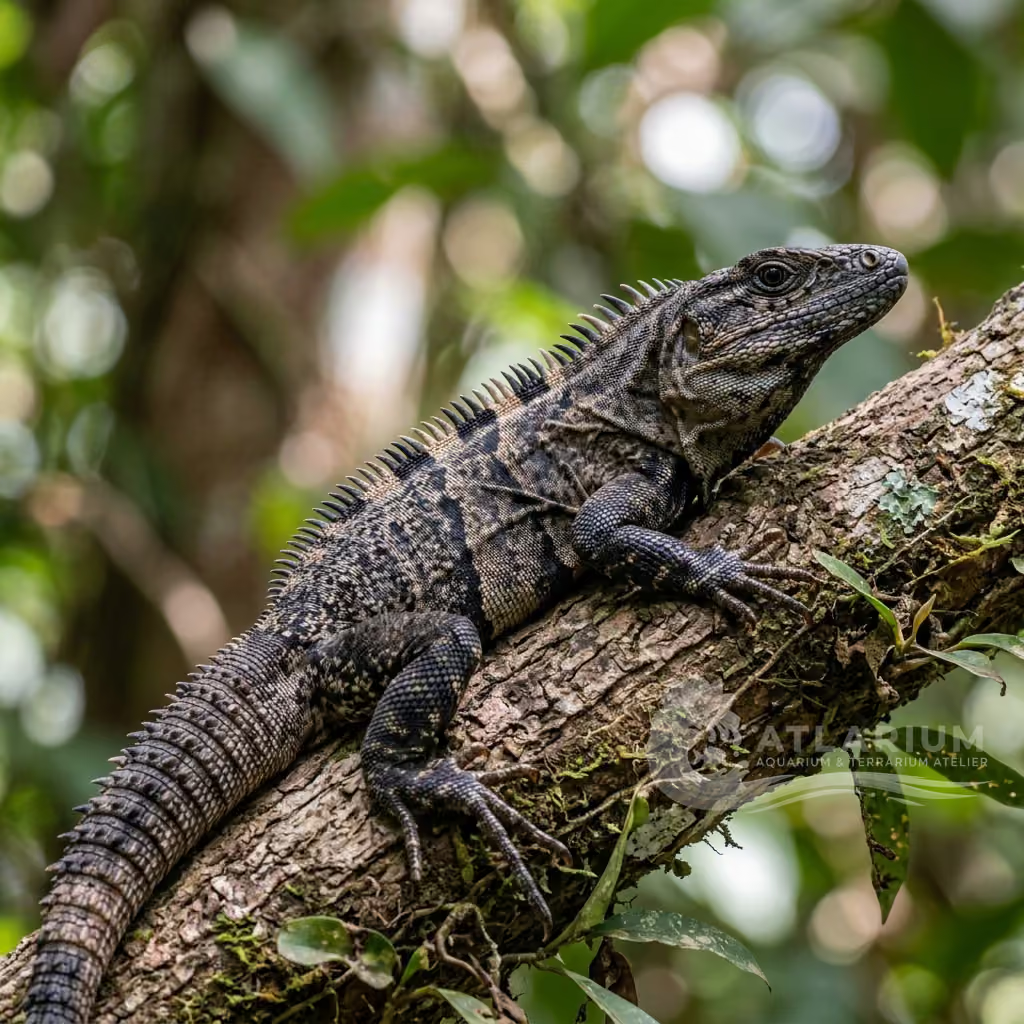
Desert Iguana
Dipsosaurus dorsalis
A highly active, herbivorous desert iguana from North America. Requires a wide desert setup (120x60x60 cm) with deep dry sand for burrowing, immense basking heat, intense UVB, and a primarily plant-based diet.
Environment
Terrestrial
Humidity
10 - 30 %
Day temperature
32 - 35 °C
Ambient temperature
35 °C
Night temperature
20 - 22 °C
Basking spot
20 - 22 °C
Adult size
40 cm
Minimum enclosure
>= 300 L
UVB
Ferguson 3
UVI
1 - 2.6 UVI

Species description
Geographical Origin and Habitat: Native to the arid regions of the southwestern United States (Sonora and Mojave deserts) and northwestern Mexico. It inhabits sandy dunes and dry washes with sparse scrub. They are commonly associated with creosote bush flats, which provide food and shade. They can withstand temperatures up to 45°C (113°F) without heat stress.
Taxonomy and Genetics: Belongs to the family Iguanidae, genus Dipsosaurus. Highly specialized for extreme heat tolerance, maintaining high active body temperatures. They belong to the family Iguanidae, representing a highly specialized desert-dwelling lineage. Genetic markers indicate ancient divergence from tropical relatives.
Behavior and Habits: Strictly diurnal. Active during the hottest hours of the day when other lizards retreat. Incredibly fast; can run bipedally on its hind legs when startled. When running at high speeds, they can become bipedal, lifting their front legs off the ground. They use their tails for balance and defense.
Morphology: Reaches 33-40 cm (13-16 inches) in total length, with the long, tapered tail comprising more than half. Has a cylindrical body, a small head, and a pale grey/beige pattern with darker reticulated bands. Their coloring is highly effective camouflage, blending in with desert sand and rocks. Small dark spots and stripes cover their greyish-brown body.

Care, breeding and tankmates
Terrarium Setup: Requires a wide desert enclosure (minimum 48x24x24 inches / 120x60x60 cm). Provide a deep dry sand substrate (15-20 cm / 6-8 inches) for burrowing. Add dry branches for climbing. Use a strong mesh screen cover to handle the high-heat fixtures required for lighting. The terrarium should be at least 120 cm long.
Lighting and Heating: Highly thermophilic. Basking spot surface temperature of 45-50°C (113-122°F). Ambient daytime of 32-35°C (90-95°F) on the warm side, with a night drop to 20-22°C (68-72°F). High-output UVB (10-12% T5 HO) is mandatory. Ensure the basking area temperature is verified using a reliable infrared thermometer. Halogen floodlights are excellent heat sources.
Humidity and Hydration: Arid environment (20-40% humidity). Provide a small, shallow water dish in the cool end. Do not mist the enclosure. Provide a humid microclimate by burying a moist hide box under the warm end. Mist the interior of the hide weekly.
Feeding and Supplementation: Primarily herbivorous. Feed daily with leafy greens (radicchio, dandelion, endive), flowers, and chopped vegetables. Dust with calcium and D3 three times a week. Shred foods like collard greens and dandelion leaves to make them easier to consume. Supplement the diet with calcium powder weekly.
Compatibility: Territorial. Do not house males together. Best kept individually or as a male-female pair in a large enclosure. A single male can be housed with multiple females if the enclosure is large enough. Monitor females for signs of territorial harassment.
Health and Common Diseases: High risk of Metabolic Bone Disease (MBD) if UVB or calcium is lacking. High humidity leads to skin blisters and fungal infections. Monitor for respiratory infections if humidity levels remain too high for extended periods. Ensure the enclosure has large side vents.

Geographic origin and distribution
Native to the arid regions of the southwestern United States (Sonora and Mojave deserts) and northwestern Mexico. It inhabits sandy dunes and dry washes with sparse scrub. They are commonly associated with creosote bush flats, which provide food and shade. They can withstand temperatures up to 45°C (113°F) without heat stress.
Origin
Central America and CaribbeanNorth America

Reptile profile
- Diet
- Herbivore
- This species is primarily herbivorous and requires a diet rich in fresh greens and vegetables. Provide a daily salad consisting of dark leafy greens, squash, and occasional fruit treats. Dusting the meals with a calcium supplement is essential to prevent metabolic bone disease.
- Adult size
- 40 cm
- Lifestyle/Microhabitat
- Terrestrial
- This species leads a terrestrial lifestyle, spending the vast majority of its time on the ground. Its enclosure should prioritize floor space over height, featuring a deep substrate for digging. Providing various ground-level hides and rocks will encourage natural foraging behaviors.
- Activity cycle
- Diurnal
- This species is strictly diurnal, meaning it is highly active during the daylight hours. It requires intense full-spectrum UVB lighting and a proper basking spot to regulate its metabolism. During the night, it will retreat to a secure hide to sleep in complete darkness.
- Sociality
- Tolerant
- This species tends to be skittish and fast-moving, often relying on flight to escape perceived threats. They generally prefer to be left alone and can become easily stressed by sudden movements. It is best to appreciate their active behaviors from a distance as a display animal.
- Reproduction
- Oviparous
- This species reproduces by laying eggs, which require specific conditions to hatch successfully. Females will seek out a suitable nesting site with moist substrate to deposit their clutch. Eggs must be carefully removed and incubated at the correct temperature and humidity levels.
- Handling tolerance
- With caution
- This species is generally tolerant of handling once it has become accustomed to its keeper. Interactions should be kept brief and positive to avoid causing unnecessary stress. Always support their body fully and allow them to walk freely on your hands.
- Brumation
- In the wild, this species undergoes a period of brumation during the cooler winter months. In captivity, healthy adults can be safely cooled to simulate this natural resting phase. During this time, they will eat less and remain largely inactive until temperatures are raised.
- Molting
- Regular
- Like most lizards, this species sheds its skin in patches rather than in one continuous piece. Maintaining proper humidity levels and providing a humid hide are crucial to prevent stuck shed. Keepers should monitor the toes and tail tip closely to ensure all old skin is successfully removed.

Related species
Recommendations grouped by close relatives, companion choices, and similar care.