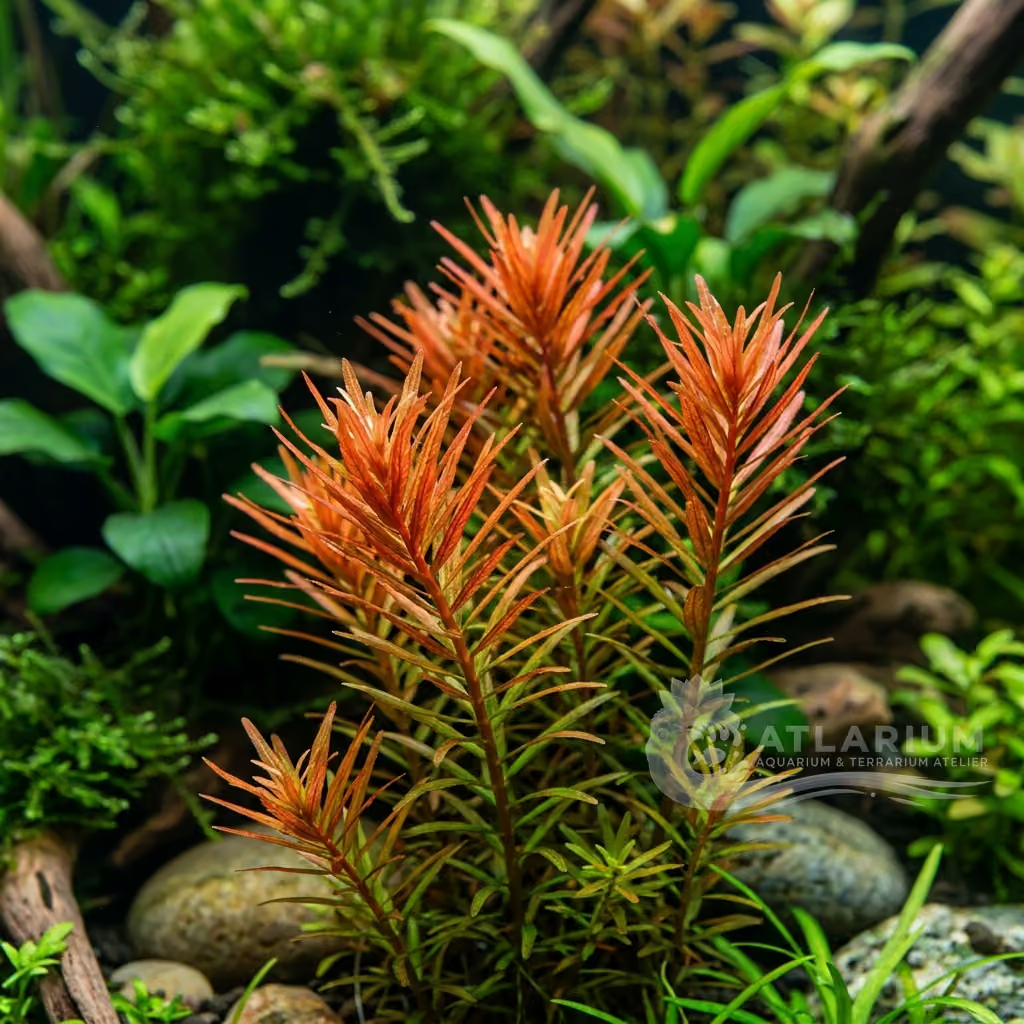
Potamogeton schweinfurthii
Potamogeton schweinfurthii
Potamogeton schweinfurthii is a versatile and resilient aquatic plant, perfect for background placement due to its vertical growth and medium growth rate. It adds a touch of natural beauty and depth to the aquarium, creating a lush and dense underwater landscape.
Water Temperature
18 - 28 °C
pH Value
6 - 9
Water type
Freshwater
Light
Medium - High
CO2
High
KH
2 - 21 dKH

Species description
Geographical Origin and Habitat: Native to various freshwater bodies across Africa, Potamogeton schweinfurthii thrives in a diverse range of aquatic environments, from slow-moving rivers and streams to still lakes and ponds. Its natural habitats are characterized by submerged or partially submerged growth, often found rooted in muddy or silty substrates where nutrient availability is consistent. This widespread distribution across the African continent highlights its adaptability to different water parameters, showcasing its resilience in varying ecological niches.
Taxonomy & Genetics: Belonging to the family Potamogetonaceae, Potamogeton schweinfurthii is part of a large and ancient group of aquatic monocotyledons, commonly known as pondweeds. This family is recognized for its true aquatic lifestyle, with many species forming extensive submerged meadows in their native environments. While specific genetic details for P. schweinfurthii are less frequently discussed in hobbyist contexts, its classification within Potamogeton signifies shared morphological traits and reproductive strategies typical of the genus. Its strong evolutionary ties within the Potamogetonaceae family underscore its specialized adaptations to fully submerged existence.
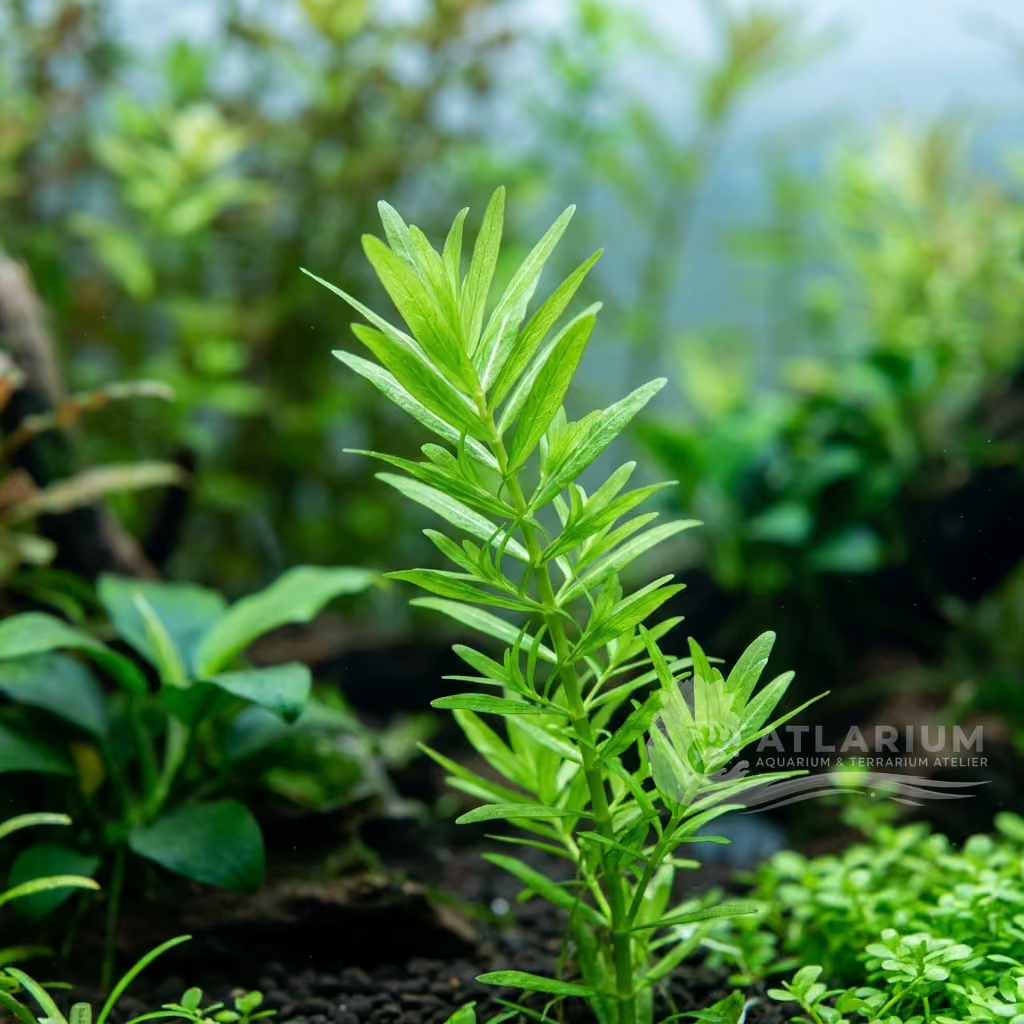
Physical Structure: Potamogeton schweinfurthii develops slender, upright stems that can reach impressive lengths, typically adorned with long, linear to lanceolate leaves arranged alternately along the stem. The leaves are generally thin and somewhat translucent, allowing for efficient light absorption in submerged conditions. A distinctive midrib is often visible, providing structural support to the otherwise delicate-looking foliage. The plant anchors itself firmly with a robust root system, which helps stabilize it in the substrate and absorb essential nutrients.
Color & Texture: The foliage of Potamogeton schweinfurthii typically presents a vibrant green coloration, ranging from a fresh, bright green to a deeper emerald hue depending on light intensity and nutrient availability. Under very strong illumination, some specimens may exhibit subtle reddish or bronze tints, particularly on newer growth or along leaf margins, adding an interesting visual dynamic. The leaves possess a smooth, somewhat delicate texture that sways gracefully with water currents, contributing to a natural, flowing appearance in the aquascape. This combination of color and texture makes it an attractive element for creating depth.

Care, breeding and tankmates
Lighting & CO2: Potamogeton schweinfurthii thrives under medium to high lighting conditions, with brighter light encouraging more vigorous growth and potentially inducing more intense coloration. Adequate light intensity, ideally 0.5 to 1.0 watts per liter (or equivalent PAR values), is crucial for maintaining dense, compact growth rather than leggy stems. While not strictly mandatory, CO2 supplementation significantly boosts its growth rate and overall health, particularly in higher light setups, leading to a lusher appearance and preventing stagnation. Consistent CO2 levels between 15-30 ppm are recommended for optimal photosynthesis and nutrient uptake.
Nutrition & Substrate: As a moderately fast-growing plant, Potamogeton schweinfurthii benefits greatly from a nutrient-rich substrate, indicating it is primarily a root feeder, though it also absorbs nutrients from the
Water Chemistry: This species is quite adaptable to a broad range of water parameters, making it suitable for various aquarium setups. It prefers water temperatures between 18.0 - 28.0 C, thriving in tropical to subtropical conditions, though it can tolerate slightly cooler environments. A pH range of 6.0 - 9.0 demonstrates its resilience across acidic, neutral, and alkaline waters, while a KH tolerance from 2.0 - 21.0 indicates its ability to flourish in both soft and hard water. Maintaining stable parameters within these ranges, rather than allowing wild fluctuations, is key to preventing stress and ensuring consistent, healthy growth.
Space Management & Placement: Given its potential for significant vertical growth, Potamogeton schweinfurthii is ideally suited for placement in the background of an aquascape, where its tall stems can create a dense, verdant backdrop. Planting it in groups or clusters helps to achieve a fuller, more impactful visual effect, providing excellent cover and a sense of depth. Ensure ample space is provided around individual stems initially to allow for light penetration and water flow, although it will readily fill in as it grows. Its robust growth habit makes it an excellent choice for creating a natural, jungle-like aesthetic in larger tanks.
Pruning: With a medium growth rate, regular pruning is necessary to manage the size and shape of Potamogeton schweinfurthii and to encourage bushier growth. When stems reach the water surface or become too dense, they can be topped by cutting the stem a few inches above the substrate or at the desired height. The trimmed tops can often be replanted into the substrate to propagate new plants, making this an efficient method for increasing plant mass or filling in empty areas. Consistent pruning also ensures that lower leaves receive adequate light, preventing them from melting or decaying.
Risks & Diseases: Potamogeton schweinfurthii is generally hardy, but like all aquatic plants, it can be susceptible to common issues if conditions are not optimal. Nutrient deficiencies, particularly iron or potassium, can lead to yellowing or stunted growth. Algae infestations can occur in tanks with imbalanced nutrients or excessive light, often indicating a need for adjustment in the care regimen. Sudden drastic changes in water parameters or introduction of aggressive fish can also cause stress, manifesting as melting or leaf loss. Maintaining stable conditions and a balanced nutrient profile is crucial for preventing most problems.

Geographic origin and distribution
Native to various freshwater bodies across Africa, Potamogeton schweinfurthii thrives in a diverse range of aquatic environments, from slow-moving rivers and streams to still lakes and ponds. Its natural habitats are characterized by submerged or partially submerged growth, often found rooted in muddy or silty substrates where nutrient availability is consistent. This widespread distribution across the African continent highlights its adaptability to different water parameters, showcasing its resilience in varying ecological niches.
Origin
Africa and Madagascar

Plant profile
- Placement
- Background
- Due to its potential size and growth habit, it is best suited for the midground or background. Grouping several stems together creates a dense, natural-looking thicket. It can be used effectively to hide aquarium equipment like heaters or filter intakes. Ensure it is not planted so densely that the lower leaves are completely starved of light.
- Botanical form
- Stem
- Botanically, Potamogeton schweinfurthii presents elongated, slightly wavy leaves arrayed along a thick, sturdy stem. The leaves are typically wide and slightly translucent, catching the light beautifully. Its green to brownish coloration adds a fresh, vibrant aesthetic to the aquascape. The plant's structure provides a classic aquatic look, highly favored in Dutch-style aquariums.
- Growth
- Medium
- This plant typically exhibits a fast growth rate, especially in well-lit, CO2-injected aquariums. It will quickly breach the water surface if left unchecked. Frequent topping and replanting are required to keep it bushy and at the desired height. In low-tech setups, it still grows reliably, though at a more manageable pace.
- Substrate
- High
- A fertile substrate strongly encourages the healthy development of Potamogeton schweinfurthii. It establishes a vigorous root system that draws heavily from substrate-bound nutrients. Aqua soil or clay-based substrates provide the ideal environment for long-term vitality. In gravel or sand, the addition of heavy root tabs is practically mandatory.
- Column fertilization
- Recommended
- While it feeds heavily from the roots, column fertilization remains important for complete nutrition. Dosing a comprehensive liquid fertilizer ensures trace elements and potassium are always available to the leaves. This is particularly crucial to prevent pinholes from forming in older leaves. Regular dosing keeps the foliage lush and vibrant.
- Root fertilization
- Required
- Root fertilization is highly effective and strongly recommended for this species. It absorbs a large portion of its required macronutrients directly through its root network. Insert root tabs deeply beneath the plant groups every few months to sustain vigorous growth. A rich base layer is the key to exceptionally thick stems.
- Trimming
- Regular
- Trim the taller stems to prevent them from shading other plants or sprawling across the surface. The trimmed tops can be easily replanted to propagate.
- Propagation
- Cuttings
- Propagating Potamogeton schweinfurthii is exceptionally easy via stem cuttings. Simply snip the upper half of a healthy stem and plant it an inch deep into the substrate. It will quickly root and continue growing upwards. The remaining bottom section will produce lateral shoots, leading to a denser plant grouping over time.
- Sensitivity
- Moderate
- Generally robust but prefers stable conditions without sudden swings in water chemistry. May attract algae on its broad leaves if the water flow is inadequate or nutrients are imbalanced.
- Layout role
- Background
- Provides excellent vertical structure and texture. Its wavy, ribbon-like leaves catch the flow beautifully, adding natural movement and depth to the aquascape.

Related species
Recommendations grouped by close relatives, companion choices, and similar care.