Fissidens splachnobryoides
Fissidens flaccidus
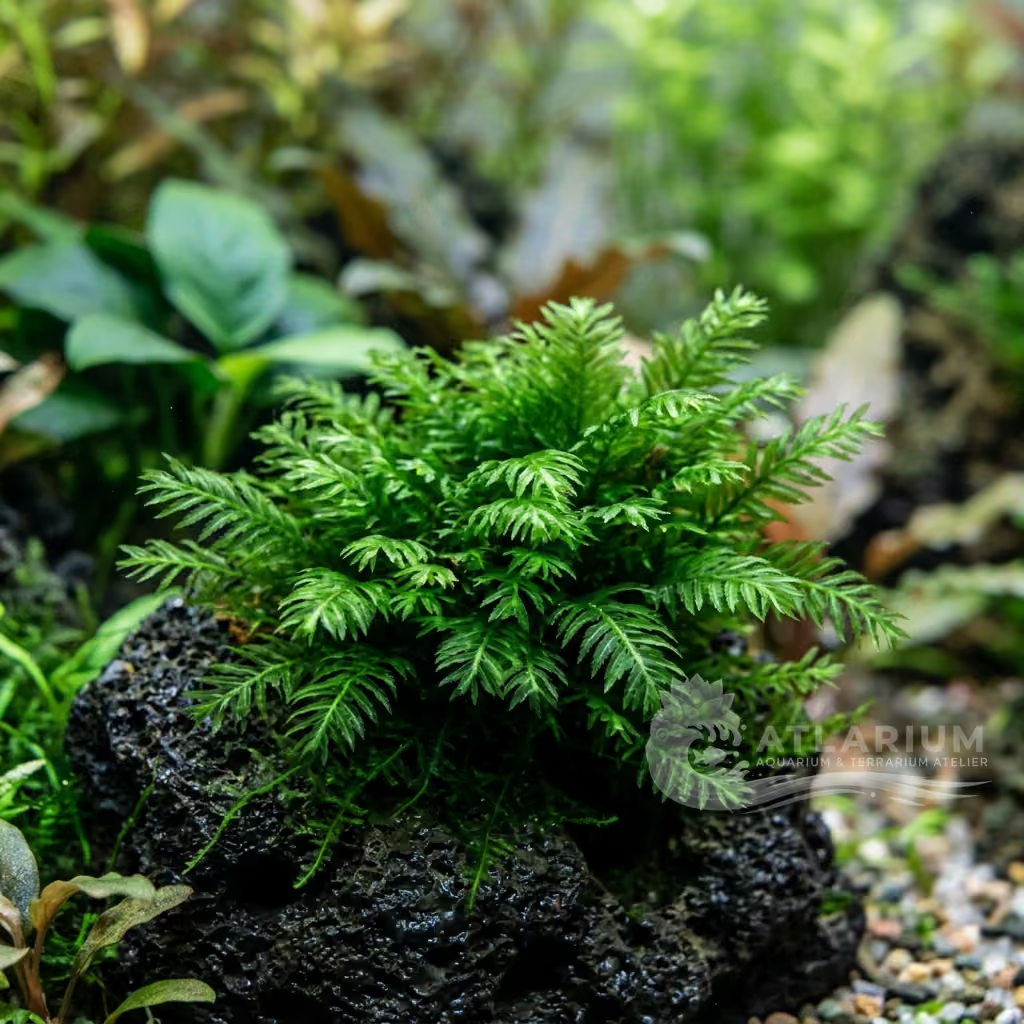
Fissidens splachnobryoides is an aquarium plant belonging to the Fissidentaceae family, characterized by a slow growth rate and ideal for placement in the foreground.
Water Temperature
18 - 30 °C
pH Value
5 - 7.5
Water type
Freshwater
Light
Medium - High
CO2
Low
GH
0 - 20 dGH
KH
0 - 14 dKH

Species description
Geographical Origin and Habitat: This fascinating aquatic species has its geographical origin in the warm tropical regions of Asia and South America, where it inhabits clear river systems with weak to moderate current. It is commonly found both submerged and partially emersed along sandy or muddy banks. Additionally, its occurrence is highly associated with shaded banks and shallow water basins.
Taxonomy & Genetics: From a taxonomic point of view, it belongs to the Fissidentaceae family and is assigned to the Fissidens genus. Its genetics reflect a high degree of adaptation to seasonal variations in water and chemical parameters of its native waters, assuring its resilience.
Physical Structure: The physical structure of the plant is characterized by a epiphyte or epilith botanical form with well-proportioned and elastic stems or rosettes. Under proper lighting conditions, it develops a stable root system capable of anchoring firmly into the riverbed.
Color & Texture: The color of the leaves presents as a bright and natural green, with translucent shades and fine textures that increase the perception of visual depth. The leaf texture is smooth or slightly wrinkled depending on aquarium conditions.

Care, breeding and tankmates
Lighting & CO2: Optimal lighting to support the plant's development ranges from medium to high, depending on the desired leaf density. Constant CO2 injection is recommended to support effective photosynthesis and prevent tissue decay.
Nutrition & Substrate: The plant benefits from a rich, porous substrate coupled with a balanced liquid fertilization in the
Water Chemistry: The ideal water chemistry includes a slightly acidic or neutral pH (6.0 - 7.5) and a moderate carbonate hardness KH (1.0 - 10.0). The optimal water temperature must be kept stable between 18.0 and 30.0 °C.
Space Management & Placement: Regarding space management, the plant should be positioned in the foreground, spacing the stems adequately to avoid shaded areas. It is ideal for creating dynamic layouts in natural aquascaping.
Pruning: Pruning must be performed regularly by topping the upper part or thinning the densest clumps with suitable scissors. Propagation is successfully achieved through cuttings replanted directly into the soil.
Risks & Diseases: The main risks are related to the development of parasitic algae on old leaves and tissue necrosis if essential nutrients are lacking. Good filtration and regular water changes prevent most diseases.

Geographic origin and distribution
This fascinating aquatic species has its geographical origin in the warm tropical regions of Asia and South America, where it inhabits clear river systems with weak to moderate current. It is commonly found both submerged and partially emersed along sandy or muddy banks. Additionally, its occurrence is highly associated with shaded banks and shallow water basins.
Origin
South and Southeast AsiaExtra-Amazon South America

Plant profile
- Placement
- Foreground
- Its extremely fine, miniature texture makes it a perfect foreground carpeting moss when grown on flat stones or mesh pads. It creates a soft, velvet-like lawn effect that contrasts beautifully with coarser plants. It needs good flow to keep detritus from accumulating in its dense mat.
- Botanical form
- Epiphyte
- It features incredibly tiny, delicate fronds that are much finer and softer than F. nobilis or F. fontanus. The leaves grow tightly packed along the stems, forming dense, bright green, carpet-like patches. Its appearance is often described as fluffy or velvet-like.
- Growth
- Slow
- Growth is notoriously slow, making patience a requirement when trying to carpet an area with it. Providing CO2 injection and strong, unobstructed light is the best way to encourage slightly faster, denser growth. It requires infrequent trimming, mainly just to shape it or remove stray pieces.
- Substrate
- High
- It is an epiphytic moss that should be tied or glued to hardscape surfaces like rocks, wood, or stainless steel mesh. Burying it in substrate will quickly cause the covered portions to rot. It uses rhizoids to anchor itself securely over time.
- Column fertilization
- Recommended
- Nutrient uptake occurs entirely through its tiny leaves from the surrounding water. A consistent, low-dose liquid fertilization regime is ideal, providing necessary trace elements without fueling algae. Keeping the water very clean is just as important as fertilizing.
- Root fertilization
- None
- Root tabs and nutrient soils offer no direct benefit to this plant, as it is a strict epiphyte. It cannot draw nutrients from beneath the substrate.
- Trimming
- Occasional
- Prune this moss selectively to maintain its neat cushion shape. Avoid heavy trimming that might expose bare stems or disrupt the mat's integrity. Careful thinning ensures that light reaches the lower layers, preventing die-off.
- Propagation
- Cuttings
- To propagate, carefully peel or snip a small portion of the moss from the main clump. Attach this new piece to a different hardscape surface using a thin thread or cyanoacrylate gel. With time and good water conditions, the small fragment will slowly expand into a new pad.
- Sensitivity
- Moderate
- This moss is relatively delicate and can be easily overwhelmed by hair algae or cyanobacteria. It enjoys stable water parameters and appreciates gentle but consistent water flow. Sudden changes in water chemistry can cause the fronds to melt or turn brown.
- Layout role
- Nano, Foreground, group, Epiphyte, Midground
- This moss is perfect for softening the harsh edges of rocks and wood in intricate layouts. It is especially well-suited for nano aquariums due to its small, fine texture. It helps create the illusion of miniature lush fields or rolling green hills.

Related species
Recommendations grouped by close relatives, companion choices, and similar care.