Fissidens nobilis
Fissidens nobilis
Fissidens nobilis is an aquarium plant belonging to the Fissidentaceae family, characterized by a very slow growth rate and ideal for placement in the foreground.
Water Temperature
18 - 26 °C
pH Value
5 - 7
Water type
Freshwater
Light
Medium - High
CO2
Low
GH
0 - 20 dGH
KH
0 - 10 dKH

Species description
Geographical Origin and Habitat: This fascinating aquatic species has its geographical origin in the warm tropical regions of Asia and South America, where it inhabits clear river systems with weak to moderate current. It is commonly found both submerged and partially emersed along sandy or muddy banks. Additionally, its occurrence is highly associated with shaded banks and shallow water basins.
Taxonomy & Genetics: From a taxonomic point of view, it belongs to the Fissidentaceae family and is assigned to the Fissidens genus. Its genetics reflect a high degree of adaptation to seasonal variations in water and chemical parameters of its native waters, assuring its resilience.
Physical Structure: The physical structure of the plant is characterized by a epiphyte or epilith botanical form with well-proportioned and elastic stems or rosettes. Under proper lighting conditions, it develops a stable root system capable of anchoring firmly into the riverbed.
Color & Texture: The color of the leaves presents as a bright and natural green, with translucent shades and fine textures that increase the perception of visual depth. The leaf texture is smooth or slightly wrinkled depending on aquarium conditions.

Care, breeding and tankmates
Lighting & CO2: Optimal lighting to support the plant's development ranges from medium to high, depending on the desired leaf density. Constant CO2 injection is recommended to support effective photosynthesis and prevent tissue decay.
Nutrition & Substrate: The plant benefits from a rich, porous substrate coupled with a balanced liquid fertilization in the
Water Chemistry: The ideal water chemistry includes a slightly acidic or neutral pH (5.0 - 7.0) and a moderate carbonate hardness KH (0.0 - 10.0). The optimal water temperature must be kept stable between 18.0 and 26.0 °C.
Space Management & Placement: Regarding space management, the plant should be positioned in the foreground, spacing the stems adequately to avoid shaded areas. It is ideal for creating dynamic layouts in natural aquascaping.
Pruning: Pruning must be performed regularly by topping the upper part or thinning the densest clumps with suitable scissors. Propagation is successfully achieved through cuttings replanted directly into the soil.
Risks & Diseases: The main risks are related to the development of parasitic algae on old leaves and tissue necrosis if essential nutrients are lacking. Good filtration and regular water changes prevent most diseases.

Geographic origin and distribution
This fascinating aquatic species has its geographical origin in the warm tropical regions of Asia and South America, where it inhabits clear river systems with weak to moderate current. It is commonly found both submerged and partially emersed along sandy or muddy banks. Additionally, its occurrence is highly associated with shaded banks and shallow water basins.
Origin
South and Southeast AsiaExtra-Amazon South America

Plant profile
- Placement
- Foreground
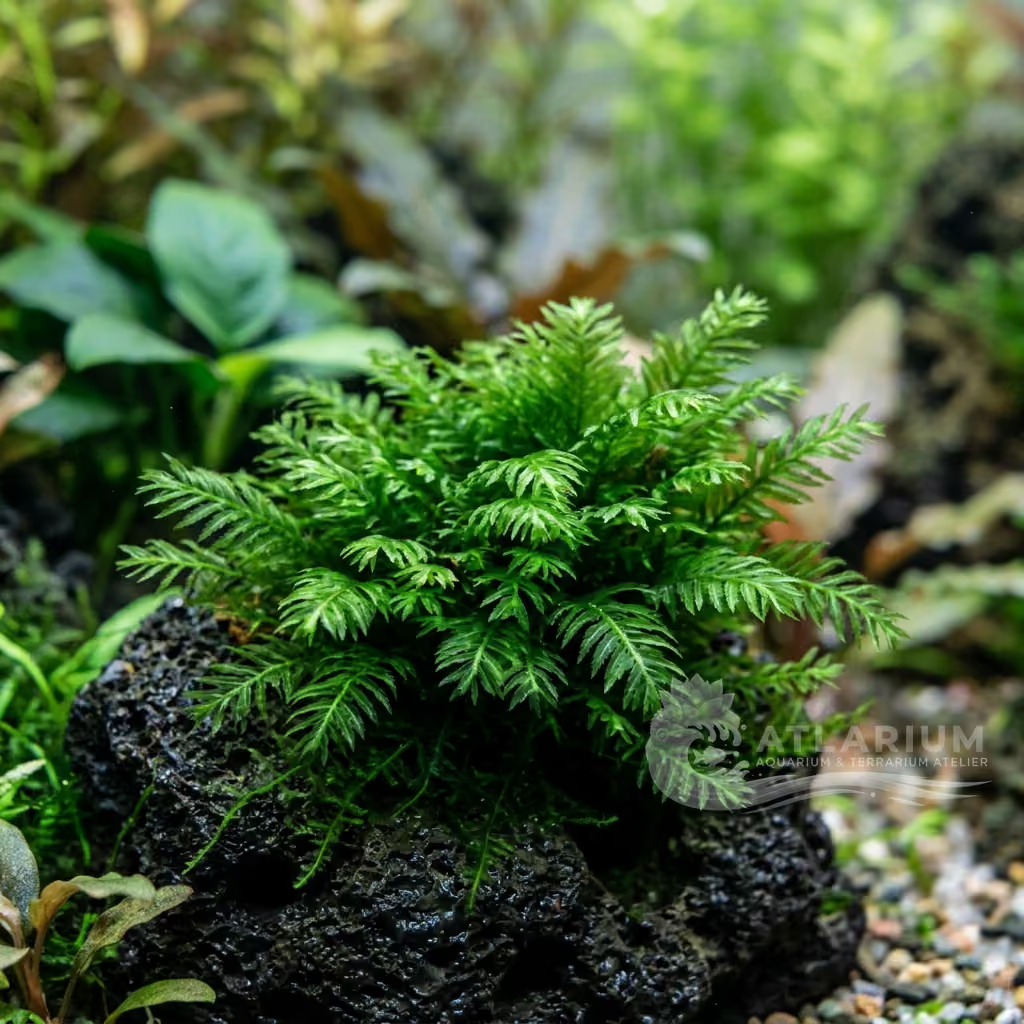
- It is ideal for attaching to wood or stones in the foreground or midground to create lush, forest-like textures. Its large, distinct fronds make it a great focal point among other mosses. It should be placed in areas with good circulation to keep its feathery fronds clean.
- Botanical form
- Epiphyte
- It is a robust, relatively large moss characterized by stiff, deeply green, feather-like fronds. The fronds look like tiny palm fronds or fern leaves, giving it a very elegant and highly structured appearance. It grows outward and slightly upward from its attachment point.
- Growth
- Very slow
- It is one of the slower-growing mosses in the aquarium hobby. CO2 injection and slightly cooler temperatures will noticeably improve its growth rate and overall vitality. Because of its slow growth, it requires very little maintenance once established.
- Substrate
- High
- As an epiphyte, it does not root in the substrate and should not be buried. It attaches itself to hardscape elements like rocks and driftwood using rhizoids. Burying the base of the moss in soil or sand will cause it to decompose.
- Column fertilization
- Recommended
- It relies entirely on water column fertilization to absorb nutrients directly through its leaves. Dosing a high-quality liquid fertilizer in small, regular amounts supports its slow, steady growth without triggering algae outbreaks. Iron supplementation helps maintain its deep, dark green color.
- Root fertilization
- None
- Root fertilizers are completely ineffective for this species as it lacks a root system. It must be attached to hardscape, drawing zero nutrients from the aquarium substrate.
- Trimming
- Occasional
- Trimming should be done rarely and with great care to avoid damaging the plant. Because of its slow growth, over-trimming can leave bare patches that take months to recover. Simply remove any dead, decaying, or algae-covered portions using sharp aquascaping scissors.
- Propagation
- Cuttings
- Propagation is done by manually dividing the moss pad or fronds. Cut or gently pull apart a healthy section and re-bind it to a new piece of hardscape using cotton thread or aquarium-safe glue. The new piece will slowly adapt and resume its outward growth.
- Sensitivity
- Moderate
- This moss is particularly sensitive to the growth of algae on its fronds. Its slow growth rate makes it highly susceptible to being smothered by hair or thread algae. Maintaining pristine water conditions and a balanced nutrient profile is essential for its survival.
- Layout role
- Nano, Foreground, group, Epiphyte
- Fissidens nobilis plays a crucial role in adding a sense of age and maturity to an aquascape. Its dark green, textured fronds provide excellent contrast against wood and stone elements. It is widely used to soften the harsh edges of hardscape and create a natural, forest-like atmosphere.

Related species
Recommendations grouped by close relatives, companion choices, and similar care.