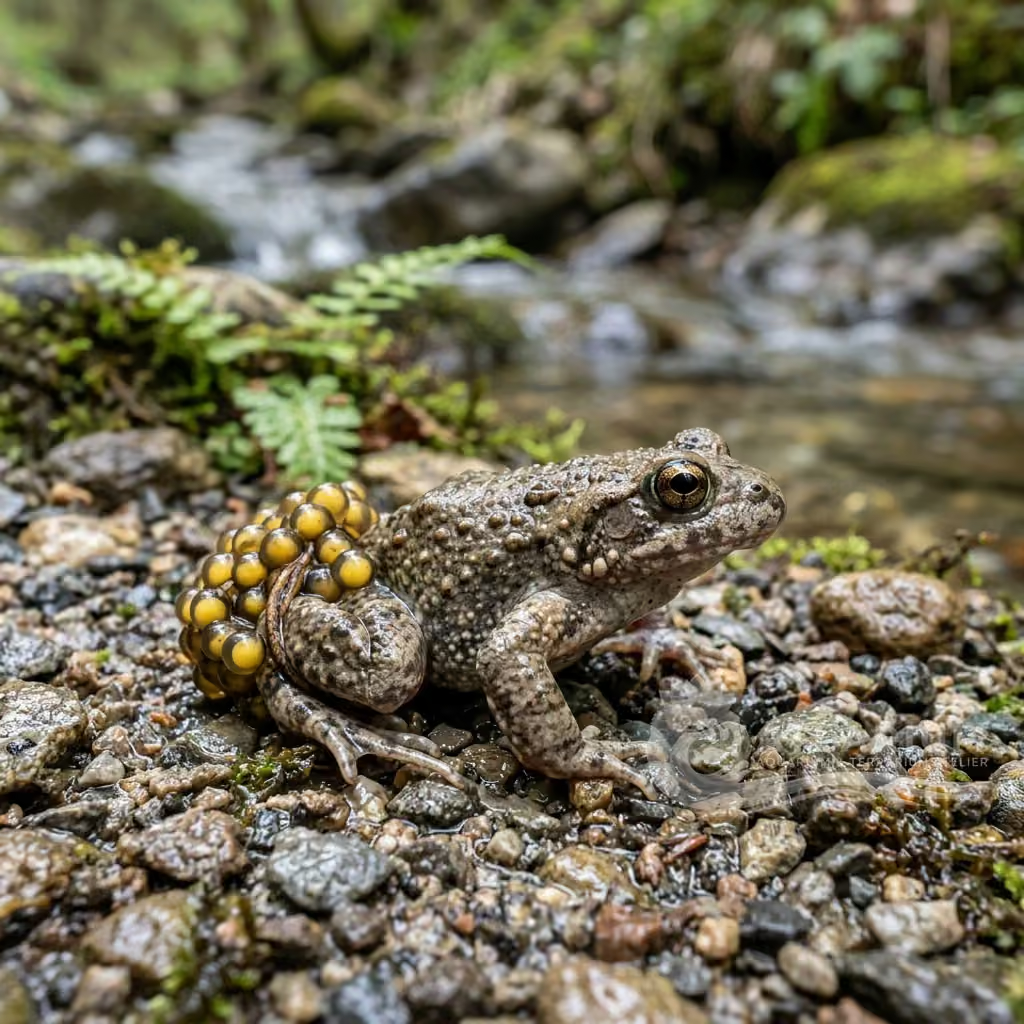
Magnificent tree frog
Ranoidea splendida
The Magnificent Tree Frog is an impressive Australian canopy dweller sporting large parotoid glands and striking spots. This docile giant flourishes in a tall, moderately humid setup with sturdy perches.
Environment
Terrestrial
Humidity
50 - 70 %
Day temperature
26 °C
Night temperature
20 - 22 °C
Ambient temperature
26 °C
Minimum enclosure
>= 45 L

Species description
Geographical Origin and Habitat: The Magnificent tree frog is native to the Kimberley region of Western Australia and adjacent areas of the Northern Territory. It inhabits arid and semi-arid environments but is highly dependent on moisture sources, frequently found in caves, rocky crevices near streams, sandstone gorges, and human structures.
Taxonomy and Genetics: Belonging to the family Hylidae and the genus Litoria. This species is closely related to the common green tree frog (Litoria caerulea) but is distinguished by the massive parotoid glands on its head and the characteristic yellow or white spots dotting its dorsal surface.
Behavior and Habits: A nocturnal and arboreal frog that spends the daytime hidden in cool, damp retreats like caves and rock fissures to prevent water loss. At night, it becomes active to hunt insects, climbing rock faces and trees with ease using its large, adhesive toe pads.
Morphology: It is a large tree frog, with adult females reaching 10 to 11 centimeters in length. The body is a vibrant, uniform green, scattered with distinct yellow or white spots bordered with dark pigment. The most striking feature is the massive, swollen parotoid gland located on the top of its head.

Care, breeding and tankmates
Terrarium Setup: A tall, vertical terrarium of at least 60x45x60 cm is required for one or two frogs. The enclosure should be furnished with sturdy climbing branches, cork bark tubes, and secure rock structures to mimic rocky crevices. Live plants with sturdy leaves, like Pothos or Bromeliads, help maintain humidity.
Lighting and Heating: Keep daytime temperatures between 24°C and 28°C, with a localized basking spot of 30°C using a guarded heat lamp. Night temperatures can drop to 20-22°C. A low-output UVB bulb (2.0 or 5.0) is highly recommended for 10-12 hours daily to facilitate calcium absorption and overall health.
Humidity and Hydration: Maintain humidity levels between 50% and 70%. Mist the enclosure daily with dechlorinated water, preferably in the evening. A large, shallow water bowl with clean, chlorine-free water must be provided at all times for soaking and must be cleaned and refilled daily.
Feeding and Supplementation: Insectivorous diet. Feed a variety of live, gut-loaded insects such as crickets, roaches, and occasionally mealworms or silkworms. Dust the insects with calcium and D3 supplements at every feeding for juveniles, and 2-3 times a week for healthy adult frogs.
Compatibility: Best kept individually or in small groups of similar size. Do not house them with smaller frog species or smaller conspecifics, as they possess a strong feeding response and will readily attempt to swallow any animal that fits into their mouth, leading to choking or cannibalism.
Health and Common Diseases: Vulnerable to Metabolic Bone Disease (MBD) if calcium and UVB lighting are inadequate. Skin infections, both bacterial and fungal, can arise from unsanitary conditions or waterlogged substrate. They are also susceptible to chytridiomycosis, a severe fungal disease in amphibians.

Geographic origin and distribution
The Magnificent tree frog is native to the Kimberley region of Western Australia and adjacent areas of the Northern Territory. It inhabits arid and semi-arid environments but is highly dependent on moisture sources, frequently found in caves, rocky crevices near streams, sandstone gorges, and human structures.
Origin
Australia, New Guinea, and Oceania

Amphibian profile
- Diet
- Insectivore
- They are hearty eaters that consume large insects, spiders, and occasionally small vertebrates in the wild. In captivity, a diet of gut-loaded crickets, roaches, and the occasional earthworm is suitable, but care must be taken not to overfeed them. They are prone to obesity, which can lead to severe health issues.
- Life expectancy
- 8-15 years
- Adult size
- 11 cm
- Lifestyle/Microhabitat
- Arboreal
- They inhabit rocky gorges, caves, and trees in the Kimberley region of Australia, requiring a semi-arboreal setup in captivity. They need sturdy branches, rocky crevices, and a large water basin to accommodate their large size and specific habitat preferences. They are well adapted to a seasonally dry environment but require humidity to thrive.
- Activity cycle
- Nocturnal
- Nocturnal by nature, they become active after dusk to hunt for prey and soak in water dishes. During the day, they rest in crevices, caves, or high up in vegetation, relying on their large head glands to block the entrance of their hideouts and prevent moisture loss. They are relatively inactive compared to smaller frog species.
- Sociality
- Solitary
- They are known for their calm and sedentary demeanor, often remaining in the same spot for days if undisturbed. They possess large poison glands on their heads (parotoid glands), which can secrete a defensive fluid if they feel severely threatened. They are generally peaceful and adapt well to a quiet captive environment.
- Reproduction
- Oviparous
- Breeding is triggered by the onset of the wet season, with males calling from rocks or trees near water sources. Their call is a loud, deep series of barks or grunts. Females lay their eggs in a surface film that floats on temporary pools or rocky streams, hatching relatively quickly.
- Toxicity
- Harmless
- The Magnificent tree frog possesses large parotoid glands that secrete a toxic substance. This secretion is a defense mechanism and can cause irritation to mucous membranes. While not lethal to humans, care must be taken to wash hands thoroughly after contact. This venom contains antimicrobial peptides.
- Life stage
- Metamorphosis
- Females lay eggs in water, which hatch into aquatic tadpoles feeding on algae. After a period of growth, they undergo metamorphosis and emerge as froglets. They grow rapidly, developing their characteristic large head glands. Adults are long-lived, often surviving over 15 years in captivity.
- Handling tolerance
- Tolerant
- The Magnificent tree frog has a remarkably docile and calm temperament compared to many of its relatives. They tolerate occasional, gentle handling well without becoming overly defensive or stressed. However, handling sessions should still be kept relatively brief to avoid temperature stress.
- Brumation
- The Magnificent tree frog originates from relatively stable tropical or subtropical environments and does not undergo a true brumation. They require consistently warm and stable temperatures year-round to maintain proper digestion, metabolic activity, and overall immune health.
- Molting
- Regular
- The Magnificent tree frog requires moderate humidity levels to facilitate smooth shedding (ecdysis). When preparing to molt, providing a humid hide or increasing misting slightly will help the skin come off in clean pieces without leaving stuck shed on the toes or tail tip.

Related species
Recommendations grouped by close relatives, companion choices, and similar care.