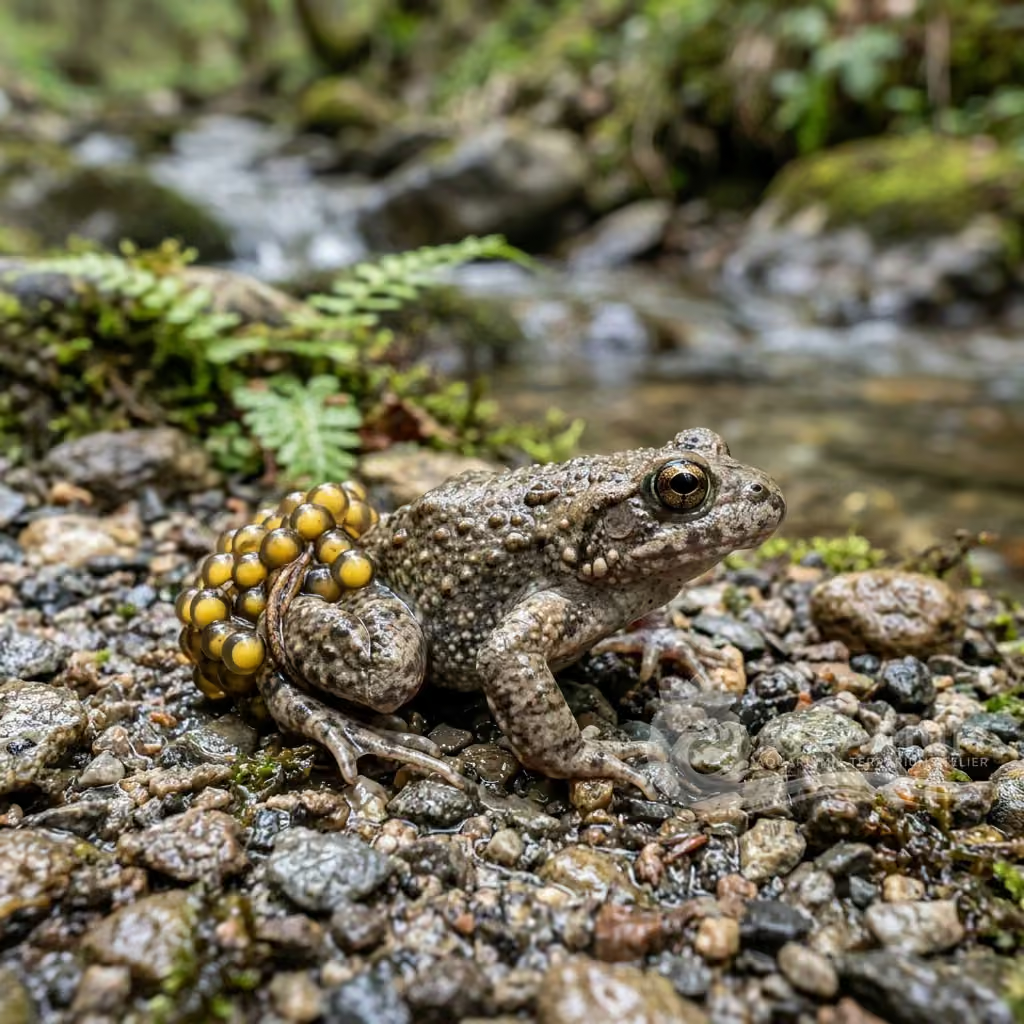
Red-legged Pan Frog
Phlyctimantis maculatus
The Red-legged Pan Frog boasts a silver back with large, striking black spots and hidden red flash colors. A primarily terrestrial hopper, it requires damp, low-lying habitats with abundant hiding spots.
Environment
Terrestrial
Humidity
50 - 70 %
Day temperature
26 - 28 °C
Night temperature
21 - 23 °C
Ambient temperature
26 - 28 °C
Minimum enclosure
>= 45 L

Species description
Geographical Origin and Habitat: Widely distributed throughout the savannas, coastal scrublands, and marshes of East and South Africa. It leads a primarily terrestrial lifestyle, sheltering during the day under roots, fallen logs, or in damp mud near bodies of water.
Taxonomy and Genetics: Features a stocky and robust body, with short limbs unsuitable for large leaps; instead, it moves by walking or running with a unique, cat-like gait. The dorsal color is olive or grayish-bronze, marked with large black or dark green spots bordered in bright yellow. The inner thighs display warning flashes of bright red or orange.
Behavior and Habits: Strictly nocturnal and secretive, spending daylight hours hidden and becoming active at night to forage on the ground or low vegetation. Males emit a highly distinctive and loud call that resembles the popping sound of a cork being pulled from a bottle.
Morphology: Adult females are larger, rounder, and heavier than males. Males are smaller and possess a dark, loose vocal sac on the throat used to emit their loud mating calls.

Care, breeding and tankmates
Terrarium Setup: Requires a spacious, horizontal or semi-arboreal terrarium (minimum 60x45x45 cm) furnished with thick, low climbing branches, cork bark, and a deep, damp soil substrate covered with leaf litter. Provide a large, shallow water dish for soaking.
Lighting and Heating: Keep daytime temperatures between 26 and 28°C, with a night drop to 21-23°C. Provide 5% UVB lighting during the day, which is essential to prevent metabolic bone disease and support skeletal health.
Humidity and Hydration: Maintain relative humidity levels between 60% and 80%. Mist the enclosure thoroughly in the evening with dechlorinated or RO water. Proper ventilation is critical to allow partial drying during the day and prevent bacterial skin rot.
Feeding and Supplementation: A voracious feeder. Diet consists of live crickets, roaches, locusts, and worms. Dust prey items with calcium and vitamin D3 supplements three times a week to support bone health and prevent lethargy or skeletal deformities.
Compatibility: Peaceful toward similar-sized conspecifics and can be housed in small groups. Do not house with smaller amphibians or lizards, as they will be eaten due to the frog's wide mouth and voracious appetite.
Health and Common Diseases: Susceptible to bacterial skin infections (Red Leg disease) under poor sanitary conditions. Avoid handling with bare hands to protect their delicate, permeable skin. Sudden stress can cause them to jump and rub their snouts against glass, leading to abrasions.

Geographic origin and distribution
Widely distributed throughout the savannas, coastal scrublands, and marshes of East and South Africa. It leads a primarily terrestrial lifestyle, sheltering during the day under roots, fallen logs, or in damp mud near bodies of water.
Origin
North AmericaAfrica and Madagascar

Amphibian profile
- Diet
- Insectivore
- The Red-legged Pan Frog is an opportunistic insectivore, feeding primarily on terrestrial arthropods. Its diet consists of a wide variety of insects including crickets, moths, beetles, and spiders found along the forest floor and low vegetation. They forage actively at night, moving with a distinctive walking or running gait rather than hopping, which allows them to stealthily approach prey. Their voracious appetite makes them excellent controllers of local insect populations.
- Life expectancy
- 5-10 years
- Adult size
- 7 cm
- Lifestyle/Microhabitat
- Arboreal
- They exhibit a highly specialized arboreal lifestyle, spending almost their entire lives off the ground in the foliage of trees and shrubs. Their specialized toe pads allow them to climb vertical surfaces and leaves with ease, rarely descending except sometimes to breed.
- Activity cycle
- Nocturnal
- These amphibians are strictly nocturnal, becoming active under the cover of darkness. During the day, they remain motionless to avoid predators, adhering to leaves or branches. As dusk approaches, they emerge to forage and vocalize, relying on low light conditions for their natural behaviors.
- Sociality
- Solitary
- Unlike typical tree frogs, the Red-legged Pan Frog is primarily terrestrial and is known for walking or running rather than making long leaps. They are strictly nocturnal, spending the daylight hours buried in leaf litter, soft soil, or hidden under logs to retain moisture and avoid predators. When threatened, they exhibit a startling defensive display, revealing the bright red flashes of color on their inner thighs to confuse predators. They are excellent climbers when necessary, capable of ascending reeds to vocalize.
- Reproduction
- Oviparous
- Breeding is intimately tied to the rainy season when ephemeral pans, pools, and marshes are full of water. Males produce a loud, distinctive "boing" call that resonates loudly over the wetlands to attract mates. Females lay eggs singly or in small clusters, attaching them firmly to submerged aquatic plants and roots. The aquatic tadpoles are robust and well-adapted to surviving in these temporary pools until they undergo metamorphosis.
- Toxicity
- Harmless
- This species produces mild skin secretions that can be distasteful to certain predators, providing a basic level of chemical defense. However, they are not dangerously toxic to humans or larger domestic animals. Their primary defense mechanism is the flash coloration on their legs, which serves to startle predators long enough for the frog to escape. Handling should be done with care and wet hands to prevent irritation to the frog's skin and the handler's eyes or mouth.
- Life stage
- Metamorphosis
- The life cycle starts with eggs that hatch into free-swimming, remarkably large tadpoles equipped with high tail fins. These tadpoles are voracious eaters of algae and organic detritus, growing rapidly in their temporary aquatic homes. Metamorphosis occurs after several weeks, with the emerging froglets already displaying the characteristic spotted patterns of the adults. These juveniles adopt a terrestrial lifestyle immediately, foraging for small insects to fuel their growth.
- Handling tolerance
- Display only
- As with most amphibians, handling should be avoided unless absolutely necessary for health checks or enclosure maintenance. They possess highly permeable skin that is extremely sensitive to the natural oils, salts, and any chemical residues present on human hands. They are best treated as a 'look, don't touch' display animal.
- Brumation
- This species hails from tropical and subtropical environments with relatively consistent year-round temperatures, so it does not undergo a true brumation period. While they may experience periods of reduced activity during dry seasons, a drastic cooling period is not required or recommended in captivity.
- Molting
- Periodic
- Like all frogs, they regularly shed their skin to accommodate growth and maintain skin health, often consuming the shed afterward. Because their skin is delicate and prone to desiccation, maintaining a consistently high ambient humidity is absolutely critical to prevent shedding complications and ensuring the molt comes off in one piece.

Related species
Recommendations grouped by close relatives, companion choices, and similar care.