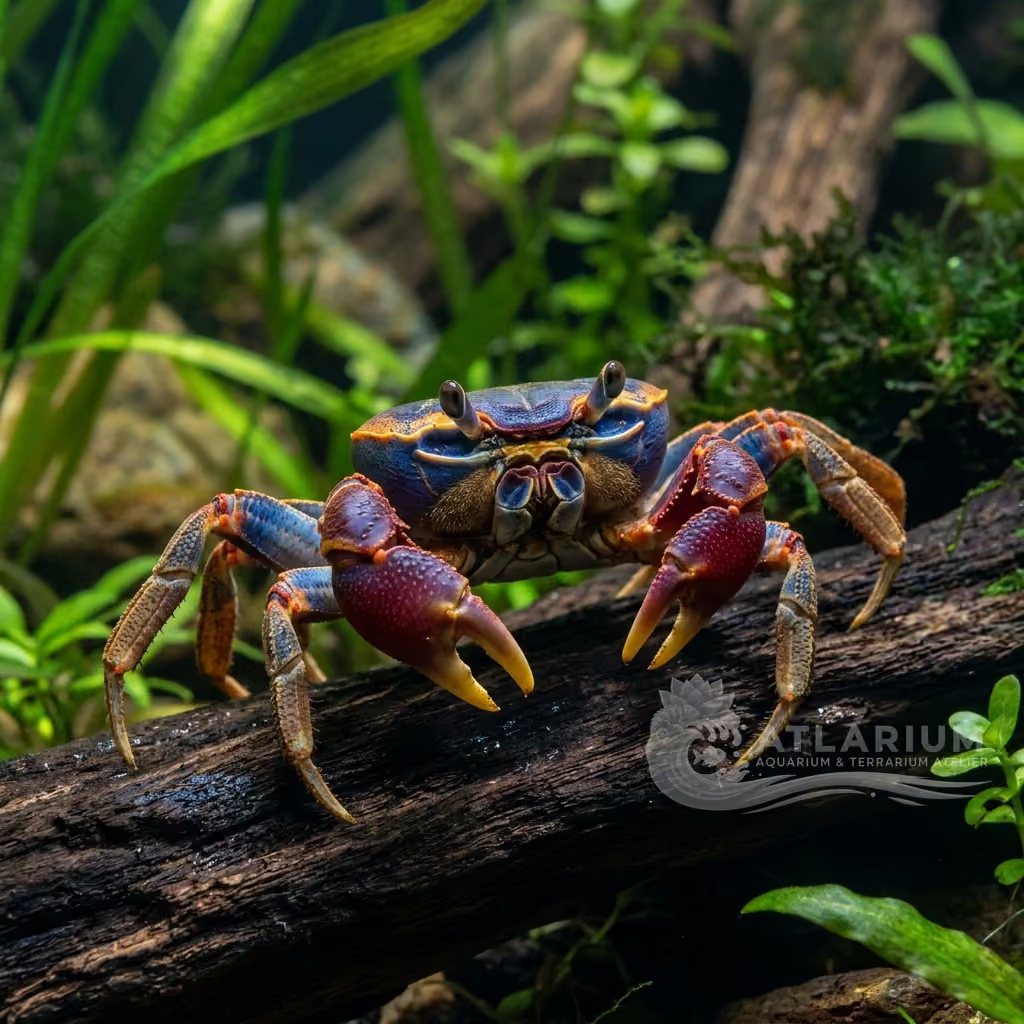
Mudflat Fiddler Crab
Minuca rapax
The Mudbank Fiddler Crab thrives in tidal environments and requires a paludarium setup. A dynamic detritivore, it constantly sifts through deep sandy substrates to feed and maintain its burrows.
Wassertemperatur
18 - 28 °C
pH-Wert
7.5 - 8.2
Wassertyp
Brackwasser / Meerwasser
Wirbelloser Typ
Marine crab
Erwachsenengröße
3 cm
Mindestgruppe
>= 3
KH
6 - 10 dKH
Ökologische Rolle
Scavenger
Kupferempfindlichkeit
High

Artbeschreibung
Geographical Origin and Habitat: This species inhabits mudflats, salt marshes, and mangrove swamps along the western coast of the Atlantic Ocean, ranging from the southeastern United States, through the Gulf of Mexico and the Caribbean, down to southern Brazil. It thrives in dynamic tidal environments.
Taxonomy: Minuca rapax (historically classified as Uca rapax) belongs to the order Decapoda, family Ocypodidae. It plays a critical ecological role in coastal ecosystems by aerating soils through burrowing activities and recycling organic nutrients.
Social Behavior: These crabs live in large, dense colonies where individuals excavate deep, private burrows. Males engage in elaborate claw-waving displays, using their oversized claw to signal females for mating and to defend territory against rival males.
Coloration and Sexual Dimorphism: The carapace is typically greyish-brown to olive-green, sometimes showing shades of blue or yellow. Extreme sexual dimorphism is present: males grow one massive cheliped (claw) and one small feeding claw, while females possess two small, symmetrical feeding claws.

Pflege, Zucht und Mitbewohner
Tank Setup: A specialized paludarium or aquaterrarium is mandatory, as this semi-terrestrial crab cannot survive fully submerged. The enclosure must feature a large land area with a deep substrate (at least 10 cm) of sand and mud to allow burrowing. Add driftwood and rocks for climbing.
Diet and Feeding: Omnivorous detritivore. They spend hours sifting through wet sand and mud to consume organic detritus, algae, and micro-organisms. In captivity, feed sinking crustacean pellets, spirulina wafers, blanched vegetables, and small frozen foods like daphnia or brine shrimp.
Water Quality: The aquatic section must contain brackish water with a specific gravity of 1.005 to 1.012, prepared using marine salt. Maintain water and air temperatures between 22°C and 28°C (72-82°F) and a stable pH of 7.8 to 8.2. Gentle filtration is recommended.
Compatibility and Tankmates: Best kept in a species-only setup. You can house a group consisting of one male and multiple females to prevent aggressive male territory battles. Avoid cohabitating with large predatory fish or aggressive crabs that may target them during molting.
Aquarium Breeding: Spawning in home setups is extremely rare. Females carry fertilized eggs beneath their abdomens. Once released, the larvae enter a marine zoeal stage that requires full marine salinity and specialized micro-plankton to survive, which is difficult to replicate.
Risks and Diseases: Fiddler crabs are exceptional escape artists; the tank must be completely sealed with no open gaps. Molting failure is the most common cause of death, often caused by a lack of calcium or iodine. Avoid any copper-based medications or chemicals in the enclosure.

Geografische Herkunft und Verbreitung
This species inhabits mudflats, salt marshes, and mangrove swamps along the western coast of the Atlantic Ocean, ranging from the southeastern United States, through the Gulf of Mexico and the Caribbean, down to southern Brazil. It thrives in dynamic tidal environments.
Ursprung
Tropische Ozeane und RiffeExtra-Amazonas-SüdamerikaMittelamerika und KaribikNordamerika

Wirbelloses Profil
- Diät
- Detritivore
- As a robust omnivore, Minuca rapax actively searches for both plant matter and meaty food items. They consume detritus, algae, and any small leftover scraps of food provided to the tank. Sinking wafers and chopped seafood can supplement their daily scavenging.
- Ökologische Rolle
- Scavenger
- Minuca rapax serves as a highly effective scavenger, breaking down larger pieces of organic waste. They aerate the substrate with their movement and control nuisance algae growth. Their constant activity maintains the health and cleanliness of the benthic zone.
- Erwachsenengröße
- 3 cm
- Sprungrisiko
- Yes
- Although they do not jump, Minuca rapax possesses exceptional climbing abilities and a strong desire to explore. Many crabs can effortlessly climb up airlines, heater cords, or silicon edges. A secure top cover is absolutely essential to prevent escapes.
- Stoßempfindlichkeit
- Medium
- Minuca rapax should be acclimated carefully to avoid the shock of rapidly changing water parameters. Wide fluctuations in salinity or temperature can compromise their immune systems or trigger premature molting. Consistency in water quality is paramount for their long-term health.
- Kalzium und Mineralien
- Medium
- Sufficient calcium availability is an absolute requirement for Minuca rapax to maintain its hard carapace. Poor calcium levels can cause incomplete molting and eventual death. Feeding calcium-enriched diets and keeping minerals in balance is vital for their exoskeleton strength.
- Häutung
- Yes
- During molting, Minuca rapax sheds its old shell to allow for growth and regeneration of lost limbs. It is entirely soft and defenseless during this process, requiring secure caves or crevices for hiding. The old molt should remain in the tank so the crab can recycle the calcium.
- Reproduktion
- Oviparous
- Rearing Minuca rapax in an aquarium is generally quite difficult due to their complicated larval phases. Females carry dense clusters of eggs on their abdomen before releasing them as planktonic zoea. These microscopic larvae usually require separate rearing vessels and very specific live foods.
- Kompatibilität & Tankkameraden
- Community
- Minuca rapax is generally safe with fish that are too large to be eaten but too small to view the crab as prey. Certain predatory species of fish should be entirely avoided. Be cautious when keeping them with slower bottom-dwelling species which might be pinched.

Verwandte Arten
Empfehlungen gruppiert nach nahen Verwandten, Auswahl von Begleitern und ähnlicher Betreuung.