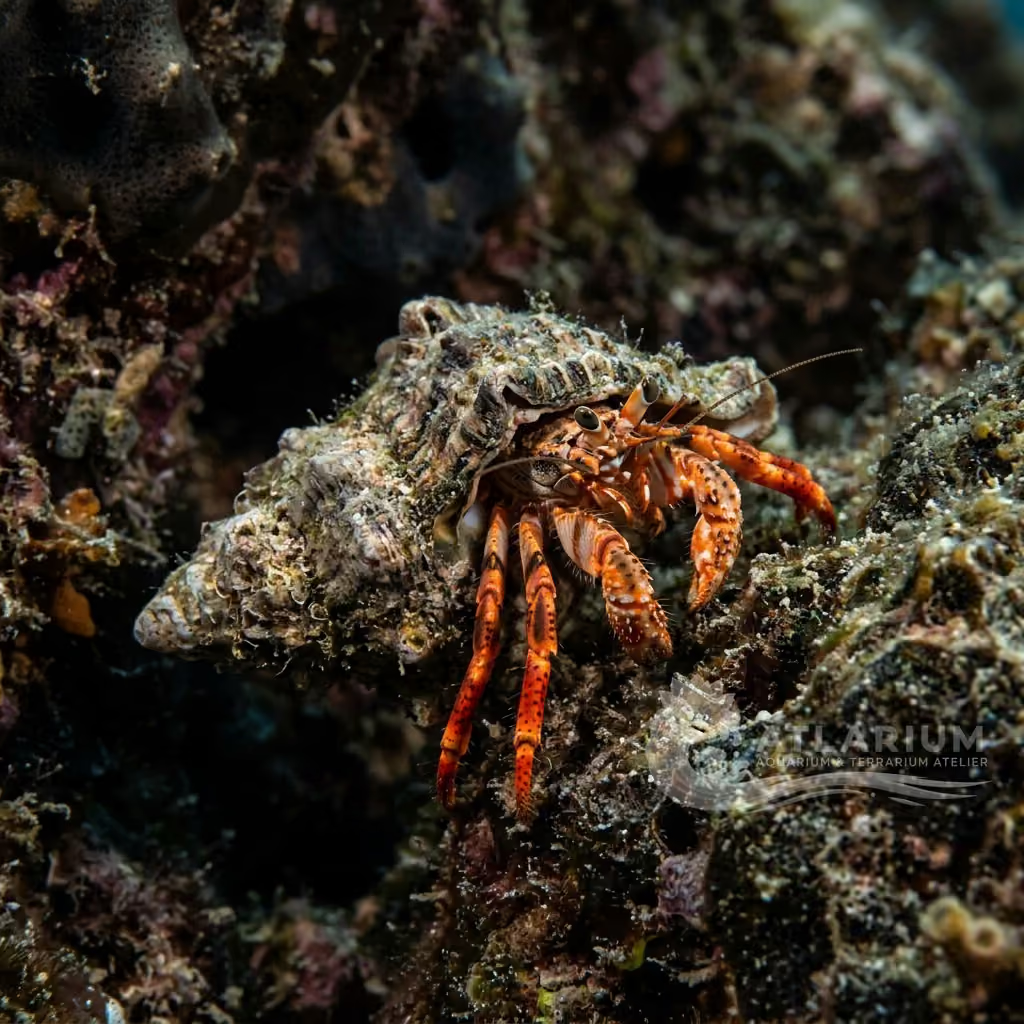
Yellow shore crab
Hemigrapsus oregonensis
The Yellow Shore Crab is a small intertidal scavenger from the Pacific. Housed in a paludarium, it thrives with access to both shallow water and land, processing detritus and organic matter.
Wassertemperatur
10 - 20 °C
pH-Wert
7.8 - 8.4
Wassertyp
Meerwasser / Brackwasser
Wirbelloser Typ
Marine crab
Erwachsenengröße
3,5 cm
Mindestgruppe
>= 1
KH
8 - 12 dKH
Ökologische Rolle
Scavenger
Kupferempfindlichkeit
High

Artbeschreibung
Geographical Origin and Habitat: This species is distributed along the Pacific coast of North America, ranging from southern Alaska to the Baja California peninsula in Mexico. It primarily inhabits the intertidal zone, especially sheltered bays, estuaries, salt marshes, and muddy or sandy beaches, where it hides under rocks, shoreline debris, or excavates shallow burrows in muddy banks.
Taxonomy: Belongs to the family Varunidae and the genus Hemigrapsus. It is commonly referred to as the yellow shore crab or Oregon shore crab. It is distinguished from the closely related H. nudus by having hairy walking legs and lacking purple spots on its claws. It is highly euryhaline and eurythermal, tolerating wide environmental shifts.
Social Behavior: Social but territorial when feeding. They gather in large numbers under rocks during low tide to conserve moisture. While not highly aggressive compared to larger predatory crabs, they will compete for shelter and food resources. They are active during both day and night, foraging along muddy shores.
Coloration and Sexual Dimorphism: The carapace is typically yellowish-green, olive, or greyish-green, often speckled with darker markings or white patches. The walking legs are covered with fine setae (hairs). Males possess larger, more robust claws than females, and a narrow, triangular abdomen on their underside, whereas females have a broad, rounded abdomen.

Pflege, Zucht und Mitbewohner
Tank Setup: Requires a paludarium or a brackish/marine aquaterrarium that provides both a shallow water area and an easily accessible land portion. A minimum tank size of 60 liters (approx. 15 gallons) is recommended for a small group. Use a substrate of sand, fine gravel, or silt, and arrange numerous flat rocks and driftwood to create caves both above and below the water line.
Diet and Feeding: Omnivorous and opportunistic scavenger. It eats a wide range of foods including algae, decaying plant matter, small invertebrates, commercial sinking crab pellets, blanched vegetables, and frozen foods such as mysis or shrimp pieces. They graze on green algae growing on tank decorations. Provide a varied diet to ensure they receive nutrients for molting.
Water Quality: Highly adaptable. Can be kept in brackish water (specific gravity 1.008-1.015) or full strength saltwater (1.020-1.025). Prefers cool to temperate water temperatures between 15°C and 22°C (59-72°F). A heater is not required; they will suffer under high heat exceeding 24-25°C (75-77°F). Perform regular water changes, though they tolerate low oxygen.
Compatibility and Tankmates: Not suitable for tanks with small, slow-moving fish or tiny aquatic invertebrates, which they may catch and consume. Can be kept with fast-swimming brackish fish. Avoid housing them with large predatory crabs or fish that will eat them. They can coexist with their own species if provided with plenty of hiding spots.
Aquarium Breeding: Oviparous. The female carries fertilized eggs under her broad abdomen until they hatch. The hatched larvae are released into the water as planktonic zoeae. Breeding in home aquariums is extremely difficult due to the complex larval stages that require specific salinity, microscopic live foods (rotifers), and specialized gentle filtration.
Risks and Diseases: The main threat in captivity is overheating, as they are a temperate species. Ensure the tank does not exceed 24°C (75°F). Iodine and calcium supplements are necessary to prevent molting failure, which is a common cause of death. Never expose them to copper-based treatments or chemical pollutants in the water.

Geografische Herkunft und Verbreitung
This species is distributed along the Pacific coast of North America, ranging from southern Alaska to the Baja California peninsula in Mexico. It primarily inhabits the intertidal zone, especially sheltered bays, estuaries, salt marshes, and muddy or sandy beaches, where it hides under rocks, shoreline debris, or excavates shallow burrows in muddy banks.
Ursprung
Tropische Ozeane und RiffeMittelamerika und KaribikNordamerika

Wirbelloses Profil
- Diät
- Omnivore
- As a robust omnivore, Hemigrapsus oregonensis actively searches for both plant matter and meaty food items. They consume detritus, algae, and any small leftover scraps of food provided to the tank. Sinking wafers and chopped seafood can supplement their daily scavenging.
- Ökologische Rolle
- Scavenger
- Hemigrapsus oregonensis serves as a highly effective scavenger, breaking down larger pieces of organic waste. They aerate the substrate with their movement and control nuisance algae growth. Their constant activity maintains the health and cleanliness of the benthic zone.
- Erwachsenengröße
- 3.5 cm
- Sprungrisiko
- Yes
- Although they do not jump, Hemigrapsus oregonensis possesses exceptional climbing abilities and a strong desire to explore. Many crabs can effortlessly climb up airlines, heater cords, or silicon edges. A secure top cover is absolutely essential to prevent escapes.
- Stoßempfindlichkeit
- Medium
- Hemigrapsus oregonensis should be acclimated carefully to avoid the shock of rapidly changing water parameters. Wide fluctuations in salinity or temperature can compromise their immune systems or trigger premature molting. Consistency in water quality is paramount for their long-term health.
- Kalzium und Mineralien
- Medium
- Sufficient calcium availability is an absolute requirement for Hemigrapsus oregonensis to maintain its hard carapace. Poor calcium levels can cause incomplete molting and eventual death. Feeding calcium-enriched diets and keeping minerals in balance is vital for their exoskeleton strength.
- Häutung
- Periodic
- During molting, Hemigrapsus oregonensis sheds its old shell to allow for growth and regeneration of lost limbs. It is entirely soft and defenseless during this process, requiring secure caves or crevices for hiding. The old molt should remain in the tank so the crab can recycle the calcium.
- Reproduktion
- Oviparous
- Rearing Hemigrapsus oregonensis in an aquarium is generally quite difficult due to their complicated larval phases. Females carry dense clusters of eggs on their abdomen before releasing them as planktonic zoea. These microscopic larvae usually require separate rearing vessels and very specific live foods.
- Kompatibilität & Tankkameraden
- Community
- Hemigrapsus oregonensis is generally safe with fish that are too large to be eaten but too small to view the crab as prey. Certain predatory species of fish should be entirely avoided. Be cautious when keeping them with slower bottom-dwelling species which might be pinched.

Verwandte Arten
Empfehlungen gruppiert nach nahen Verwandten, Auswahl von Begleitern und ähnlicher Betreuung.