White-cheeked Goby
Rhinogobius duospilus
A small, charismatic Asian freshwater goby perfectly suited for highly oxygenated hillstream aquariums with strong flow and smooth rocks.
Wassertemperatur
18 - 24 °C
pH-Wert
7 - 8
Wassertyp
Süßwasser
Tankfüllstand
Unten
Erwachsenengröße
5 cm
Mindesttankvolumen
>= 60 L
Mindestgruppe
>= 1
GH
10 - 20 dGH
KH
5 - 10 dKH
TDS
200 - 400 ppm
Leitfähigkeit
313 - 625 uS/cm

Artbeschreibung
Geographical Origin and Habitat: Native to southern China (Guangdong and Hainan provinces) and parts of northern Vietnam. It inhabits fast-flowing, cool hill streams and mountain creeks characterized by crystal-clear, highly oxygenated water. They live strictly on the streambed, which is composed of smooth stones, gravel, and sand, seeking refuge behind rocks to avoid the strong current.
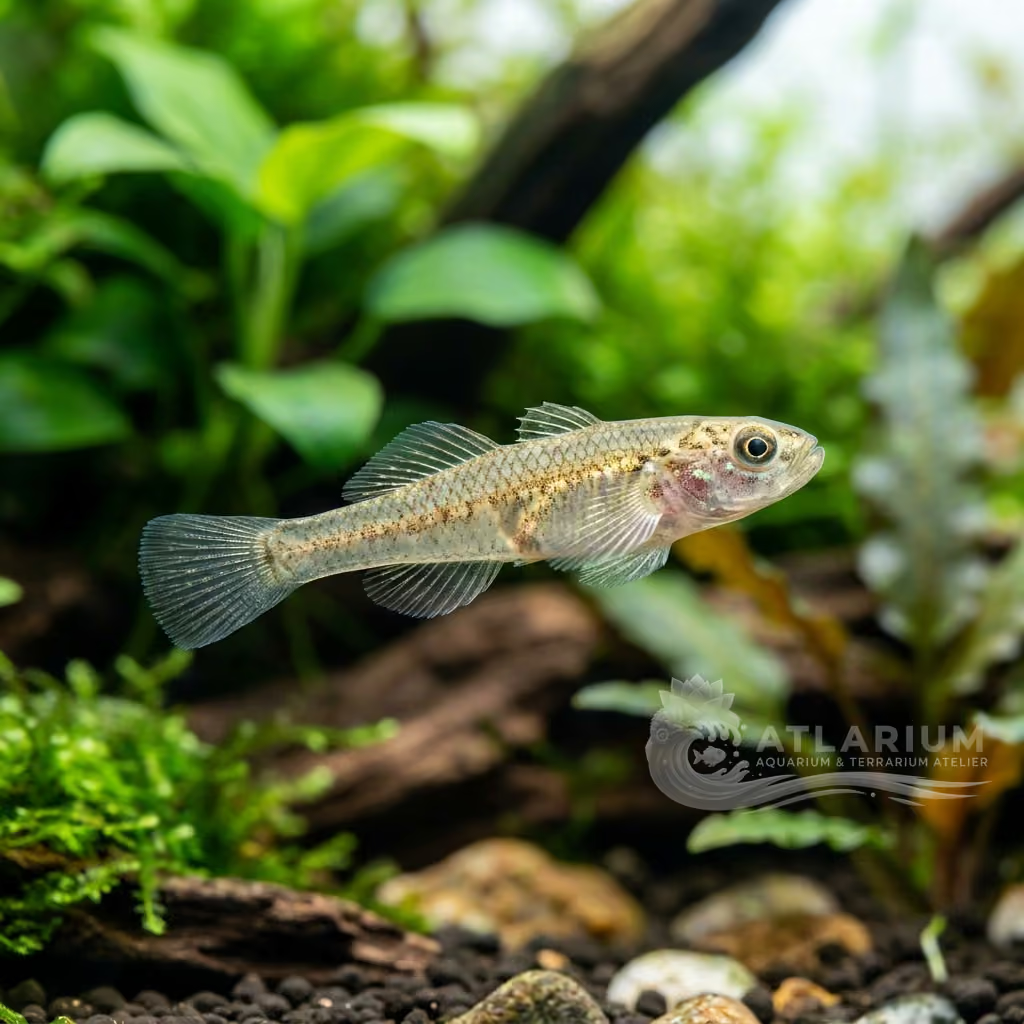
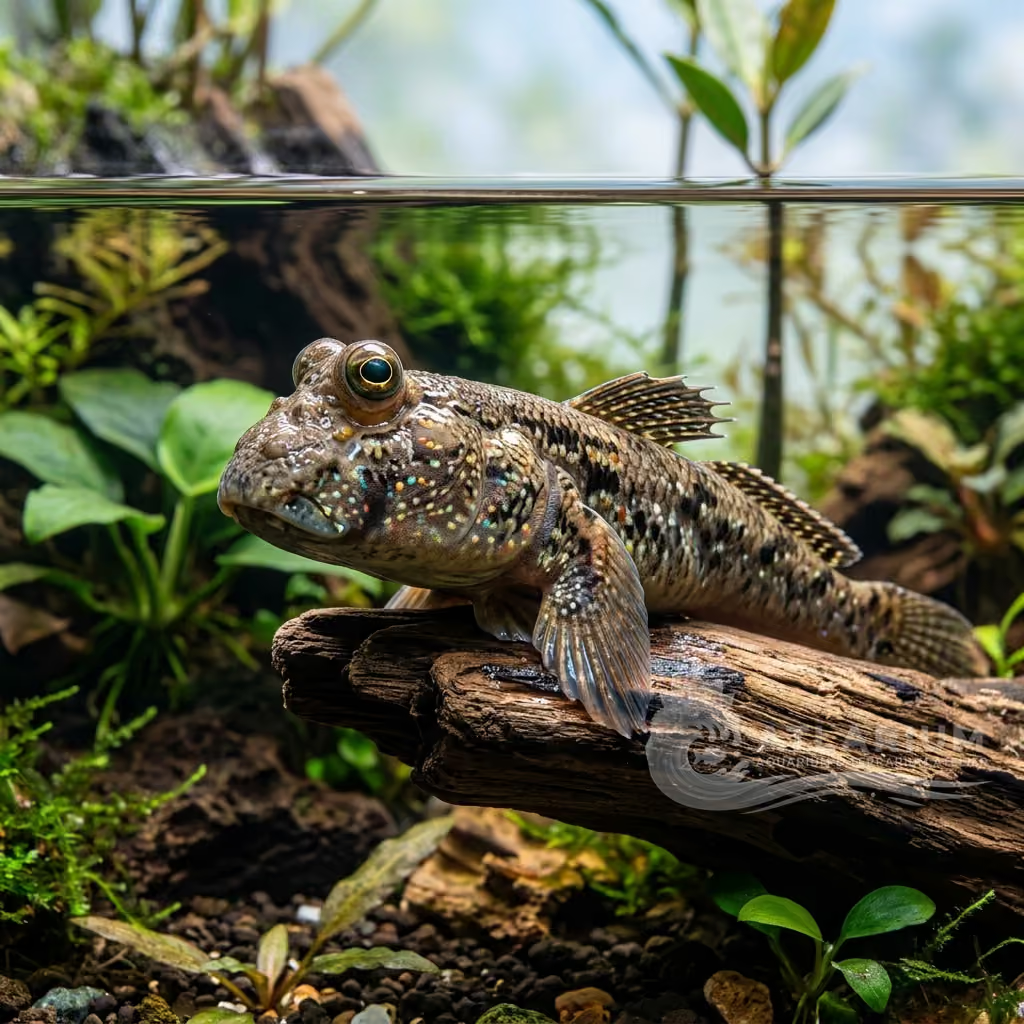
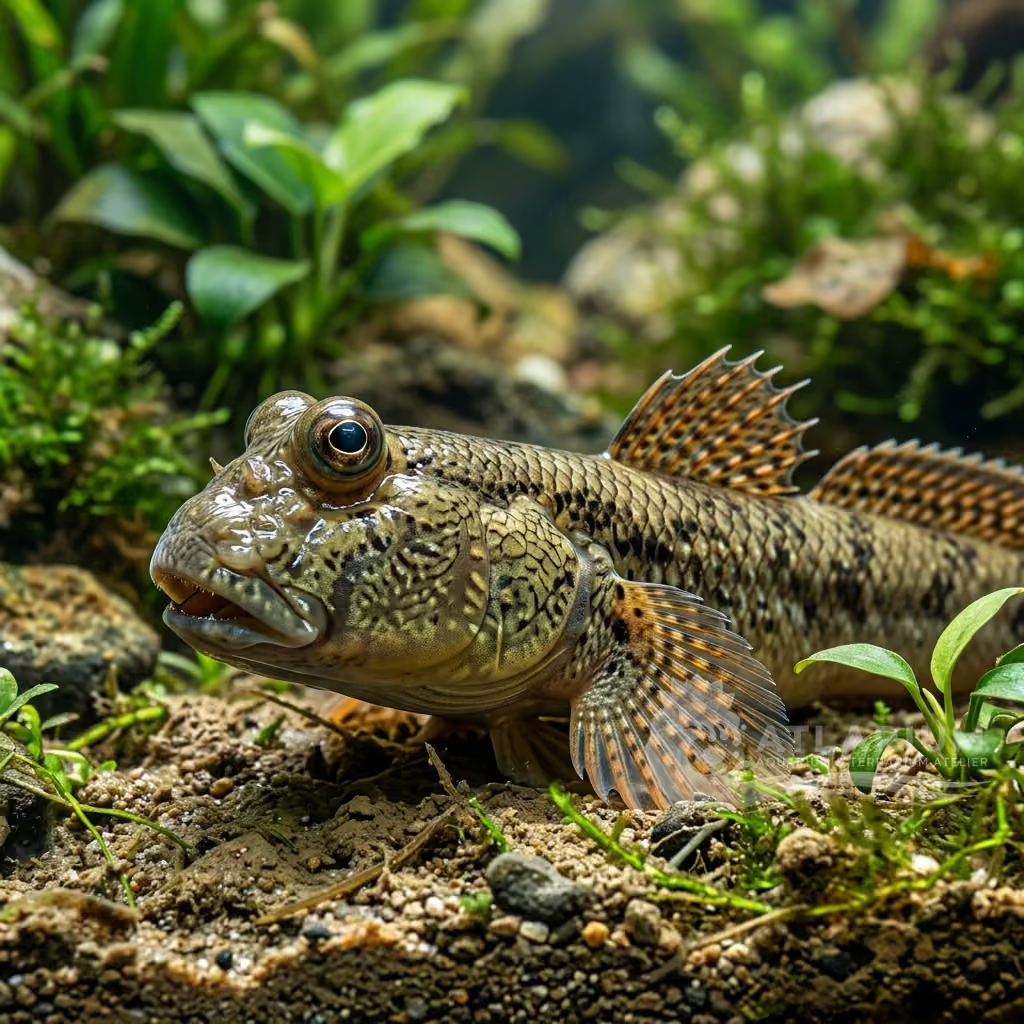
Taxonomy and Morphology: Belongs to the order Gobiiformes, family Oxudercidae, subfamily Gobionellinae, and genus Rhinogobius. It has frequently been traded under the scientific synonym Rhinogobius wui. It features an elongated body, eyes set high on the head, and fused pelvic fins that form a ventral suction cup used to anchor itself to rocks in fast currents. Maximum size is 4-5 cm (1.6-2 inches).
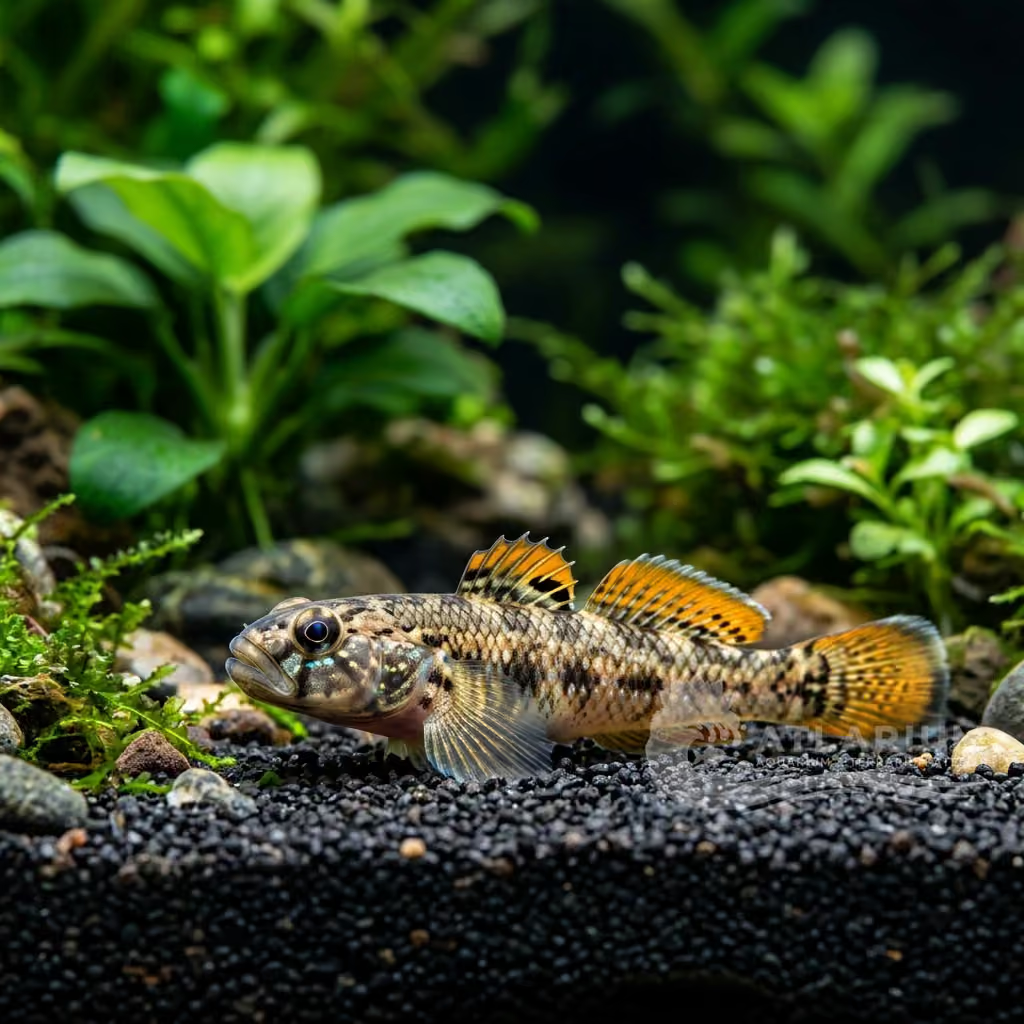
Social Behavior: Territorial but not overly aggressive. Males establish territories around caves or crevices and defend them through impressive displays, flaring their gills and expanding their fins to intimidate rivals. They can be kept in groups if the tank footprint is large enough and divided by rocks and wood to block sightlines.
Coloration and Sexual Dimorphism: The body is sandy-gray to light brown with darker markings and vertical bars. Males develop bright red or reddish-orange patterning on their cheeks and throat, along with larger, colorful fins edged in white or bluish-white. Females are smaller, less colorful, and develop a yellow-tinted abdomen when gravid.

Pflege, Zucht und Mitbewohner
Aquarium Setup: A specialized 'hillstream' setup is essential. A minimum tank size of 60x30 cm (24x12 inches) is recommended for a pair or small group. Use a substrate of sand, smooth gravel, and rounded river stones. A powerful canister filter or additional powerheads must be used to create substantial water movement and ensure high dissolved oxygen.
Diet and Feeding: Primarily a micro-predator. They rarely accept dry flake or pellet foods. Their diet must consist of live or frozen foods such as brine shrimp, bloodworms, daphnia, and mosquito larvae. Feeding should be targeted to the bottom, and patience is required as they adapt to feeding in captivity.
Water Quality: Requires cool, pristine water. Ideal temperature is 15-22°C (59-72°F); prolonged exposure to temperatures above 25°C (77°F) should be avoided. pH should be 7.0-7.8, with medium-hard water (GH 8-20). Regular water changes are critical to keep nitrate levels low. An air stone or Venturi attachment is highly recommended.
Compatibility and Cohabitation: Best housed with active, upper-water-dwelling species that thrive in cool, fast-flowing water, such as White Cloud Mountain Minnows (Tanichthys albonubes), various Danio species, or hillstream loaches (Sewellia, Gastromyzon). Avoid slow-moving, long-finned fish that cannot handle high flow.
Aquarium Breeding: Occurs in caves or under flat stones. The male coaxes a ripe female into his cave, where she deposits eggs on the ceiling. The male then drives the female away and guards the clutch, fanning them with his fins until they hatch (typically 10-14 days). The tiny fry require infusoria or micro-worms as first foods.
Risks and Diseases: Highly susceptible to oxygen depletion and heat stress. If water temperatures rise too high, they will quickly suffocate. They are also sensitive to organic pollutants. Protozoan infections (like Ich) can occur if the fish are stressed by rapid temperature fluctuations or poor water hygiene.

Geografische Herkunft und Verbreitung
Native to southern China (Guangdong and Hainan provinces) and parts of northern Vietnam. It inhabits fast-flowing, cool hill streams and mountain creeks characterized by crystal-clear, highly oxygenated water. They live strictly on the streambed, which is composed of smooth stones, gravel, and sand, seeking refuge behind rocks to avoid the strong current.
Ursprung
Süd- und SüdostasienOstasien

Fischprofil
- Temperament
- Semi-aggressive
- They have a feisty and entertaining personality, full of bluster but little actual harm. Males will puff out their cheeks and flare their fins at rivals in a show of dominance. They are a captivating focal point for a specialized hillstream setup.
- Diät
- Omnivore
- They are strict carnivores that almost exclusively require meaty foods. They eagerly consume live or frozen bloodworms, brine shrimp, and daphnia. They generally ignore dry flakes or pellets, requiring a dedicated frozen food diet.
- Lebenserwartung
- 3-5 years
- Erwachsenengröße
- 5 cm
- Geschlechterverhältnis
- Flexible
- Keeping one male with several females is the most harmonious setup. Males will actively display and occasionally spar for territory, so ample space is needed if keeping multiple males. Males are generally more colorful with larger fins.
- Fütterungsfrequenz
- Twice daily
- Feed them small amounts once or twice a day. Ensure the food reaches the bottom where they can easily access it. They are not fast swimmers, so make sure faster tank mates don't steal their food.
- Bioload
- Low to Medium
- The White-cheeked Goby produces a minimal bioload due to its small size. They do require pristine water quality, so excellent filtration is a must. Regular water changes are essential to keep nitrates extremely low.
- Fluss
- Stagnant
- They are hillstream gobies that absolutely require highly oxygenated, fast-flowing water. Specialized river-manifold systems or strong powerheads are highly recommended. Poor flow will quickly lead to lethargy and health issues.
- Sprungrisiko
- Yes
- They have a low to moderate jump risk. They generally stick to the bottom, but can climb the glass using their fused pelvic fins. A secure lid is necessary to prevent them from scaling the glass and escaping.
- Reproduktion
- Oviparous
- Breeding is possible in captivity, typically occurring in small caves or under rocks. The male fiercely guards the eggs until they hatch. The fry require microscopic live foods immediately after hatching.
- Kompatibilität & Tankkameraden
- Territorial
- They are relatively peaceful but can be territorial towards bottom-dwelling conspecifics. They can be kept with peaceful, mid-to-top dwelling species like white cloud mountain minnows or small rasboras. Avoid keeping them with aggressive fish or tiny shrimp, which they will eat.
- Tankfüllstand
- Bottom
- They are obligate bottom-dwellers, spending most of their time perched on smooth stones. They use their specialized pelvic fins to anchor themselves against strong currents. They rarely swim freely in the open water column.

Wissenschaftliche Modelle & Parameter
FishBase
Zugang zu den offiziellen wissenschaftlichen Daten der Art
FishBase v25.04Daten synchronisiert am: 15.06.2026
- Trophäenniveau
- 3,3 ± 0,4 se
- Belastbarkeit
- Hoch (weniger als 15 Monate)
- Phylogenetische Einzigartigkeit (PD50)
- 0.5
- Bayessche Längen-Gewichts-Beziehung
- a = 0.00813, b = 3.1
- AnfälligkeitGeringe Anfälligkeit (10 / 100)

Verwandte Arten
Empfehlungen gruppiert nach nahen Verwandten, Auswahl von Begleitern und ähnlicher Betreuung.