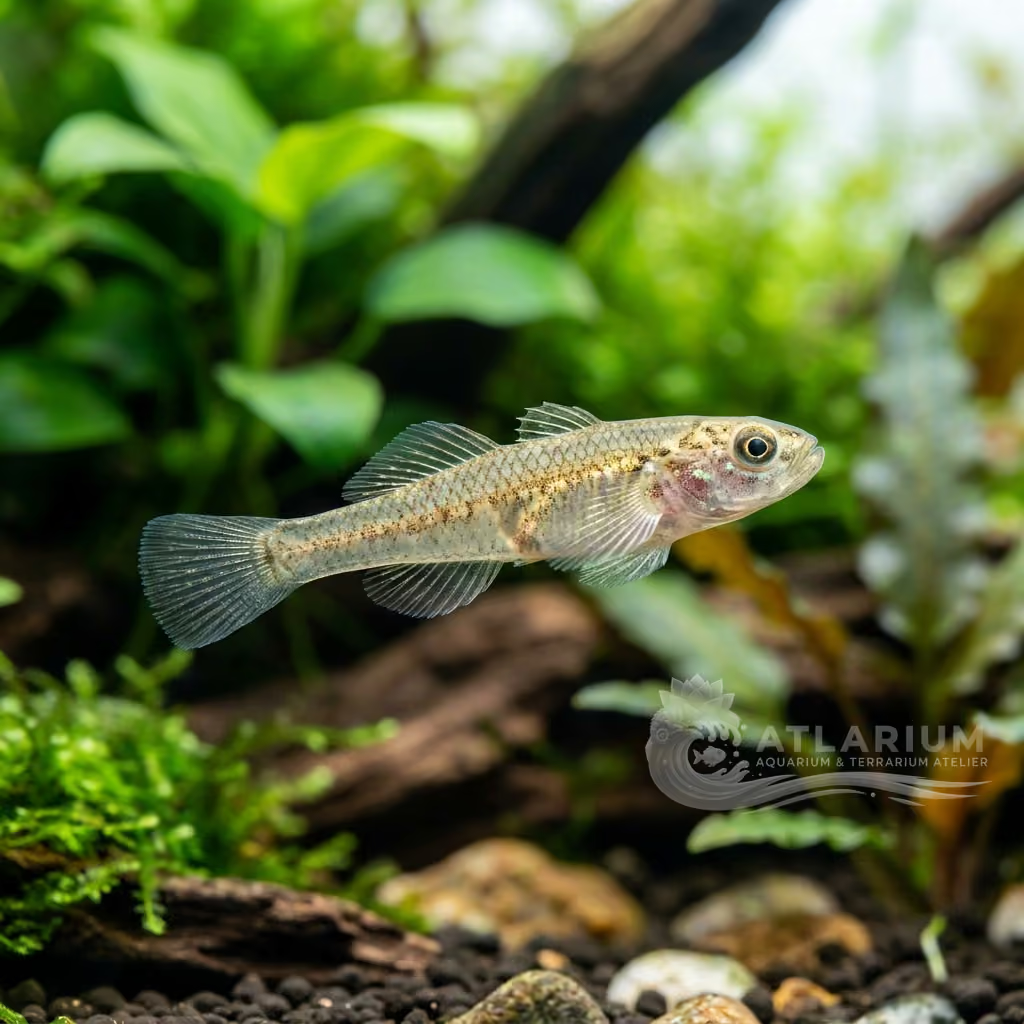
Pygmy Leopard Catfish
Synodontis petricola
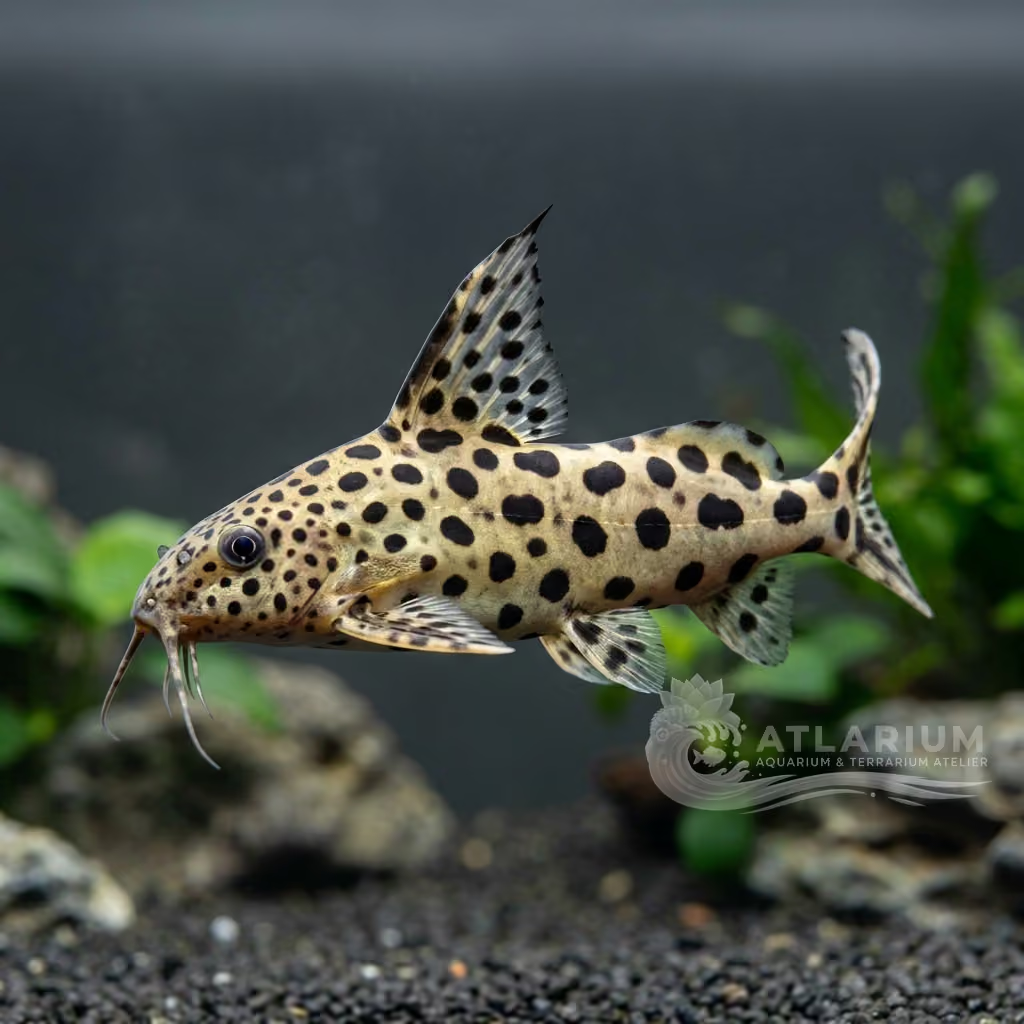
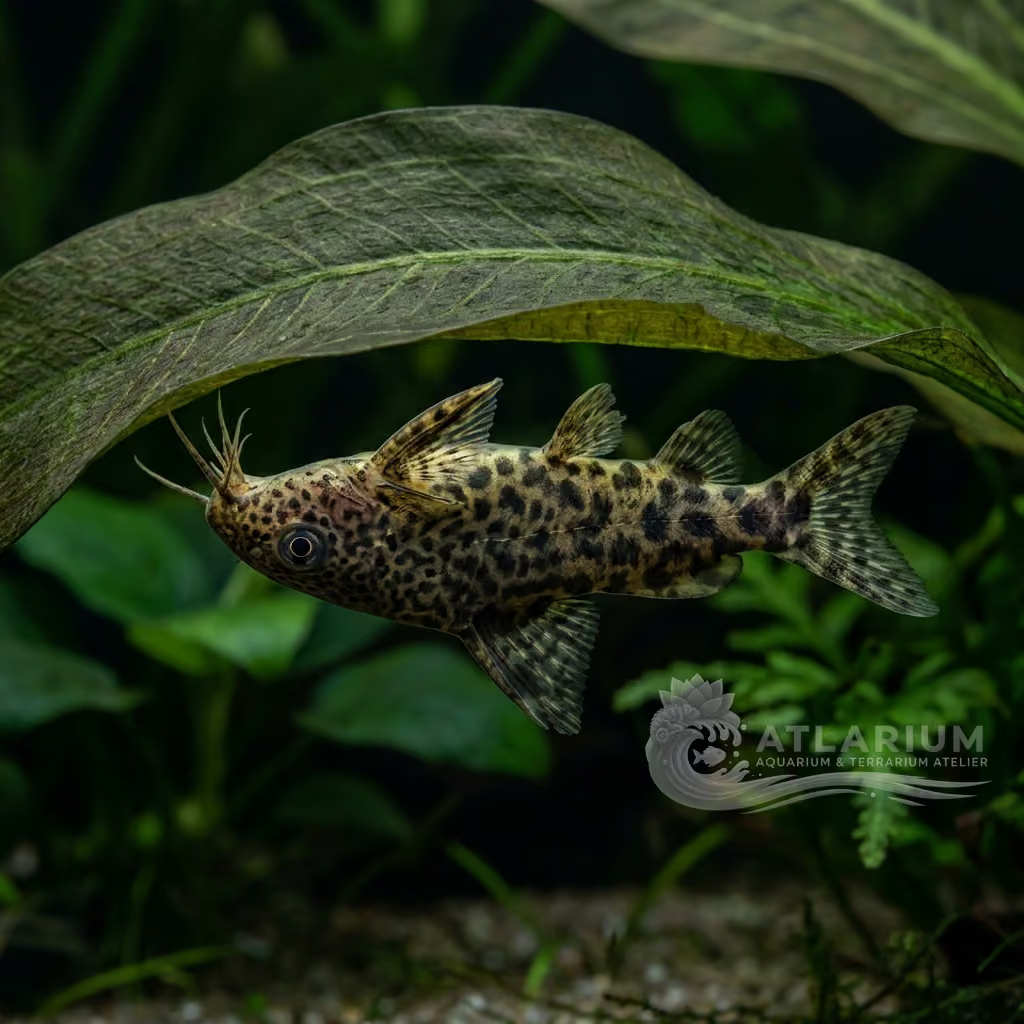
The 'Dwarf Leopard' of Lake Tanganyika. Looks like a stunning miniature clone of the Cuckoo Catfish, maxing out at just 10-11 cm (4 inches). Retains the gorgeous spots, the highly active daylight schooling behavior, and the peaceful nature, making it the perfect clean-up crew for smaller African tanks.
Wassertemperatur
23 - 27 °C
pH-Wert
7.5 - 8.5
Wassertyp
Süßwasser
Tankfüllstand
Unten und in der Mitte
Erwachsenengröße
13 cm
Mindesttankvolumen
>= 180 L
Mindestgruppe
6
GH
10 - 30 dGH
KH
5 - 15 dKH
TDS
200 - 600 ppm
Leitfähigkeit
313 - 938 uS/cm

Artbeschreibung
Geographical Origin and Habitat: Endemic to Lake Tanganyika. Exclusively colonizes the rocky littoral (petricola = rock dweller), never venturing onto muddy bottoms, preferring coastal cobble clusters.
Taxonomy and Morphology: Pygmy Leopard Catfish (Synodontis petricola). Older brother of S. lucipinnis, it is distinguished from it by its size (13-15 cm / 5-6 inches) and by the black barbels (whiskers) instead of white.
Social Behavior: Extroverted and social. While loving rocks, it is not a nocturnal catfish that hides 24/7. In a school of 6 specimens they will constantly roam in plain sight. They become invisible and terrified if kept singly.
Coloration and Sexual Dimorphism: Starry coat (Leopard). Brownish/copper base dotted with irregular very black circular spots. The leading rays of the fins are thick and bright white, a clear school signal in the dark waters between crevices.

Pflege, Zucht und Mitbewohner
Aquarium Setup: 100 cm (40 inches) rocky aquarium. Create two large barriers of porous limestone rocks separated by an isthmus of fine sand. Do not insert sharp gravel, they would wear out their barbels by constantly rummaging.
Diet and Feeding: Omnivorous explorer. They consume granulated dry feeds, bottom fish tablets, frozen bloodworms, daphnia and stolen fish eggs. They will also eradicate annoying small snails (Physa, Planorbarius).
Water Quality: Demands pH stability and great purity. They cannot tolerate a pH drop below 7.4. Use coral sand or marine live rocks if the local tap water is too soft.
Compatibility and Cohabitation: Perfect companions for medium-small Tanganyika Cichlids (Neolamprologus, Julidochromis). They do not eat tankmates, except very small defenseless fry. Not suitable for soft and acidic Amazonian tanks (they would die quickly).
Aquarium Breeding: It is not a "Cuckoo". Unlike the multipunctatus, the petricola lays its eggs in narrow cavities and crevices inaccessible to other fish. In captivity, a bowl of glass marbles is often placed in the tank: they will throw the eggs inside, escaping the instinct to eat them.
Risks and Diseases: The "fabric nets" (Net entanglement). The pectoral spines of the petricola have thick backward-serrated teeth. If caught with a traditional nylon net, they will become totally entangled. Pulling means tearing off the bone (and killing the fish); it always forces the aquarist to cut the net around the spine.

Geografische Herkunft und Verbreitung
Endemic to Lake Tanganyika. Exclusively colonizes the rocky littoral (petricola = rock dweller), never venturing onto muddy bottoms, preferring coastal cobble clusters.
Ursprung
Afrika und MadagaskarOstasien

Fischprofil
- Temperament
- Semi-aggressive
- Synodontis petricola is an incredibly peaceful, playful, and active species. When kept in appropriate groups, they are surprisingly bold and can be seen out and about during the day. They playfully chase one another without causing any harm or damage. Their charming demeanor makes them one of the most beloved catfish in the hobby.
- Diät
- Omnivore
- Synodontis petricola is an unfussy omnivore that will eagerly consume almost any prepared or frozen food. In the wild, they graze on small invertebrates and organic detritus found among the rocks. Aquarists should feed a staple of sinking catfish pellets, supplemented with spirulina wafers and frozen bloodworms. They are enthusiastic eaters that actively forage across the substrate.
- Lebenserwartung
- 8-10 years
- Erwachsenengröße
- 13 cm
- Geschlechterverhältnis
- Harem
- They are highly gregarious and should be kept in a group of at least five or six individuals to display natural behavior. There is no required male-to-female ratio as they do not form territories or harems. In large groups, they will often school together, gracefully weaving through the rockwork. Solitary specimens become extremely reclusive and prone to stress-related illnesses.
- Fütterungsfrequenz
- Twice daily
- They should be fed once or twice daily, with amounts they can completely consume in a few minutes. Unlike many nocturnal catfish, S. petricola is frequently active during daylight hours and will readily learn to come out at feeding time. Ensure that enough food sinks past top-feeding tankmates so these bottom dwellers get their share. Avoid chronic overfeeding to prevent obesity.
- Bioload
- Low to Medium
- This small Tanganyikan catfish produces a low to moderate bioload, making it suitable for many community setups. Their active metabolism means they produce a fair amount of waste for their size, but standard biological filtration handles it easily. Weekly water changes are highly recommended to maintain the high water quality they require. They thrive in mature, stable environments with negligible nitrate levels.
- Fluss
- Stagnant
- Endemic to the rocky shoreline of Lake Tanganyika, they appreciate moderate to brisk water flow. Good water movement provides the high levels of dissolved oxygen they need to remain active and healthy. Utilizing powerheads or wavemakers can recreate the surging currents of their natural habitat. However, they must be provided with deep rock crevices where the water flow is calm.
- Sprungrisiko
- Yes
- They are predominantly bottom dwellers with a very low propensity for jumping. They feel most secure when swimming low amongst the rocks and substrate. Nevertheless, an insecure lid leaves open the possibility of escape if the fish is startled or chased. Keeping the tank covered is a simple preventative measure.
- Reproduktion
- Oviparous
- Unlike S. multipunctatus, S. petricola are typical egg-scatterers and do not parasitize cichlid broods. They spawn by releasing hundreds of tiny eggs among small stones or marbles in a breeding tank. Because they are avid egg eaters, the parents must be removed immediately after spawning to secure a harvest. Raising the minute fry requires specialized micro-foods like infusoria and newly hatched brine shrimp.
- Kompatibilität & Tankkameraden
- Community
- They are remarkably peaceful and are excellent additions to hard-water community tanks. They associate perfectly with African cichlids, lively tetras, rainbowfish, and larger rasboras. Due to their small mouths, they pose no threat to anything other than the tiniest fry or newborn shrimp. They do not aggressively defend territory against other bottom dwellers.
- Tankfüllstand
- Middle/Bottom
- They are dedicated bottom dwellers that rarely venture into the upper half of the water column. They constantly explore the substrate, heavily relying on complex rocky structures for cover and comfort. It is very common to see them resting upside down in tight caves. A tank with a large footprint and abundant rock piles is their ideal environment.

Wissenschaftliche Modelle & Parameter
FishBase
Zugang zu den offiziellen wissenschaftlichen Daten der Art
FishBase v25.04Daten synchronisiert am: 15.06.2026
- Trophäenniveau
- 2,9 ± 0,4 se
- Belastbarkeit
- Hoch (weniger als 15 Monate)
- Phylogenetische Einzigartigkeit (PD50)
- 0.5
- Bayessche Längen-Gewichts-Beziehung
- a = 0.01096, b = 3
- AnfälligkeitGeringe Anfälligkeit (10 / 100)

Verwandte Arten
Empfehlungen gruppiert nach nahen Verwandten, Auswahl von Begleitern und ähnlicher Betreuung.