Rosy Bitterling
Rhodeus ocellatus
A unique coldwater cyprinid featuring a fascinating reproductive strategy where the female deposits her eggs inside live freshwater mussels.
Wassertemperatur
10 - 24 °C
pH-Wert
7 - 8
Wassertyp
Süßwasser
Tankfüllstand
Unten und in der Mitte
Erwachsenengröße
8 cm
Mindesttankvolumen
>= 100 L
Mindestgruppe
>= 1
GH
10 - 20 dGH
KH
5 - 10 dKH
TDS
200 - 400 ppm
Leitfähigkeit
313 - 625 uS/cm

Artbeschreibung
Geographical Origin and Habitat: Found in quiet lakes, ponds, and irrigation canals across East Asia. Prefers shallow, slow waters rich in submerged vegetation with muddy bottoms where colonies of large freshwater bivalves (Unionidae) thrive.
Taxonomy and Morphology: Small cyprinid (6-8 cm), tall and laterally compressed. Small terminal mouth adapted for capturing planktonic microinvertebrates. Large, reflective cycloid scales.
Social Behavior: Gregarious and generally peaceful. During breeding, males become extremely territorial around their chosen mussel, aggressively chasing all intruders. Females develop a long ovipositor tube hanging from the belly.
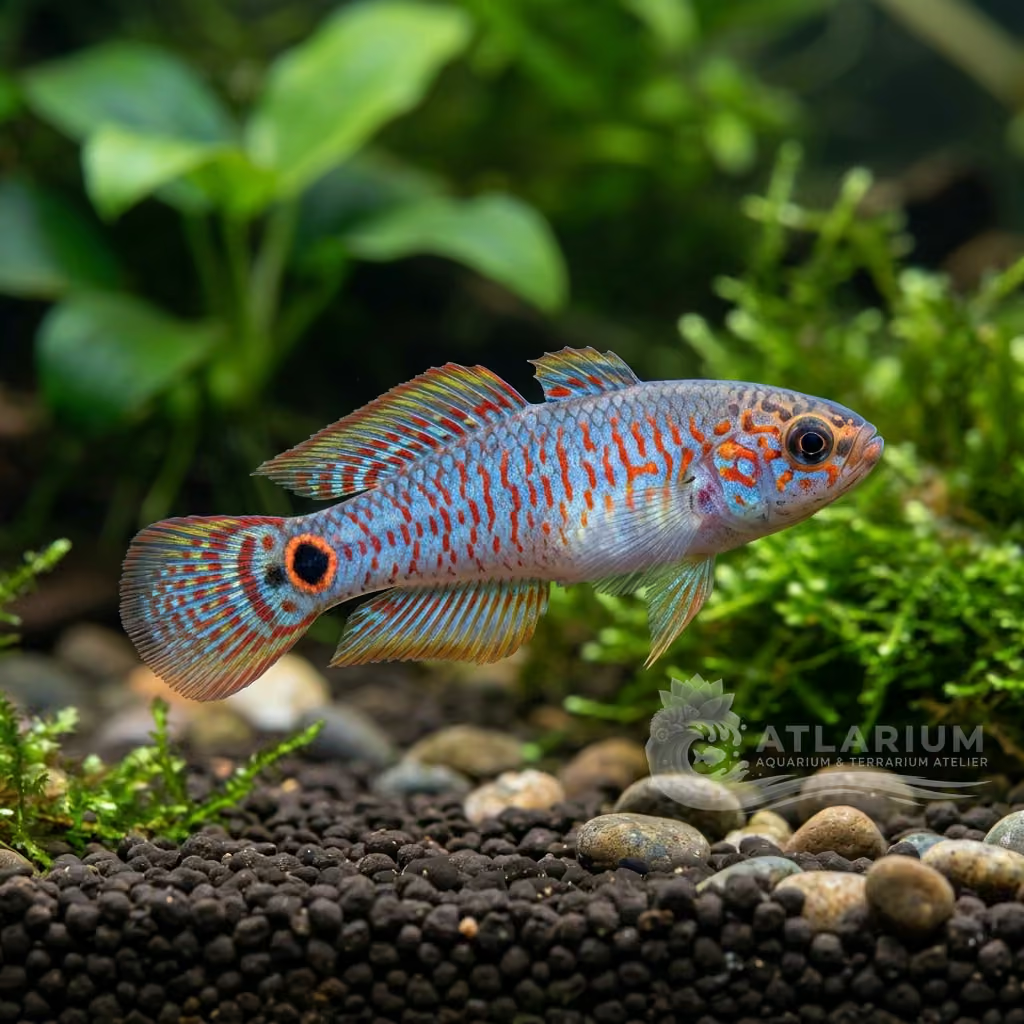
Coloration and Sexual Dimorphism: Nuptial males are among the most beautiful coldwater cyprinids: brilliant iridescent pink flanks, dark olive back, reddened fins, and white keratinized nuptial tubercles on the mouth. Females are silvery with a long tubular ovipositor protruding from the cloaca.

Pflege, Zucht und Mitbewohner
Aquarium Setup: Unheated aquarium or outdoor pond. Fine sand or compact silt substrate for bivalves to burrow. Dense vegetation (Hornwort, Elodea, Vallisneria). Moderate lighting and gentle filtration.
Diet and Feeding: Small-sized opportunistic omnivore. Feeds on microalgae, biofilm, small invertebrates, and detritus. Accepts flakes readily, but nuptial colors require frozen supplements and blanched vegetables.
Water Quality: Coldwater fish: ideal 15-22°C. Above 25°C it suffers thermal stress. Neutral to slightly alkaline pH (7.0-8.0), medium-high hardness. Not tolerant of ammonia spikes.
Compatibility and Cohabitation: Ideal with other coldwater cyprinids: White Clouds, small Goldfish. Never pair with tropical aggressors. Cohabitation with live bivalves is mandatory for breeding but complex: mussels need suspended particulate food or they starve.
Aquarium Breeding: The species' heart. The female inserts her ovipositor into the mussel's siphon, depositing eggs in the branchial chamber. Eggs develop safely for 3-4 weeks, nourished by water filtered by the mussel. In return, mussel larvae (glochidia) attach to the fish's gills for dispersal: a perfect mutualistic symbiosis.
Risks and Diseases: The primary risk is bivalve death: if the mussel dies (from starvation, heat, or poor oxygenation), its decomposition releases a toxic mass of ammonia capable of wiping out the entire tank in hours. Monitor mussels with extreme care.

Geografische Herkunft und Verbreitung
Found in quiet lakes, ponds, and irrigation canals across East Asia. Prefers shallow, slow waters rich in submerged vegetation with muddy bottoms where colonies of large freshwater bivalves (Unionidae) thrive.
Ursprung
Tropische Ozeane und RiffeNordamerikaEuropa, Mittelmeerraum und WestasienOstasien

Fischprofil
- Temperament
- Semi-aggressive
- They have a peaceful and active schooling temperament. They are an excellent choice for a temperate biotope aquarium. They are hardy, undemanding, and provide beautiful flashes of color.
- Diät
- Omnivore
- They are omnivores that feed on algae, detritus, and small invertebrates in the wild. In the aquarium, they happily accept high-quality flakes, small pellets, and spirulina. Regular feedings of live or frozen daphnia and bloodworms are highly appreciated.
- Lebenserwartung
- 3-5 years
- Erwachsenengröße
- 8 cm
- Geschlechterverhältnis
- School
- Keeping them in schools of six or more is highly recommended. Males develop stunning, vibrant colors during the breeding season to attract females. An even mix of males and females allows for natural social interactions.
- Fütterungsfrequenz
- Twice daily
- Feeding them small meals twice a day is optimal for their health. They are enthusiastic eaters that forage in the middle and bottom layers. Ensure no uneaten food remains after a few minutes.
- Bioload
- Medium
- The Rosy Bitterling produces a moderate bioload for a small fish. They are hardy and adaptable to various water conditions. A standard power filter and regular partial water changes are sufficient to maintain good water quality.
- Fluss
- Stagnant
- They naturally inhabit still or slow-moving waters like ponds and sluggish rivers. They prefer gentle to moderate filtration that does not create strong currents. Overly turbulent water will cause them to hide and become stressed.
- Sprungrisiko
- Yes
- They are not particularly prone to jumping, but a lid is always recommended. Startling them with sudden movements or turning lights on abruptly can cause them to dart upwards. A secure cover prevents any accidental losses.
- Reproduktion
- Oviparous
- Their breeding method is highly unique, requiring the presence of live freshwater mussels. The female uses a long ovipositor to deposit eggs inside the mussel's gills, where they hatch. Providing freshwater mussels is absolutely essential if breeding is desired.
- Kompatibilität & Tankkameraden
- Peaceful
- They are very peaceful and do well in unheated community aquariums or indoor ponds. Good tank mates include weather loaches, white cloud mountain minnows, and other temperate species. Tropical species requiring high temperatures should be avoided.
- Tankfüllstand
- Middle/Bottom
- They are active primarily in the middle and lower levels of the water column. They enjoy tanks with dense planting and ample open swimming space. They frequently investigate the substrate for leftover food.

Wissenschaftliche Modelle & Parameter
FishBase
Zugang zu den offiziellen wissenschaftlichen Daten der Art
FishBase v25.04Daten synchronisiert am: 15.06.2026
- Trophäenniveau
- 2,5 ± 0,2 se
- Belastbarkeit
- Mittel (1,4 - 4,4 Jahre)
- Generierungszeit
- 1,3 Jahre
- Phylogenetische Einzigartigkeit (PD50)
- 0.5
- Bayessche Längen-Gewichts-Beziehung
- a = 0.01148, b = 3.11
- AnfälligkeitGeringe Anfälligkeit (16 / 100)

Verwandte Arten
Empfehlungen gruppiert nach nahen Verwandten, Auswahl von Begleitern und ähnlicher Betreuung.