Barred Mudskipper
Periophthalmus argentilineatus
A fascinating amphibious fish from Indo-Pacific mangroves, featuring silvery spots and unique land-walking abilities. It demands a specialized brackish paludarium with a securely sealed, humid lid.
Wassertemperatur
24 - 30 °C
pH-Wert
7.5 - 8.5
Wassertyp
Brackwasser
Tankfüllstand
Unten
Erwachsenengröße
12 cm
Mindesttankvolumen
>= 150 L
Mindestgruppe
>= 1

Artbeschreibung
Geographical Origin and Habitat:
Periophthalmus argentilineatus is widely distributed throughout the tropical Indo-Pacific, from East Africa to Samoa and the northern coasts of Australia. It inhabits mangrove swamps, estuaries, and tidal mudflats, where salinity varies and muddy shorelines are exposed daily.
Taxonomy and Morphology:
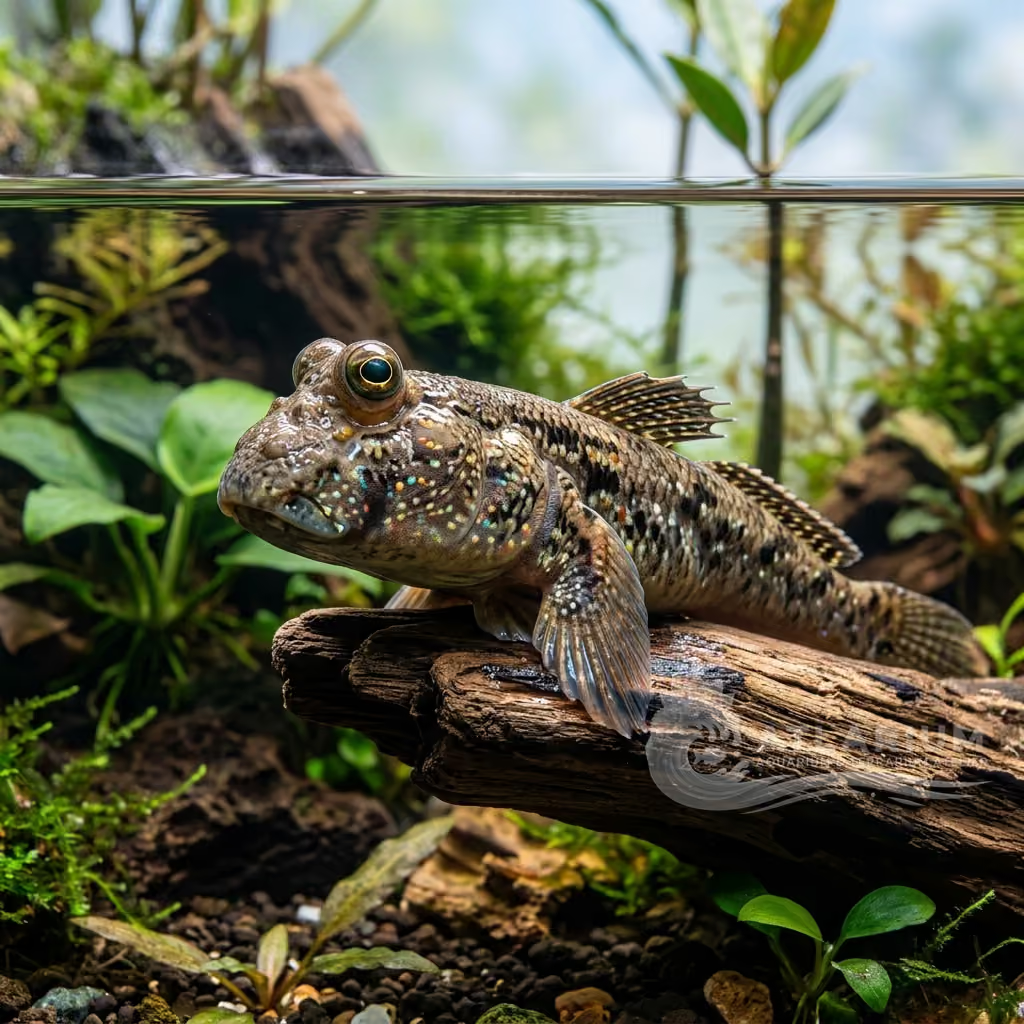
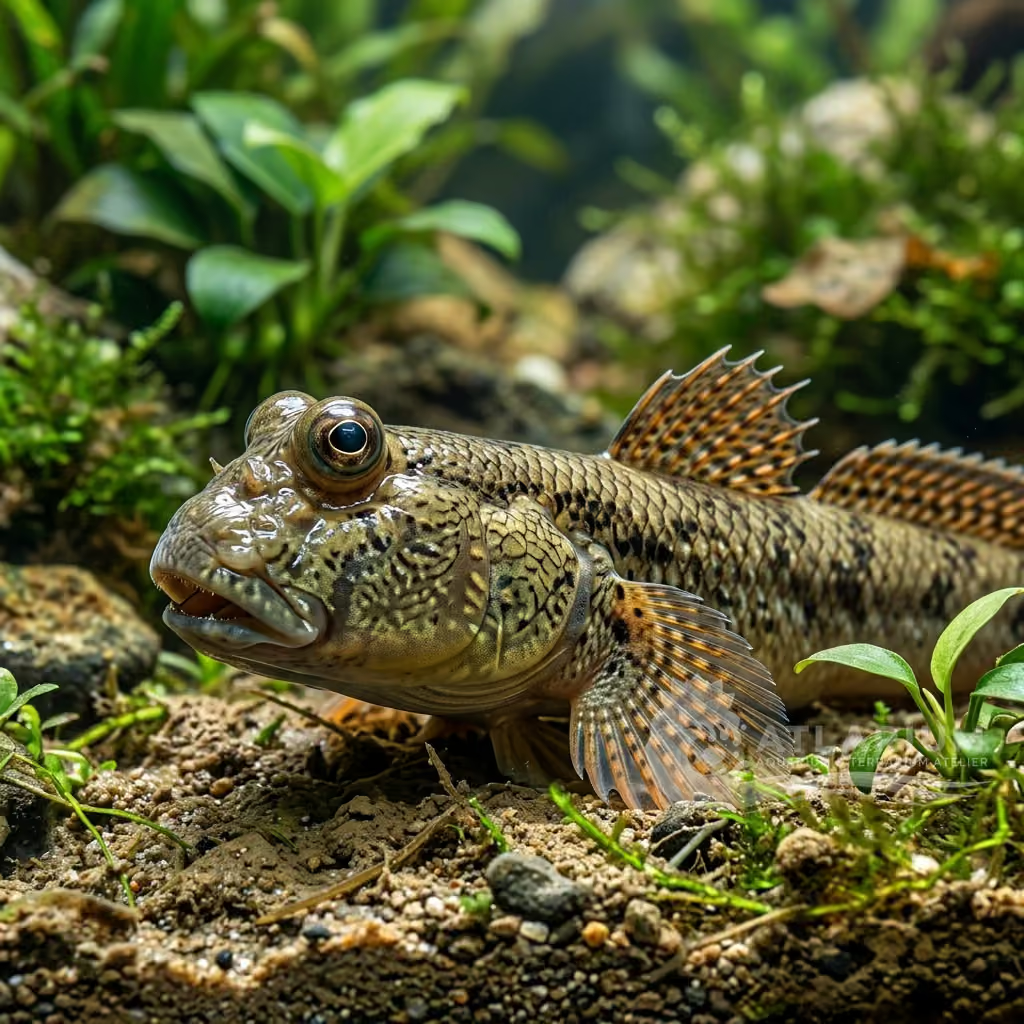
Belongs to the family Gobiidae. It has specialized pectoral fins with limb-like joints that allow it to walk on land. Its eyes are positioned high on the head for panoramic vision. Gills are adapted to retain water, allowing it to breathe air when damp.
Social Behavior:
Highly territorial and aggressive, especially towards rival males. They defend their mud territories with threat displays, raising their dorsal fins. Not suitable for community environments unless significant land space is provided.
Coloration and Sexual Dimorphism:
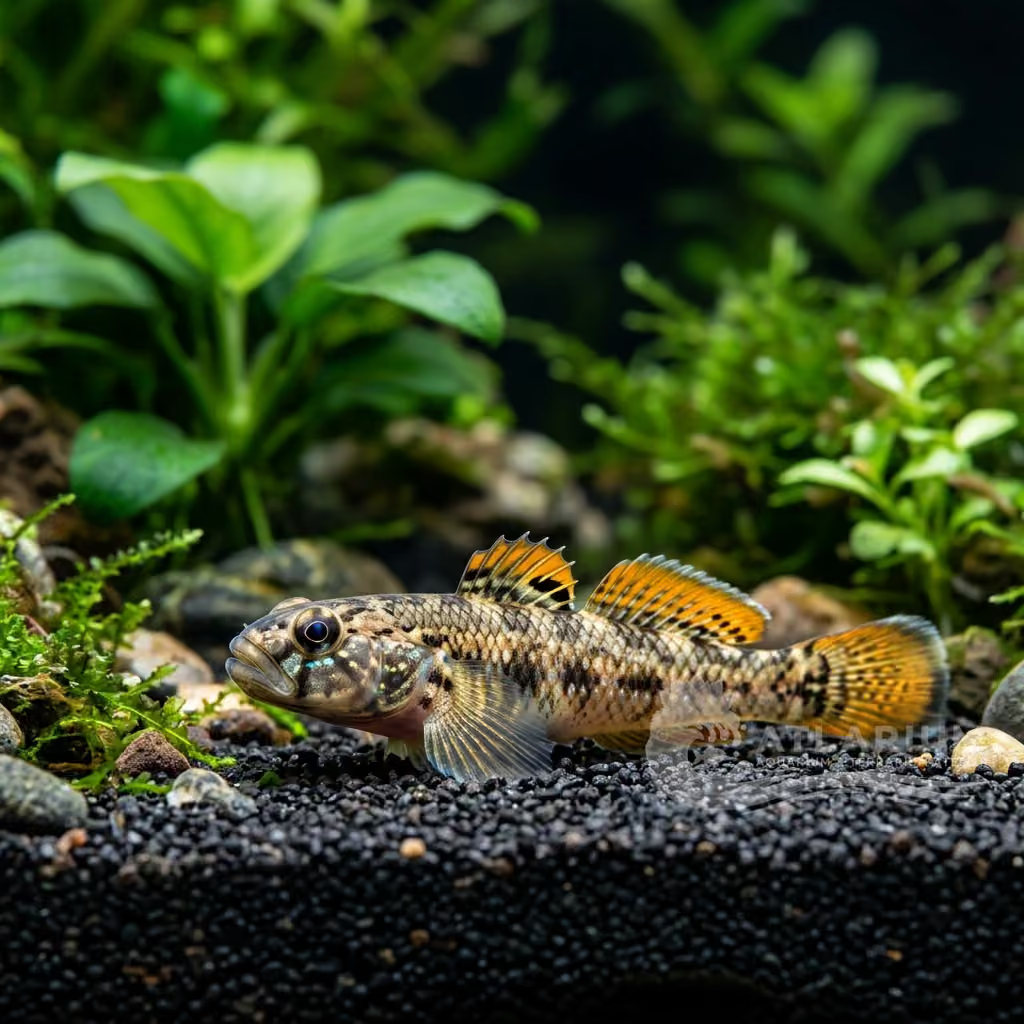
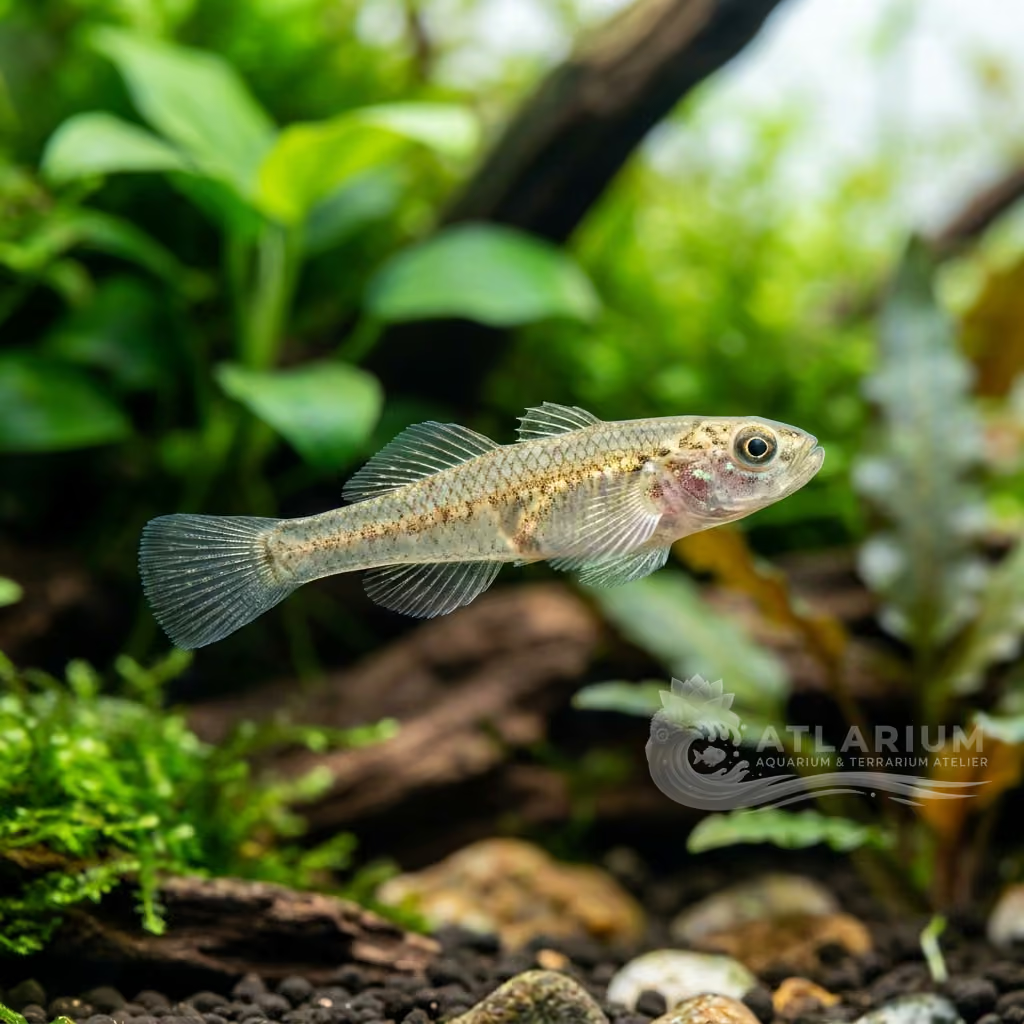
Body is grayish-brown with dark vertical bars and silvery-white spots along the flanks. The dorsal fins are colorful with dark margins. Males are generally more colorful and showy than females, especially during breeding displays.

Pflege, Zucht und Mitbewohner
Aquarium Setup:
Must be housed in a specialized paludarium (aquaterrarium) with a land area consisting of sand, mud, or rocks, and a shallow brackish water section. Include roots or branches for climbing. A tight-fitting lid is mandatory to maintain humidity and prevent escapes.
Diet and Feeding:
Carnivorous, hunting primarily on land. Feed live insects like small crickets, fruit flies, and mealworms. Frozen foods can be offered using tweezers on the land zone. They will rarely consume standard dry fish food.
Water Quality:
Water must be brackish, with specific gravity between 1.005 and 1.015 using marine salt. Keep water and air temperature between 24 and 30 °C, and pH between 7.5 and 8.5. Good filtration is necessary to process waste.
Compatibility and Cohabitation:
Best kept in a species-only setup. They will prey on any small fish or invertebrates. Multiple mudskippers can cohabitate only if the enclosure is very large with plenty of visual barriers to establish territories.
Aquarium Breeding:
Breeding in home aquariums is virtually impossible. In nature, they dig deep, complex burrows in the mud where eggs are deposited in specialized air-filled chambers, which cannot be easily simulated in captivity.
Risks and Diseases:
Dehydration is the biggest risk if air humidity drops. Bacterial and fungal infections of the skin can occur if substrate hygiene is poor. The tank must be tightly sealed to prevent escape and preserve high humidity.

Geografische Herkunft und Verbreitung
Periophthalmus argentilineatus is widely distributed throughout the tropical Indo-Pacific, from East Africa to Samoa and the northern coasts of Australia. It inhabits mangrove swamps, estuaries, and tidal mudflats, where salinity varies and muddy shorelines are exposed daily.
Ursprung
Tropische Ozeane und RiffeAfrika und MadagaskarOstasienAustralien, Neuguinea und Ozeanien

Fischprofil
- Temperament
- Aggressive
- They are highly territorial, especially the males. Fights can result in injury if space is limited. They are very alert and interactive with their owners.
- Diät
- Carnivore
- They prey heavily on small invertebrates and insects. Live crickets and small worms are eagerly accepted. Frozen meaty foods can be offered using tongs.
- Lebenserwartung
- 5-8 years
- Erwachsenengröße
- 12 cm
- Geschlechterverhältnis
- Flexible
- A single male can be housed with several females. Multiple males will engage in fierce territorial disputes. If keeping multiple males, the footprint must be enormous.
- Fütterungsfrequenz
- Twice daily
- Daily feeding is recommended to maintain their energy. They actively hunt on the land portion of the tank. Ensure all food items are appropriately sized.
- Bioload
- Medium
- The bioload is minimal to moderate. The semi-aquatic setup requires regular water changes. Spot cleaning the land section is crucial for hygiene.
- Fluss
- Strong
- Gentle water movement is required in the aquatic zone. Strong currents are unnatural and stressful for them. Shallow, still pools simulate their mangrove habitats perfectly.
- Sprungrisiko
- Yes
- They are incredible acrobats capable of jumping significant distances. They also use surface tension to skip across the water. A tight-fitting, secure lid is mandatory to prevent escape.
- Reproduktion
- Oviparous
- Reproducing them in captivity has rarely been documented. The natural process involves complex mud burrows in tidal zones. Mimicking tidal fluctuations is difficult in a home aquarium.
- Kompatibilität & Tankkameraden
- Species only
- Best kept with their own kind in a large paludarium. Aquatic fish are not suitable companions. Small fiddler crabs might be tolerated if the tank is huge.
- Tankfüllstand
- Bottom
- They are amphibious and need both land and water. They spend most of their time basking on exposed surfaces. Deep water is unnecessary and can be dangerous.

Wissenschaftliche Modelle & Parameter
FishBase
Zugang zu den offiziellen wissenschaftlichen Daten der Art
FishBase v25.04Daten synchronisiert am: 15.06.2026
- Trophäenniveau
- 3,3 ± 0,4 se
- Belastbarkeit
- Hoch (weniger als 15 Monate)
- Phylogenetische Einzigartigkeit (PD50)
- 0.5
- Bayessche Längen-Gewichts-Beziehung
- a = 0.01096, b = 2.97
- AnfälligkeitGeringe Anfälligkeit (10 / 100)

Verwandte Arten
Empfehlungen gruppiert nach nahen Verwandten, Auswahl von Begleitern und ähnlicher Betreuung.