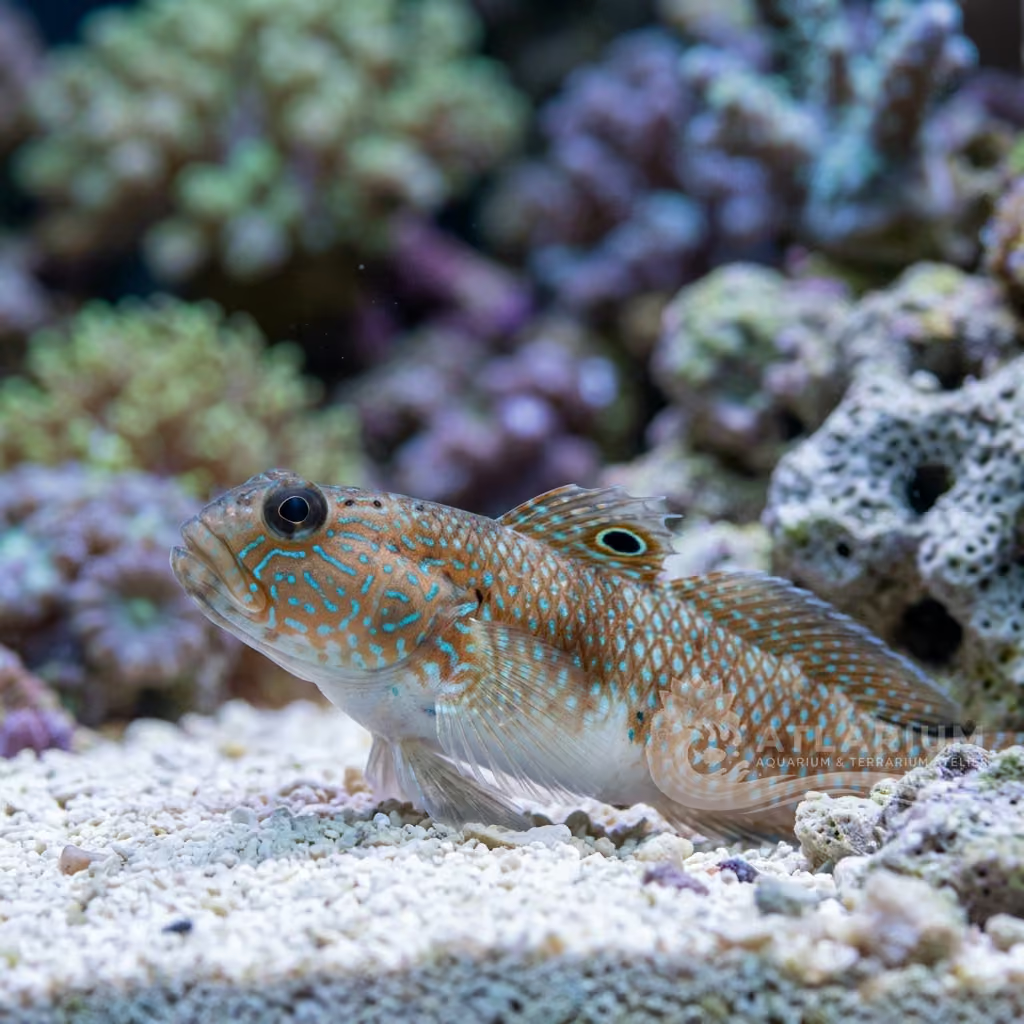
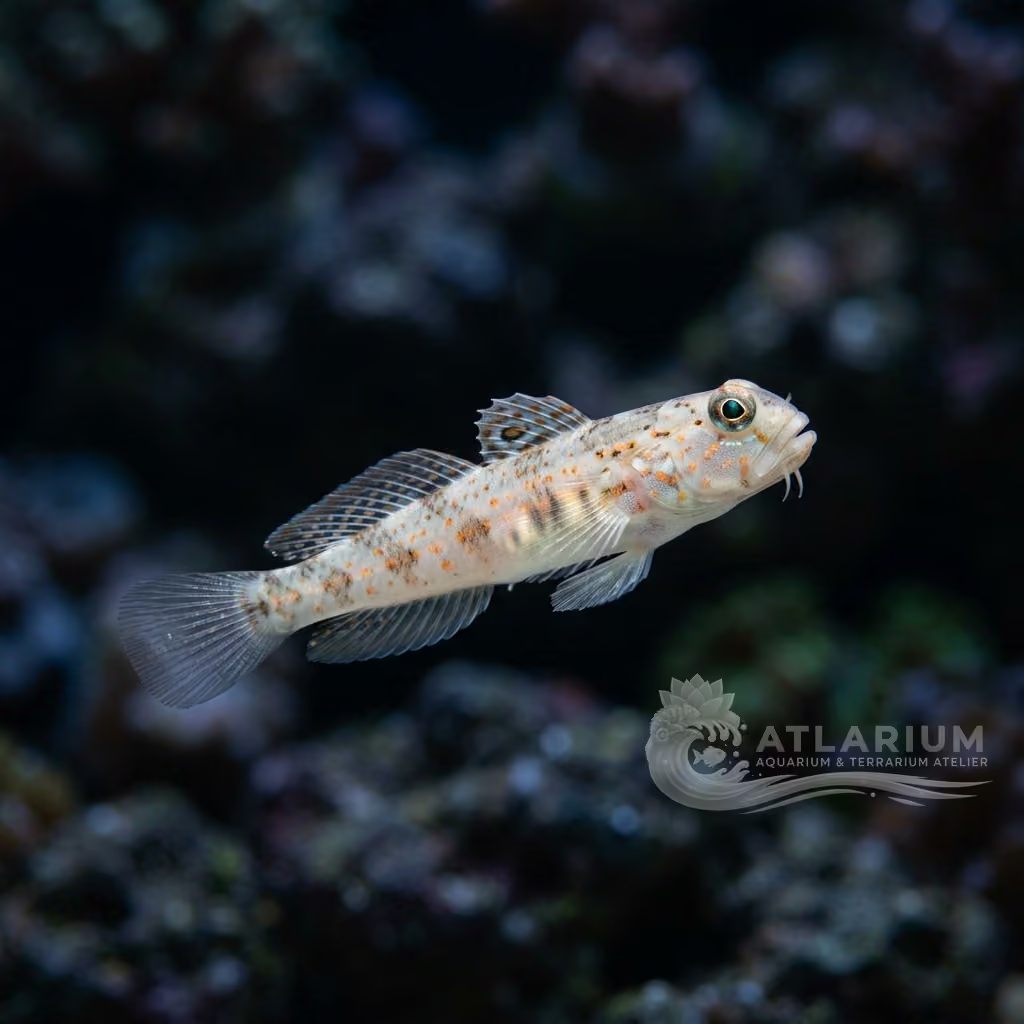
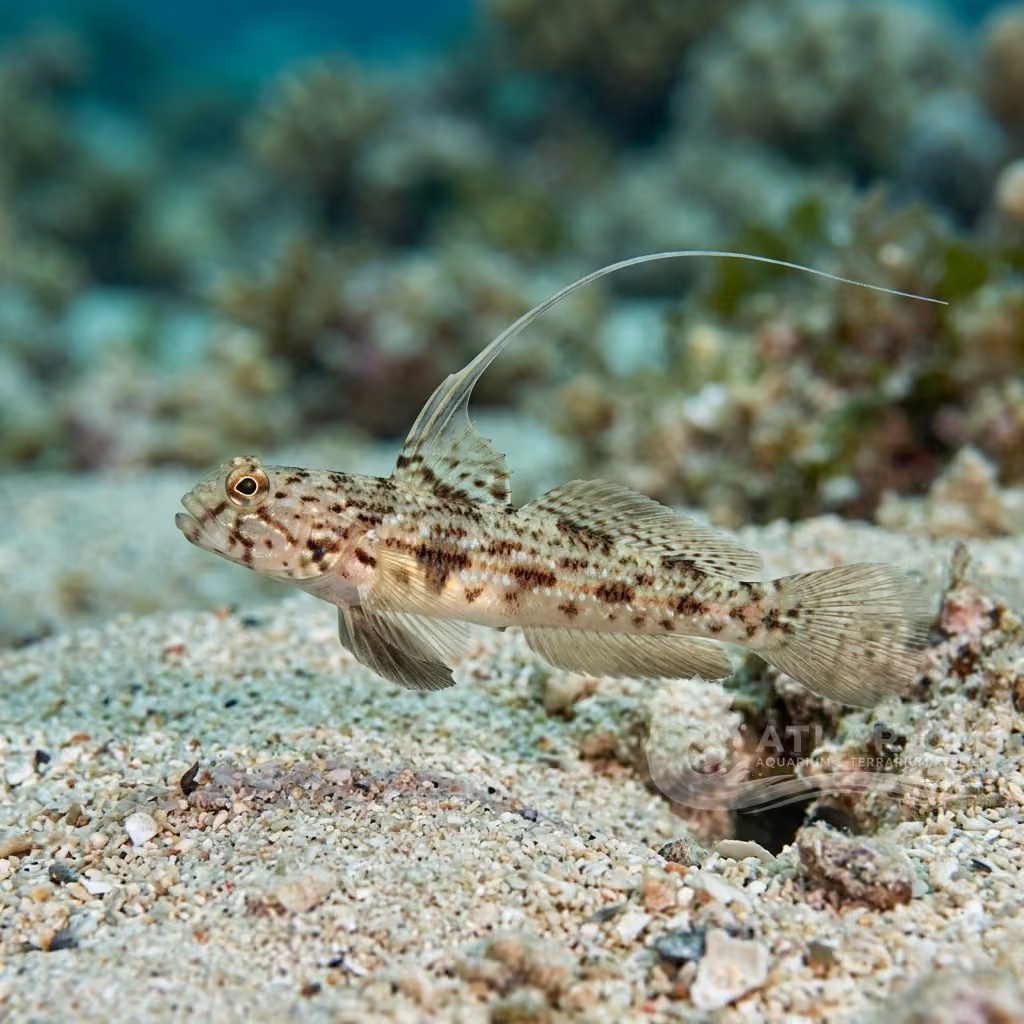
Decorated Sleeper Goby
Valenciennea decora
The decorated sleeper goby sifts fine sand for benthic prey. It requires a 150L tank with a deep, soft substrate to prevent mouth damage and burrow collapses.
Température de l’eau
22 - 26 °C
Valeur du pH
8.1 - 8.4
Type d'eau
Marin
Niveau dans le bac
Fond
Taille adulte
12 cm
Volume minimal du bac
>= 120 L
Groupe minimal
>= 1
KH
8 - 12 dKH

Description de l'espèce
Geographical Origin and Habitat: Valenciennea decora, commonly known as the decorated sleeper goby or decorated glidergoby, is native to the tropical Western Pacific Ocean, specifically recorded from the Great Barrier Reef, New Caledonia, the Solomon Islands, and the Philippines. It inhabits clean sandy areas, coastal slopes, and sheltered lagoons at depths ranging from 2 to 30 meters, typically found near rocky rubble or live coral heads that provide foundations for its burrows.
Taxonomy and Morphology: It belongs to the Gobiidae family and the Valenciennea genus. It features an elongated, cylindrical, and tapered body shape, reaching a maximum total length of approximately 12 to 14 centimeters. It has high-set eyes and a large, downward-facing mouth adapted specifically for scooping and sifting large quantities of sand. It possesses two well-developed dorsal fins.
Social Behavior: This is a peaceful and monogamous species. They almost always live in pairs, excavating and sharing a burrow beneath live rocks or coral structures. They spend their time hovering just above the substrate (hence the name 'glider goby') and sifting sand. The pair coordinates closely, working together to maintain their tunnel system and defend it from small intruders.
Coloration and Sexual Dimorphism: The body coloration is elegant, with a creamy-white or light grey base color marked by distinctive orange, yellow, or reddish longitudinal stripes, and bright iridescent blue lines along the head and cheeks. The fins feature decorative spotting. Sexual dimorphism is minimal; mature males may display slightly elongated and pointed filaments on the first dorsal fin.

Soins, reproduction et cohabitation
Aquarium Setup: Requires a mature marine aquarium of at least 150 liters (approx. 40 gallons) for a single specimen or a pair. The most critical requirement is a deep, fine sand bed (at least 5-8 centimeters deep); coarse coral rubble should be avoided to prevent damage to their mouths. Ensure that the live rock structure is placed directly on the bottom glass, as their burrowing activity can undermine and collapse unstable rocks.
Diet and Feeding: It feeds by sifting sand through its gills to extract small crustaceans, worms, and benthic organisms. In captivity, a standard sand bed rarely provides enough food long-term. They must be fed multiple times daily with high-quality frozen foods like mysis shrimp, brine shrimp, copepods, and chopped table shrimp. Sinking pellets can be offered once acclimated.
Water Quality: Requires clean, stable water conditions: temperature 24-27°C, pH 8.1-8.4, and specific gravity 1.023-1.025. They are sensitive to high nitrates and low oxygen levels. A high-performance protein skimmer and efficient mechanical filtration are necessary to clear the suspended particulates raised by their constant sand-sifting behavior.
Compatibility and Cohabitation: An excellent, peaceful utility fish that helps keep the sand bed clean and aerated. It will not harm corals or sessile invertebrates. House with peaceful tankmates. Avoid housing with large, aggressive bottom-dwellers (such as large dottybacks or territorial wrasses) or large predators. Do not keep multiple males or unpaired individuals together as they will fight.
Aquarium Breeding: Spawning in captivity is possible, but raising the fry is extremely challenging. The pair deposits adhesive eggs on the roof of their burrow. The male guards and fans the clutch until hatch. The hatched larvae enter a planktonic phase and require microscopic live foods (rotifers and green water) in a separate, darkened rearing tank.
Risks and Diseases: The primary risk is starvation (chronic emaciation) if the aquarium is too sterile, newly established, or if they fail to accept prepared frozen foods. Because they are easily startled and are active diggers, a tight-fitting lid is mandatory to prevent them from jumping out. They are susceptible to skin parasites if stressed or malnourished.

Origine et répartition géographiques
Valenciennea decora, commonly known as the decorated sleeper goby or decorated glidergoby, is native to the tropical Western Pacific Ocean, specifically recorded from the Great Barrier Reef, New Caledonia, the Solomon Islands, and the Philippines. It inhabits clean sandy areas, coastal slopes, and sheltered lagoons at depths ranging from 2 to 30 meters, typically found near rocky rubble or live coral heads that provide foundations for its burrows.
Origine
Cosmopolite ou introduitAsie du Sud et du Sud-EstAsie de l'EstAustralie, Nouvelle-Guinée et OcéanieOcéans tropicaux et récifs

Profil de poisson
- Tempérament
- Peaceful
- Behaviorally, the Decorated Goby is characterized as being peaceful but territorial over burrows. They exhibit fascinating social dynamics that can be a true joy to observe in a well-planned display. While generally agreeable, unexpected aggression can sometimes occur if their fundamental environmental needs are not met. Providing adequate hiding spots and sufficient swimming space will go a long way in ensuring their temperament remains calm and manageable.
- Régime alimentaire
- Carnivore
- Feeding the Decorated Goby properly requires acknowledging its natural role as a benthic carnivorous. A staple diet of premium flakes or pellets should be supplemented with nutrient-rich treats to replicate natural foraging. It is advisable to soak dry foods beforehand to prevent digestive issues and swim bladder complications. Consistently offering a diverse menu will significantly boost their immune system and overall vitality.
- Espérance de vie
- 3-5 years
- Taille adulte
- 12 cm
- Ratio des sexes
- Flexible
- To prevent undue stress, it is recommended to keep the Decorated Goby in a carefully managed sex ratio. Providing more females than males reduces the constant harassment that a single female might endure. If keeping multiple males, the aquarium must be sufficiently large to allow for the establishment of distinct territories. Careful observation during the first few weeks will dictate if any aggressive individuals need to be rehomed.
- Fréquence d'alimentation
- 3-4 times daily
- To mimic its natural foraging behavior, the Decorated Goby should be fed small portions two to three times a day. Overfeeding can lead to severe health issues and quickly degrade the water quality. It is crucial to only provide an amount of food that the fish can consume within a few minutes. Adjusting the feeding frequency based on the fish's age and activity level is a best practice for long-term care.
- Charge biologique
- Medium
- Maintaining this marine species requires understanding its moderate bioload profile. The Decorated Goby will thrive when the filtration system is carefully matched to its specific waste production. Frequent testing of the water chemistry is highly recommended to ensure no dangerous spikes occur. Excellent water quality is the foundation for preventing disease and promoting a vibrant, active fish.
- Courant
- Strong
- Providing a moderate current is highly recommended for the overall well-being of the Decorated Goby. Adequate water circulation not only mimics their natural ecosystem but also ensures high dissolved oxygen levels throughout the aquarium. Hobbyists should avoid creating localized dead spots where debris might accumulate. Adjusting the filtration output angle can help achieve the perfect balance between steady circulation and calm resting areas.
- Risque de saut
- Yes
- Due to its energetic nature, the Decorated Goby carries a high probability of jumping out of an open-top aquarium. It is highly advised to secure the perimeter of the tank with a glass canopy or custom netting. Instances of leaping often happen at night or during sudden lighting changes, making a gentle sunrise/sunset lighting schedule beneficial. Maintaining exceptional water quality further discourages attempts to escape the enclosure.
- Reproduction
- Oviparous
- The reproductive strategy of the Decorated Goby involves being a cave spawner. Breeding this species in captivity can be a rewarding challenge that requires dedicated conditioning of the broodstock. Specific triggers such as changes in temperature, diet, or water chemistry are often necessary to induce spawning. Once breeding occurs, specialized care for the fry, including appropriately sized live foods, is critical for their survival and development.
- Compatibilité et compagnons
- Peaceful
- When considering tankmates, the Decorated Goby is generally considered good sand sifter for reef tanks. It is important to avoid housing them with overly aggressive or large predatory fish that could bully them or outcompete them for food. Careful observation during the initial introduction period is highly recommended to ensure harmony within the community. Selecting species that occupy different levels of the water column can further reduce territorial disputes.
- Niveau dans le bac
- Bottom
- This species is predominantly a bottom dweller within the aquarium setup. Providing the appropriate spatial layout with open swimming areas or dense vegetation where they feel secure is highly beneficial. By understanding their preferred depth, aquarists can carefully select complementary species that occupy other regions of the tank. This spatial separation helps to reduce competition for food and minimizes unnecessary territorial disputes.

Modèles et paramètres scientifiques
FishBase
Fenêtre sur les données scientifiques officielles de l’espèce
FishBase v25.04Données synchronisées le : 15/06/2026
- Niveau trophique
- 3,2 ± 0,3 se
- Résilience
- Élevée (moins de 15 mois)
- Singularité phylogénétique (PD50)
- 0.5
- Relation bayésienne longueur-poids
- a = 0.00741, b = 3.09
- VulnérabilitéVulnérabilité faible (10 / 100)

Espèces associées
Recommandations regroupées par proches parents, compagnons et soins similaires.