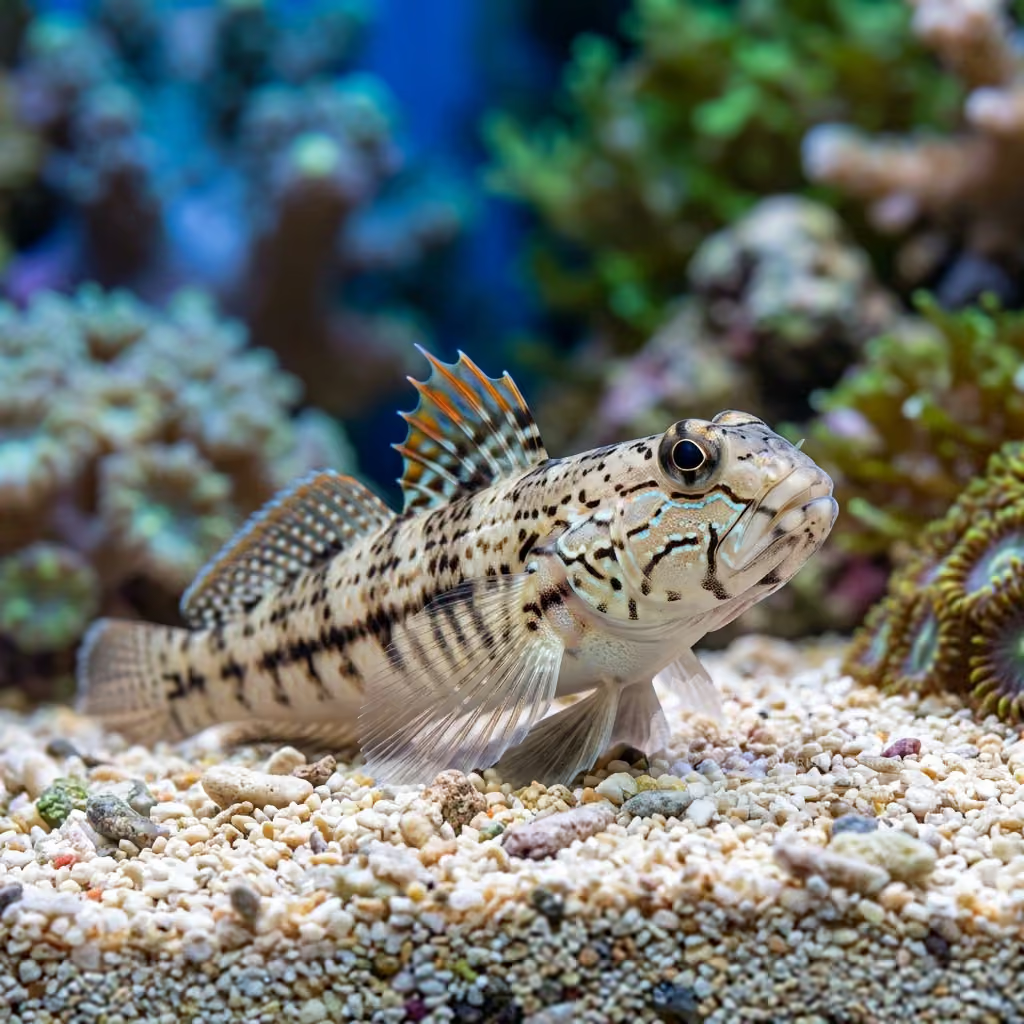
Orange-spotted Prawn-goby
Amblyeleotris guttata
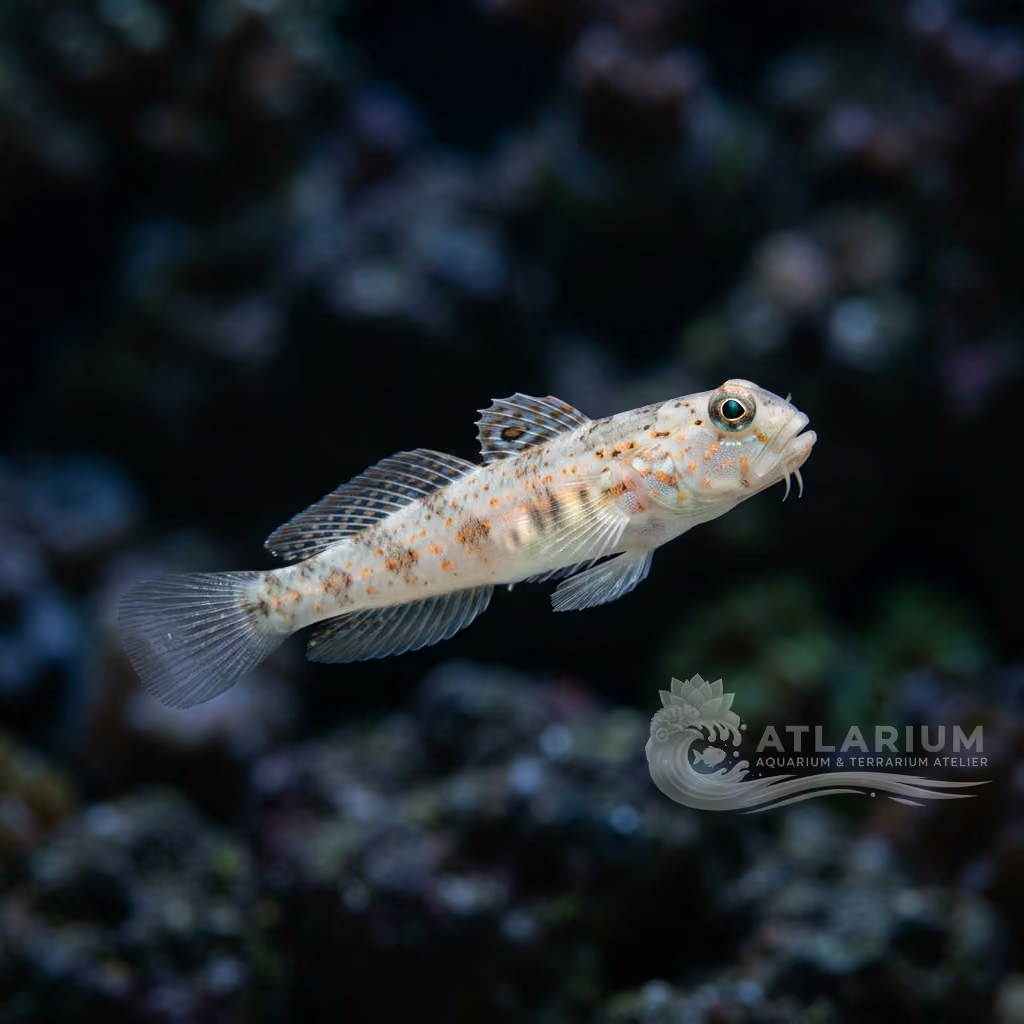
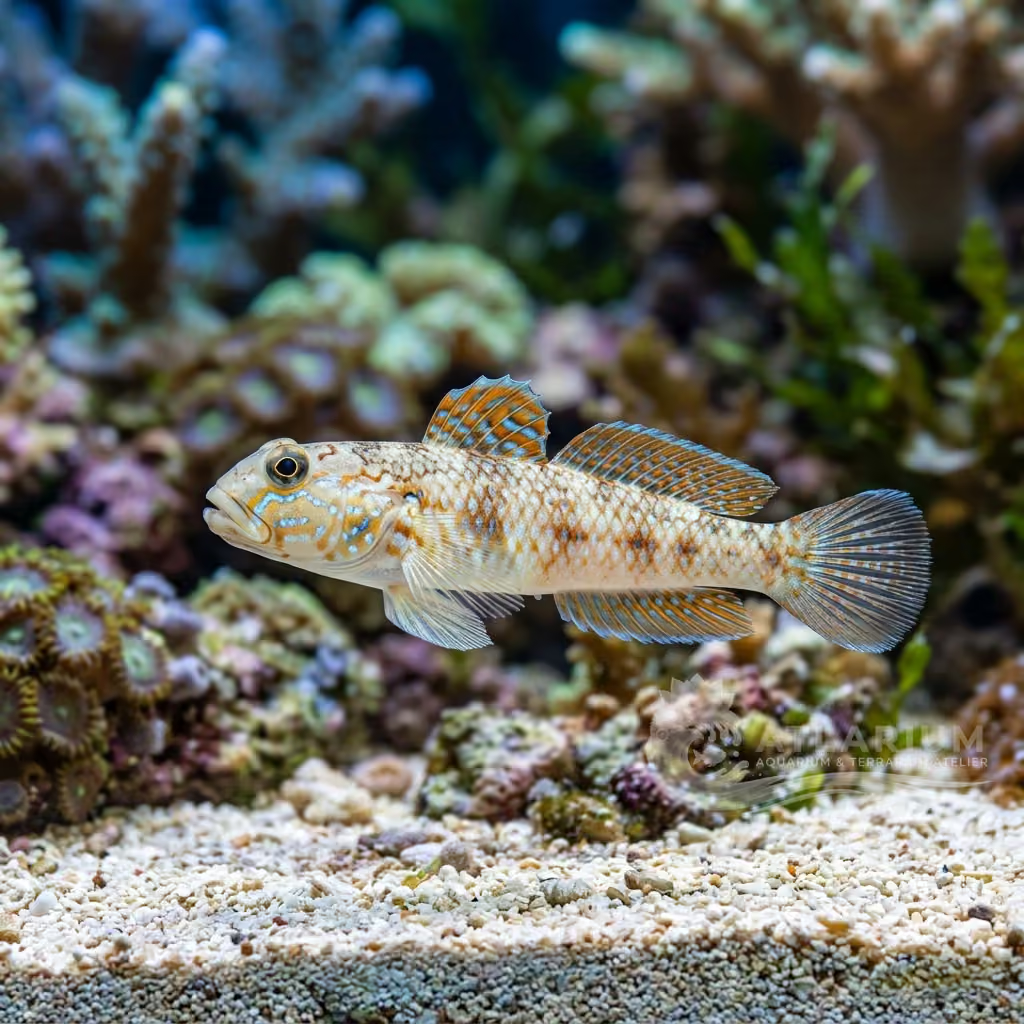
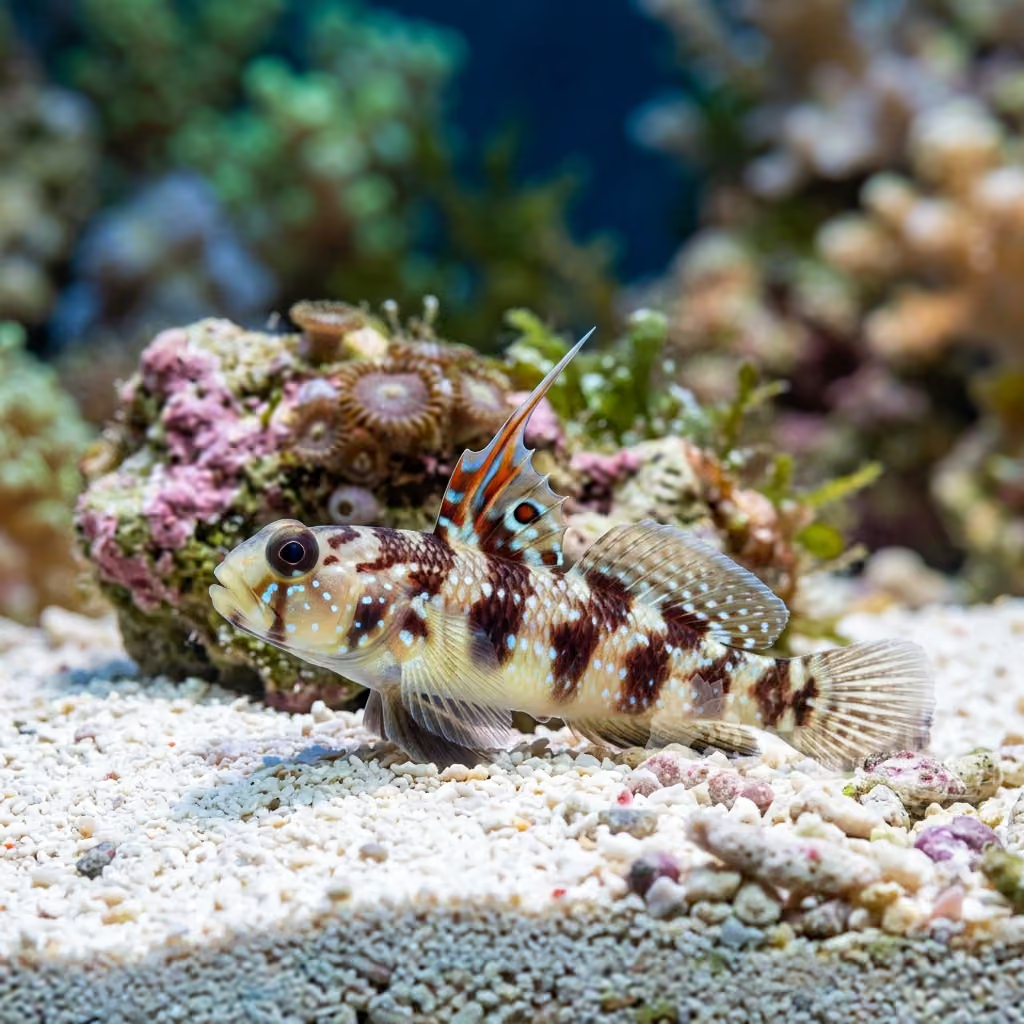
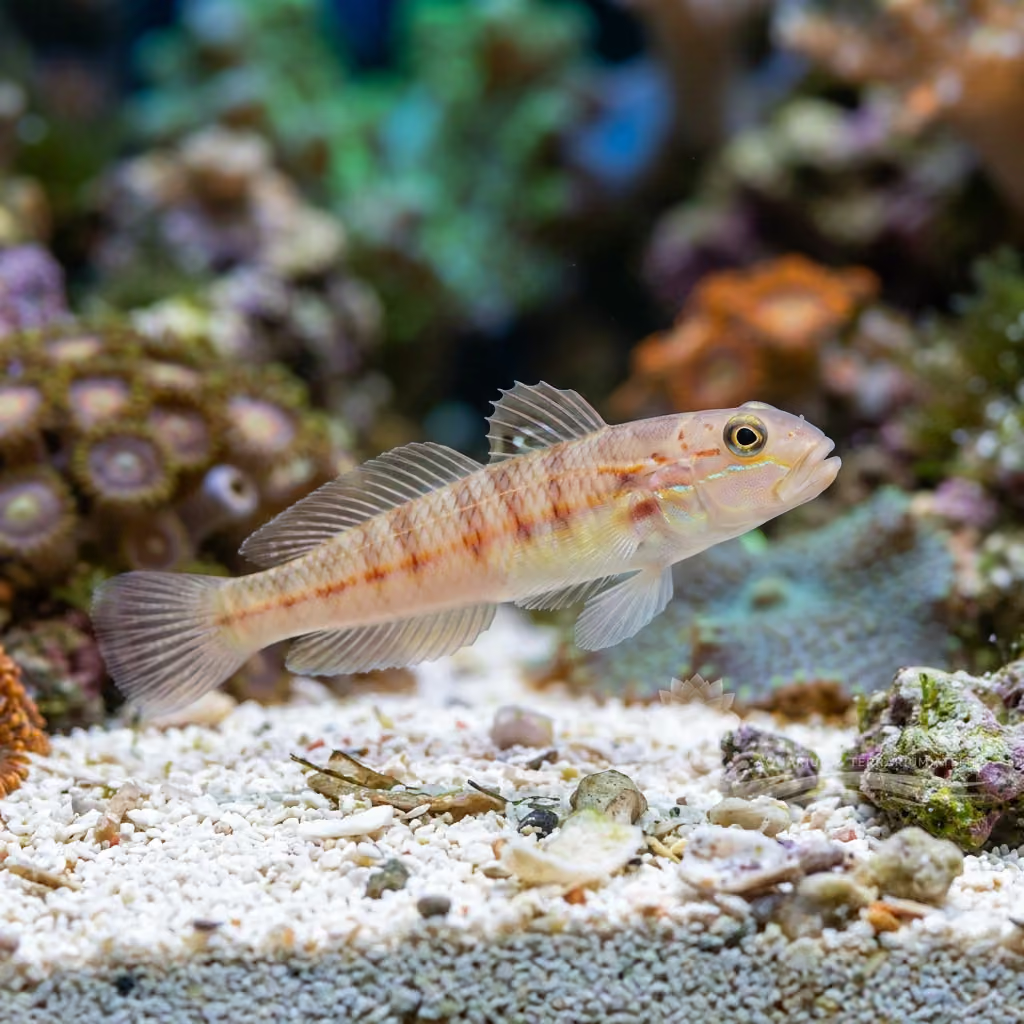
The spotted shrimpgoby adapts perfectly to sandy lagoons and channels in the Western Indo-Pacific. It features protruding eyes and a slender body adapted for sifting sand.
Température de l’eau
22 - 27 °C
Valeur du pH
8.1 - 8.4
Type d'eau
Marin
Niveau dans le bac
Fond
Taille adulte
9 cm
Volume minimal du bac
>= 110 L
Groupe minimal
>= 1
KH
8 - 12 dKH

Description de l'espèce
Geographical Origin and Habitat: Western Indo-Pacific: widely distributed from the coasts of Indonesia, the Philippines, and Taiwan to the Great Barrier Reef, New Caledonia, and the Tonga Islands. It inhabits sandy and muddy bottoms of protected inland lagoons and outer reef slopes, down to about 30 meters deep. It is perfectly adapted to sandy channels.
Taxonomy and Morphology: Belongs to the family Gobiidae, subfamily Gobiinae, genus Amblyeleotris. It has a slender and elongated body that can reach a maximum length of about 11 centimeters in adulthood. It features large, protruding eyes oriented upwards and a wide mouth equipped with small sharp conical teeth.
Social Behavior: This species lives in close mutualistic symbiosis with snapping shrimps of the family Alpheidae (typically Alpheus bellulus or Alpheus ochrostriatus). The shrimp digs and maintains the shared burrow in the sand, while the goby acts as a lookout, warning the shrimp of danger with quick tail flicks.
Coloration and Sexual Dimorphism: Light greyish-white body covered with numerous circular spots of bright orange or orange-brown distributed uniformly. The dorsal fins feature dark shading with orange dots, and the anal fin has a characteristic black band. Sexual dimorphism is not prominent.

Soins, reproduction et cohabitation
Aquarium Setup: Requires an aquarium of at least 80 liters equipped with a fine sand or aragonite substrate mixed with small pebbles, with a minimum depth of 5-7 centimeters to allow the associated shrimp to dig its burrow. Stable live rocks must be placed directly on the glass bottom to prevent collapses due to digging.
Diet and Feeding: Carnivorous. In nature, it feeds on small benthic crustaceans and zooplankton drifting near the burrow. In the aquarium, it must be fed small frozen foods such as brine shrimp, mysis, copepods, and dry granular or flake foods. Food should be released near its burrow.
Water Quality: Typical parameters of a tropical marine aquarium: temperature between 24 and 27 °C, stable pH between 8.1 and 8.4, and constant water density of 1.020-1.025. It requires moderate water movement and good biological filtration to keep nitrogenous compounds low.
Compatibility and Cohabitation: Very peaceful with all other fish species and invertebrates. It is highly recommended to house it in a pair with its symbiotic Alpheus shrimp. Avoid housing with large and predatory fish (such as groupers or lionfish) and with other territorial benthic gobies to prevent conflicts over the burrow.
Aquarium Breeding: Oviparous reproduction. Spawning takes place inside the burrow dug by the shrimp. The pair defends the clutch, but there are no known cases of controlled breeding in the aquarium hobby with rearing of the young due to the complexity of feeding the planktonic larvae.
Risks and Diseases: The main risk is starvation if tankmates are too fast and consume the food before it reaches the bottom. If startled, the fish can jump out of the tank, making the use of a protective net or lid on the aquarium mandatory.

Origine et répartition géographiques
Western Indo-Pacific: widely distributed from the coasts of Indonesia, the Philippines, and Taiwan to the Great Barrier Reef, New Caledonia, and the Tonga Islands. It inhabits sandy and muddy bottoms of protected inland lagoons and outer reef slopes, down to about 30 meters deep. It is perfectly adapted to sandy channels.
Origine
Océans tropicaux et récifsAsie du Sud et du Sud-EstAsie de l'EstAustralie, Nouvelle-Guinée et Océanie

Profil de poisson
- Tempérament
- Aggressive
- This goby is generally peaceful and passive toward other reef fish that do not share its bottom-dwelling ecological niche. However, it can be highly territorial towards conspecifics and other shrimp gobies, aggressively defending the area around its burrow. Its most famous behavior is the symbiotic relationship it forms with alpheid pistol shrimp, where the goby acts as the lookout while the shrimp maintains the tunnel system. This cooperative partnership is a fascinating display of mutualism and greatly enriches their behavioral expression in captivity.
- Régime alimentaire
- Carnivore
- Amblyeleotris guttata is a carnivore that feeds on tiny benthic invertebrates in the wild. In an aquarium, they should be offered a varied selection of meaty foods, such as frozen mysis shrimp, vitamin-enriched brine shrimp, and finely chopped table shrimp. They can also adapt to high-quality marine pellets and flakes if they drift near the bottom. Since they rarely swim to the surface to feed, it is important to target-feed them using a pipette or feeder tube to ensure they receive adequate nutrition.
- Espérance de vie
- 3-5 years
- Taille adulte
- 9 cm
- Ratio des sexes
- 1:1 ratio
- In the home aquarium, Amblyeleotris guttata is best kept singly or as a verified mated pair. These gobies are highly territorial toward members of their own species and similar-looking species, which can lead to intense fighting in smaller tanks. If you wish to keep a pair, it is highly recommended to purchase them as an established, bonded pair from a dealer. In very large systems with ample sandy substrate and separate rock piles, multiple individuals may establish distinct territories, but caution is always advised.
- Fréquence d'alimentation
- Twice daily
- It is recommended to feed Amblyeleotris guttata at least once or twice daily. Because of their active metabolism and continuous burrow-guarding behavior, they require consistent energy intake. Feeding smaller amounts multiple times a day is preferable to one large feeding, as it mimics their natural foraging patterns. Care must be taken to ensure that more aggressive tankmates do not consume all the food before it reaches the bottom of the aquarium.
- Charge biologique
- Low
- Amblyeleotris guttata has a relatively low biological load due to its small size and sedentary lifestyle. It spends most of its time near its burrow, meaning its waste production is concentrated in a specific area. However, because it requires frequent feedings of meaty foods, a high-quality protein skimmer and efficient mechanical filtration are recommended to maintain pristine water conditions. Regular sand cleaning around the burrow, without disturbing the occupants, also helps prevent localized nutrient buildup.
- Courant
- Strong
- This species prefers gentle to moderate water flow in the lower sections of the aquarium. Excessive currents at the bottom can make it difficult for the goby to hover comfortably and can cause stress. More importantly, strong localized flow can erode the sandy substrate and lead to the collapse of their symbiotic burrows. The filtration and powerhead outlets should be directed toward the middle or upper levels of the tank to ensure excellent oxygenation without blasting the sand bed.
- Risque de saut
- Yes
- Amblyeleotris guttata poses a high risk of jumping out of the aquarium, especially when first introduced or if startled by sudden light changes or tankmates. They are easily spooked and can bolt upward with surprising speed, finding even the smallest openings in a lid. It is absolutely essential to secure the aquarium with a tight-fitting cover or a fine mesh lid to prevent fatal jumps. Floating plants or perimeter bracing can offer slight protection, but a complete seal is the only reliable safeguard.
- Reproduction
- Oviparous
- Breeding Amblyeleotris guttata in captivity is rare and considered quite challenging for the average hobbyist. They are demersal spawners, with the female depositing adhesive eggs inside the safety of the shared burrow where the male fertilizes and guards them. The symbiotic pistol shrimp may play a role in maintaining clean tunnel conditions that support egg development. However, once the eggs hatch, the larvae are extremely small and demand microscopic live foods like rotifers and specialized greenwater cultures to survive the initial developmental stages.
- Compatibilité et compagnons
- Peaceful
- Amblyeleotris guttata is highly compatible with a wide range of peaceful reef inhabitants such as firefish, clownfish, and small wrasses. Its most ideal companion is a symbiotic pistol shrimp from the Alpheus genus, which provides mutual security and increases natural behaviors. It should not be housed with large, aggressive predators, nor with semi-aggressive bottom-dwellers like large dottybacks or territorial damsels that might usurp its burrow. Additionally, care should be taken with very tiny decorative shrimp, as large adult gobies may occasionally view them as prey.
- Niveau dans le bac
- Bottom
- This species is strictly a bottom-dwelling fish that coordinates its daily activities around its subterranean burrow. It rarely ventures into the middle or upper water columns, preferring to hover just a few centimeters above the sandy substrate. When threatened or startled, it will instantly retreat tail-first into its burrow for safety. Consequently, aquarium decor should focus on providing a deep sand bed and plenty of flat rocks on the bottom to accommodate this benthic lifestyle.

Modèles et paramètres scientifiques
FishBase
Fenêtre sur les données scientifiques officielles de l’espèce
FishBase v25.04Données synchronisées le : 15/06/2026
- Niveau trophique
- 3,4 ± 0,4 se
- Résilience
- Élevée (moins de 15 mois)
- Singularité phylogénétique (PD50)
- 0.5
- Relation bayésienne longueur-poids
- a = 0.00741, b = 3.09
- VulnérabilitéVulnérabilité faible (10 / 100)

Espèces associées
Recommandations regroupées par proches parents, compagnons et soins similaires.