Redmargin shrimpgobid
Amblyeleotris rubrimarginata
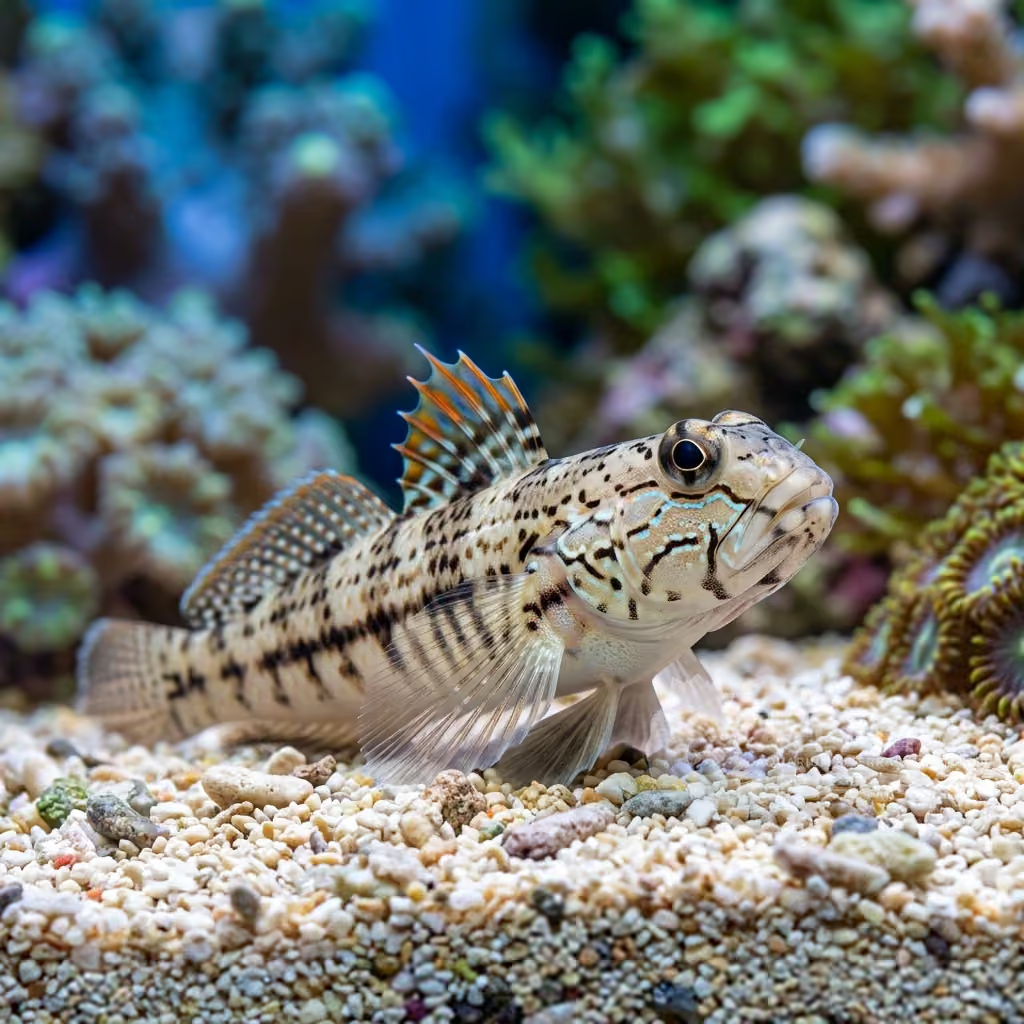
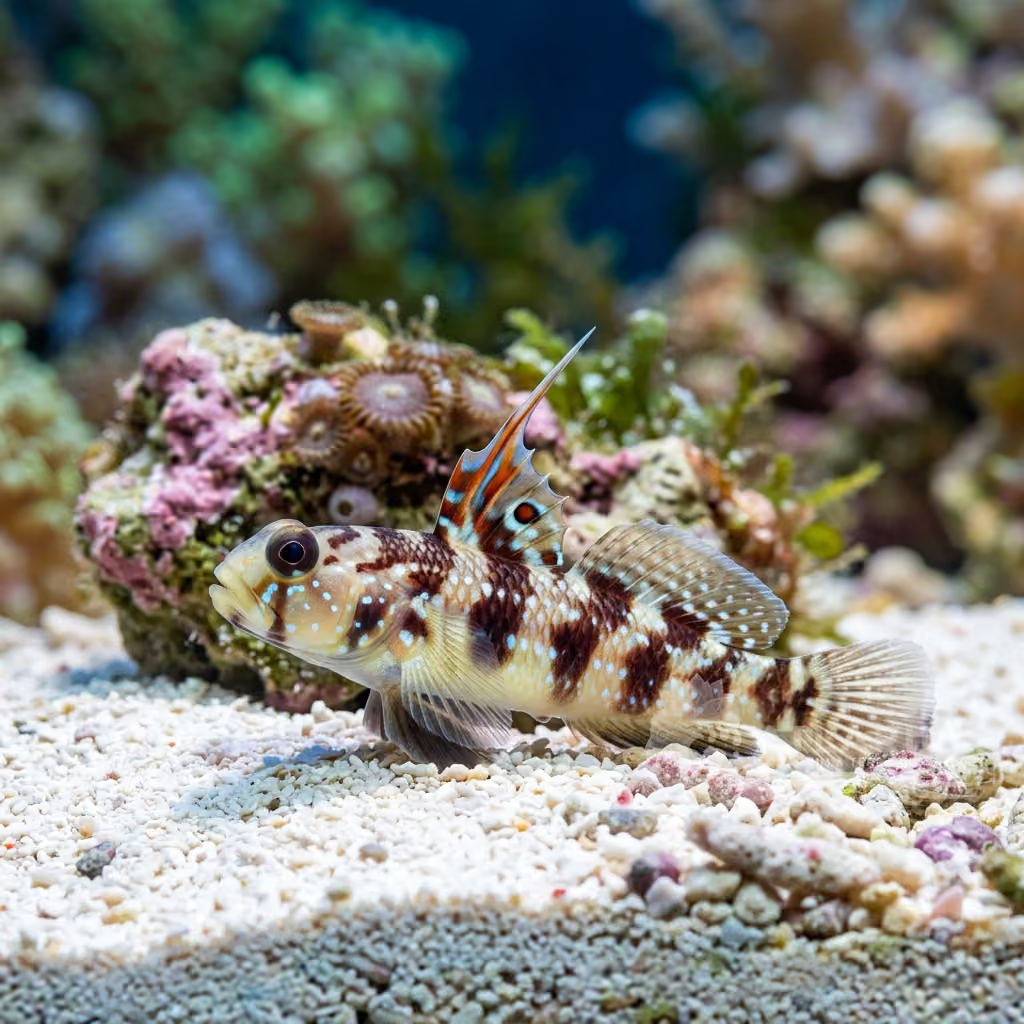
A marine goby from the Western Pacific that shares a symbiotic burrow with Alpheus snapping shrimps. Its striking red-margined fins make it a visual standout on the substrate.
Température de l’eau
22 - 26 °C
Valeur du pH
8.1 - 8.4
Type d'eau
Marin
Niveau dans le bac
Fond
Taille adulte
11 cm
Volume minimal du bac
>= 100 L
Groupe minimal
>= 1

Description de l'espèce
Geographical Origin and Habitat: The Redmargin shrimpgobid is native to the warm tropical waters of the Western Pacific Ocean, with notable populations found in the Great Barrier Reef, the Coral Sea, Indonesia, and Papua New Guinea. It prefers sandy or silty slopes near coral reefs, typically in sheltered lagoons at depths ranging from 5 to 25 meters.
Taxonomy and Morphology: Belonging to the family Gobiidae, Amblyeleotris rubrimarginata features a slender, cylindrical body with large, high-set eyes and a wide mouth. It is renowned for its symbiotic relationship with snapping shrimps of the genus Alpheus, sharing a burrow where the shrimp acts as the builder and the goby as the lookout.
Social Behavior: It exhibits highly specialized social behavior centered around its symbiotic shrimp partner. The goby spends most of its time perched at the entrance of the shared burrow, keeping physical contact with the shrimp's antennae. It is peaceful toward other species but highly territorial against other benthic gobies.
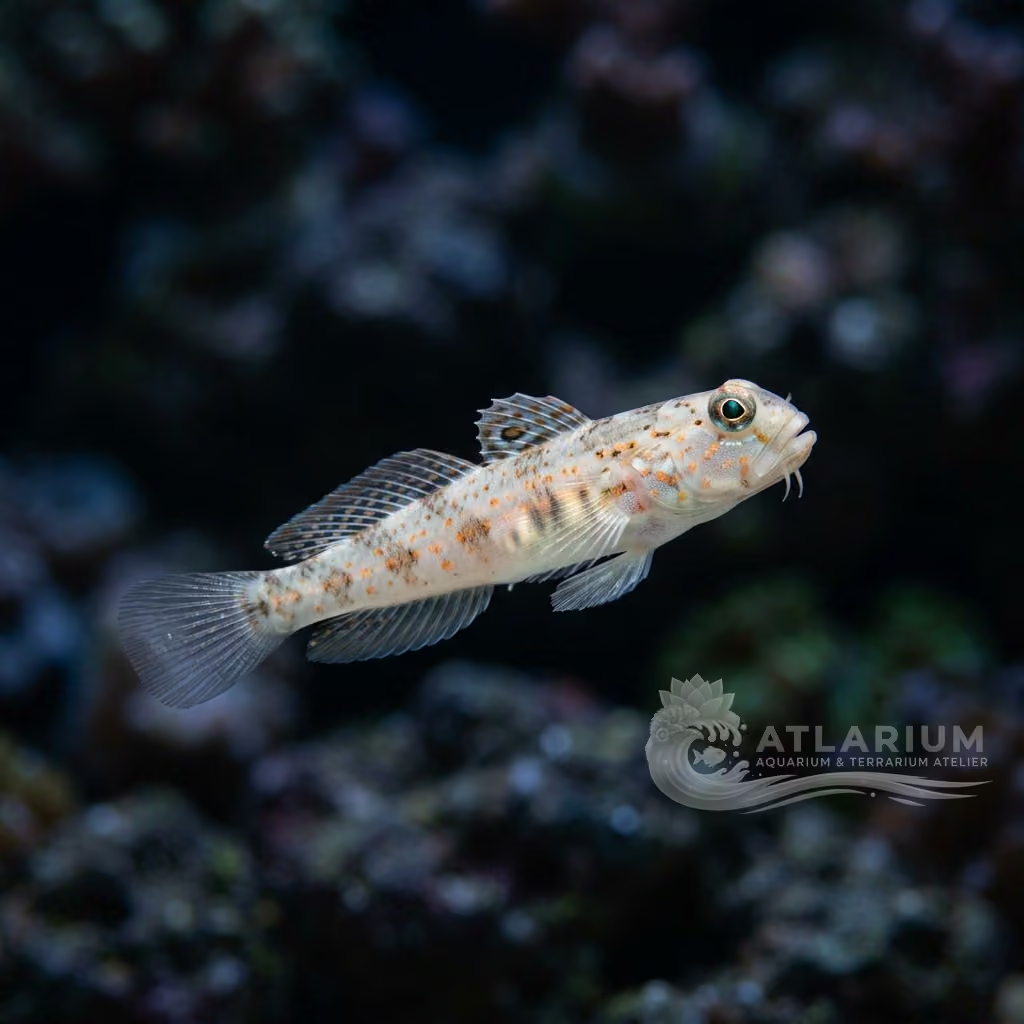
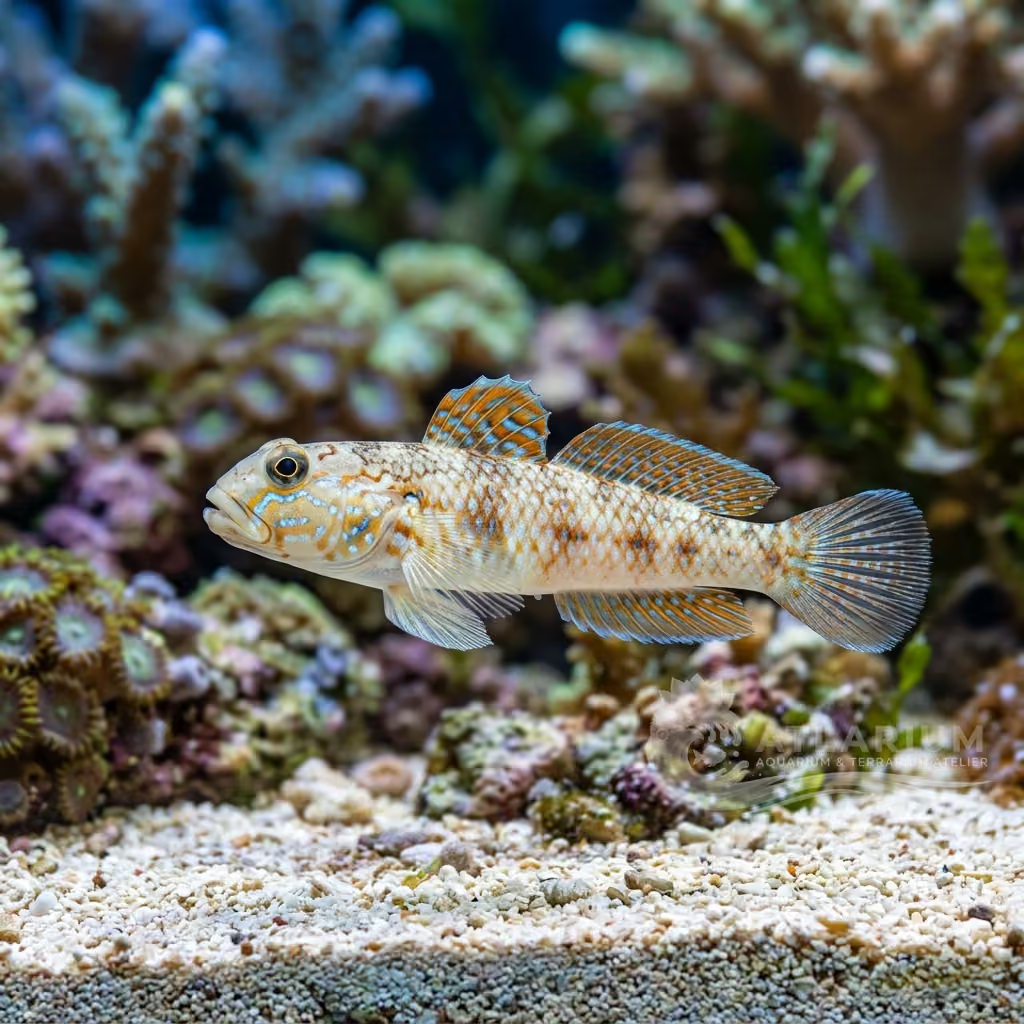
Coloration and Sexual Dimorphism: The body displays a pattern of reddish-orange to brown vertical bands on a pale sand-colored background, interspersed with fine blue or white spots. The margins of its dorsal and caudal fins are edged with a distinct, vivid red line. There is no clear external dimorphism to differentiate between sexes.

Soins, reproduction et cohabitation
Aquarium Setup: An aquarium of at least 100 liters with a deep sand bed (5-8 cm minimum) containing a mix of fine sand and small rubble is essential. This allows the goby and its symbiotic shrimp to excavate and reinforce stable burrows. Ensure that rockwork is resting on the tank glass, not on the sand, to prevent collapses.
Diet and Feeding: Carnivorous. In the aquarium, it should be fed a variety of small frozen foods like mysis shrimp, brine shrimp, and copepods. Food should ideally be targeted near the burrow entrance, as the goby is hesitant to venture far from its home to feed. It will eventually accept high-quality pellets.
Water Quality: Requires stable marine water parameters. The temperature should be maintained between 22°C and 26°C, pH between 8.1 and 8.4, and specific gravity (salinity) between 1.020 and 1.025. Regular water changes and a reliable filtration system are key to keeping nitrates and phosphates low.
Compatibility and Cohabitation: Excellent reef-safe choice. Best kept in a symbiotic pair with a compatible Alpheus snapping shrimp (such as Alpheus bellulus). It is peaceful toward mid-water swimming fish but can be hostile toward other bottom-dwelling gobies unless the tank is large enough to establish territories.
Aquarium Breeding: Breeding in home aquaria is extremely rare. Spawning occurs deep within the burrow, where adhesive eggs are attached to the walls. The parents guard the nest. The larvae are planktonic upon hatching and are exceptionally difficult to raise, requiring specialized culture of rotifers.
Risks and Diseases: Hardy once established, but vulnerable to stress and skin parasites like marine ich. A major risk is burrow collapse due to incorrect substrate composition or shifting rocks. Always ensure that the rock structure is secure and cannot be undermined by the digging activities of the pair.

Origine et répartition géographiques
The Redmargin shrimpgobid is native to the warm tropical waters of the Western Pacific Ocean, with notable populations found in the Great Barrier Reef, the Coral Sea, Indonesia, and Papua New Guinea. It prefers sandy or silty slopes near coral reefs, typically in sheltered lagoons at depths ranging from 5 to 25 meters.
Origine
Océans tropicaux et récifsAfrique et MadagascarAsie du Sud et du Sud-EstAsie de l'EstAustralie, Nouvelle-Guinée et Océanie

Profil de poisson
- Tempérament
- Territorial
- It is a peaceful, shy, and cautious fish that prefers to stay close to the safety of its established burrow. While it will bravely defend its immediate territory from other bottom-dwellers, it ignores fish swimming higher up. Providing plenty of rubble and a quiet environment helps it feel secure and behave naturally.
- Régime alimentaire
- Carnivore
- As a micro-predator, its natural diet consists mostly of tiny benthic crustaceans and zooplankton found near the substrate. In captivity, it eagerly accepts frozen mysis shrimp, brine shrimp, and sinking carnivore pellets. Providing a varied, high-quality meaty diet is critical for maintaining its health and vibrant coloration.
- Espérance de vie
- 6-8 years
- Taille adulte
- 11 cm
- Ratio des sexes
- Pair
- There are no obvious external differences between males and females, making sexing this species visually almost impossible. They are best kept singly or as a confirmed mated pair to avoid territorial disputes. Placing multiple unsexed individuals in a small tank usually leads to aggressive territorial battles over burrow sites.
- Fréquence d'alimentation
- Twice daily
- Feeding small portions two to three times daily is recommended to mimic its natural, continuous foraging behavior. Because it rarely ventures far from its burrow, targeted feeding near its home may be necessary in a busy tank. Care should be taken to ensure it gets enough food without overfeeding the entire system.
- Charge biologique
- Low to Medium
- This species has a minimal impact on the overall bioload of the aquarium due to its small size and sedentary lifestyle. It produces very little waste compared to more active, open-water swimmers. Routine maintenance and standard filtration are entirely sufficient to keep the water pristine.
- Courant
- Strong
- It favors gentle to moderate water flow, reflecting the calm sandy bottoms and rubble zones it inhabits in the ocean. Exceedingly strong currents can collapse its delicate burrow and make feeding difficult. A well-planned, indirect flow pattern allows the goby to thrive while keeping detritus from accumulating.
- Risque de saut
- Yes
- Like most gobies, this fish is easily spooked and possesses a strong instinct to jump when frightened or chased. A tight-fitting lid or a fine mesh cover is absolutely necessary to prevent it from leaping out of the aquarium. Keeping it in an open-top tank is highly risky and often ends poorly.
- Reproduction
- Oviparous
- Captive breeding of this species is extremely rare and technically demanding, primarily due to the difficulty of raising its microscopic pelagic larvae. In their natural habitat, they are substrate spawners that lay adhesive eggs deep within the safety of their burrow. The male takes on the responsibility of guarding and oxygenating the eggs until they hatch.
- Compatibilité et compagnons
- Reef safe
- It is a fantastic community fish for peaceful reef aquariums, coexisting easily with corals and small, non-aggressive tank mates. This fish forms a fascinating symbiotic bond with pistol shrimp, which provides an incredible behavioral display. Large or predatory fish must be avoided, as they will easily consume this small goby.
- Niveau dans le bac
- Bottom
- This bottom-dwelling fish spends the vast majority of its life resting on the sand bed or hovering just outside its burrow. It relies heavily on a deep sand substrate to create its home alongside its symbiotic shrimp partner. It will only dart higher into the water column momentarily to grab a passing morsel of food.

Modèles et paramètres scientifiques
FishBase
Fenêtre sur les données scientifiques officielles de l’espèce
FishBase v25.04Données synchronisées le : 15/06/2026
- Niveau trophique
- 3,3 ± 0,4 se
- Résilience
- Élevée (moins de 15 mois)
- Singularité phylogénétique (PD50)
- 0.5
- Relation bayésienne longueur-poids
- a = 0.00741, b = 3.09
- VulnérabilitéVulnérabilité faible (10 / 100)

Espèces associées
Recommandations regroupées par proches parents, compagnons et soins similaires.