Spotbanded Scat
Selenotoca multifasciata
The Spotbanded Scat is a highly active, schooling brackish fish displaying striking vertical bands and spots. It demands a large, spacious aquarium and a predominantly herbivorous diet.
Température de l’eau
20 - 28 °C
Valeur du pH
7.5 - 8.5
Type d'eau
Eau saumâtre / Marin
Niveau dans le bac
Milieu
Taille adulte
28 cm
Volume minimal du bac
>= 300 L
Groupe minimal
>= 5

Description de l'espèce
Geographical Origin and Habitat: Native to the Western Indo-Pacific, including the coastal waters of northern Australia, New Guinea, and Indonesia. It inhabits mangrove swamps, river estuaries, and brackish coastal lagoons.
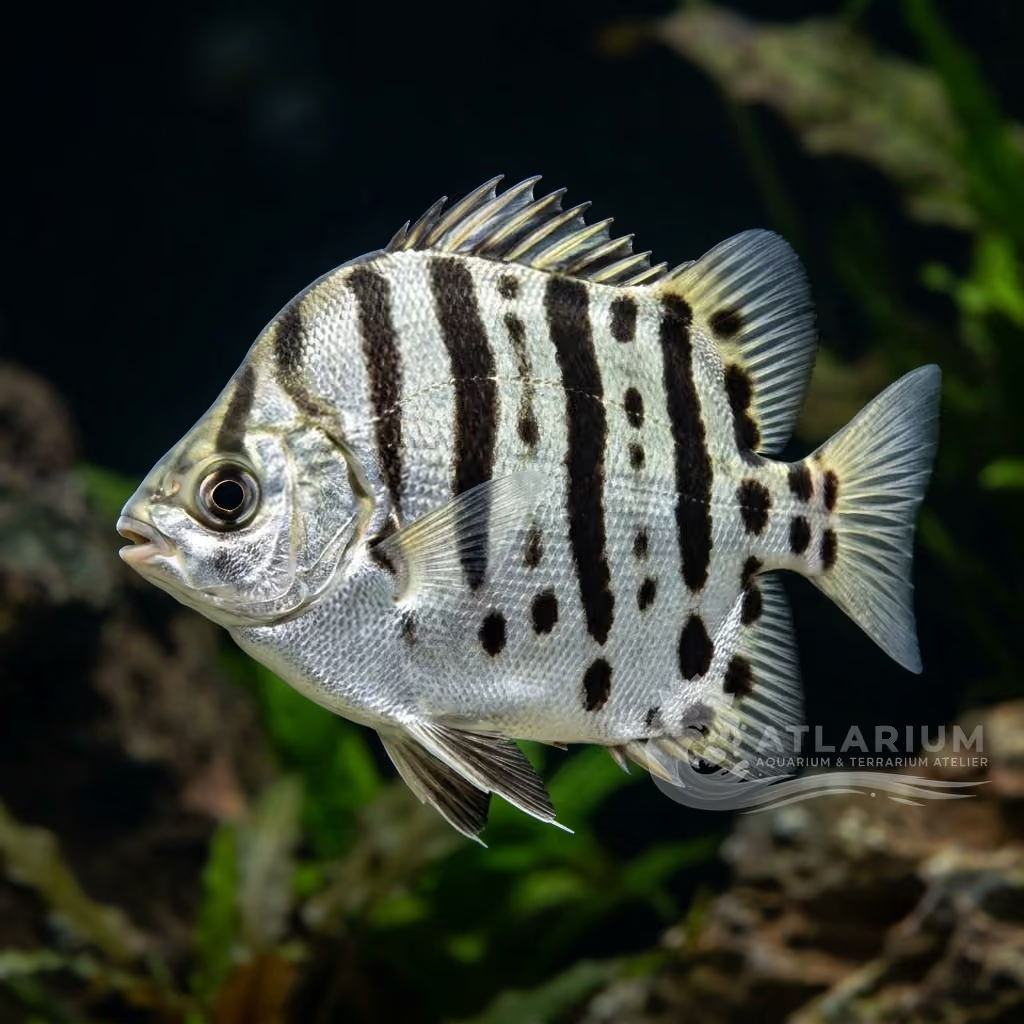
Taxonomy and Morphology: Member of the Scatophagidae family, genus Selenotoca. Features a disc-shaped, highly compressed body with robust, venomous dorsal spines. Can grow up to 40 cm in the wild, but usually reaches 20 cm in aquariums.
Social Behavior: Highly active, schooling fish that should be kept in groups of at least 4 to 6 specimens. They exhibit a lively swimming pattern and establish a minor social hierarchy, which helps reduce stress in individuals.
Coloration and Sexual Dimorphism: Body base is silvery-white or golden, covered with dark vertical bars on the dorsal region that break into round spots toward the belly. There are no reliable external differences between males and females.

Soins, reproduction et cohabitation
Aquarium Setup: Requires a large aquarium of at least 300 liters (approx. 80 gallons) to accommodate their active swimming habits. Use heavy rocks and large driftwood for decoration. Live plants will be eaten and should be avoided.
Diet and Feeding: Omnivorous with a strong herbivorous preference. They feed on algae, detritus, and plant matter. Provide spirulina-based pellets, blanched spinach, zucchini, and supplement with frozen foods like krill, mysis, and brine shrimp.
Water Quality: Euryhaline species. While juveniles can survive in freshwater, adults must be transitioned to brackish (SG 1.005 to 1.015) or marine water. Keep temperature at 22-28°C (72-82°F) and pH stable between 7.8 and 8.4.
Compatibility and Cohabitation: Excellent tankmate for other active brackish fish of similar size, such as Monos, Archerfish, and brackish puffers. Avoid keeping them with small or slow-moving fish that could be outcompeted or eaten.
Aquarium Breeding: Breeding in home aquariums is currently undocumented. In nature, they migrate to offshore marine reefs to spawn, a complex biological trigger that is extremely difficult to recreate in captive systems.
Risks and Diseases: Handle with extreme care; their dorsal spines carry a mild venom that causes severe pain if stung. Prone to skin parasites in poor water conditions. Ensure a highly varied diet to prevent nutritional deficiencies.

Origine et répartition géographiques
Native to the Western Indo-Pacific, including the coastal waters of northern Australia, New Guinea, and Indonesia. It inhabits mangrove swamps, river estuaries, and brackish coastal lagoons.
Origine
Océans tropicaux et récifsAfrique et MadagascarAsie du Sud et du Sud-EstAustralie, Nouvelle-Guinée et Océanie

Profil de poisson
- Tempérament
- Peaceful
- They are lively, curious, and generally peaceful schooling fish that add immense activity to the tank. They can be somewhat boisterous during feeding time, outcompeting slower fish for food. As they mature, they require increasingly saline water to remain healthy and vibrant.
- Régime alimentaire
- Omnivore
- Selenotoca multifasciata is omnivorous with a strong inclination towards herbivory. Their diet must include a large amount of vegetable matter, such as spirulina flakes, blanched spinach, and marine algae. They will also greedily consume meaty foods like brine shrimp and bloodworms.
- Espérance de vie
- 5-15 years
- Taille adulte
- 28 cm
- Ratio des sexes
- School
- There are no obvious external sexual differences between males and females. They are best kept in a shoal of at least five or six individuals to display natural behaviors. Keeping them in groups helps diffuse any minor intra-species aggression.
- Fréquence d'alimentation
- 2-3 times daily
- Due to their active nature and rapid digestion of plant matter, they should be fed multiple small meals throughout the day. Feeding them two to three times daily helps maintain their energy levels and overall health. A varied rotation of foods prevents dietary deficiencies.
- Charge biologique
- Extreme
- The Spotbanded Scat produces a significant bioload, especially when kept in the recommended groups. They are messy eaters and very active swimmers with high metabolisms. Excellent mechanical filtration and strong biological filtration, along with regular water changes, are necessary.
- Courant
- Strong
- They originate from coastal estuaries and mangrove swamps where water movement is constant. A strong, turbulent flow in the aquarium is highly appreciated and mimics their natural tidal habitats. Powerheads can be used to create the necessary water movement.
- Risque de saut
- No
- Reproduction
- Oviparous
- Breeding in the home aquarium is extremely rare and poorly documented for this species. In nature, they spawn in the ocean, and the juveniles migrate into brackish estuaries to grow. Replicating the necessary changes in salinity and environment for breeding is highly complex.
- Compatibilité et compagnons
- Verify
- They are peaceful but active and robust schooling fish that do well in brackish or marine community setups. Good tank mates include Monos, Archerfish, and other scats that share similar water requirements. They should not be trusted with very small fish or delicate, slow-moving species.
- Niveau dans le bac
- Middle
- These scats are primarily mid-water swimmers that are constantly on the move. They will occasionally forage along the bottom or pick at algae on rocks and decorations. They require plenty of open swimming space to thrive.

Modèles et paramètres scientifiques
FishBase
Fenêtre sur les données scientifiques officielles de l’espèce
FishBase v25.04Données synchronisées le : 15/06/2026
- Niveau trophique
- 2,9 ± 0,3 se
- Résilience
- Élevée (moins de 15 mois)
- Singularité phylogénétique (PD50)
- 0.8125
- Relation bayésienne longueur-poids
- a = 0.0257, b = 2.96
- VulnérabilitéVulnérabilité modérée (39 / 100)

Espèces associées
Recommandations regroupées par proches parents, compagnons et soins similaires.