African Scat
Scatophagus tetracanthus
The Feces Eater (12 inches / 30 cm). A massive, hyperactive brackish fish that gets its scientific name from literally stalking other large fish to eat their poop before it hits the bottom.
Température de l’eau
22 - 28 °C
Valeur du pH
7.5 - 8.5
Type d'eau
Eau douce
Niveau dans le bac
Milieu
Taille adulte
30 cm
Volume minimal du bac
>= 300 L
Groupe minimal
>= 1
GH
15 - 30 dGH
KH
7 - 15 dKH
TDS
295 - 600 ppm
Conductivité
461 - 938 uS/cm

Description de l'espèce
Geographical Origin and Habitat: East African coasts (Somalia down to South Africa). Replaces the argus in the African region, dominating muddy estuaries, brackish bays and tidal rivers.
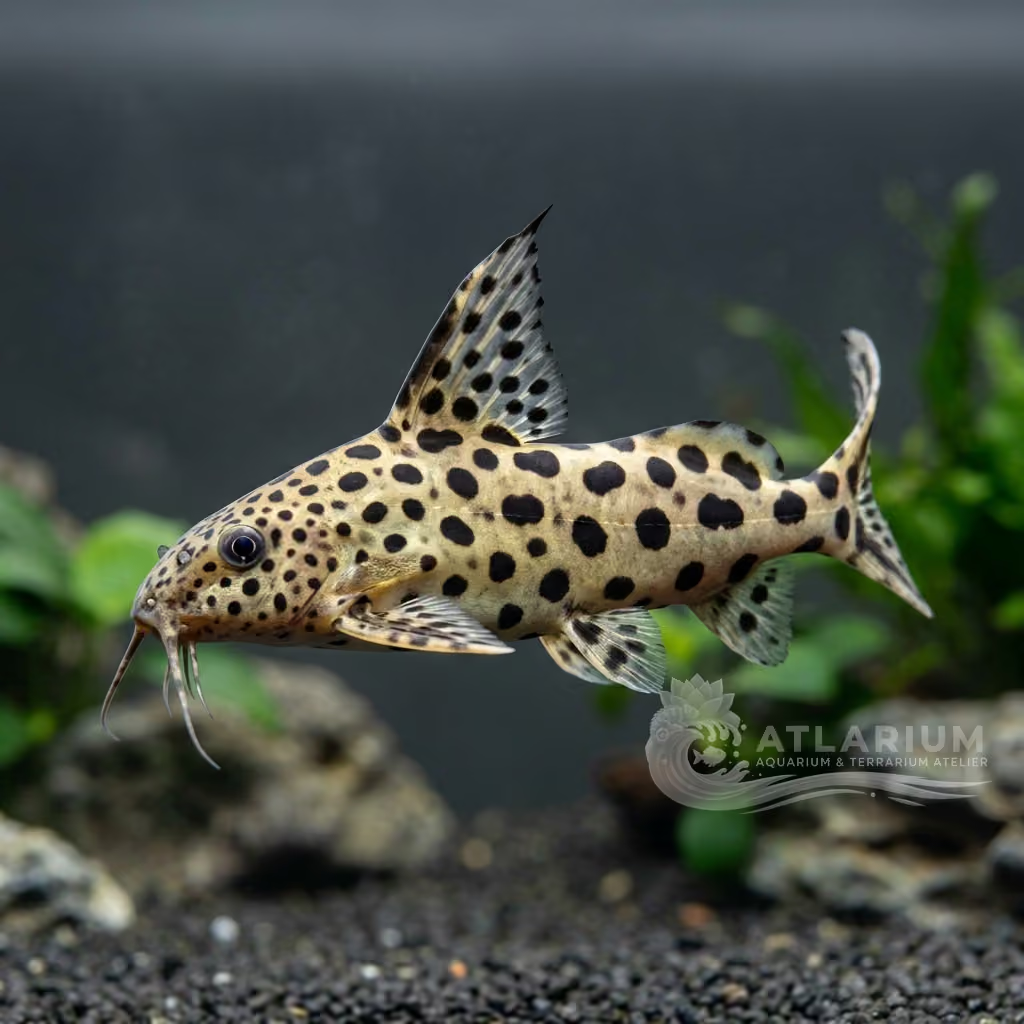
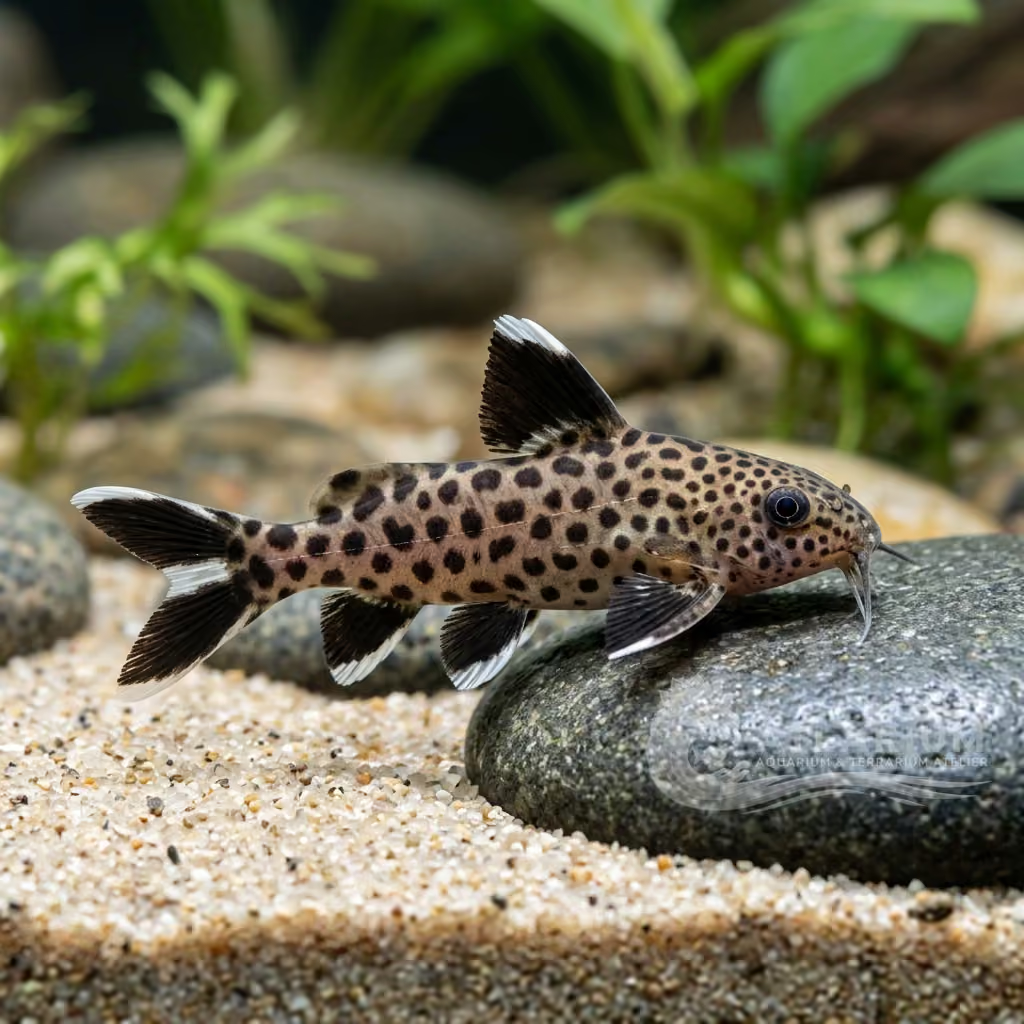
Taxonomy and Morphology: African Scat / Tiger Scat (Scatophagus tetracanthus). Rarer in the trade. It has the same robust and square morphology as its "cousin" argus, with a spiny back, but differs in its distinctive pattern.
Social Behavior: Voracious patroller. They live in thick dynamic schools that patrol the bottoms and roots in search of debris. They interact exceptionally with those who feed them (pet-fish).
Coloration and Sexual Dimorphism: Tiger Coat. Instead of polka dots, it features a beautiful lattice of thick vertical and sinuous black bars (tiger style) on a golden or bronze background. It maintains this marked pattern much better than the argus even in adulthood.

Soins, reproduction et cohabitation
Aquarium Setup: Brackish Monster Tank (150 cm / 60 inches or more). Very hard alkaline water essential (Marine salt necessary). Emerging roots (mangrove style), zero plants (they are destroyed), sandy substrate. Powerful water flow.
Diet and Feeding: Insatiable Scavenger. Readily eats large amounts of blanched vegetables (zucchini, spinach) as well as larvae, earthworms, shrimp, pellets and any filamentous algae it finds on the rocks.
Water Quality: Titanic Filtration (Heavy duty). As 30 cm (12 inch) fish that eat for ten, they produce immense waste. Marine skimmer recommended if kept at high densities (from 1.012 to 1.020).
Compatibility and Cohabitation: Robust and overbearing. Perfect with Scatophagus argus, Monodactylus, and brackish water triggerfish. In the presence of weak fish, their feeding frenzy will leave them starving.
Aquarium Breeding: Totally impossible in a home aquarium. Reproductive and migratory sea-river cycle never completed in closed spaces.
Risks and Diseases: Defensive Spines. The spines of the dorsal fin are extremely hard, sharp and equipped with a very painful toxin, similar to the sting of a large hymenopteran. Never catch them with hands or soft nets.

Origine et répartition géographiques
East African coasts (Somalia down to South Africa). Replaces the argus in the African region, dominating muddy estuaries, brackish bays and tidal rivers.
Origine
Afrique et Madagascar

Profil de poisson
- Tempérament
- Semi-aggressive
- They are very active, bold, and can be boisterous. They interact well with their owners and beg for food aggressively. Care must be taken to avoid their venomous dorsal spines.
- Régime alimentaire
- Omnivore
- They are highly omnivorous but need a lot of vegetable matter. They will quickly decimate any live plants in the tank. Feed them spirulina, blanched spinach, and high-quality pellets.
- Espérance de vie
- 15-20 years
- Taille adulte
- 30 cm
- Ratio des sexes
- Solitary
- Keep them in a group of 4 to 6 to minimize aggression. They form a pecking order within the group. A single specimen may become highly aggressive towards other species.
- Fréquence d'alimentation
- Twice daily
- Feed them two or three times a day. They are greedy eaters and will gorge themselves if given the chance. Ensure their diet remains balanced with plenty of greens.
- Charge biologique
- High
- This large brackish fish creates a very heavy bioload. Robust filtration and a large water volume are strictly necessary. Consistent maintenance is required to keep nitrates in check.
- Courant
- Stagnant
- They enjoy strong water flow and highly oxygenated environments. Powerheads should be used to mimic their natural river mouth habitats. They are energetic swimmers that thrive in a current.
- Risque de saut
- Yes
- They have a moderate risk of jumping, especially during feeding frenzies. A tight and heavy lid is an absolute must. They are powerful enough to move light covers.
- Reproduction
- Oviparous
- Breeding this species in an aquarium setting is undocumented. Their complex life cycle between fresh and marine waters is too difficult to replicate. Captive breeding is currently not viable.
- Compatibilité et compagnons
- Species only
- They can be aggressive towards smaller or more docile tankmates. Best kept with robust brackish species of similar size. They are voracious and will eat anything that fits in their mouth.
- Niveau dans le bac
- Middle
- They are highly active fish that utilize the entire water column. They will swim at the surface, middle, and bottom constantly. They need a very large tank to accommodate their activity.

Modèles et paramètres scientifiques
FishBase
Fenêtre sur les données scientifiques officielles de l’espèce
FishBase v25.04Données synchronisées le : 15/06/2026
- Niveau trophique
- 2,8 ± 0,25 se
- Résilience
- Élevée (moins de 15 mois)
- Singularité phylogénétique (PD50)
- 0.8125
- Relation bayésienne longueur-poids
- a = 0.0257, b = 2.96
- VulnérabilitéVulnérabilité faible (20 / 100)

Espèces associées
Recommandations regroupées par proches parents, compagnons et soins similaires.