Cuckoo Catfish
Synodontis multipunctatus
The master of underwater deception. Like the Cuckoo bird, it tricks host Cichlids into holding its eggs in their mouths; the baby catfish then hatch early and devour the Cichlid's own babies from the inside. A stunning, hyper-active day-swimmer covered in black polka-dots.
Température de l’eau
23 - 27 °C
Valeur du pH
7.5 - 8.5
Type d'eau
Eau douce
Niveau dans le bac
Fond
Taille adulte
27 cm
Volume minimal du bac
>= 300 L
Groupe minimal
>= 1
GH
10 - 30 dGH
KH
5 - 15 dKH
TDS
200 - 600 ppm
Conductivité
313 - 938 uS/cm

Description de l'espèce
Geographical Origin and Habitat: Endemic to Lake Tanganyika. Inhabits muddy and rocky bottoms at great depths, pushing towards shallower waters to feed and carry out its very particular reproductive cycle.
Taxonomy and Morphology: Cuckoo Catfish (Synodontis multipunctatus). A robust and large fish (up to 27 cm / 10.6 inches). Massive head, light sensitive barbels, large eyes and towering dorsal fin with hardened and sharp first ray.
Social Behavior: Opportunistic gregariousness. Active day and night. Very gregarious, forms turbulent schools that tirelessly patrol the bottom. They are real nest raiders that take advantage of chaos.
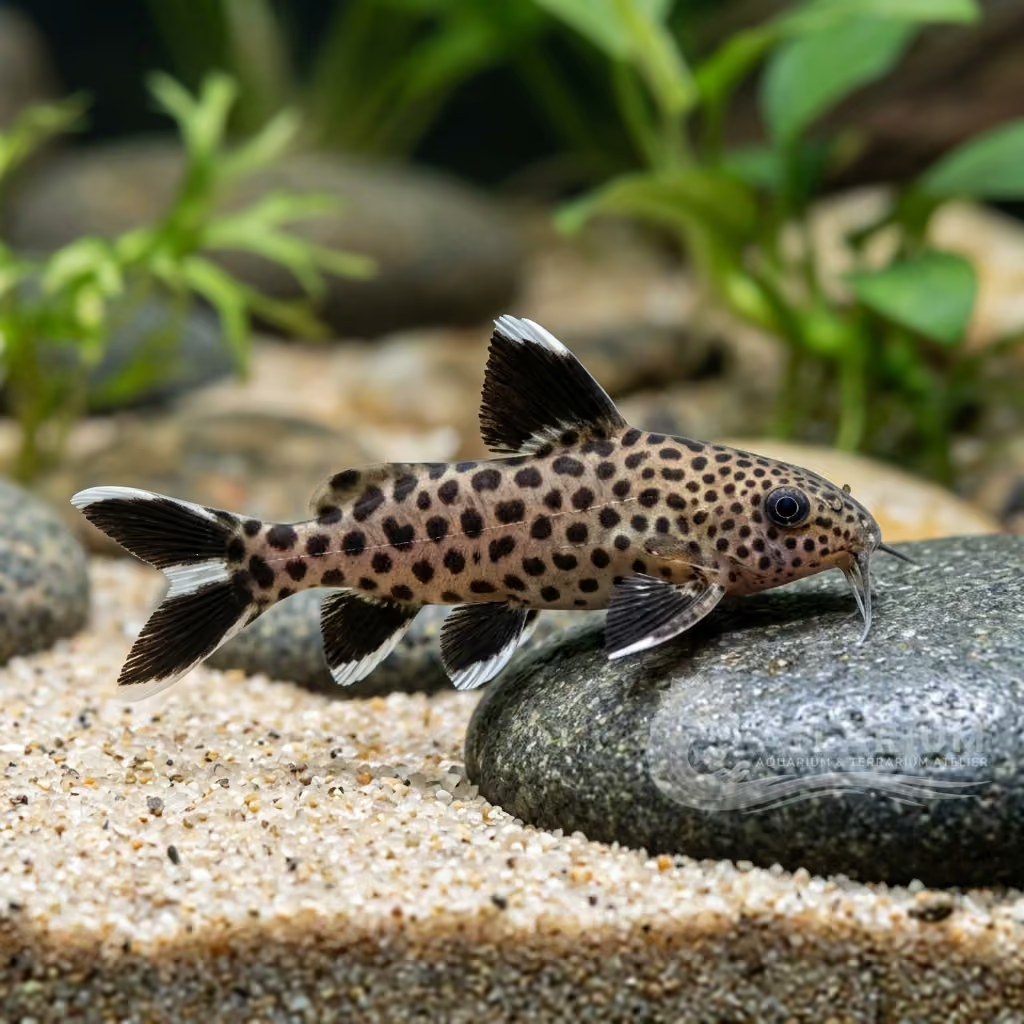
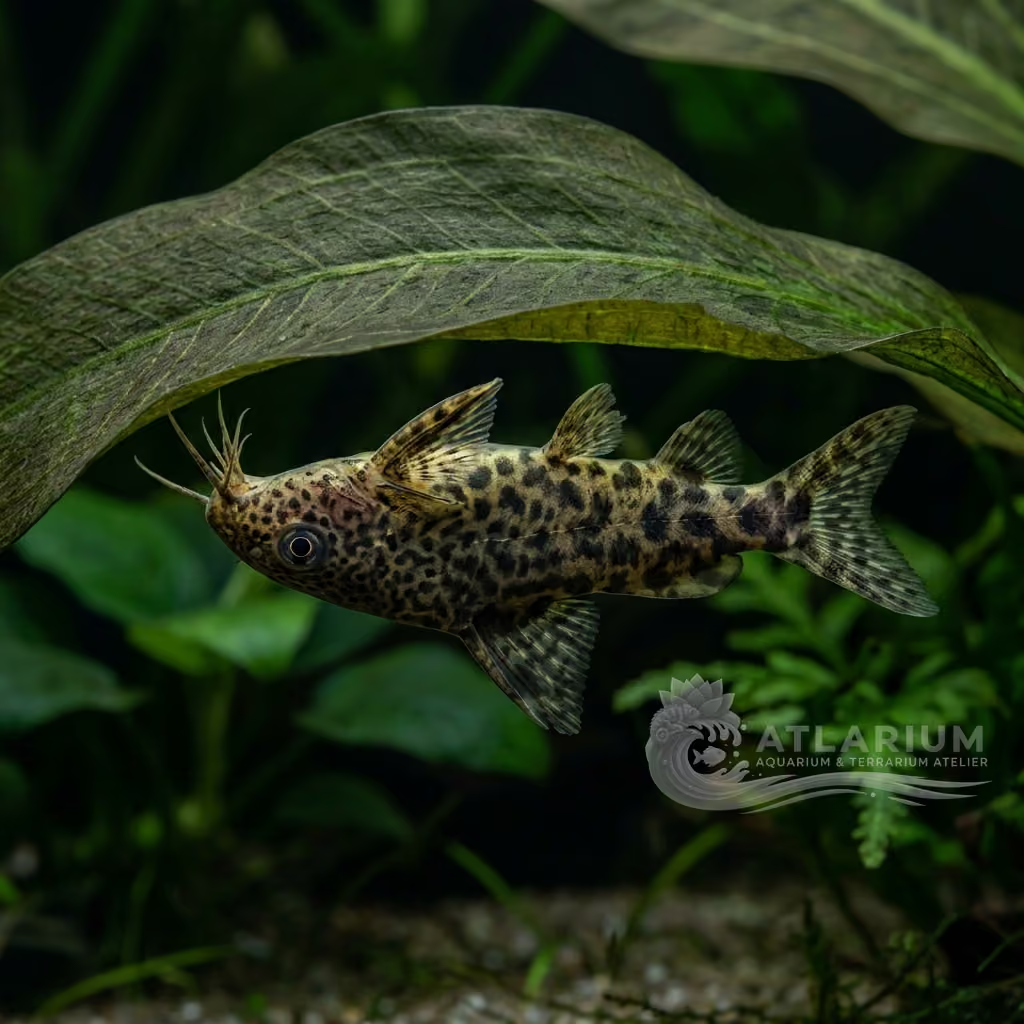
Coloration and Sexual Dimorphism: White-edged Leopard. Background varying from cream to dark gold-bronze, scattered with countless black polka dots (multipunctatus). The pectoral, dorsal and caudal fins have thick, bright white borders. Impossible to sex with the naked eye (only by examining the genital papilla).

Soins, reproduction et cohabitation
Aquarium Setup: Large Tanganyika tank (minimum 150 cm / 60 inches). Solid rockwork forming wide dens (Caves) to rest, flanked by open areas of fine sand to sift. No plants required (Cichlids and Synos would uproot them).
Diet and Feeding: Voracious omnivore. Not picky: eats sinking pellets (carnivorous), bloodworms, chopped mussels and shrimp. Snails in the aquarium will disappear, as it extracts them from the shell with extreme skill.
Water Quality: Tanganyika Live Rock. Demands alkaline (pH 8-9) and very hard waters (high GH and KH). Extremely resistant to diseases if parameters remain stable, it collapses dramatically in soft, acidic waters.
Compatibility and Cohabitation: Ideal companion for large Great Lakes Cichlids (Frontosa, large Haplochromis). Avoid with timid or too slow fish, from which they would aggressively steal food. They will eat any fish that fits in their mouth.
Aquarium Breeding: Brood Parasitism (Cuckoo). One of the most fascinating reproductions in nature. They wait for large mouthbrooding Cichlids to lay: they sneak in, eat the cichlid's eggs and lay their own! The confused cichlid female will gather the Synodontis eggs in her mouth, incubating them unaware. The Synodontis larvae will hatch first, devouring the remaining eggs of the host cichlid directly in the mouth of the adoptive mother.
Risks and Diseases: Overfeeding. They are "bottomless" fish. If kept in community, the inexperienced aquarist, fearing slow fish won't eat, will throw rivers of feed: the Multipunctatus will gorge themselves until they deform their belly, risking lethal intestinal blocks and Fatty liver.

Origine et répartition géographiques
Endemic to Lake Tanganyika. Inhabits muddy and rocky bottoms at great depths, pushing towards shallower waters to feed and carry out its very particular reproductive cycle.
Origine
Afrique et Madagascar

Profil de poisson
- Tempérament
- Semi-aggressive
- The Cuckoo Catfish has a bold, highly active, and sometimes pugnacious temperament. They are extremely social with their own kind but establish a distinct pecking order through harmless chasing. Their frantic energy can be stressful to shy or delicate fish, which is why robust cichlid tankmates are preferred. They are fascinating to watch due to their constant movement and interactions.
- Régime alimentaire
- Omnivore
- A ravenous omnivore, the Cuckoo Catfish will eagerly accept a wide variety of meaty and vegetative foods. Their diet should consist of high-quality sinking pellets, freeze-dried krill, and frozen bloodworms or mysis shrimp. They are aggressive eaters that will vigorously compete for food during feeding time. Snails and small invertebrates may also be predated upon in the aquarium.
- Espérance de vie
- 10-15 years
- Taille adulte
- 27 cm
- Ratio des sexes
- Group
- When keeping a group, a relatively balanced mix of males and females is acceptable, though exact ratios are not critical. They are highly social and thrive best in groups of four to six or more. In smaller numbers, a dominant individual may incessantly bully the others. Determining sex is challenging, usually requiring examination of the genital papilla by an expert.
- Fréquence d'alimentation
- Twice daily
- They should be fed once or twice daily with portions they can consume within a few minutes. Their highly active nature means they have a fast metabolism and are almost always looking for food. Because they are bold, they easily learn to come to the surface or specific feeding spots. Care must be taken to ensure they don't outcompete more timid tankmates.
- Charge biologique
- Medium to High
- This active and moderately sized catfish contributes a medium to high bioload to the aquarium. They consume large amounts of food and produce corresponding waste, necessitating strong and efficient filtration. Over-filtration is highly recommended, especially since they are typically kept with messy African cichlids. Consistent weekly water changes are crucial to prevent nitrate buildup.
- Courant
- Stagnant
- Coming from Lake Tanganyika, they require well-oxygenated water with moderate to strong flow. Substantial water movement across the rockwork simulates their natural environment and keeps them active. Powerheads are often utilized in their setups to maintain excellent circulation and oxygen exchange. They will often swim directly into the current for exercise and stimulation.
- Risque de saut
- Yes
- While predominantly a bottom-dwelling species, their boisterous nature gives them a moderate jump risk. During frenzied feeding or territorial disputes, they can easily breach the water's surface. A tightly fitting aquarium cover is essential to prevent them from ending up on the floor. Pay special attention to closing gaps around filter intakes and heater cables.
- Reproduction
- Oviparous
- This species is famous for its unique brood-parasitism reproductive strategy. They meticulously synchronize their spawning with mouthbrooding cichlids, sneaking their eggs into the cichlid's clutch. The host cichlid unwittingly picks up and incubates the catfish eggs alongside its own. The catfish fry hatch earlier and quickly devour the host cichlid's eggs before being released as juveniles.
- Compatibilité et compagnons
- Peaceful
- They are best kept with robust Rift Lake cichlids, particularly mouthbrooding species from Lake Tanganyika or Malawi. They can be quite boisterous and may terrorize smaller, timid bottom-dwelling fish. While generally peaceful towards mid-water swimmers, they are known to nip the fins of slower moving species. They should never be trusted with fish small enough to swallow.
- Niveau dans le bac
- Bottom
- They primarily inhabit the lower and middle levels of the aquarium. Unlike many other Synodontis, they are quite active mid-water swimmers and spend significant time out in the open. They still require a network of rocky caves and crevices to retreat to when they want to rest. They are often seen boldly cruising the tank boundaries during daylight hours.

Modèles et paramètres scientifiques
FishBase
Fenêtre sur les données scientifiques officielles de l’espèce
FishBase v25.04Données synchronisées le : 15/06/2026
- Niveau trophique
- 3,4 ± 0,53 se
- Résilience
- Élevée (moins de 15 mois)
- Singularité phylogénétique (PD50)
- 0.5
- Relation bayésienne longueur-poids
- a = 0.01445, b = 2.9
- VulnérabilitéVulnérabilité faible (18 / 100)

Espèces associées
Recommandations regroupées par proches parents, compagnons et soins similaires.