Knight Goby
Stigmatogobius sadanundio
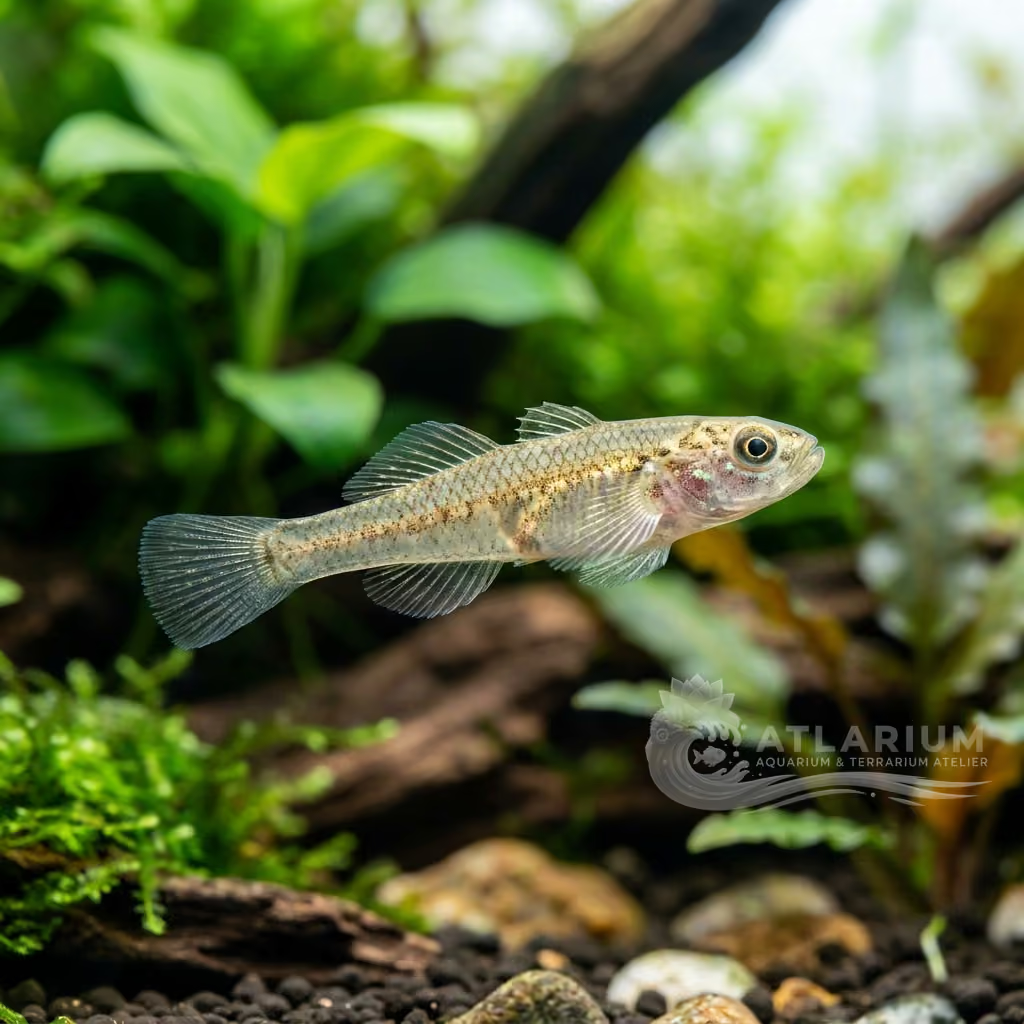
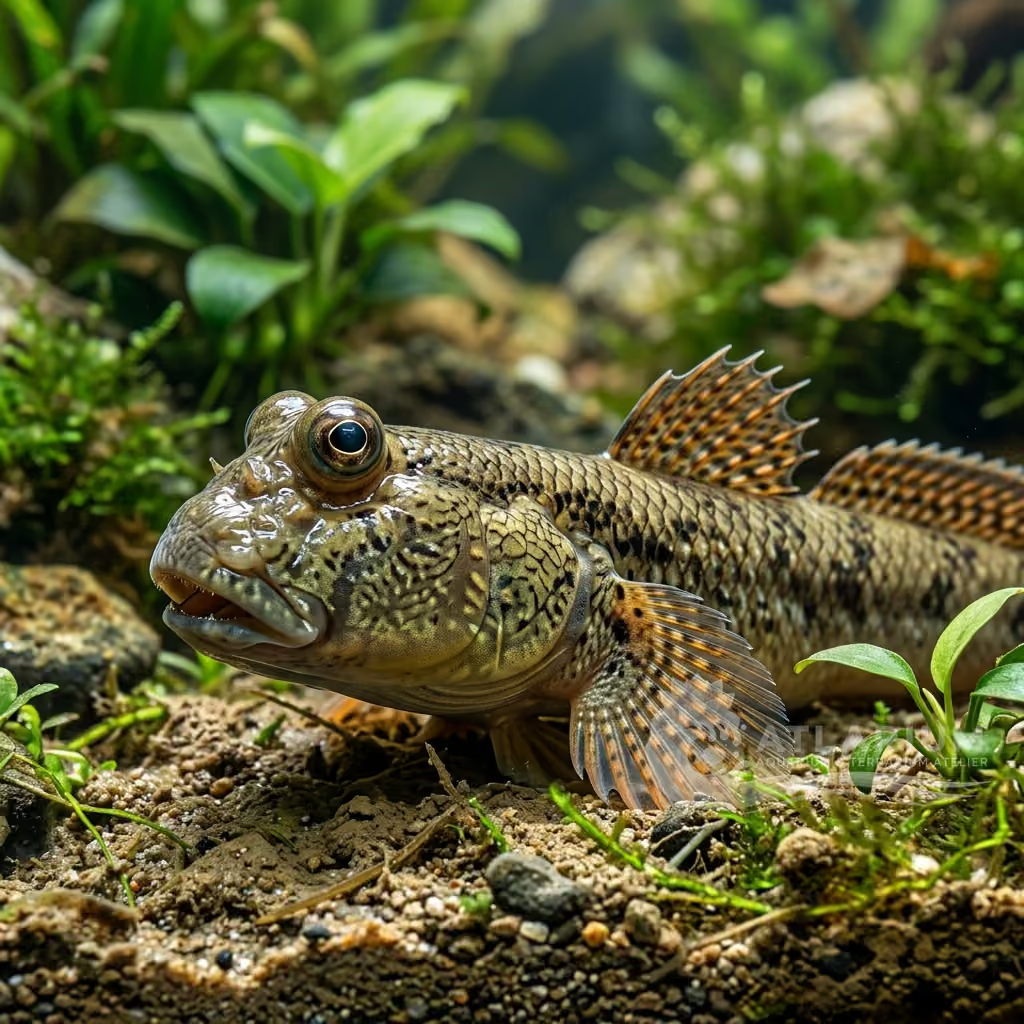
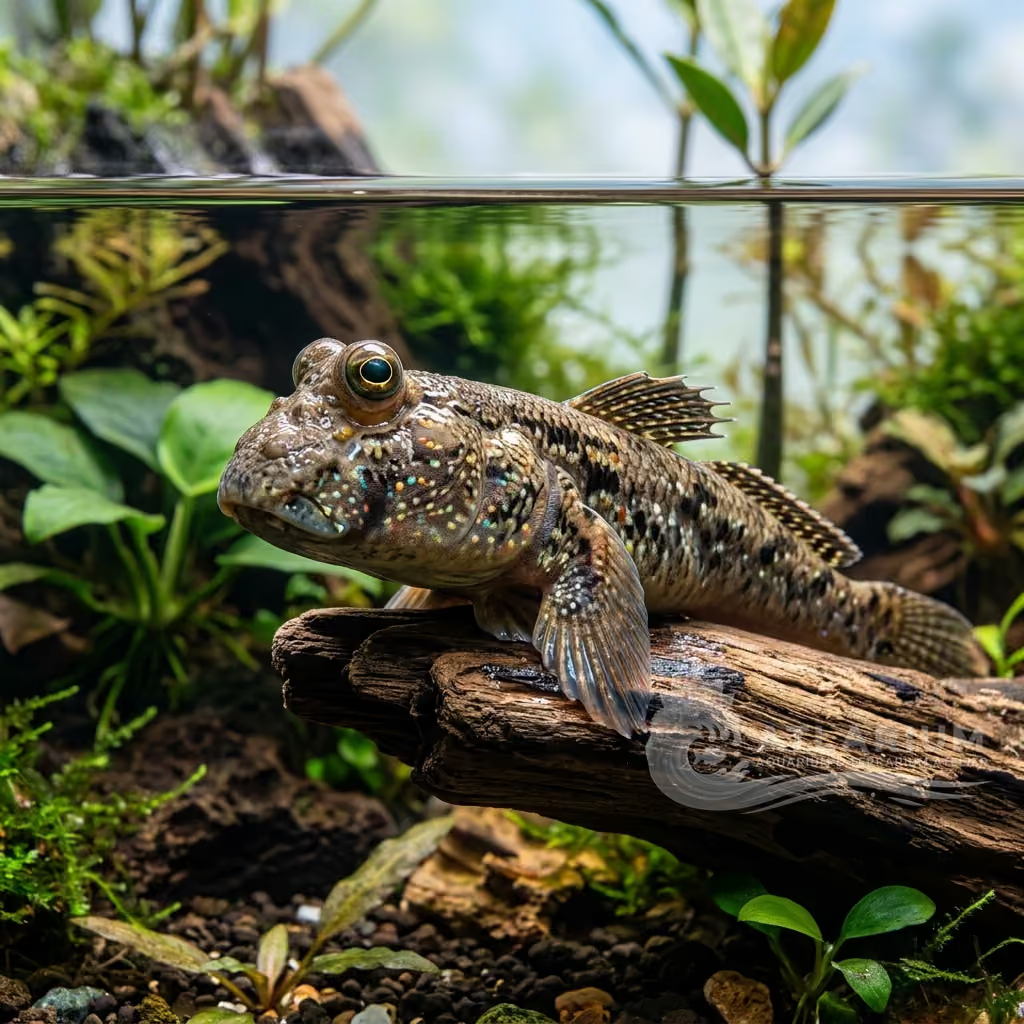
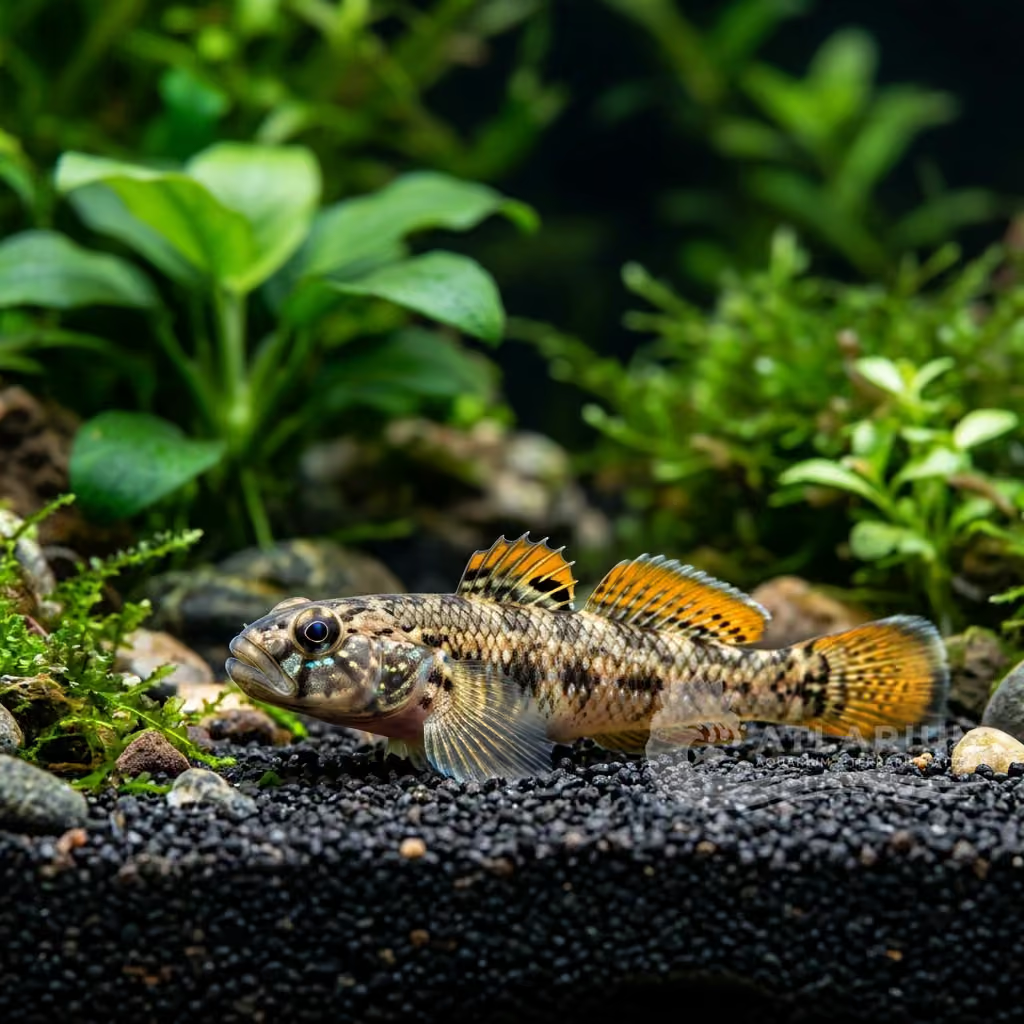
The Knight Goby is a hardy, bottom-dwelling brackish fish known for its striking dark spots and fan-like fins. Provide a sandy substrate, hiding caves, and a carnivorous diet.
Température de l’eau
20 - 26 °C
Valeur du pH
7.5 - 8.5
Type d'eau
Eau douce / Eau saumâtre
Niveau dans le bac
Fond
Taille adulte
9 cm
Volume minimal du bac
>= 80 L
Groupe minimal
>= 1
GH
12 - 25 dGH
KH
6 - 12 dKH
TDS
240 - 495 ppm
Conductivité
375 - 773 uS/cm

Description de l'espèce
Geographical Origin and Habitat: This species is native to Southern and Southeastern Asia, including India, Bangladesh, Singapore, Malaysia, Thailand, and Indonesia. It inhabits brackish estuaries, mangrove swamps, tidal flats, and lower river reaches where freshwater mixes with seawater.
Taxonomy and Morphology: Member of the Gobiidae family. It features a robust, laterally compressed, stocky body with a large head and upward-directed eyes. It has two dorsal fins, the first of which displays extended filamentous rays in males. Grows to a maximum length of about 9 centimeters.
Social Behavior: A benthic, territorial species that remains close to the substrate. Males are highly territorial and territorial toward conspecifics, actively fighting over caves. They establish clear hierarchies and will defend their chosen shelter from any intruders.
Coloration and Sexual Dimorphism: Displays a pale greyish-blue or silvery body coloration, marked with distinct, round black spots scattered across the body and fins. Mature males possess significantly longer and more pointed dorsal and anal fins compared to the shorter, rounded fins of females.

Soins, reproduction et cohabitation
Aquarium Setup: An aquarium of at least 80 liters is required for a pair. The substrate should consist of fine sand or smooth gravel to prevent injury to their bellies. Provide plenty of hiding places, such as rock caves, clay pots, and PVC pipes, to help them define territorial boundaries.
Diet and Feeding: Benthic carnivore. In the wild, it feeds on small crustaceans, worms, and insect larvae. In captivity, feed frozen foods like bloodworms, mysis, brine shrimp, and chopped krill. They can be trained to accept carnivore sinking pellets, but usually ignore flakes.
Water Quality: Although they can adapt to hard freshwater, they thrive in brackish water (recommended SG 1.002-1.006). Keep water parameters at: temperature 20 to 26 °C, pH 7.5 to 8.5, and GH 12-25. Excellent aeration and weekly partial water changes are necessary.
Compatibility and Cohabitation: Best kept with medium-sized, active brackish water fish such as mollies, archerfish, or monos. Do not house with very small fish or dwarf shrimp, as they will be eaten. Avoid keeping with other territorial bottom-dwelling species.
Aquarium Breeding: Cave spawner. The female deposits adhesive eggs on the ceiling of a cave or ceramic pot. The male fertilizes the eggs and guards them, fanning the clutch until hatching, which takes about 48 hours. The tiny fry require rotifers or greenwater.
Risks and Diseases: Prone to bacterial fin rot and mouth fungus if the substrate is dirty or contains sharp edges. Regular vacuuming of the sand bed is highly recommended to maintain low organic load and prevent bacterial buildup near their bottom-dwelling habitat.

Origine et répartition géographiques
This species is native to Southern and Southeastern Asia, including India, Bangladesh, Singapore, Malaysia, Thailand, and Indonesia. It inhabits brackish estuaries, mangrove swamps, tidal flats, and lower river reaches where freshwater mixes with seawater.
Origine
Asie du Sud et du Sud-Est

Profil de poisson
- Tempérament
- Semi-aggressive
- They are peaceful toward most other fish species. Males can be slightly territorial with one another. Overall, they are hardy and interesting additions to the tank.
- Régime alimentaire
- Carnivore
- They are carnivores that enjoy meaty foods. Frozen bloodworms, mysis shrimp, and sinking pellets are ideal. They will also eagerly consume live blackworms or brine shrimp.
- Espérance de vie
- 3-7 years
- Taille adulte
- 9 cm
- Ratio des sexes
- Pair
- They can be kept in pairs or small groups. Multiple males may spar over caves and territory. Providing plenty of hiding spots minimizes any aggression.
- Fréquence d'alimentation
- Twice daily
- Feed them once or twice a day. Ensure the food sinks to the bottom where they reside. They are opportunistic feeders that will quickly grab falling food.
- Charge biologique
- Low to Medium
- The knight goby has a moderate bioload. Regular water changes and standard filtration are adequate. They are not overly messy eaters.
- Courant
- Moderate
- They prefer slow to moderate water flow. High flow environments can exhaust them over time. Provide plenty of rocks and caves to break the current.
- Risque de saut
- No
- Reproduction
- Oviparous
- They have been successfully bred in home aquariums. They lay eggs in caves which the male fiercely guards. The tiny fry require brackish water and infusoria to survive.
- Compatibilité et compagnons
- Community
- They are good additions to a peaceful brackish tank. They can be kept with mollies, halfbeaks, and small archerfish. Avoid keeping them with very small fish that could be eaten.
- Niveau dans le bac
- Bottom
- They are strictly bottom dwellers. They spend their time hopping along the substrate and resting on rocks. They appreciate a sandy bottom to dig in.

Modèles et paramètres scientifiques
FishBase
Fenêtre sur les données scientifiques officielles de l’espèce
FishBase v25.04Données synchronisées le : 15/06/2026
- Niveau trophique
- 3,8 ± 0,61 se
- Résilience
- Élevée (moins de 15 mois)
- Singularité phylogénétique (PD50)
- 0.5156
- Relation bayésienne longueur-poids
- a = 0.01023, b = 3
- VulnérabilitéVulnérabilité faible (10 / 100)

Espèces associées
Recommandations regroupées par proches parents, compagnons et soins similaires.