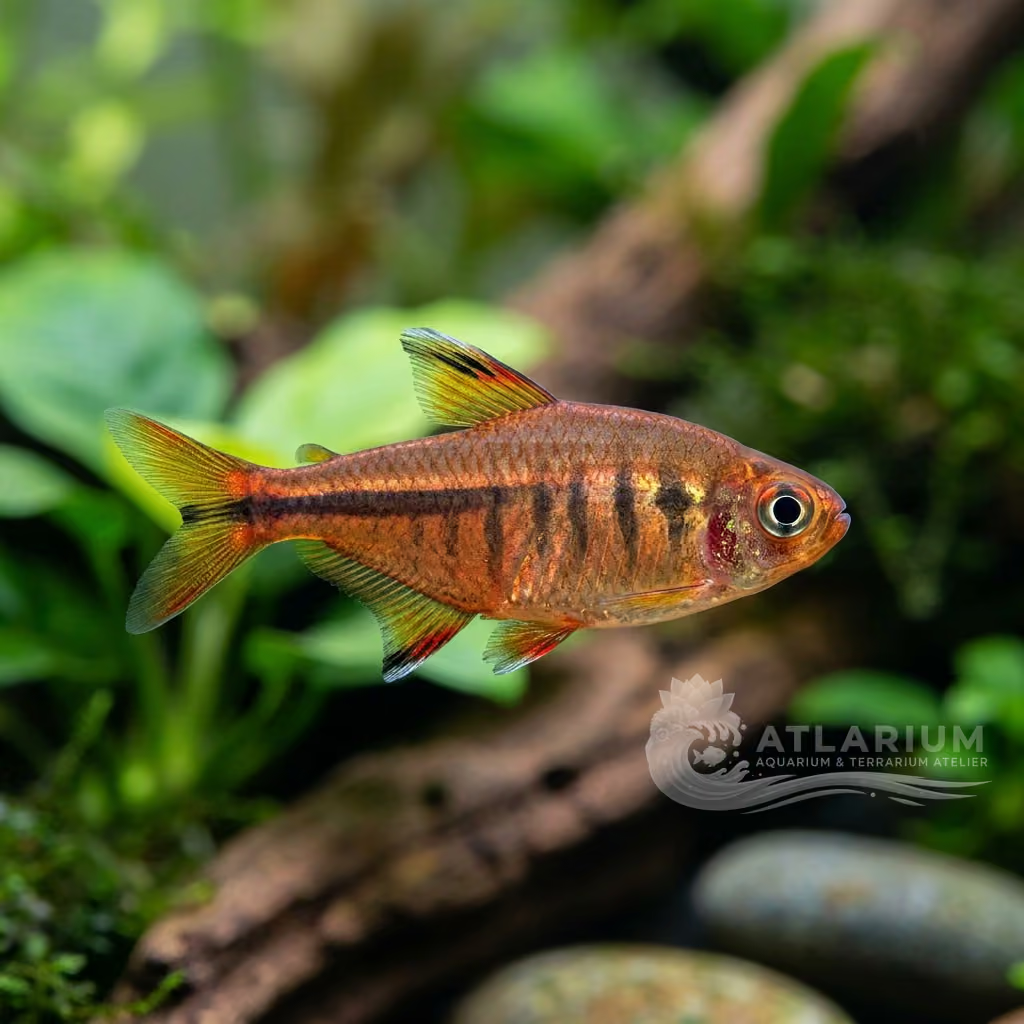
Glass Goby
Gobiopterus chuno
A nearly transparent brackish water goby from Southeast Asia. It forms small schools in heavily vegetated 40L tanks, feeding primarily on micro-zooplankton.
Température de l’eau
22 - 28 °C
Valeur du pH
7 - 8.2
Type d'eau
Eau douce / Eau saumâtre
Niveau dans le bac
Fond et milieu
Taille adulte
3 cm
Volume minimal du bac
>= 30 L
Groupe minimal
>= 6
GH
8 - 20 dGH
KH
6 - 15 dKH
TDS
200 - 600 ppm
Conductivité
400 - 1 000 uS/cm

Description de l'espèce
Geographical Origin and Habitat: This species is native to Southern and Southeastern Asia, including India, Bangladesh, Thailand, Singapore, and parts of Indonesia. It inhabits brackish estuaries, tidal river mouths, and slow-moving coastal streams with dense vegetation and silty substrates.
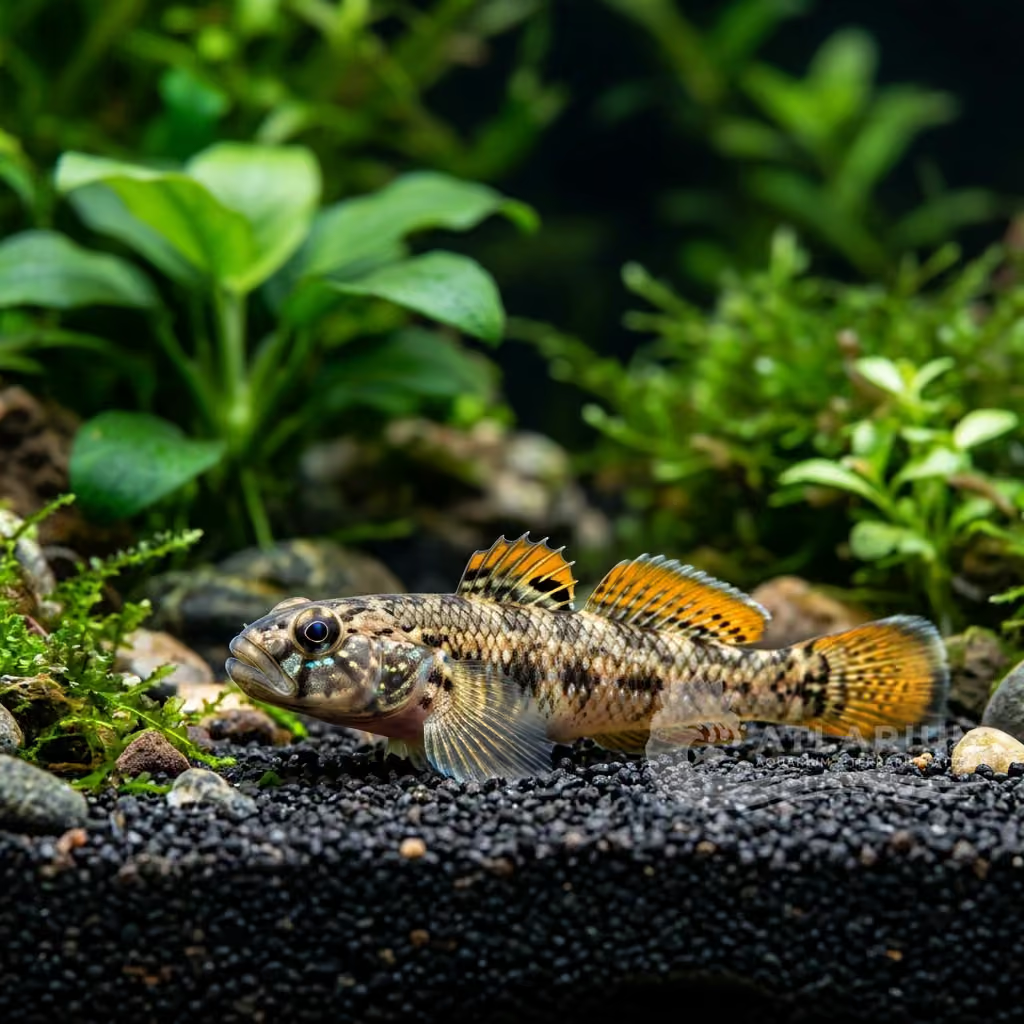
Taxonomy and Morphology: Classified within the Gobiidae family. It features a slender and almost completely transparent body, exposing its skeletal structure and internal organs. The head has large silvery eyes. It is an extremely small fish, with adults rarely exceeding 3.0 centimeters in length.
Social Behavior: Unlike most gobies that are strictly benthic bottom-dwellers, this species is schooling and pelagic, actively swimming in the midwater column. They form cohesive groups that move fluidly between plant stems and roots for shelter.
Coloration and Sexual Dimorphism: The body is glass-like and translucent, marked with tiny black spots or chromatophores along the lateral line and fin rays. Sexual dimorphism is minimal; mature females are slightly more rounded in the abdomen than males when carrying eggs.

Soins, reproduction et cohabitation
Aquarium Setup: A tank of at least 30-40 liters is recommended for a small school. Can be kept in hard freshwater or low-salinity brackish water (SG 1.002-1.005, which is ideal). Decorate with fine sand, smooth rocks, and salt-tolerant plants like Java Fern to provide safety.
Diet and Feeding: Micro-carnivorous. Feeds on suspended micro-zooplankton. In captivity, they must be supplied with small live foods such as baby brine shrimp (nauplii), copepods, and high-quality fine powdered prepared foods, as they often ignore large flakes.
Water Quality: Maintain stable parameters: temperature 22 to 28 °C, pH 7.0 to 8.2, GH 8-20, KH 6-15. They are sensitive to nitrogenous wastes (ammonia and nitrites), requiring an efficient, gentle filtration system that does not produce overly strong currents.
Compatibility and Cohabitation: Peaceful and very shy. Must be kept in groups of at least 6-8 specimens. Compatible only with other tiny, non-aggressive species that share brackish water preferences, such as bumblebee gobies or small caridean shrimps.
Aquarium Breeding: Spawns adhesive eggs on plants or hard surfaces. The parents do not guard the nest. The fry are microscopic upon hatching and require rotifers, greenwater, or infusoria before they are large enough to consume baby brine shrimp.
Risks and Diseases: Starvation is the biggest risk if housed with faster, competitive feeders. They are also sensitive to sudden drops in salinity or temperature, which can weaken their immune system and trigger fungal infections or skin parasites.

Origine et répartition géographiques
This species is native to Southern and Southeastern Asia, including India, Bangladesh, Thailand, Singapore, and parts of Indonesia. It inhabits brackish estuaries, tidal river mouths, and slow-moving coastal streams with dense vegetation and silty substrates.
Origine
Asie du Sud et du Sud-EstAsie de l'Est

Profil de poisson
- Tempérament
- Peaceful
- Behaviorally, the Glass Goby is characterized as being peaceful and shy. They exhibit fascinating social dynamics that can be a true joy to observe in a well-planned display. While generally agreeable, unexpected aggression can sometimes occur if their fundamental environmental needs are not met. Providing adequate hiding spots and sufficient swimming space will go a long way in ensuring their temperament remains calm and manageable.
- Régime alimentaire
- Carnivore
- Feeding the Glass Goby properly requires acknowledging its natural role as a micro-predator. A staple diet of premium flakes or pellets should be supplemented with nutrient-rich treats to replicate natural foraging. It is advisable to soak dry foods beforehand to prevent digestive issues and swim bladder complications. Consistently offering a diverse menu will significantly boost their immune system and overall vitality.
- Espérance de vie
- 3-5 years
- Taille adulte
- 3 cm
- Ratio des sexes
- Group
- To prevent undue stress, it is recommended to keep the Glass Goby in a carefully managed sex ratio. Providing more females than males reduces the constant harassment that a single female might endure. If keeping multiple males, the aquarium must be sufficiently large to allow for the establishment of distinct territories. Careful observation during the first few weeks will dictate if any aggressive individuals need to be rehomed.
- Fréquence d'alimentation
- Twice daily
- To mimic its natural foraging behavior, the Glass Goby should be fed small portions two to three times a day. Overfeeding can lead to severe health issues and quickly degrade the water quality. It is crucial to only provide an amount of food that the fish can consume within a few minutes. Adjusting the feeding frequency based on the fish's age and activity level is a best practice for long-term care.
- Charge biologique
- Low
- Maintaining this freshwater species requires understanding its low bioload profile. The Glass Goby will thrive when the filtration system is carefully matched to its specific waste production. Frequent testing of the water chemistry is highly recommended to ensure no dangerous spikes occur. Excellent water quality is the foundation for preventing disease and promoting a vibrant, active fish.
- Courant
- Strong
- Providing a low current is highly recommended for the overall well-being of the Glass Goby. Adequate water circulation not only mimics their natural ecosystem but also ensures high dissolved oxygen levels throughout the aquarium. Hobbyists should avoid creating localized dead spots where debris might accumulate. Adjusting the filtration output angle can help achieve the perfect balance between steady circulation and calm resting areas.
- Risque de saut
- No
- Reproduction
- Oviparous
- The reproductive strategy of the Glass Goby involves being a egg scatterer. Breeding this species in captivity can be a rewarding challenge that requires dedicated conditioning of the broodstock. Specific triggers such as changes in temperature, diet, or water chemistry are often necessary to induce spawning. Once breeding occurs, specialized care for the fry, including appropriately sized live foods, is critical for their survival and development.
- Compatibilité et compagnons
- Peaceful
- The Glass Goby is known to be requires peaceful nano tankmates when integrated into a carefully planned setup. They tend to exhibit the best colors and natural behaviors when kept with species of a similar temperament. Aquarists must be cautious to provide enough visual barriers if housing them with semi-aggressive tankmates. Overall, a well-thought-out stocking plan will yield a beautiful, drama-free aquatic display.
- Niveau dans le bac
- Middle/Bottom
- This species is predominantly a mid to top dweller within the aquarium setup. Providing the appropriate spatial layout with open swimming areas or dense vegetation where they feel secure is highly beneficial. By understanding their preferred depth, aquarists can carefully select complementary species that occupy other regions of the tank. This spatial separation helps to reduce competition for food and minimizes unnecessary territorial disputes.

Modèles et paramètres scientifiques
FishBase
Fenêtre sur les données scientifiques officielles de l’espèce
FishBase v25.04Données synchronisées le : 15/06/2026
- Niveau trophique
- 3,4 ± 0,45 se
- Résilience
- Élevée (moins de 15 mois)
- Singularité phylogénétique (PD50)
- 0.501
- Relation bayésienne longueur-poids
- a = 0.01023, b = 3
- VulnérabilitéVulnérabilité faible (10 / 100)

Espèces associées
Recommandations regroupées par proches parents, compagnons et soins similaires.