Yellowstriped Dartfish
Parioglossus formosus
An elongated, laterally compressed goby inhabiting mangrove estuaries. It is a skilled jumper that requires an 80L tank with a tight-fitting lid to stay safe.
Température de l’eau
22 - 26 °C
Valeur du pH
7.5 - 8.2
Type d'eau
Eau saumâtre / Marin
Niveau dans le bac
Fond et milieu
Taille adulte
3,5 cm
Volume minimal du bac
>= 50 L
Groupe minimal
>= 6
KH
6 - 15 dKH

Description de l'espèce
Geographical Origin and Habitat: Native to the Western Indo-Pacific, from the Andaman Sea to southern Japan and Australia. It inhabits shallow coastal waters, mangrove estuaries, river mouths, and tidal creeks with protective cover.
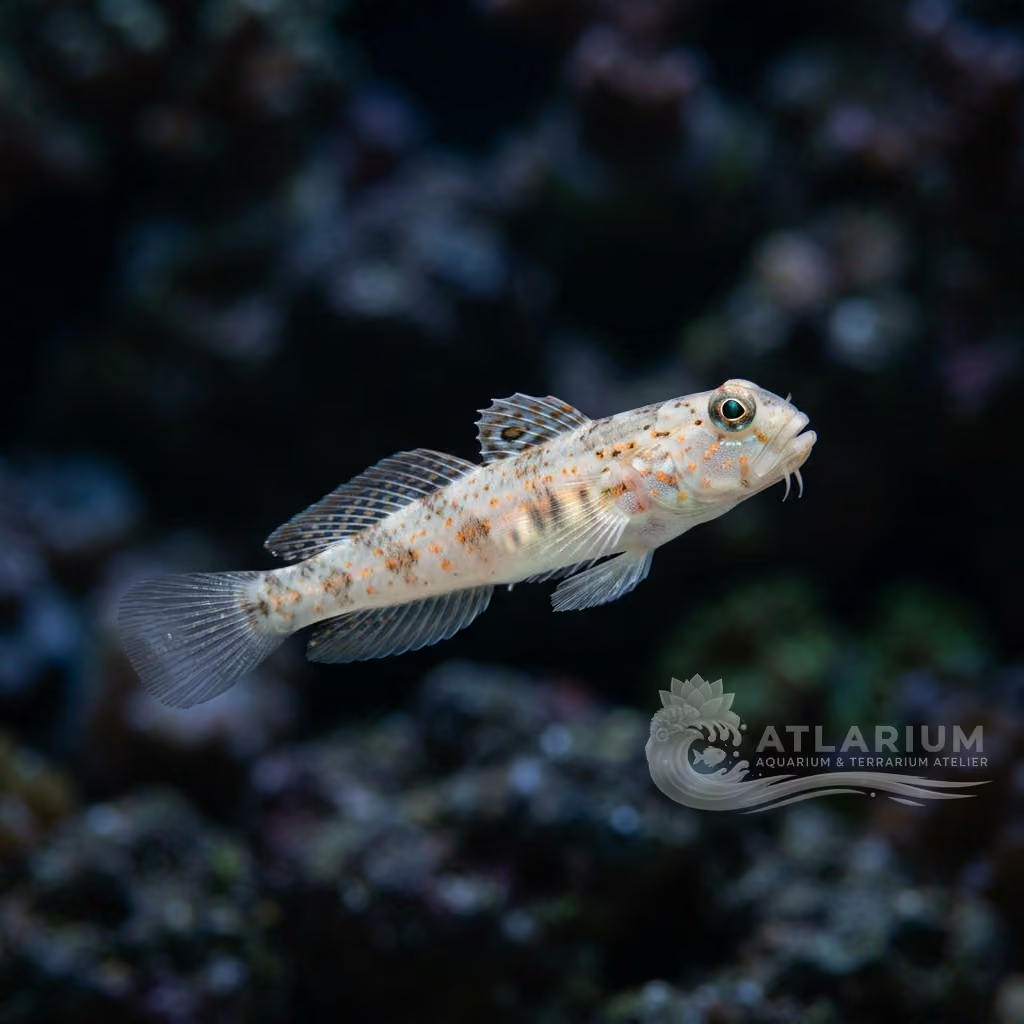
Taxonomy and Morphology: Member of the Gobiidae family, subfamily Ptereleotrinae. Features a slender, elongated, and laterally compressed body with an upward-pointing mouth. Adults are small, reaching a maximum length of 3.5 to 4 cm.
Social Behavior: school-dwelling, active swimmer. Unlike typical benthic gobies, they hover and swim in the middle water column in tight groups. They are peaceful and shy, relying on school size to feel secure and prevent stress.
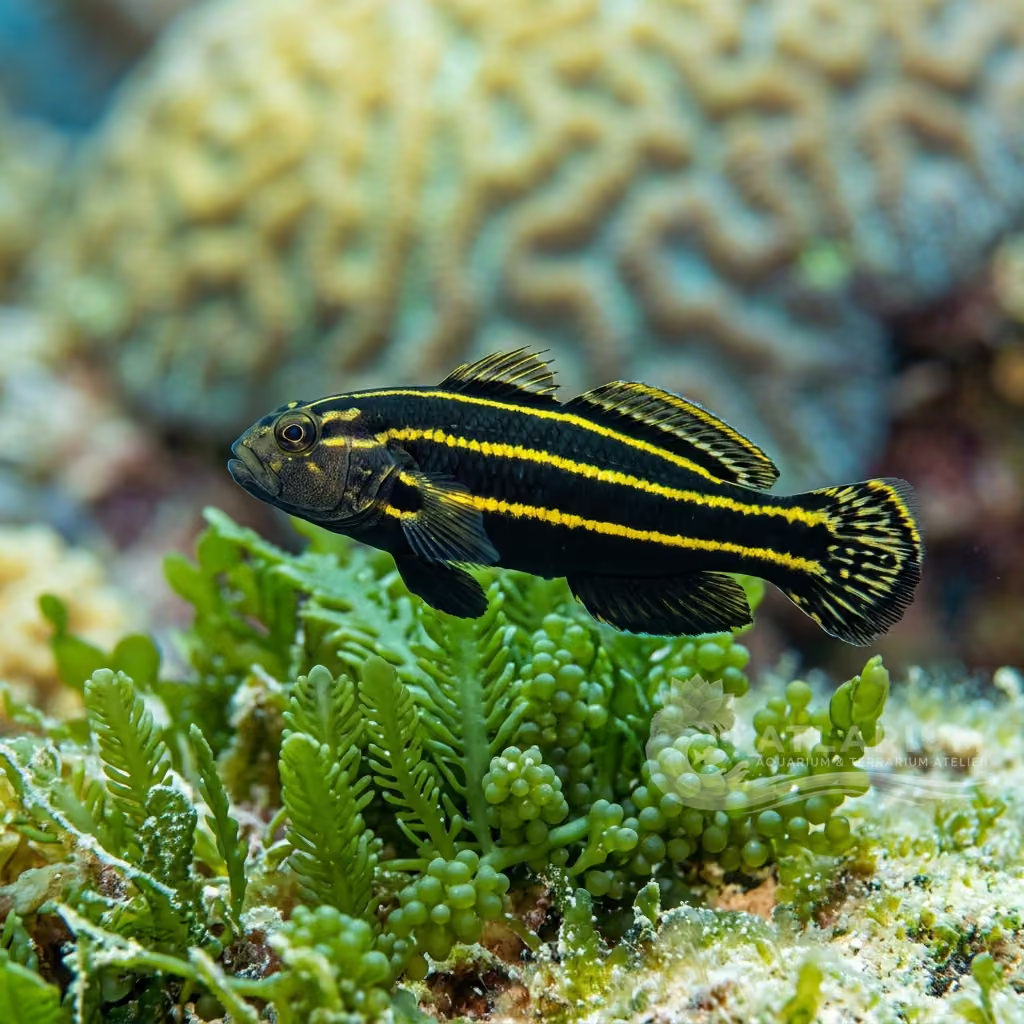
Coloration and Sexual Dimorphism: Body is translucent greyish-white, marked by a bright yellow stripe along the upper dorsal region and a solid black stripe running from the snout to the tail. Males may develop slightly longer fins.

Soins, reproduction et cohabitation
Aquarium Setup: Requires an aquarium of at least 80 liters (approx. 21 gallons). Provide ample open swimming area combined with hiding spots like rocks and plants. A tight-fitting lid is absolutely essential to prevent jumping.
Diet and Feeding: Planctivorous. In captivity, feed small frozen foods such as copepods, cyclops, baby brine shrimp, and finely shredded mysis. They will accept high-quality fine flakes and micro-granules once established in the tank.
Water Quality: Best kept in brackish water (SG 1.008 to 1.015) or marine water. Temperature 22-26°C (72-79°F), pH 7.8 to 8.2, and low nitrogenous waste. Provide gentle to moderate water flow, avoiding strong currents that exhaust them.
Compatibility and Cohabitation: Extremely peaceful. Must be kept in a school of at least 6 to 8 individuals. Compatible with other small, non-aggressive fish such as nano gobies, blennies, and ornamental shrimp. Avoid large or aggressive tankmates.
Aquarium Breeding: Rarely bred in home aquariums. They lay eggs in small caves or crevices, which the male guards until hatching. The tiny pelagic larvae require specialized live micro-zooplankton and are very difficult to raise.
Risks and Diseases: High risk of jumping out of the tank when startled. They can easily starve if housed with fast-eating, competitive tankmates. Highly sensitive to sudden fluctuations in temperature or salinity during maintenance.

Origine et répartition géographiques
Native to the Western Indo-Pacific, from the Andaman Sea to southern Japan and Australia. It inhabits shallow coastal waters, mangrove estuaries, river mouths, and tidal creeks with protective cover.
Origine
Océans tropicaux et récifsAsie du Sud et du Sud-EstAsie de l'EstAustralie, Nouvelle-Guinée et Océanie

Profil de poisson
- Tempérament
- Peaceful
- The overall temperament of the Beautiful Hover Goby can be best described as peaceful schooling. Their disposition makes them a unique addition to the appropriate aquatic community, provided their specific needs are respected. Stressful conditions, such as poor water quality or overcrowding, can drastically alter their typical behavioral patterns. A quiet environment and a stable routine will bring out the most confident and engaging personality from this species.
- Régime alimentaire
- Carnivore
- Feeding the Beautiful Hover Goby properly requires acknowledging its natural role as a carnivorous. A staple diet of premium flakes or pellets should be supplemented with nutrient-rich treats to replicate natural foraging. It is advisable to soak dry foods beforehand to prevent digestive issues and swim bladder complications. Consistently offering a diverse menu will significantly boost their immune system and overall vitality.
- Espérance de vie
- 1-3 years
- Taille adulte
- 3.5 cm
- Ratio des sexes
- Group
- Maintaining an appropriate sex ratio is vital, and a balanced distribution of males and females often works best for the Beautiful Hover Goby. In many cases, keeping a ratio heavily skewed towards females can help disperse male aggression during the breeding season. It is important to monitor the group dynamics closely to quickly identify and isolate any bullied individuals. A well-structured environment with plenty of visual barriers will support a harmonious mixed-sex group.
- Fréquence d'alimentation
- Twice daily
- Establishing a consistent feeding routine is important, with 1-2 small meals per day being ideal for the Beautiful Hover Goby. Aquarists should carefully monitor the fish during feeding time to ensure every individual gets its share. Any uneaten food should be promptly removed with a net or siphon to preserve the pristine aquatic environment. During periods of breeding or elevated temperatures, the feeding frequency may be slightly increased.
- Charge biologique
- Low
- Maintaining this marine species requires understanding its low bioload profile. The Beautiful Hover Goby will thrive when the filtration system is carefully matched to its specific waste production. Frequent testing of the water chemistry is highly recommended to ensure no dangerous spikes occur. Excellent water quality is the foundation for preventing disease and promoting a vibrant, active fish.
- Courant
- Strong
- In terms of water movement, the Beautiful Hover Goby thrives best in environments with moderate flow. Replicating the hydrodynamic conditions of their native habitat is key to reducing stress and promoting natural behaviors. Powerheads or spray bars can be strategically placed to create adequate currents without overwhelming the fish. Careful placement of hardscape and plants can also provide sheltered resting zones away from the main flow.
- Risque de saut
- Yes
- Due to its energetic nature, the Beautiful Hover Goby carries a high probability of jumping out of an open-top aquarium. It is highly advised to secure the perimeter of the tank with a glass canopy or custom netting. Instances of leaping often happen at night or during sudden lighting changes, making a gentle sunrise/sunset lighting schedule beneficial. Maintaining exceptional water quality further discourages attempts to escape the enclosure.
- Reproduction
- Oviparous
- The reproductive strategy of the Beautiful Hover Goby involves being a demersal egg layer. Breeding this species in captivity can be a rewarding challenge that requires dedicated conditioning of the broodstock. Specific triggers such as changes in temperature, diet, or water chemistry are often necessary to induce spawning. Once breeding occurs, specialized care for the fry, including appropriately sized live foods, is critical for their survival and development.
- Compatibilité et compagnons
- Peaceful
- The Beautiful Hover Goby is known to be excellent for peaceful nano reef aquariums when integrated into a carefully planned setup. They tend to exhibit the best colors and natural behaviors when kept with species of a similar temperament. Aquarists must be cautious to provide enough visual barriers if housing them with semi-aggressive tankmates. Overall, a well-thought-out stocking plan will yield a beautiful, drama-free aquatic display.
- Niveau dans le bac
- Middle/Bottom
- This species is predominantly a mid dweller within the aquarium setup. Providing the appropriate spatial layout with open swimming areas or dense vegetation where they feel secure is highly beneficial. By understanding their preferred depth, aquarists can carefully select complementary species that occupy other regions of the tank. This spatial separation helps to reduce competition for food and minimizes unnecessary territorial disputes.

Modèles et paramètres scientifiques
FishBase
Fenêtre sur les données scientifiques officielles de l’espèce
FishBase v25.04Données synchronisées le : 15/06/2026
- Niveau trophique
- 3,2 ± 0,4 se
- Singularité phylogénétique (PD50)
- 0.5
- Relation bayésienne longueur-poids
- a = 0.00389, b = 3.12
- VulnérabilitéVulnérabilité faible (10 / 100)

Espèces associées
Recommandations regroupées par proches parents, compagnons et soins similaires.