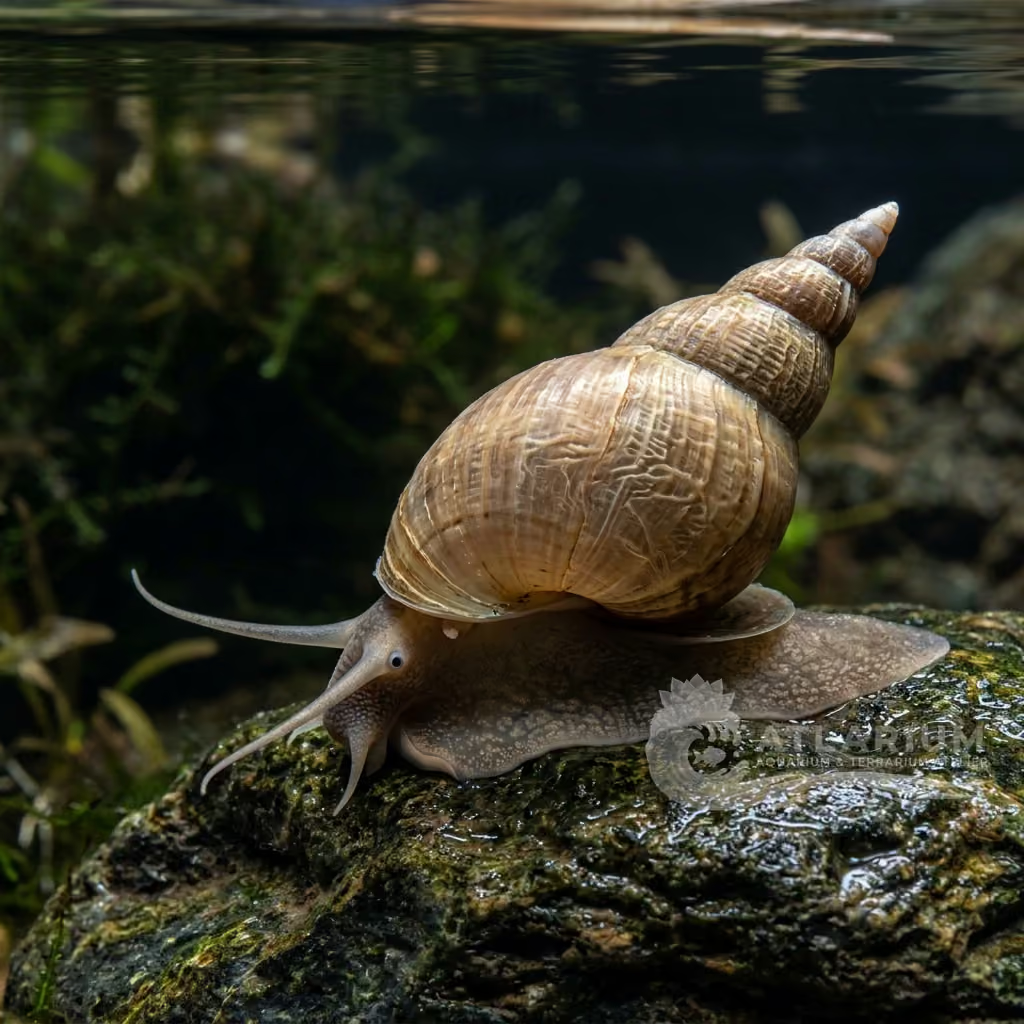
Quilted melania snail
Tarebia granifera
Quilted melania snail: aquarium gastropod in the family Thiaridae, useful for biofilm, light algae, and substrate cleanup. Geographical Origin and Habitat: The Quilted Melania (*Tarebia...
Température de l’eau
20 - 28 °C
Valeur du pH
7 - 8.4
Type d'eau
Eau douce / Eau saumâtre
Type d'invertébré
Freshwater snail
Taille adulte
3 cm
Groupe minimal
>= 1
GH
6 - 20 dGH
KH
3 - 15 dKH
TDS
120 - 450 ppm
Rôle écologique
Scavenger
Sensibilité au cuivre
High

Description de l'espèce
Geographical Origin and Habitat: The Quilted Melania (*Tarebia granifera*) is an incredibly robust, subterranean freshwater gastropod natively endemic to the warm, shallow streams, coastal estuaries, and heavily vegetated marshes of Southeast Asia and India. Due to its extreme adaptability, it has become a highly successful invasive species globally. Their natural biotope is defined by slow-moving water over deep, soft, nutrient-rich substrates, where they spend the majority of their time buried, foraging for microscopic organic detritus.
Taxonomy: Scientifically classified within the Thiaridae family, they are very closely related to the famous Malaysian Trumpet Snail (MTS) and share a similar conical morphology. Fully mature adults reach 2.0 to 2.5 centimeters (0.8-1.0 inches) in length. While they possess a similar elongated, spiral cone shell with a hard operculum (trapdoor), the Quilted Melania is distinctly wider and shorter than the MTS. Their defining feature is their highly textured shell, covered in distinct nodules or "bumps" giving it a quilted appearance.
Social Behavior: They are peaceful, highly industrious, and primarily subterranean scavengers. Like the MTS, they are exceptional burrowers and provide a massive biological benefit to planted aquariums by constantly churning, aerating, and cleaning the sand bed, preventing the formation of toxic anaerobic gas pockets. They are significantly more active during the day than the strictly nocturnal MTS, frequently emerging from the substrate to patrol the lower levels of the aquarium glass and hardscapes.
Coloration and Sexual Dimorphism: Like their Thiaridae cousins, the Quilted Melania reproduces almost exclusively via parthenogenesis (cloning by females), entirely eliminating visual sexual dimorphism. Their highly textured, bumpy, conical shell is an exercise in natural camouflage. The base coloration is incredibly variable, ranging from light yellowish-tan to deep mahogany brown, often heavily speckled or banded with dark reddish-brown markings. The distinct nodules (the "quilting") on the shell whorls catch the light beautifully.

Soins, reproduction et cohabitation
Tank Setup: The aquarium architecture requires very few specific accommodations, but the substrate is absolutely critical to their biology. To allow them to burrow and aerate the tank, a fine sand or very smooth, fine gravel substrate of at least 1.5-2.0 inches deep is unconditionally mandatory. Sharp, coarse gravel will prevent them from burying and cause stress. They do not require a tight lid, as they possess zero instinct to climb above the waterline.
Diet and Feeding: They are ravenous, heavy-duty detritivores and highly efficient substrate cleaners.
CRITICAL CLARIFICATION: They absolutely DO NOT eat live, healthy aquarium plants; they heavily benefit them by aerating the roots. They strictly consume soft green algae, diatoms, decaying plant matter, and massive amounts of uneaten fish food that sinks into the sand. Their population size is entirely dependent on food availability; severe overfeeding will trigger an explosive population boom.
Water Quality: They are nearly indestructible extremophiles. They can tolerate slightly brackish water, severe anoxic conditions, and immense spikes in Ammonia. However, to maintain the intricate, bumpy texture of their shells, they strictly prefer moderately hard to very hard water (GH 8-25, pH 7.2 - 8.5) rich in dissolved calcium. Keeping them in acidic water (below pH 6.8) will not instantly kill them, but the sharp tips and distinct nodules of their shells will slowly dissolve, turn white, and erode away.
Compatibility and Tankmates: Compatibility is universal. Their thick, hard, bumpy shell and protective trapdoor make them highly resistant to minor predation. They are the perfect, harmless cleanup crew for peaceful community tanks, planted setups, and shrimp breeding tanks. However, they will be hunted and eaten by specialized snail-eaters. Assassin Snails (*Clea helena*) will actively hunt them. Large, specialized Loaches (Clown, Yoyo) will aggressively dig them out of the sand and crack their shells.
Aquarium Breeding: Breeding is immediate, explosive, and unstoppable. Because they reproduce via parthenogenesis (cloning) and are livebearers (giving birth to fully formed miniature snails rather than laying eggs), introducing just ONE single snail guarantees a massive colony. They are considered a highly beneficial "pest" snail. The population is 100% dictated by how much you feed your fish: if you overfeed, the substrate will rapidly become overwhelmed with thousands of Quilted Melania clones.
Risks and Diseases: The absolute greatest risk to the aquarist is a massive, visually overwhelming population explosion caused entirely by severe overfeeding. The greatest physical risk to the snail is severe shell degradation (especially the loss of their distinct shell nodules) if kept in highly acidic, soft water. Chemical copper treatments (used for fish parasites) are immediately and brutally lethal, and a massive die-off of hundreds of these snails buried deep in the sand will crash the tank's biological cycle.

Origine et répartition géographiques
The Quilted Melania (*Tarebia granifera*) is an incredibly robust, subterranean freshwater gastropod natively endemic to the warm, shallow streams, coastal estuaries, and heavily vegetated marshes of Southeast Asia and India. Due to its extreme adaptability, it has become a highly successful invasive species globally. Their natural biotope is defined by slow-moving water over deep, soft, nutrient-rich substrates, where they spend the majority of their time buried, foraging for microscopic organic detritus.
Origine
Cosmopolite ou introduitAmérique du NordAsie du Sud et du Sud-Est

Profil d'invertébré
- Régime alimentaire
- Biofilm grazer
- These snails are voracious scavengers that feed almost exclusively on detritus, uneaten fish food, and decaying plant matter trapped within the substrate. They are incredibly beneficial to planted tanks, as they completely ignore healthy vegetation and focus solely on eliminating rotting organic waste. In a typical community aquarium, they rarely require targeted supplemental feeding, easily subsisting on leftover food.
- Rôle écologique
- Scavenger
- Quilted melania perform a critical ecological role in the aquarium by constantly burrowing through the sand or gravel, effectively acting as earthworms of the aquatic world. This relentless churning prevents the substrate from compacting and entirely eliminates the risk of toxic, anaerobic gas pockets forming. They are unparalleled in their ability to maintain a clean, highly aerated, and biologically stable substrate.
- Taille adulte
- 3 cm
- Risque de saut
- Yes
- These snails are exclusively substrate-dwelling organisms that spend the vast majority of daylight hours buried completely beneath the sand or gravel. They possess no jumping capability and practically never leave the water, though they may emerge and climb the glass at night or if oxygen levels drop dangerously low. A mass exodus up the glass is a reliable warning sign of poor water quality rather than an attempt to escape.
- Sensibilité aux chocs
- High
- Tarebia granifera is arguably one of the most adaptable and indestructible snails in the aquarium hobby, capable of surviving broad fluctuations in temperature and water quality. While they are highly resistant to shock, a standard drip acclimation is still recommended to ensure a smooth transition to a new tank. They are often the first to colonize new setups and can easily survive the cycling process.
- Calcium et minéraux
- High
- To maintain the rugged, heavily textured integrity of their conical shells, quilted melania require a moderate supply of dissolved calcium in the water column. In extremely soft or acidic water, their shells will gradually pit and erode, though they often survive these conditions better than most other snail species. Providing crushed coral in the filter ensures their shells remain strong and aesthetically pleasing.
- Mue
- Shell growth
- As gastropods, quilted melania do not molt or shed their shells at any point in their lifecycle. They grow by continuously secreting new, calcified layers along the aperture of their shell, steadily increasing the length and width of their distinctive conical shape. This continuous growth pattern relies on a steady intake of environmental calcium.
- Reproduction
- Oviparous
- This species is parthenogenetic, meaning a single female can reproduce prolifically without the need for a male, giving birth to live, fully formed miniature snails. Their population can explode rapidly if the aquarium is overfed, making them an excellent indicator species for excess nutrient accumulation. Managing their numbers relies entirely on controlling the amount of leftover food and detritus available in the tank.
- Compatibilité et compagnons
- Peaceful
- The quilted melania is a completely peaceful invertebrate that will never bother fish, shrimp, or other snail species. Their thick shells and tendency to burrow keep them safe from many casual predators, though dedicated snail-eaters like assassin snails, pufferfish, and large loaches will actively hunt them. They are an ideal, low-maintenance addition to virtually any freshwater community or planted aquarium.

Galerie d'images
Images sous licence liées à l'espèce ou, lorsqu'elles sont indiquées, au taxon représentatif le plus proche.

Espèces associées
Recommandations regroupées par proches parents, compagnons et soins similaires.