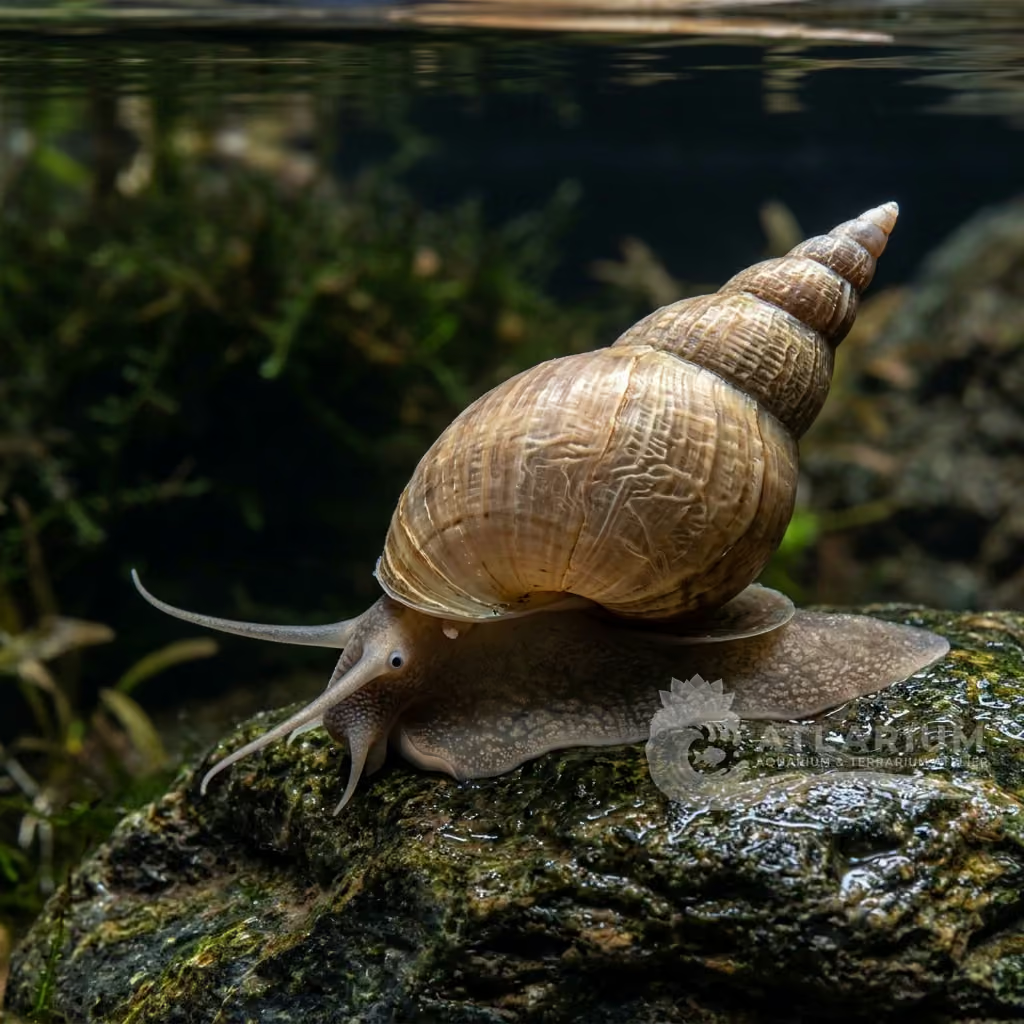
Pond river snail
Viviparus contectus
Pond river snail: aquarium gastropod in the family Viviparidae, useful for biofilm, light algae, and substrate cleanup. Geographical Origin and Habitat: Lister's River Snail (*Viviparus...
Température de l’eau
20 - 28 °C
Valeur du pH
7 - 8.4
Type d'eau
Eau douce
Type d'invertébré
Freshwater snail
Taille adulte
4 cm
Groupe minimal
>= 1
GH
6 - 20 dGH
KH
3 - 15 dKH
TDS
120 - 450 ppm
Rôle écologique
Scavenger
Sensibilité au cuivre
High

Description de l'espèce
Geographical Origin and Habitat: Lister's River Snail (*Viviparus contectus*) is a highly robust, temperate freshwater gastropod natively endemic across Europe, ranging from the British Isles deep into Russia. Unlike its close cousin (*V. viviparus*) which prefers flowing rivers, *V. contectus* has evolved to dominate stagnant, still-water environments. Their natural biotope is defined by heavily vegetated, low-oxygen ponds, slow-moving canals, and flooded marshlands, where they forage deeply in thick, anoxic mud.
Taxonomy: Scientifically classified within the Viviparidae family, they closely resemble other European trapdoor snails but possess distinct morphological differences. Fully mature adults reach 3.0 to 4.0 centimeters (1.2-1.6 inches) in shell length. Compared to *V. viviparus*, the shell of *V. contectus* is significantly more pointed, with heavily stepped (shouldered) whorls and far deeper grooves, giving it a distinct "pagoda-like" silhouette. They breathe via gills and possess a tough operculum.
Social Behavior: They are peaceful, highly industrious, and substrate-bound filter feeders. Because they evolved in stagnant ponds rather than flowing rivers, their behavior is slightly different from other River Snails: they rely less on water current to bring them food and are far more active scavengers. They spend their days bulldozing through thick mud and climbing over massive piles of decaying autumn leaves, actively seeking out rich deposits of detritus and algae to consume.
Coloration and Sexual Dimorphism: Sexual dimorphism is visually identifiable: males possess a noticeably thicker, curled right tentacle (the reproductive organ), while females have identical, straight tentacles. The pointed, deeply grooved shell features a highly camouflaged base coloration ranging from greenish-brown to dark, muddy olive. Like its cousins, the shell is wrapped with three distinct, dark reddish-brown bands, though these are often obscured by heavy layers of green algae and brown pond mud.

Soins, reproduction et cohabitation
Tank Setup: The aquarium architecture must accommodate their size and their preference for stagnant, heavily planted environments. A minimum 40-liter (10-gallon) tank or an outdoor pond is required.
CRITICAL REQUIREMENT: The substrate MUST consist of soft, fine sand or mud (at least 2 inches deep). They heavily prefer dense thickets of aquatic plants and massive piles of decaying leaf litter (Catappa, Oak) to forage in. Unlike *V. viviparus*, they do NOT require strong water flow.
Diet and Feeding: They are highly effective detritivores and opportunistic filter feeders.
CRITICAL CLARIFICATION: They absolutely DO NOT eat healthy, living aquarium plants, making them 100% reef-safe for planted tanks. They rely heavily on massive amounts of soft organic matter. Their diet MUST be supplemented with premium sinking omnivore wafers, powdered spirulina (for filter feeding), and copious amounts of blanched vegetables (zucchini, carrots) and decaying Indian Almond leaves.
Water Quality: Originating from temperate Europe, their biological requirements lean strongly toward COOL to temperate water (10-22°C / 50-72°F). They are highly prized for outdoor ornamental ponds because they easily survive freezing winters under the ice. Keeping them in hot tropical tanks (28°C+) will severely accelerate their metabolism, causing exhaustion and death. They strictly require hard, alkaline water (GH 8-20, pH 7.2 - 8.5) rich in dissolved calcium to maintain their thick shells.
Compatibility and Tankmates: Compatibility is excellent for cooler-water community tanks or stagnant ponds. They are perfect cleanup crews for unheated tanks with Goldfish, Medaka (Japanese Rice Fish), or White Cloud Mountain Minnows. They MUST NEVER be housed with aggressive, snail-eating predators (massive Loaches, large Cichlids) that will relentlessly harass them, forcing them to stay sealed in their shells until they starve. They are completely harmless to dwarf shrimp and fry.
Aquarium Breeding: Breeding is incredibly slow and highly fascinating. As true livebearers (viviparous), females incubate embryos internally for months and give birth to fully formed, independent miniature snails. A female will only give birth to a handful of young per year. Because they reproduce so slowly, they will absolutely NEVER overpopulate a tank or become a "pest." The young are born with highly textured shells adorned with tiny bristles, which wear off as they mature into adults.
Risks and Diseases: The absolute greatest physical risk is slow, agonizing death from massive shell degradation (pitting and whitening) caused by keeping them in soft, acidic water lacking calcium; hard, alkaline water is unconditionally mandatory. The second major risk is lethal starvation if placed in a highly sterile tank without decaying organic matter. Finally, lethal metabolic exhaustion will occur rapidly if this coldwater pond species is kept in a constantly hot tropical aquarium.

Origine et répartition géographiques
Lister's River Snail (*Viviparus contectus*) is a highly robust, temperate freshwater gastropod natively endemic across Europe, ranging from the British Isles deep into Russia. Unlike its close cousin (*V. viviparus*) which prefers flowing rivers, *V. contectus* has evolved to dominate stagnant, still-water environments. Their natural biotope is defined by heavily vegetated, low-oxygen ponds, slow-moving canals, and flooded marshlands, where they forage deeply in thick, anoxic mud.
Origine
Europe, Méditerranée et Asie occidentale

Profil d'invertébré
- Régime alimentaire
- Biofilm grazer
- The primary diet of Viviparus contectus consists of various types of algae, biofilm, and decaying plant matter found on aquarium surfaces. It is an excellent clean-up crew member but may require supplemental feeding. Sinking algae wafers and blanched vegetables should be provided if natural food sources are depleted.
- Rôle écologique
- Scavenger
- In its natural habitat, Viviparus contectus plays a crucial role as a detritivore and primary consumer, helping to process organic waste. By constantly grazing on algae and detritus, it prevents excessive nutrient buildup and keeps surfaces clean. This ecological function translates perfectly into the closed ecosystem of a home aquarium.
- Taille adulte
- 4 cm
- Risque de saut
- Yes
- While Viviparus contectus lacks the ability to physically jump, it is known to occasionally climb above the water line or out of the tank entirely. This wandering behavior can sometimes lead to fatal desiccation if they fall onto the floor. A tightly fitted lid or a wide rim is highly recommended to keep them safely enclosed.
- Sensibilité aux chocs
- High
- Viviparus contectus is remarkably sensitive to sudden fluctuations in water parameters, particularly temperature, pH, and hardness. Rapid changes can induce osmotic shock, leading to lethargy, shell damage, or death. A slow drip acclimation process over several hours is highly recommended when introducing it to a new tank.
- Calcium et minéraux
- High
- Adequate calcium levels are absolutely critical for Viviparus contectus to develop and maintain a strong, healthy shell. Soft, acidic water will gradually erode the shell, exposing the snail to infection and premature death. Hobbyists should supplement the water column or diet with cuttlebone, coral skeleton, or specialized mineral blocks.
- Mue
- Shell growth
- Unlike crustaceans, Viviparus contectus is a gastropod and does not undergo a molting process to grow. Instead, it continuously adds new calcified layers to the aperture of its existing shell as it matures. Therefore, observing continuous, healthy shell growth lines without pitting or cracks is the best indicator of its well-being.
- Reproduction
- Variable
- The reproductive strategy of Viviparus contectus varies, but many require specific conditions such as brackish water to successfully yield viable offspring. While they may lay eggs frequently in a freshwater aquarium, the larvae often fail to develop without the proper salinity. This trait makes them ideal for aquarists who wish to avoid overpopulation issues.
- Compatibilité et compagnons
- Peaceful
- Viviparus contectus is entirely peaceful and possesses no means to harm other tank inhabitants, making it perfect for community setups. It should not, however, be kept with aggressive loaches, pufferfish, or large crayfish that will prey on it. Ideal tank mates include small tetras, rasboras, and dwarf shrimp.

Galerie d'images
Images sous licence liées à l'espèce ou, lorsqu'elles sont indiquées, au taxon représentatif le plus proche.

Espèces associées
Recommandations regroupées par proches parents, compagnons et soins similaires.