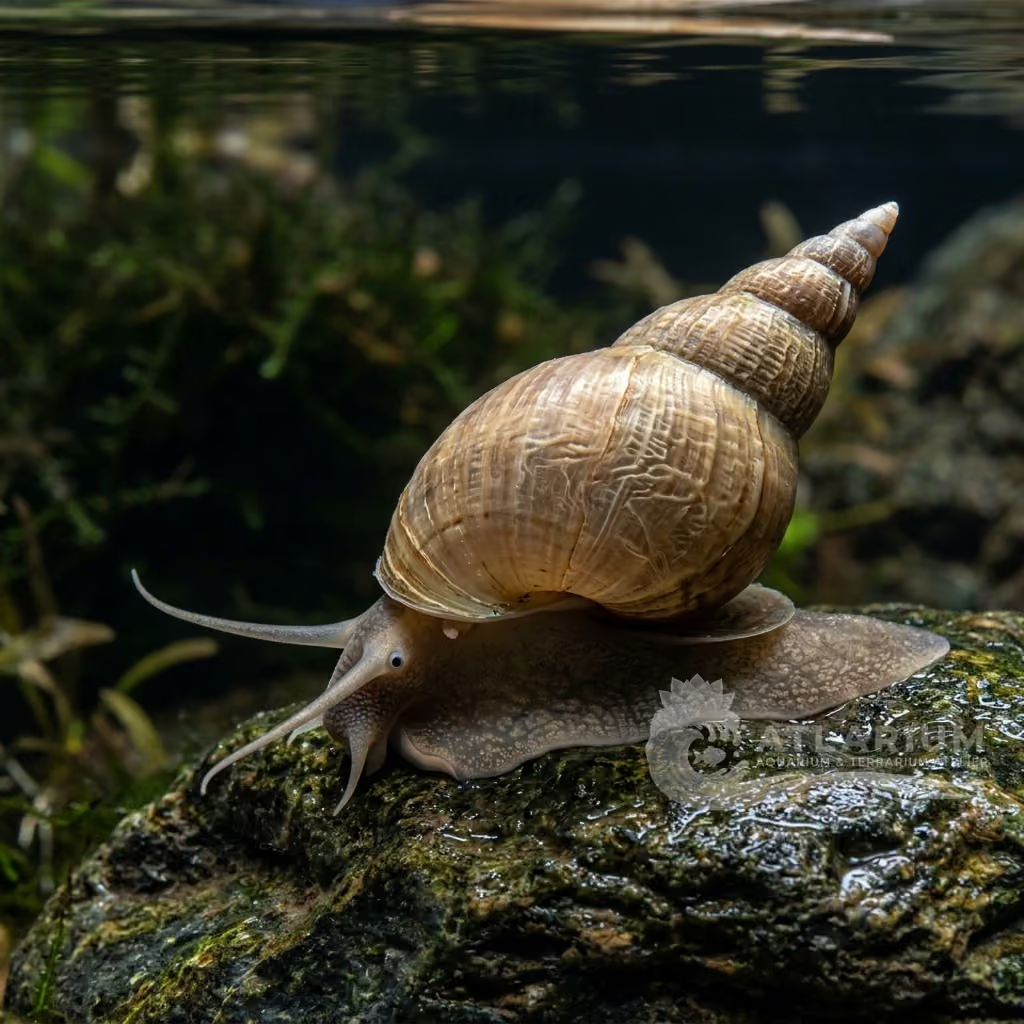
Indian apple snail
Pila globosa
Indian apple snail: aquarium gastropod in the family Ampullariidae, useful for biofilm, light algae, and substrate cleanup. Geographical Origin and Habitat: The Indian Apple Snail (*Pila...
Température de l’eau
20 - 28 °C
Valeur du pH
7 - 8.4
Type d'eau
Eau douce
Type d'invertébré
Freshwater snail
Taille adulte
6 cm
Groupe minimal
>= 1
GH
6 - 20 dGH
KH
3 - 15 dKH
TDS
120 - 450 ppm
Rôle écologique
Scavenger
Sensibilité au cuivre
High

Description de l'espèce
Geographical Origin and Habitat: The Indian Apple Snail (*Pila globosa*) is a massive, exceptionally resilient freshwater gastropod natively endemic to the vast, highly vegetated, and seasonally flooded river basins, shallow lakes, and agricultural rice paddies stretching across India, Bangladesh, and Myanmar. Their natural biotope is defined by extreme monsoonal flooding followed by severe, prolonged droughts. They are famous for burying themselves incredibly deep in the baking mud to aestivate (hibernate) for months, awaiting the return of the monsoons.
Taxonomy: Scientifically classified within the Ampullariidae family alongside the Asian Apple Snail, they are immense aquatic titans. Fully mature adults routinely reach 6.0 to 8.0 centimeters (2.4-3.1 inches) in shell diameter. Their morphological hallmark—which gives them their scientific name (*globosa*)—is their spectacularly rounded, perfectly globe-shaped shell that is significantly wider and rounder than most other Apple Snails. They possess gills, a lung, a long breathing siphon, and a tough operculum.
Social Behavior: They are peaceful, highly armored, and exceptionally hungry biological bulldozers. Despite their massive size, they are completely devoid of predatory instinct toward fish or dwarf shrimp. They are aggressive substrate scavengers; using their massive, muscular foot, they effortlessly plow through deep sand and gravel, unearthing buried roots and decaying matter. Utilizing their lung, they will frequently scale the aquarium glass to the surface, extend their siphon tube, inhale loudly, and drop back down.
Coloration and Sexual Dimorphism: Sexual dimorphism is visually non-existent; male and female reproductive organs are fully enclosed within the shell. The intensely rounded, globe-like shell is incredibly thick to survive drought conditions. The base coloration is highly variable but generally earthy: pale yellowish-green, dark olive, muddy brown, or occasionally a stunning deep reddish-brown. The shell is usually wrapped in numerous, thin, dark horizontal bands. Their massive foot is typically a dark, mottled greyish-black.

Soins, reproduction et cohabitation
Tank Setup: The aquarium architecture MUST accommodate their colossal adult size, massive biological footprint, and reliance on atmospheric air. A minimum 100-liter (25-gallon) tank is absolutely mandatory for a single adult. Because they breathe via a siphon, a heavily exposed air gap of 2-3 inches above the waterline is unconditionally required. A robust, heavy lid is mandatory to prevent them from climbing out. The substrate should be deep, soft sand to allow them to engage in natural burrowing behavior.
Diet and Feeding: They are relentless, heavy-duty herbivores and voracious macrophyte (plant) eaters.
CRITICAL WARNING: The Indian Apple Snail is catastrophically destructive to planted aquariums. They possess a massive appetite and WILL aggressively consume and obliterate every single living aquatic plant in the tank. In an unplanted or rock-only aquarium, they MUST be heavily fed daily with copious amounts of fresh, blanched vegetables (entire zucchini halves, lettuce) and heavy sinking wafers.
Water Quality: Originating from the hot plains of the Indian subcontinent, they demand stable tropical heat (24-30°C / 75-86°F). Due to their massive size and ravenous, plant-eating metabolism, they produce an astonishing amount of physical waste. Flawless, over-engineered filtration and massive water changes are strictly required to prevent lethal Ammonia spikes. They possess an uncompromising biological requirement for extremely HARD, highly alkaline water (GH 8-20, pH 7.5 - 8.5) rich in dissolved calcium.
Compatibility and Tankmates: Compatibility is universally excellent due to their peaceful nature and immense, impenetrable shell. They are the perfect (though heavily destructive to plants) giant cleanup crew for large, bare, or rock-only community tanks. They completely ignore fish. However, they MUST NEVER be housed with aggressive, snail-eating predators (massive Loaches, large Cichlids) that will relentlessly attack their vulnerable soft foot. Excellent companions include fast schooling fish and peaceful bottom-dwellers.
Aquarium Breeding: Breeding the Indian Apple Snail is highly prolific. They are NOT hermaphrodites; distinct males and females are required for reproduction. After mating, the female will climb completely OUT of the water to lay a large, hard, calcified, stark-white egg clutch firmly attached to the aquarium glass, lid, or emergent rocks. The eggs incubate in humid atmospheric air for 2-4 weeks before hatching. Hundreds of voracious, plant-eating baby snails will then drop into the water column.
Risks and Diseases: The absolute greatest physical risk is agonizing death from massive shell degradation caused by keeping them in soft, acidic water lacking calcium; extremely hard, highly alkaline water is unconditionally mandatory. The second major risk is massive, lethal water fouling (Ammonia spikes) if industrial-grade filtration is not utilized to handle their immense physical waste. Finally, they will completely decimate, devour, and destroy any planted aquarium they are introduced to.

Origine et répartition géographiques
The Indian Apple Snail (*Pila globosa*) is a massive, exceptionally resilient freshwater gastropod natively endemic to the vast, highly vegetated, and seasonally flooded river basins, shallow lakes, and agricultural rice paddies stretching across India, Bangladesh, and Myanmar. Their natural biotope is defined by extreme monsoonal flooding followed by severe, prolonged droughts. They are famous for burying themselves incredibly deep in the baking mud to aestivate (hibernate) for months, awaiting the return of the monsoons.
Origine
Amérique du NordAsie du Sud et du Sud-Est

Profil d'invertébré
- Régime alimentaire
- Biofilm grazer
- Pila globosa is a ravenous macrophyte eater that will heavily consume almost any aquatic plant it encounters. In captivity, they must be fed vast amounts of fresh vegetables like lettuce, cucumber, and carrots, alongside sinking commercial diets. They are entirely unsuited for aquascapes as they will decimate the plant life.
- Rôle écologique
- Scavenger
- In nature, they are crucial primary consumers that clear dense aquatic vegetation and provide food for various predators. Due to their enormous appetite and size, they produce a massive bioload in the aquarium. Robust, oversized filtration and frequent water changes are required to keep the environment stable.
- Taille adulte
- 6 cm
- Risque de saut
- Yes
- To facilitate egg-laying, females have a strong instinct to climb above the water's surface. They are strong enough to dislodge light aquarium lids and will easily crawl out of open tanks, risking fatal falls. A secure, weighted, or locked lid is absolutely necessary.
- Sensibilité aux chocs
- High
- They are evolved to be incredibly hardy, capable of surviving extreme conditions by aestivating (burying themselves in mud and going dormant) during droughts. However, in an aquarium, they can still suffer shock from sudden, drastic drops in pH or temperature. A slow acclimation process helps them adjust comfortably to captive conditions.
- Calcium et minéraux
- High
- Building and maintaining their massive, thick shell requires substantial, continuous calcium intake. Water parameters must be kept hard and alkaline to prevent the heavy shell from deteriorating over time. Providing cuttlebone, oyster grit, and high-calcium foods is critical for their long-term health.
- Mue
- Shell growth
- Like all snails, Pila globosa does not molt but continuously adds thick calcium layers to the edge of its shell. Because they naturally aestivate, growth rings on the shell can be prominent, marking periods of active growth versus dormancy. Smooth new growth is a strong indicator of an ideal captive environment.
- Reproduction
- Variable
- Reproduction requires distinct males and females. The female will leave the water entirely to lay large, highly visible, chalky white egg masses on solid surfaces above the waterline. The eggs require specific humidity to incubate, and hatching can result in hundreds of hungry baby snails.
- Compatibilité et compagnons
- Peaceful
- They are completely peaceful but their sheer size and clumsy nature can bulldoze delicate decorations. They do well with medium-sized community fish but should be kept away from aggressive, snail-biting species. They must never be housed in carefully planted tanks, as they will consume everything green.

Galerie d'images
Images sous licence liées à l'espèce ou, lorsqu'elles sont indiquées, au taxon représentatif le plus proche.

Espèces associées
Recommandations regroupées par proches parents, compagnons et soins similaires.