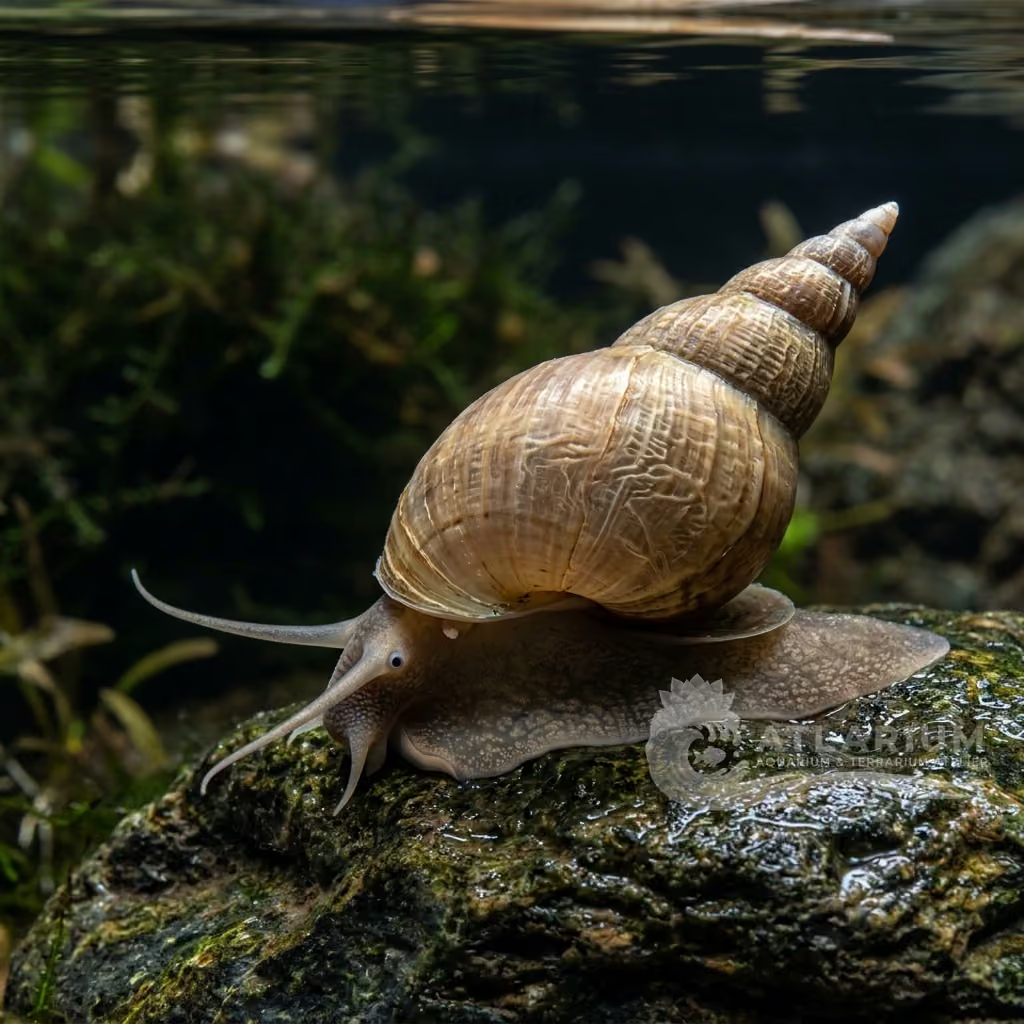
Florida apple snail
Pomacea paludosa
Florida apple snail: aquarium gastropod in the family Ampullariidae, useful for biofilm, light algae, and substrate cleanup. Geographical Origin and Habitat: The Florida Apple Snail...
Température de l’eau
20 - 28 °C
Valeur du pH
7 - 8.4
Type d'eau
Eau douce
Type d'invertébré
Freshwater snail
Taille adulte
6 cm
Groupe minimal
>= 1
GH
6 - 20 dGH
KH
3 - 15 dKH
TDS
120 - 450 ppm
Rôle écologique
Scavenger
Sensibilité au cuivre
High

Description de l'espèce
Geographical Origin and Habitat: The Florida Apple Snail (*Pomacea paludosa*) is a massive, environmentally critical aquatic gastropod natively endemic to the massive subtropical wetlands, slow-moving rivers, spring runs, and specifically the expansive Everglades ecosystem of the southeastern United States (Florida, Georgia, Alabama) and Cuba. Their natural biotope is defined by shallow, densely vegetated, highly alkaline freshwater marshes, where they serve as the singular, critical food source for the endangered Snail Kite bird of prey.
Taxonomy: Scientifically classified within the Ampullariidae family, they are the largest freshwater snail native to North America. Fully mature adults routinely reach 5.0 to 6.5 centimeters (2.0-2.6 inches) in diameter, easily the size of a tennis ball. Morphologically, they possess a massive, rounded, globular calcium-carbonate shell. Like all Apple Snails, they possess complex biology: a lung, gills, an extendable breathing siphon tube for inhaling atmospheric air, and a hard operculum (trapdoor) to seal themselves during droughts.
Social Behavior: They are peaceful, deliberate, and highly active giant scavengers. They lack any predatory instincts toward fish. They are constantly in motion across the tank bottom and glass, using their immense weight to bulldoze through the environment. Their behavior is heavily tied to their unique lung; they frequently march to the highest point in the tank, extend their long, snorkel-like siphon to break the water's surface, aggressively pump their lung full of air, and then gracefully drop back to the substrate.
Coloration and Sexual Dimorphism: Sexual dimorphism is virtually non-existent visually; confirming the sex requires inspecting the mantle cavity for male reproductive organs when the snail is fully extended. Unlike the highly bred Mystery Snail (*P. diffusa*), the Florida Apple Snail has not been extensively color-bred for the hobby. They possess a natural, rugged, wild-type camouflage. The massive, globular shell is typically a deeply saturated, dark olive-green or rich brown, heavily banded with intricate, darker vertical stripes across the whorls.

Soins, reproduction et cohabitation
Tank Setup: The aquarium architecture MUST flawlessly accommodate their massive tennis-ball size, immense bioload, and need to breathe air. A minimum 100-liter (25-gallon) tank is absolutely mandatory for a single adult. The tank MUST have a heavy, tight-fitting lid, and crucially, an exposed air gap of 3 to 4 inches between the water surface and the lid. This gap is unconditionally mandatory to allow them to extend their siphon and breathe, and to provide the female space to deposit her massive egg clutches out of the water.
Diet and Feeding: They are ravenous, heavy-duty omnivores and voracious macrophyte (plant) eaters.
CRITICAL WARNING: Unlike the plant-safe Mystery Snail, the Florida Apple Snail WILL absolutely decimate and consume live, healthy aquatic plants; they should only be kept in bare-bottom, rock, or fake-plant aquariums. Their massive appetite MUST be heavily supplemented daily. Copious amounts of premium sinking algae wafers, entire blanched zucchini halves, spinach, and high-protein sinking pellets are unconditionally mandatory.
Water Quality: Originating from the limestone-rich Florida Everglades, they possess an absolute, uncompromising biological requirement for pristine, highly alkaline, and HARD water. They thrive in subtropical to tropical heat (20-28°C / 68-82°F). They STRICTLY require extremely hard water (GH 10-25, pH 7.5 - 8.5) loaded with dissolved calcium. Keeping them in soft, acidic water (below pH 7.2) is absolutely fatal; their massive shells will rapidly dissolve and collapse. Flawless, over-engineered filtration is mandatory for their massive waste.
Compatibility and Tankmates: Compatibility is heavily restricted by their massive size, plant-eating habits, and delicate sensory tentacles. They MUST NEVER be housed with aggressive fin-nippers (Tiger Barbs, Pufferfish) or massive Cichlids that will aggressively bite off their tentacles and siphon, forcing them to starve to death inside their sealed shells. Because they destroy live plants, tankmates must tolerate bare scapes. Excellent companions include fast-swimming schooling fish, large robust Corydoras, and peaceful bottom-dwellers.
Aquarium Breeding: Breeding the Florida Apple Snail is spectacular and prolific. Breeding is triggered by warm water and heavy feeding. During the night, the female will crawl entirely out of the water and deposit a massive, hardened clutch of 100-300 eggs on the dry glass or under the tank lid. Unlike the bright pink clutches of *P. canaliculata* or *P. diffusa*, the Florida Apple Snail lays distinct, pale white to light-pinkish-opaque egg clutches. If left to hatch, hundreds of ravenous, plant-eating babies will overrun the tank.
Risks and Diseases: The absolute greatest physical risk is agonizing death from massive shell degradation caused by keeping them in soft, acidic water lacking calcium; extremely hard, highly alkaline water is unconditionally mandatory. The second major risk is lethal starvation; owners fail to realize their massive appetite and do not provide enough heavy vegetable and pellet foods. Finally, massive, lethal water fouling (Ammonia spikes) will occur if industrial-grade filtration is not utilized to handle their immense physical waste.

Origine et répartition géographiques
The Florida Apple Snail (*Pomacea paludosa*) is a massive, environmentally critical aquatic gastropod natively endemic to the massive subtropical wetlands, slow-moving rivers, spring runs, and specifically the expansive Everglades ecosystem of the southeastern United States (Florida, Georgia, Alabama) and Cuba. Their natural biotope is defined by shallow, densely vegetated, highly alkaline freshwater marshes, where they serve as the singular, critical food source for the endangered Snail Kite bird of prey.
Origine
Amérique centrale et CaraïbesAmérique du Nord

Profil d'invertébré
- Régime alimentaire
- Biofilm grazer
- This species is remarkably herbivorous and possesses a voracious appetite for a wide variety of aquatic vegetation. Unlike some of their smaller cousins, Florida apple snails will actively consume living aquarium plants, often devastating planted setups in a matter of days. In captivity, they must be heavily provisioned with fresh greens, blanched vegetables, and specialized sinking pellets to meet their caloric needs.
- Rôle écologique
- Scavenger
- In their native habitats, they are foundational species that control the overgrowth of aquatic flora while serving as a crucial prey item for birds, turtles, and alligators. In an aquarium setting, their immense appetite means they process large volumes of plant matter, producing a corresponding amount of waste. Consequently, they require robust mechanical and biological filtration to maintain stable water parameters.
- Taille adulte
- 6 cm
- Risque de saut
- Yes
- Florida apple snails possess a strong instinct to climb above the waterline, particularly females searching for suitable egg-laying sites. Without a secure lid, they will easily wander out of an aquarium and inevitably succumb to desiccation. Ensuring the tank is tightly covered while leaving a few inches of air space at the top is a strict requirement for their care.
- Sensibilité aux chocs
- High
- While relatively hardy once established, P. paludosa can suffer significantly from sudden alterations in water chemistry, especially rapid drops in temperature or pH. They originate from warm, stable environments and thrive best when conditions remain consistently tropical. A slow and deliberate acclimation process is highly advised when transferring them between systems.
- Calcium et minéraux
- High
- Due to their massive size, the calcium requirements of the Florida apple snail are exceptionally high compared to other freshwater invertebrates. A deficiency in calcium or a low pH environment will quickly lead to severe shell erosion, pitting, and eventual structural collapse. Providing cuttlebone, limestone rocks, and calcium-fortified foods is absolutely essential for their long-term health.
- Mue
- Shell growth
- As members of the gastropod class, Florida apple snails grow by continuously secreting new shell material at the aperture, rather than shedding an exoskeleton. This uninterrupted growth process relies heavily on the availability of dissolved minerals in the water column and dietary calcium. Any interruption in this mineral supply can result in visible deformities along the shell's growth lines.
- Reproduction
- Variable
- Florida apple snails are not hermaphroditic; they require both a male and a female to successfully reproduce. The female emerges from the water, usually under the cover of darkness, to lay prominent clutches of large, whitish-pink eggs on emergent vegetation or tank walls. These clutches must remain humid but entirely out of the water to incubate properly before hatching into miniature replicas of the adults.
- Compatibilité et compagnons
- Peaceful
- Their massive size protects them from many smaller predatory fish, making them compatible with medium-sized peaceful species. However, they should be strictly kept out of aquascaped planted tanks due to their destructive feeding habits. Large cichlids, aggressive loaches, and freshwater puffers will still attempt to harass or consume them, requiring careful tankmate selection.

Galerie d'images
Images sous licence liées à l'espèce ou, lorsqu'elles sont indiquées, au taxon représentatif le plus proche.

Espèces associées
Recommandations regroupées par proches parents, compagnons et soins similaires.