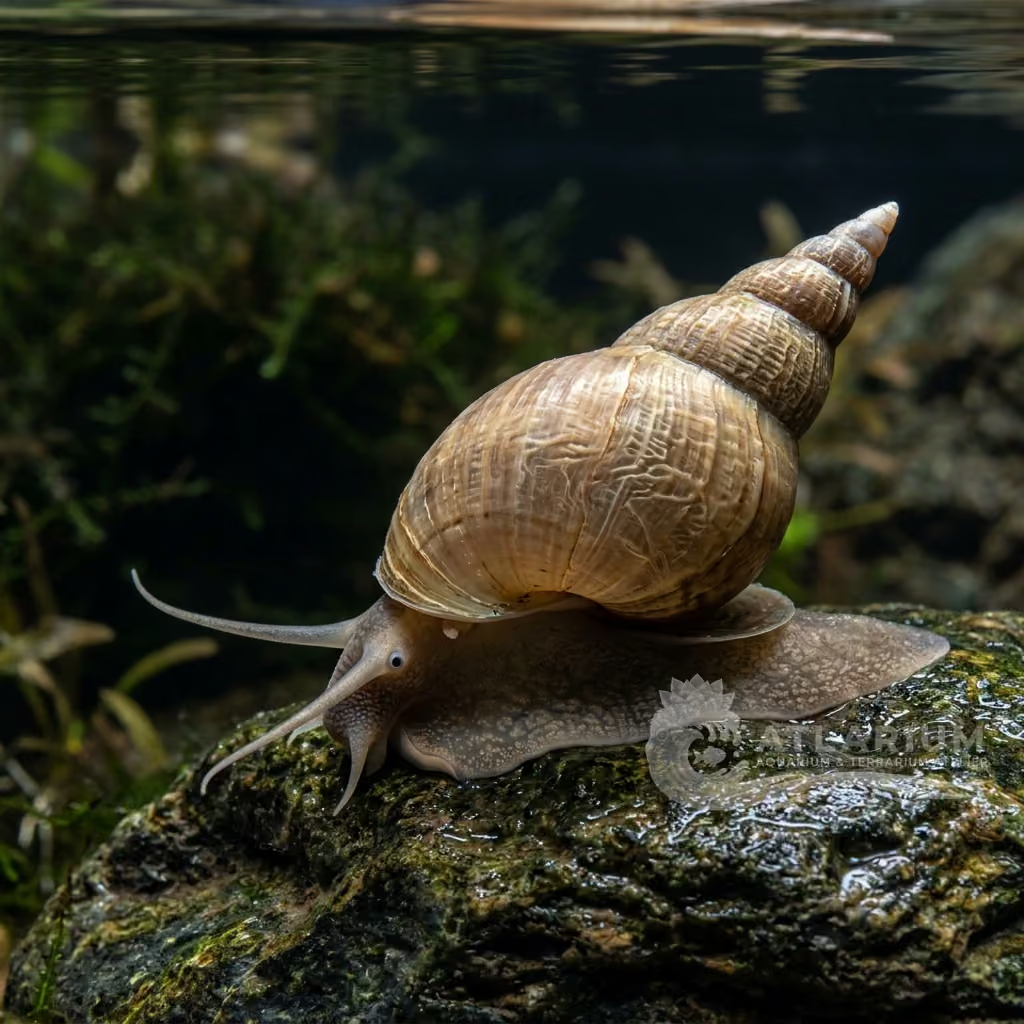
Zebra Nerite Snail
Vittina natalensis
The Zebra Nerite Snail is a legendary consumer of green algae and diatoms. It features striking black and gold stripes and cannot reproduce in freshwater.
Température de l’eau
20 - 28 °C
Valeur du pH
7.2 - 8.5
Type d'eau
Eau douce
Type d'invertébré
Freshwater snail
Taille adulte
3 cm
Groupe minimal
>= 1
GH
8 - 20 dGH
KH
5 - 15 dKH
TDS
200 - 500 ppm
Rôle écologique
Scavenger
Sensibilité au cuivre
High

Description de l'espèce
Geographical Origin and Habitat: Neritina natalensis is native to the coastal regions of East Africa, specifically South Africa (KwaZulu-Natal), Mozambique, Kenya, and Tanzania. It inhabits coastal rivers, mangrove swamps, and tidal estuaries, thriving in both freshwater and brackish environments.
Taxonomy: Belonging to the family Neritidae, this snail features a heavy, globose, and smooth shell without spines. Adult specimens reach 2-3 cm in diameter. It possesses a small, calcareous operculum that seals the shell opening against predators and dehydration.
Social Behavior: Completely peaceful, active, and harmless. It is a dedicated scavenger that works day and night scraping algae off surfaces. It does not bother fish, shrimp, or other snails, and is guaranteed not to feed on or damage healthy live aquarium plants.
Coloration and Sexual Dimorphism: The shell is yellow-gold decorated with bold black-to-dark brown vertical stripes in a zebra-like pattern. Genders are separate but there is no external sexual dimorphism; males and females look identical to the naked eye.

Soins, reproduction et cohabitation
Tank Setup: A tank of at least 20-30 liters is recommended. Provide smooth rocks, driftwood, and glass surfaces to allow grazing.
CRITICAL WARNING: Zebra Nerites are notorious for crawling out of open-top tanks; a tight cover lid is strictly required to prevent death by drying out.
Diet and Feeding: Strictly herbivorous algae eaters. They specialize in eating green dust algae, diatoms, and bacterial biofilm. They rarely accept fish flakes, wafers, or blanched vegetables. They must only be introduced into established aquariums with existing algae.
Water Quality: Requires moderately hard, alkaline water to prevent shell erosion: temperature 22-26°C, pH 7.0-8.2, GH 8-20, and KH 5-12. Soft, acidic waters dissolve their shell, leading to cracking. Keep ammonia and nitrites at zero. Copper is highly toxic.
Compatibility and Tankmates: Excellent for community tanks and shrimp setups. Never house with snail-eating predators such as puffers, loaches, large aggressive cichlids, or Clea helena snails.
Aquarium Breeding: Breeding in freshwater is impossible. While females lay small, hard white egg capsules on wood and glass, the larvae require brackish or marine water to survive. Consequently, they will never overpopulate the aquarium.
Risks and Diseases: Starvation in newly set up or overly clean aquariums is the main threat. Another risk is getting stuck upside down on soft substrates; they may struggle to upright themselves and can perish if left unattended.

Origine et répartition géographiques
Neritina natalensis is native to the coastal regions of East Africa, specifically South Africa (KwaZulu-Natal), Mozambique, Kenya, and Tanzania. It inhabits coastal rivers, mangrove swamps, and tidal estuaries, thriving in both freshwater and brackish environments.
Origine
Océans tropicaux et récifsAfrique et Madagascar

Profil d'invertébré
- Régime alimentaire
- Herbivore
- Herbivorous grazer. Primarily consumes soft green algae, diatoms, and biofilm from glass, rocks, and plant leaves. Will not eat healthy plants. May require supplemental algae wafers if natural algae is insufficient.
- Rôle écologique
- Scavenger
- Excellent algae eater, particularly adept at cleaning glass and hardscape without damaging flora.
- Taille adulte
- 3 cm
- Risque de saut
- Yes
- High risk of escaping. Nerite snails are known to climb out of open-top aquariums. A tight-fitting lid is highly recommended.
- Sensibilité aux chocs
- High
- Can be sensitive to sudden shifts in pH or temperature. Acclimate carefully.
- Calcium et minéraux
- High
- Needs adequate calcium to maintain a strong, healthy shell and prevent erosion.
- Mue
- Shell growth
- Unlike crustaceans, snails do not undergo any molting process. Instead, they secrete material from their mantle to continuously grow their shell outward. They require water with adequate minerals and calcium to prevent shell erosion and decalcification over the course of their lifespan.
- Reproduction
- Rare / not documented
- Lays distinct, sesame-seed-like egg capsules on hard surfaces (glass, wood, rocks). These eggs require brackish or saltwater to hatch into larvae, so they will not reproduce in freshwater aquariums.
- Compatibilité et compagnons
- With caution
- This species is extremely peaceful and completely safe for community aquariums and planted tanks. They make excellent tankmates for small fish and dwarf shrimp, but should never be housed with loaches, pufferfish, assassin snails, or large aggressive species that naturally prey on mollusks.

Galerie d'images
Images sous licence liées à l'espèce ou, lorsqu'elles sont indiquées, au taxon représentatif le plus proche.

Espèces associées
Recommandations regroupées par proches parents, compagnons et soins similaires.