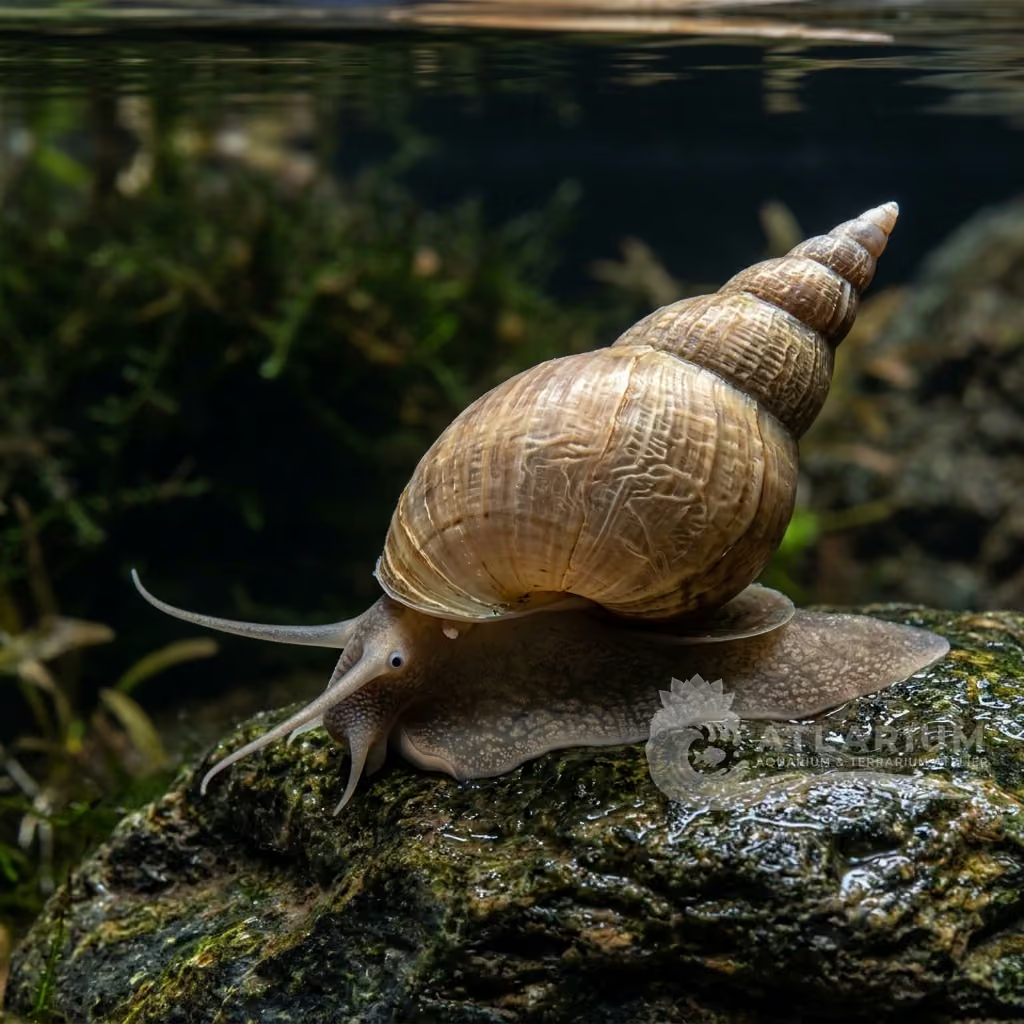
Stream rock snail
Paludomus loricata
The Stream Rock Snail is a unique freshwater gastropod native to fast-flowing streams. It is an excellent biofilm grazer that requires highly oxygenated water.
Température de l’eau
20 - 28 °C
Valeur du pH
7 - 8.4
Type d'eau
Eau douce
Type d'invertébré
Freshwater snail
Taille adulte
3 cm
Groupe minimal
>= 1
GH
6 - 20 dGH
KH
3 - 15 dKH
TDS
120 - 450 ppm
Rôle écologique
Scavenger
Sensibilité au cuivre
High

Description de l'espèce
Geographical Origin and Habitat: Endemic exclusively to the pristine, high-altitude mountain streams and fast-flowing rivers of Sri Lanka. Paludomus loricatus (the Stream Rock Snail) is a highly specialized, rheophilic (current-loving) invertebrate. It naturally colonizes torrential, highly oxygenated aquatic environments. These incredibly rugged micro-habitats are fundamentally characterized by freezing, crystal-clear water violently rushing over massive, smooth boulders and solid bedrock, completely devoid of fine sand or aquatic vegetation, but heavily encrusted with tough diatoms and biofilm.
Taxonomy: Scientifically classified within the Paludomidae family. Morphologically, it is a robust, heavily armored, medium-sized snail, reaching 2.5 to 3.5 centimeters (1-1.4 inches) in diameter. Its extraordinary evolutionary adaptation is its massive, incredibly thick, rounded, and highly textured shell. The shell is deeply sculpted with thick, prominent spiral ridges and grooves, heavily resembling a rough, eroded piece of river rock. This heavy, low-profile, and rugged design acts as the ultimate anchor, preventing the snail from being crushed by debris or swept away in torrential mountain rapids.
Social Behavior: They are completely peaceful, entirely non-aggressive, and highly methodical biological grazers. They possess zero territorial instincts and completely ignore all other tank inhabitants, including tiny shrimp and peaceful fish. Unlike burrowing snails, the Stream Rock Snail is a dedicated surface grazer. They spend 100% of their waking hours firmly locked onto large, smooth surfaces (massive river stones, thick driftwood, and aquarium glass) using their massive, muscular foot, relentlessly scraping away stubborn biofilms and encrusting green algae.
Coloration and Sexual Dimorphism: Sexual dimorphism is virtually non-existent visually; distinguishing males from females requires microscopic anatomical dissection. The coloration is highly functional, rugged camouflage designed to render them completely invisible against algae-covered boulders. The massively textured shell is typically a deep, earthy olive-green, dark chestnut-brown, or solid, striking jet-black. The shell is frequently overlaid with intricate, dizzying patterns of tiny, bright golden or yellow flecks, spots, or delicate zigzag lines trapped within the deep spiral grooves.

Soins, reproduction et cohabitation
Tank Setup: The aquarium architecture must flawlessly replicate a highly oxygenated, fast-flowing Sri Lankan mountain stream. A minimum 40-liter tank is sufficient, provided it is fully mature. The layout MUST feature massive amounts of smooth hardscape: giant, water-worn river stones and heavy, thick driftwood positioned directly under bright lights to intentionally cultivate heavy biofilm and algae growth. They strictly require hard surfaces to graze on. A completely sealed, tight-fitting lid is absolutely mandatory, as they are capable of climbing above the waterline and desiccating.
Diet and Feeding: In their torrential Sri Lankan streams, they are highly specialized, obligate algivores and biofilm grazers. They use their specialized, raspy radula to shear tough diatoms and green encrusting algae directly off smooth bedrock. In captivity, they are ravenous grazers but strictly refuse to eat healthy aquatic plants. Their diet MUST consist almost entirely of naturally occurring aquarium algae and biofilm. In flawlessly clean tanks, they will quickly starve. Their diet MUST be supplemented with sinking spirulina wafers, blanched zucchini, and calcium-rich foods.
Water Quality: Originating from pristine mountain rapids, they demand immaculate water chemistry and extreme oxygenation. They thrive in cooler, stable tropical temperatures (20-25°C / 68-77°F). Crucially, they strictly require hard, highly alkaline water (pH 7.2 - 8.5, GH 8-20) saturated with dissolved calcium to maintain their massive, thick shells. They are rheophilic (current-loving); therefore, a highly powerful canister filter or dedicated powerheads generating a massive, unidirectional water flow across the rocks is absolutely mandatory. They have zero tolerance for stagnant water or ammonia.
Compatibility and Tankmates: They are the absolute perfect, heavy-duty algae grazers for a specialized, fast-flowing "Hillstream" or river manifold community tank. Because they are completely peaceful and heavily armored, they are virtually impervious to casual nipping. Excellent tankmates are other rheophilic, fast-water species: Hillstream Loaches (Sewellia), White Cloud Mountain Minnows, and peaceful Gobies (Stiphodon). However, they MUST NEVER be housed with specialized snail-eating predators: large Pufferfish, massive Botiid Loaches, or Assassin Snails, which will relentlessly hunt them.
Aquarium Breeding: Breeding in a standard freshwater aquarium is incredibly difficult and extraordinarily rare. Unlike pest snails that lay massive, unsightly egg clutches on the glass, Paludomus loricatus is exceptionally secretive. Their complete reproductive cycle remains largely a mystery in the aquarium hobby. They are believed to be livebearers or produce extremely small numbers of fully formed miniature snails hidden deep within the rockwork. Consequently, they will absolutely never overrun a planted aquarium, making them a premium, non-invasive cleanup crew.
Risks and Diseases: The absolute greatest physical risk is slow, agonizing starvation in a brand new, perfectly clean tank; they MUST only be added to mature, established aquariums with a heavy, visible crop of algae and biofilm on the rocks. The second major risk is severe shell erosion and death caused by keeping them in soft, acidic water lacking calcium. The third major risk is suffocation in stagnant, poorly oxygenated water without strong flow. Medically, as invertebrates, they possess absolute zero tolerance for any copper-based medications.

Origine et répartition géographiques
Endemic exclusively to the pristine, high-altitude mountain streams and fast-flowing rivers of Sri Lanka. Paludomus loricatus (the Stream Rock Snail) is a highly specialized, rheophilic (current-loving) invertebrate. It naturally colonizes torrential, highly oxygenated aquatic environments. These incredibly rugged micro-habitats are fundamentally characterized by freezing, crystal-clear water violently rushing over massive, smooth boulders and solid bedrock, completely devoid of fine sand or aquatic vegetation, but heavily encrusted with tough diatoms and biofilm.
Origine
Océans tropicaux et récifsAsie du Sud et du Sud-Est

Profil d'invertébré
- Régime alimentaire
- Biofilm grazer
- Omnivorous. Feeds on algae, biofilm, detritus, and uneaten fish food. Supplemental sinking pellets or blanched vegetables may be required.
- Rôle écologique
- Scavenger
- Substrate and glass cleaner, turning over organic matter and grazing on surfaces.
- Taille adulte
- 3 cm
- Risque de saut
- Yes
- Low risk.
- Sensibilité aux chocs
- High
- Prefers well-oxygenated water with moderate flow; sensitive to poor water quality.
- Calcium et minéraux
- High
- Requires moderate to hard water with sufficient calcium for proper shell development.
- Mue
- No
- Snails do not shed an exoskeleton or molt. Their shell grows continuously throughout their life. If you observe skin or tissue sloughing off the snail, it is not a molt but an indication of severe stress or irritation, often caused by poor water chemistry, incorrect pH, or a lack of essential minerals.
- Reproduction
- Variable
- Information on captive breeding is limited, likely requires specific conditions or brackish stages similar to other related snails.
- Compatibilité et compagnons
- Peaceful
- Peaceful. Can be kept with most community fish, provided the fish do not prey on snails.

Galerie d'images
Images sous licence liées à l'espèce ou, lorsqu'elles sont indiquées, au taxon représentatif le plus proche.

Espèces associées
Recommandations regroupées par proches parents, compagnons et soins similaires.