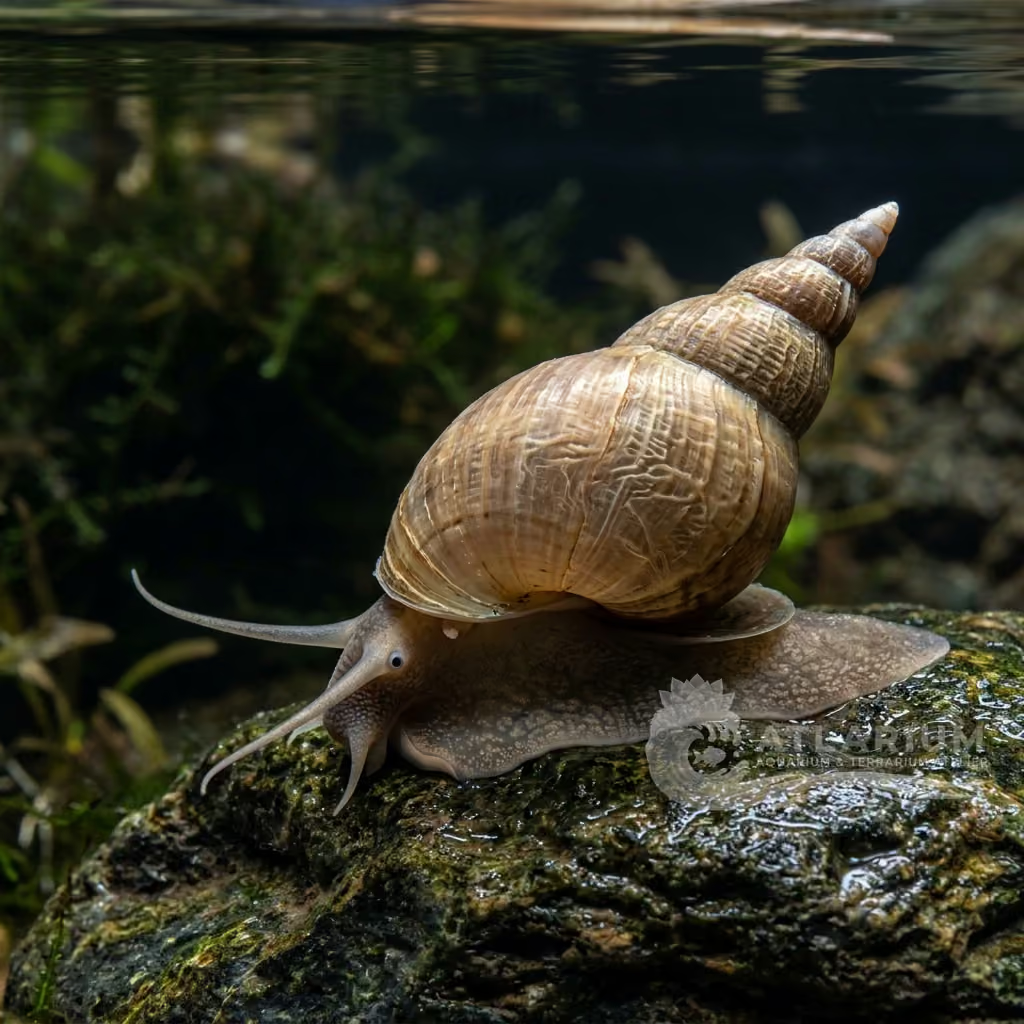
Piano snail
Taia naticoides
Piano snail: aquarium gastropod in the family Viviparidae, useful for biofilm, light algae, and substrate cleanup. Geographical Origin and Habitat: The Piano Snail (Taia naticoides) is a...
Température de l’eau
20 - 28 °C
Valeur du pH
7 - 8.4
Type d'eau
Eau douce
Type d'invertébré
Freshwater snail
Taille adulte
4 cm
Groupe minimal
>= 1
GH
6 - 20 dGH
KH
3 - 15 dKH
TDS
120 - 450 ppm
Rôle écologique
Scavenger
Sensibilité au cuivre
High

Description de l'espèce
Geographical Origin and Habitat: The Piano Snail (*Taia naticoides*) is a highly unique, captivating freshwater gastropod natively endemic strictly to the Inle Lake basin and the massive, slow-moving river systems of Myanmar (Burma). Their natural biotope is defined by shallow, incredibly clear, warm waters densely choked with aquatic vegetation, where they live over soft mud or silty sand substrates, functioning as specialized substrate scavengers and highly efficient filter feeders.
Taxonomy: Scientifically classified within the Viviparidae family, they are close cousins to the European River Snails and Asian Trapdoor Snails. Fully mature adults are medium-sized, generally reaching 3.0 to 3.5 centimeters (1.2-1.4 inches) in shell length. They possess a beautiful, deeply stepped (shouldered), conical shell that gives them a distinct "pagoda" shape. They breathe entirely underwater via gills and possess a tough, protective operculum (trapdoor).
Social Behavior: They are exceptionally peaceful, methodical, and notoriously shy filter feeders. Unlike hyperactive Ramshorns, Piano Snails spend vast amounts of their time partially or completely buried in soft substrate, using their gills to actively filter microscopic detritus and algae directly from the water column. When not filter-feeding, they emerge to slowly bulldoze across the sand, grazing on soft organic matter. They rarely climb the aquarium glass, heavily preferring the bottom.
Coloration and Sexual Dimorphism: Sexual dimorphism is visually distinct: males possess a noticeably swollen, curled right tentacle (the reproductive organ), while females have identical, straight tentacles. Their shell coloration is the origin of their common name. The heavily textured, grooved shell features alternating, thick horizontal bands of rich, chocolate brown or olive-green against lighter bands of cream or yellowish-white, resembling the keys of a piano. Their fleshy body is heavily mottled with dark grey.

Soins, reproduction et cohabitation
Tank Setup: The aquarium architecture MUST accommodate their filter-feeding biology and burrowing behavior. A minimum 40-liter (10-gallon) tank is required.
CRITICAL REQUIREMENT: The substrate MUST consist of soft, fine sand (at least 2 inches deep). Coarse, heavy gravel will brutally lacerate their soft foot and prevent them from natural burrowing. They require moderate water flow (from a filter outflow) to bring suspended, microscopic food particles to their gills.
Diet and Feeding: They are highly specialized filter feeders and detritivores.
CRITICAL CLARIFICATION: They absolutely DO NOT eat healthy, living aquarium plants, making them 100% reef-safe for planted tanks. Because they filter-feed, they will slowly starve to death in pristine, heavily filtered, sterile aquariums. Their diet MUST be meticulously supplemented with powdered spirulina (injected directly into the water current), premium sinking omnivore wafers, and blanched vegetables.
Water Quality: Originating from the warm basins of Myanmar, they possess a strict biological requirement for stable tropical heat (24-28°C / 75-82°F). They are highly sensitive to sudden fluctuations in water parameters. To maintain the integrity of their beautiful, tiered shells, they STRICTLY require hard, alkaline water (GH 8-15, pH 7.2 - 8.2) rich in dissolved calcium. Keeping them in soft, acidic water (below pH 7.0) is lethal; it will rapidly pit and dissolve their shells.
Compatibility and Tankmates: Compatibility is universally excellent for peaceful community tanks. They are the perfect, harmless cleanup crew and filter-feeder for planted setups. They completely ignore fish and dwarf shrimp (Neocaridina). However, they MUST NEVER be housed with aggressive, snail-eating predators (massive Loaches, large Cichlids, Pufferfish) that will relentlessly harass them, forcing them to stay sealed in their shells until they starve to death. Excellent companions for small Tetras.
Aquarium Breeding: Breeding the Piano Snail is incredibly slow, fascinating, and highly prized. As their scientific classification (*Viviparidae*) implies, they are true livebearers (viviparous). Females do not lay eggs; they incubate the embryos internally for months and give birth to fully formed, surprisingly large (up to 0.5 cm) independent miniature snails. Because they reproduce incredibly slowly (producing only a few babies a year), they will absolutely NEVER overpopulate a tank.
Risks and Diseases: The absolute greatest physical risk is slow, agonizing starvation; owners often fail to realize they are specialized filter feeders and place them in pristine, sterile tanks without providing powdered food supplements. The second major risk is massive shell degradation (pitting) caused by keeping them in soft, acidic water lacking calcium. Finally, keeping them on sharp, jagged gravel will cause severe, lethal lacerations to their soft foot.

Origine et répartition géographiques
The Piano Snail (*Taia naticoides*) is a highly unique, captivating freshwater gastropod natively endemic strictly to the Inle Lake basin and the massive, slow-moving river systems of Myanmar (Burma). Their natural biotope is defined by shallow, incredibly clear, warm waters densely choked with aquatic vegetation, where they live over soft mud or silty sand substrates, functioning as specialized substrate scavengers and highly efficient filter feeders.
Origine
Amérique du NordEurope, Méditerranée et Asie occidentaleAsie du Sud et du Sud-EstAsie de l'Est

Profil d'invertébré
- Régime alimentaire
- Biofilm grazer
- Piano snails are industrious detritivores that primarily feed on decaying plant matter, uneaten fish food, and soft biofilm found on hardscape materials. They are completely plant-safe and will ignore healthy living vegetation, focusing their efforts entirely on breaking down detritus. Supplementing their diet with sinking algae wafers, powdered spirulina, or blanched vegetables is highly recommended to ensure proper nutrition.
- Rôle écologique
- Scavenger
- In the aquarium, piano snails perform an invaluable ecological service by constantly cleaning surfaces and breaking down organic waste before it can negatively impact water quality. Unlike some burrowing snails, they spend most of their time actively crawling over rocks, wood, and glass, providing excellent, visible algae control. Their continuous grazing pressure prevents biofilm overgrowth and contributes to a healthier micro-ecosystem.
- Taille adulte
- 4 cm
- Risque de saut
- Yes
- Piano snails are purely aquatic creatures that possess absolutely no ability or inclination to jump. While they may occasionally climb near the waterline to graze on algae, they rarely venture out of the water. The risk of them escaping the aquarium is exceedingly low, although a standard lid is always recommended to prevent evaporation and secure other tank inhabitants.
- Sensibilité aux chocs
- High
- While generally hardy once established, they can be quite sensitive to sudden, drastic shifts in water parameters during introduction. Rapid changes in temperature or pH can induce severe stress, causing them to remain tightly closed within their shells for extended periods. Utilizing a slow, methodical drip acclimation process is the safest way to transition them to a new aquatic environment.
- Calcium et minéraux
- High
- A readily available source of dissolved calcium is absolutely critical to maintain the integrity of their uniquely patterned, banded shells. In soft or acidic water conditions, the vibrant colors of their shells will fade, and the structure will become prone to rapid erosion and breakage. Adding crushed coral, cuttlebone, or specialized mineral supplements to the water ensures their shells remain thick and visually striking.
- Mue
- Shell growth
- Like all freshwater snails, Taia naticoides does not undergo a molting cycle or shed an exoskeleton. Instead, they continually secrete new calcified material along the shell's aperture, steadily extending their characteristic spiral pattern as they grow. This constant state of shell development underscores their absolute requirement for a continuous supply of environmental and dietary calcium.
- Reproduction
- Variable
- Piano snails are viviparous livebearers, meaning the females give birth to fully formed, miniature juvenile snails rather than laying unsightly egg clutches. Their reproductive rate is notoriously slow in captivity, often producing only a few young every month under optimal conditions. This makes them an excellent, highly manageable choice for aquarists who want the benefits of snails without the risk of an overwhelming population explosion.
- Compatibilité et compagnons
- Peaceful
- These snails are incredibly peaceful, possessing no defensive mechanisms other than retreating into their operculum-sealed shells. They are perfectly compatible with a wide variety of community fish, dwarf shrimp, and other peaceful invertebrates. However, they should never be housed with dedicated snail-eaters such as pufferfish, assassin snails, or large, aggressive loaches, which will easily predate upon them.

Galerie d'images
Images sous licence liées à l'espèce ou, lorsqu'elles sont indiquées, au taxon représentatif le plus proche.

Espèces associées
Recommandations regroupées par proches parents, compagnons et soins similaires.