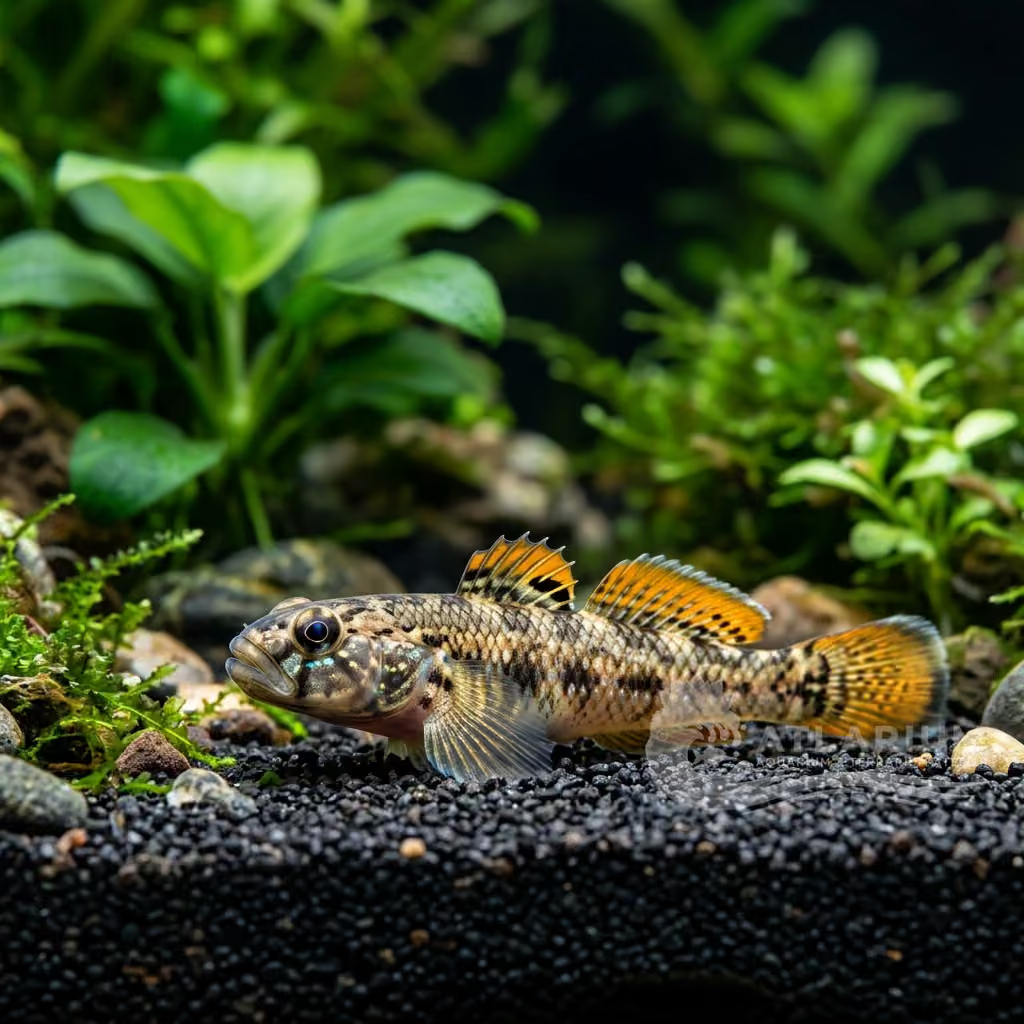
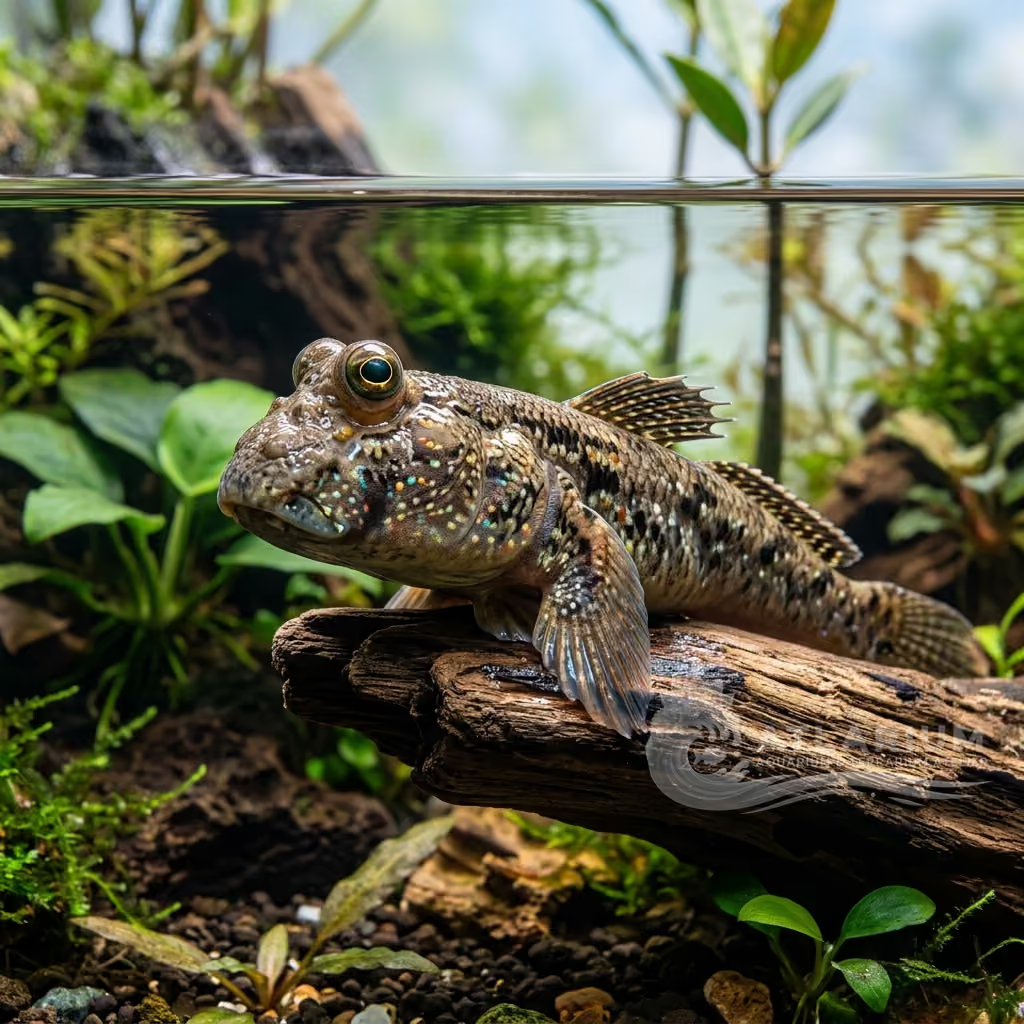
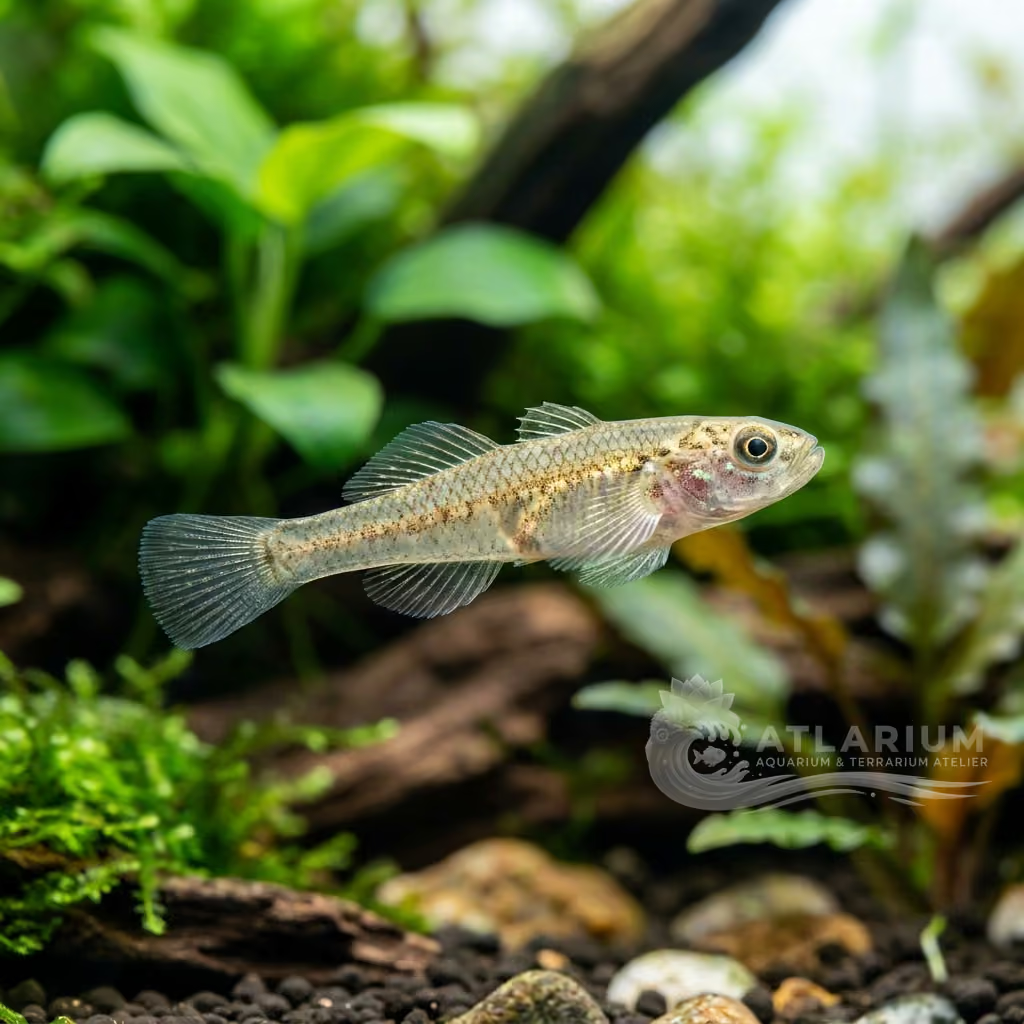
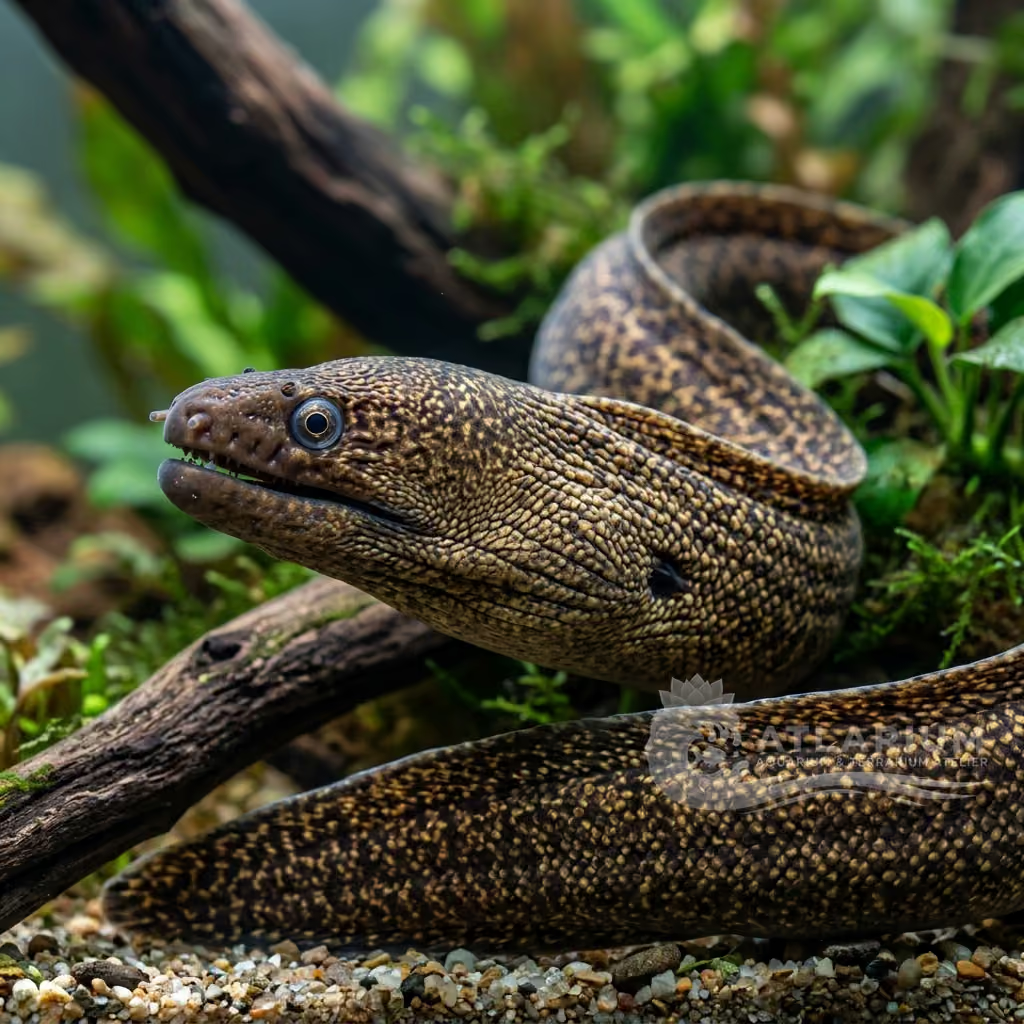
Giant mudskipper
Periophthalmodon schlosseri
The largest mudskipper species, reaching up to 30cm. Highly territorial and aggressively solitary, this apex amphibious predator requires a spacious 250L brackish paludarium with extensive land area.
Température de l’eau
24 - 30 °C
Valeur du pH
7.5 - 8.5
Type d'eau
Eau saumâtre
Niveau dans le bac
Fond
Taille adulte
27 cm
Volume minimal du bac
>= 300 L
Groupe minimal
>= 1
KH
8 - 15 dKH

Description de l'espèce
Geographical Origin and Habitat: The fish species Periophthalmodon schlosseri is native to tropical coastal regions of the Indo-West Pacific, including the coasts of Indonesia, Malaysia, Thailand, Vietnam, and northern Australia. It predominantly populates tidal mudflats, mangrove swamps, brackish estuaries, and muddy river banks where the water levels fluctuate with the tide, preferring areas rich in vegetation, rocks, or crevices where it can find shelter from natural predators. The geographical distribution of this organism reflects its ecological adaptability to different natural aquatic habitats.
Taxonomy and Morphology: From a systematic perspective, Periophthalmodon schlosseri belongs to the family Gobiidae, order Gobiiformes. It was officially classified by Pallas, 1770. Morphologically, it is distinguished by large sizes reaching up to 25-30 cm, muscular and strong pectoral fins modified for crawling and climbing on land, and bulbous eyes set high on top of the head, structural features adapted for swimming and hunting in its natural environment.
Social Behavior: This fish exhibits a behavior that is predominantly territorial, amphibious, active during daylight hours, and highly aggressive towards conspecifics. Towards conspecifics and other species, it behaves in a solitary and highly aggressive; it vigorously defends its terrestrial territory by digging deep burrows in the mud and chasing off any intruders manner. It plays an active role in its habitat, occupying a specific ecological niche.
Coloration and Sexual Dimorphism: The coloration of this species is characterized by a grey-brown body with dark mottling and a prominent black stripe running from the eye along the flanks, complemented by colorful bands on the dorsal fins. Regarding sexual dimorphism, adult males are typically larger than females, showing brighter coloration and taller dorsal fins used during territorial displays.

Soins, reproduction et cohabitation
Aquarium Setup: To properly house Periophthalmodon schlosseri, a stable aquarium with a minimum volume of 250 liters with a large terrestrial surface area is recommended. The tank must be set up with a brackish paludarium featuring a fine sand or mud substrate, a shallow brackish water area, and a dry land portion made of flat rocks or driftwood, secured with a tight-fitting lid to ensure a stimulating and safe environment.
Diet and Feeding: The diet of this fish is predominantly strictly carnivorous and predatory. In the aquarium, it readily accepts live insects such as crickets, mealworms, earthworms, small crabs, and pieces of fresh fish or shrimp. Integrating the diet with vitaminized feeds helps keep the specimen healthy.
Water Quality: The stability of water parameters is fundamental for the long-term health of Periophthalmodon schlosseri. Ideal values include a temperature of 24-28 °C, pH of 7.5-8.2, specific gravity of 1.005-1.015 specific gravity (brackish), and KH of 8-15 dKH. It is essential to perform regular water changes to maintain ammonia and nitrites at zero, and limit nitrates.
Compatibility and Cohabitation: In terms of compatibility, this species proves to be highly territorial and aggressive. It can be housed with generally none; it can only coexist with fast-swimming upper-water brackish species like archerfish in very large setups. Conversely, cohabitation with other male mudskippers, any small fish or invertebrate that can fit in its mouth, and slow-moving or peaceful species is absolutely not recommended, as they could harm or prey on it.
Aquarium Breeding: Breeding Periophthalmodon schlosseri in the aquarium is extremely difficult and rarely achieved in home aquariums as it requires deep mud burrows and tidal cycles. The reproductive cycle involves they excavate U-shaped tunnels in the mud where spawning occurs; the male maintains an air pocket within the burrow to support egg development until hatching. The development of fry requires stable conditions and suitable feeds for the early stages of growth.
Risks and Diseases: The main health risks for this species are related to skin dehydration if the air in the enclosure is too dry, and ammonia poisoning in shallow water without strong filtration. It is sensitive to bacterial skin infections caused by abrasive surfaces, fin rot, and Oodinium parasitic infestations. Rapid fluctuations in chemical parameters can cause stress and immune weakening.

Origine et répartition géographiques
The fish species Periophthalmodon schlosseri is native to tropical coastal regions of the Indo-West Pacific, including the coasts of Indonesia, Malaysia, Thailand, Vietnam, and northern Australia. It predominantly populates tidal mudflats, mangrove swamps, brackish estuaries, and muddy river banks where the water levels fluctuate with the tide, preferring areas rich in vegetation, rocks, or crevices where it can find shelter from natural predators. The geographical distribution of this organism reflects its ecological adaptability to different natural aquatic habitats.
Origine
Océans tropicaux et récifsAsie du Sud et du Sud-EstAustralie, Nouvelle-Guinée et Océanie

Profil de poisson
- Tempérament
- Territorial
- They are highly aggressive and highly predatory. They view most moving objects as either food or a threat. They make fascinating but demanding solitary pets.
- Régime alimentaire
- Carnivore
- They are ravenous carnivores. Large insects, earthworms, and even small fish or crustaceans are consumed. High-quality meaty frozen foods can supplement their diet.
- Espérance de vie
- 5-8 years
- Taille adulte
- 27 cm
- Ratio des sexes
- Solitary
- It is best to keep a single specimen. Males are incredibly aggressive and will fight to the death. Only public aquariums have the space for multiple individuals.
- Fréquence d'alimentation
- Twice daily
- Feed them a substantial meal once a day. They have large appetites and hunt aggressively. Tongs can be used to offer food and prevent biting.
- Charge biologique
- High
- This is a large mudskipper with a significant bioload. It produces a lot of waste on land and in the water. Heavy filtration on the water side and frequent land cleaning are required.
- Courant
- Moderate
- They need calm, shallow water pools. Strong flow is completely inappropriate for their environment. The water should be clean but relatively still.
- Risque de saut
- Yes
- They are powerful jumpers and excellent climbers. They will easily escape an open top tank. The enclosure must be completely secure at all times.
- Reproduction
- Oviparous
- Breeding this giant species in captivity is virtually impossible. They require extensive muddy tidal flats to construct deep burrows. Home aquariums cannot provide the necessary space or substrate depth.
- Compatibilité et compagnons
- Aggressive
- Keep them solitary or in a highly specialized, massive enclosure. They will eat anything that fits in their large mouths. Smaller mudskippers will definitely become prey.
- Niveau dans le bac
- Bottom
- They require a massive paludarium setup. The land area must be spacious and sturdy. They use the shallow water mostly to keep their skin moist.

Modèles et paramètres scientifiques
FishBase
Fenêtre sur les données scientifiques officielles de l’espèce
FishBase v25.04Données synchronisées le : 15/06/2026
- Niveau trophique
- 3,3 ± 0,4 se
- Résilience
- Élevée (moins de 15 mois)
- Temps de génération
- 0,8 ans
- Singularité phylogénétique (PD50)
- 0.625
- Relation bayésienne longueur-poids
- a = 0.01738, b = 3.04
- VulnérabilitéVulnérabilité faible (13 / 100)

Espèces associées
Recommandations regroupées par proches parents, compagnons et soins similaires.