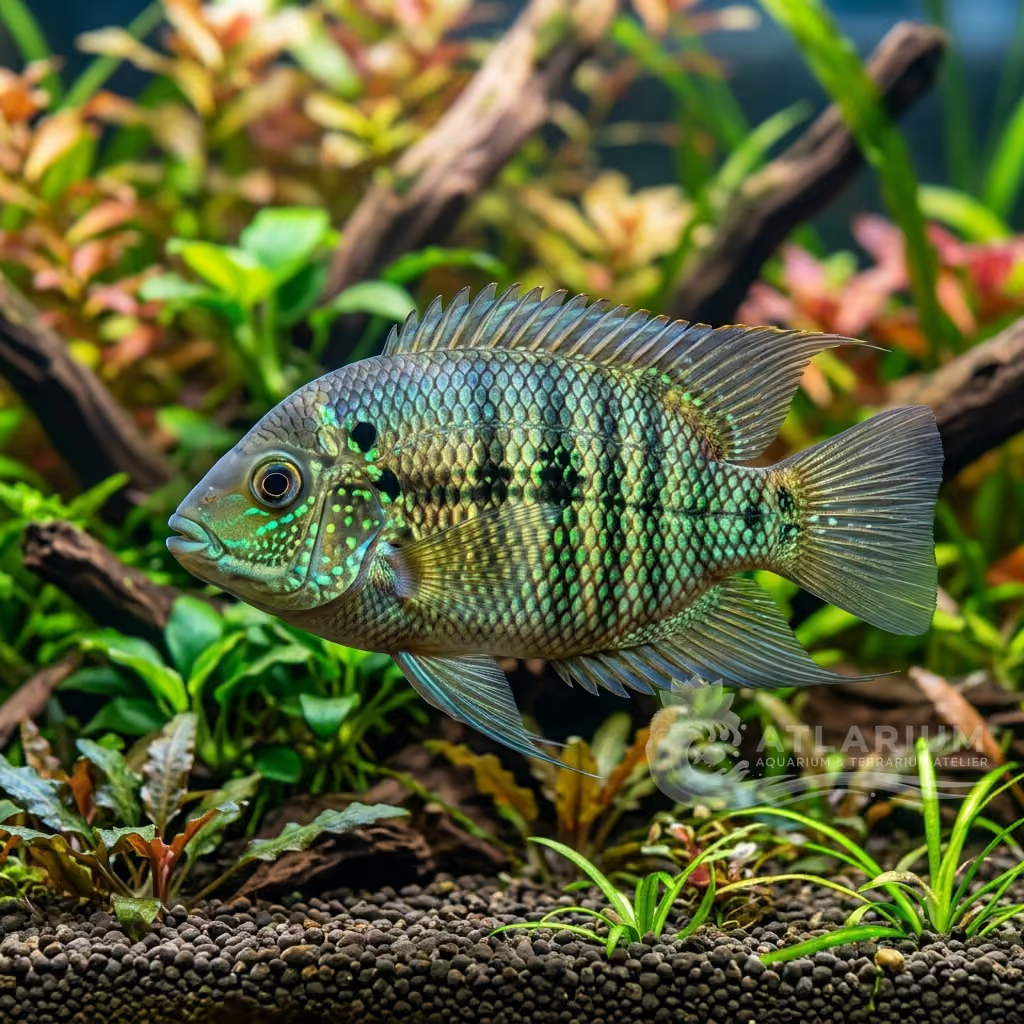
Finescale Four-eyed Fish
Anableps microlepis
An extraordinary brackish water fish famous for its dual-vision eyes, which allow it to search for food and watch for predators above and below the surface.
Température de l’eau
24 - 28 °C
Valeur du pH
7.5 - 8.5
Type d'eau
Eau douce / Eau saumâtre
Niveau dans le bac
Surface
Taille adulte
30 cm
Volume minimal du bac
>= 350 L
Groupe minimal
>= 6
GH
4 - 15 dGH
KH
2 - 7 dKH
TDS
80 - 295 ppm
Conductivité
125 - 461 uS/cm

Description de l'espèce
Geographical Origin and Habitat: Anableps microlepis is found along the northern coast of South America, from the Orinoco River delta in Venezuela to the Amazon River mouth in Brazil. It inhabits shallow brackish waters, mangrove swamps, muddy estuaries, and tidal flats where it stays near the shoreline.
Taxonomy and Morphology: Belonging to the family Anablepidae, this species is named for its horizontal eye split, creating two pupils in each eye for simultaneous air and water vision. It has an elongated, cylindrical body covered in very small scales and can reach a length of 12 inches (30 cm).
Social Behavior: Highly social, schooling fish that spend their entire lives swimming right at the water surface. They are active during the day and are easily startled, often leaping out of the water to escape perceived threats or predators.
Coloration and Sexual Dimorphism: Body coloration is olive-brown to silvery-gray with a pale belly. They are livebearers exhibiting unilateral specialized reproduction: males have a modified anal fin called a gonopodium that bends either to the left or right, mating only with females whose genital openings match.

Soins, reproduction et cohabitation
Aquarium Setup: Requires a wide tank with a large footprint rather than depth (at least 120 cm length and 400 liters). A tight-fitting lid is absolutely critical as they are exceptional jumpers. Decorate with a sandy substrate and smooth roots, leaving the surface completely unobstructed.
Diet and Feeding: Surface-oriented carnivore. Feed live and frozen foods that float, such as crickets, fruit flies, bloodworms, brine shrimp, and floating pellet foods. They rarely consume food once it has fallen to the bottom.
Water Quality: Best kept in brackish water conditions with a specific gravity between 1.005 and 1.012. Maintain temperatures at 24-28°C (75-82°F), pH 7.5-8.5, and hard water. Good biological filtration and regular water changes are essential to prevent accumulation of wastes.
Compatibility and Cohabitation: Peaceful but will consume any fish small enough to fit in their mouths. Best housed in a species-only group or with large brackish tankmates like archerfish (Toxotes), mudskippers, and silver monos (Monodactylus).
Aquarium Breeding: Viviparous (gives birth to live young). Breeding requires matched pairs of compatible lateral orientation. After a gestation period of around 2 months, the female releases 10-30 large, fully developed fry (about 4 cm long) that require immediate feeding.
Risks and Diseases: Highly susceptible to bacterial skin infections and columnaris if kept in freshwater long-term. Physical damage to their protruding eyes from rough decorations or jumping accidents can easily lead to blindness or fatal infections.

Origine et répartition géographiques
Anableps microlepis is found along the northern coast of South America, from the Orinoco River delta in Venezuela to the Amazon River mouth in Brazil. It inhabits shallow brackish waters, mangrove swamps, muddy estuaries, and tidal flats where it stays near the shoreline.
Origine
Amazonie, Orénoque et Guyanes

Profil de poisson
- Tempérament
- Active
- They are peaceful but easily startled. Sudden shadows or movements outside the tank will cause panic. They do not bother fish that live lower in the water column.
- Régime alimentaire
- Carnivore
- They are insectivores that feed almost exclusively at the surface. Floating pellets, crickets, and mealworms are ideal foods. They will rarely dive to catch sinking food.
- Espérance de vie
- 6-8 years
- Taille adulte
- 30 cm
- Ratio des sexes
- Group
- Keep them in small groups to encourage natural behavior. Ensure you have a mix of compatible handedness if breeding is desired. The ratio of males to females is otherwise not critical.
- Fréquence d'alimentation
- Twice daily
- Feed them one to two times daily. Ensure all food floats and remains at the surface. They have a hearty appetite and feed vigorously.
- Charge biologique
- Medium to High
- This is a large, messy fish with a high bioload. They eat heavily and excrete a lot of waste. Powerful filtration and frequent water changes are completely necessary.
- Courant
- Strong
- They prefer gentle flow at the surface. Too much surface agitation disrupts their unique vision. The return flow should be directed downwards.
- Risque de saut
- Yes
- They are extremely prone to jumping. They frequently leap out of the water to catch insects or escape threats. A heavy, tight-fitting glass lid is absolutely mandatory.
- Reproduction
- Livebearer
- They are livebearers that breed occasionally in captivity. The fry are born very large and independent. They require left-handed and right-handed mates to reproduce successfully.
- Compatibilité et compagnons
- Peaceful
- Keep with other peaceful, large brackish fish. Do not house with small fish, as they will be eaten. Mid-water or bottom-dwelling companions are best.
- Niveau dans le bac
- Top
- They exclusively inhabit the very top layer of the water. Their eyes are specially adapted to see above and below the water line simultaneously. They need maximum surface area.

Modèles et paramètres scientifiques
FishBase
Fenêtre sur les données scientifiques officielles de l’espèce
FishBase v25.04Données synchronisées le : 15/06/2026
- Niveau trophique
- 2,8 ± 0,3 se
- Résilience
- Faible (4,5 - 14 ans)
- Singularité phylogénétique (PD50)
- 0.625
- Relation bayésienne longueur-poids
- a = 0.00537, b = 3.15
- VulnérabilitéVulnérabilité faible (22 / 100)

Espèces associées
Recommandations regroupées par proches parents, compagnons et soins similaires.