Duckbill Sleeper
Butis butis
The Crazy Fish is a fascinating brackish predator that perfectly mimics dead leaves by swimming upside down. It requires an estuarine habitat with hiding spots and a strict carnivorous diet.
Température de l’eau
22 - 28 °C
Valeur du pH
7.5 - 8.5
Type d'eau
Eau douce / Eau saumâtre
Niveau dans le bac
Fond
Taille adulte
15 cm
Volume minimal du bac
>= 150 L
Groupe minimal
>= 1
GH
12 - 20 dGH
KH
6 - 10 dKH
TDS
240 - 400 ppm
Conductivité
375 - 625 uS/cm

Description de l'espèce
Geographical Origin and Habitat: Butis butis, commonly known as the Duckbill Sleeper or Crazy Fish, is a brackish and freshwater fish widely distributed across the coastal regions of the Indo-West Pacific. Its natural range extends from East Africa and Madagascar to India, Southeast Asia, northern Australia, and the western Pacific islands. It primarily inhabits muddy estuaries, coastal lagoons, mangrove forests, tidal canals, and the lower reaches of rivers where salinity levels fluctuate seasonally.
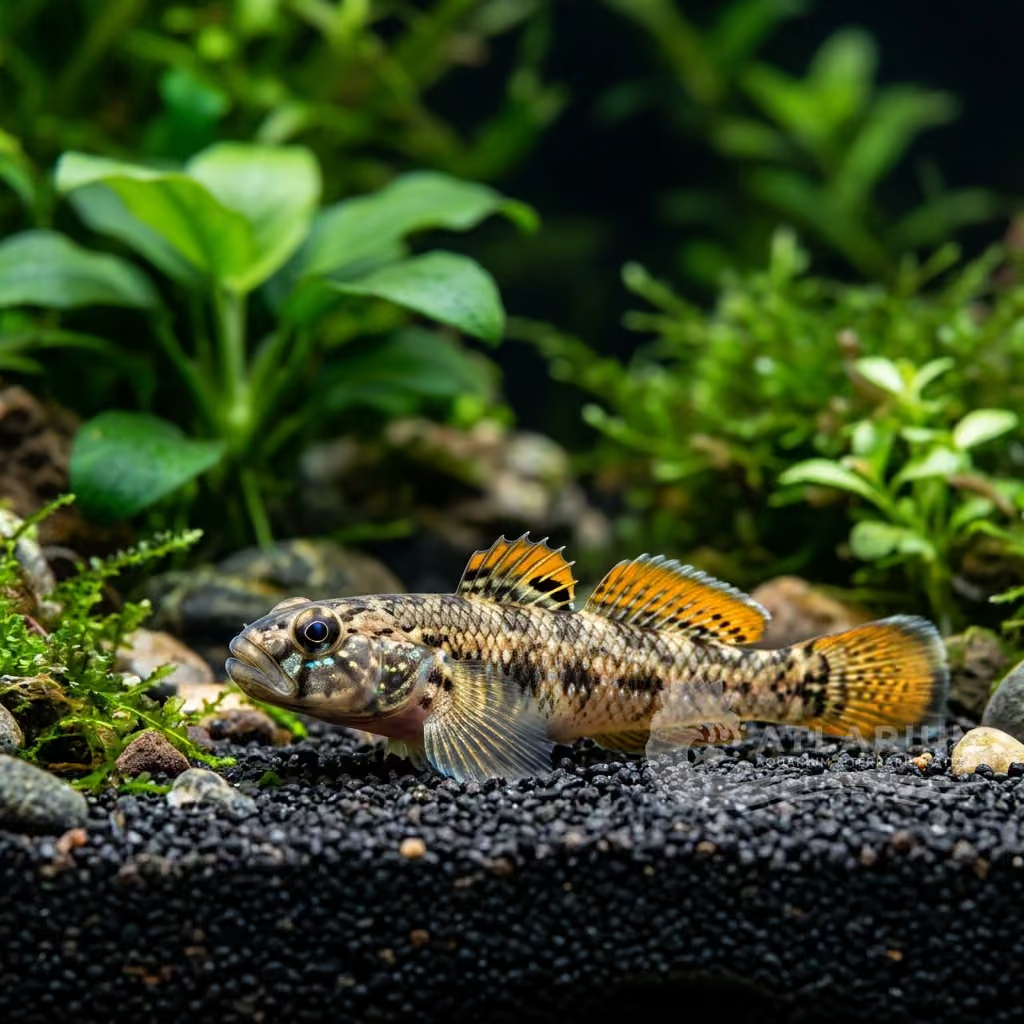
Taxonomy and Morphology: Belonging to the family Eleotridae (sleeper gobies), order Gobiiformes, and class Actinopterygii, it is characterized by an elongated, robust body with a flattened head and a long, pointed snout resembling a duck's bill. The mouth is large and highly protractile, lined with small sharp teeth. It can reach a maximum length of about 15 centimeters in adulthood.
Social Behavior: It is a solitary, territorial ambush predator. It is famous for its unusual behavior of swimming and resting upside down or vertically against rocks, driftwood, or aquarium glass, mimicking dead leaves or debris to surprise unsuspecting prey. It is peaceful toward fish too large to be swallowed, but is aggressive toward conspecifics and highly predatory toward smaller tankmates.
Coloration and Sexual Dimorphism: The coloration is highly mimetically patterned, dominated by shades of dark brown, gray, and black. These are arranged in irregular bands and mottling that break up the fish's silhouette against muddy bottoms. Small red or orange spots are often present on the pectoral and dorsal fins. There is no obvious sexual dimorphism; males may have slightly longer fins, but positive identification is only possible during spawning via genital papilla examination.

Soins, reproduction et cohabitation
Aquarium Setup: It requires an aquarium of at least 120-150 liters for a single specimen or a compatible pair. The tank design should replicate an estuarine habitat, featuring a substrate of fine, dark sand. Furnish the tank with plenty of hiding places such as vertically positioned driftwood, roots, flat rocks, and PVC pipes of appropriate diameter. A secure lid is mandatory as they are known to jump when startled.
Diet and Feeding: They are strict carnivores. In nature, they feed on small fish, crustaceans, and insects. In captivity, they rarely accept dry commercial foods. They must be fed live or frozen foods of appropriate size, such as grass shrimp, mysis, krill, small baitfish, insect larvae, and earthworms. Feeding with tongs can help stimulate their natural strike response.
Water Quality: Although they can tolerate fresh water, they thrive best long-term under brackish conditions (recommended specific gravity of 1.002 to 1.008). Water pH should be kept alkaline (7.5 to 8.2), with medium-high hardness (GH 12-20 dGH), and temperatures between 22°C and 28°C. Efficient filtration is required, but water movement should be kept moderate.
Compatibility and Cohabitation: They can be kept in brackish community tanks with robust, medium-to-large fish that occupy the upper water column, such as archerfish (Toxotes), monos (Monodactylus), or large glassfish. Any fish or invertebrate small enough to fit into its expansive mouth will inevitably be viewed as food and predated upon, especially at night.
Aquarium Breeding: Breeding in captivity is extremely difficult and rarely documented. They are substrate spawners; adhesive eggs are deposited on flat surfaces inside caves or underneath rocks. The male guards the clutch and fans the eggs until they hatch. Larval development is complex and requires a gradual adjustment of salinity levels for the fry to survive.
Risks and Diseases: Long-term housing in pure fresh water weakens their immune system, making them prone to skin fungal infections and fin rot. Poor substrate hygiene can also lead to infections around the mouth and pelvic regions. They are highly sensitive to copper-based therapeutic medications.

Origine et répartition géographiques
Butis butis, commonly known as the Duckbill Sleeper or Crazy Fish, is a brackish and freshwater fish widely distributed across the coastal regions of the Indo-West Pacific. Its natural range extends from East Africa and Madagascar to India, Southeast Asia, northern Australia, and the western Pacific islands. It primarily inhabits muddy estuaries, coastal lagoons, mangrove forests, tidal canals, and the lower reaches of rivers where salinity levels fluctuate seasonally.
Origine
Océans tropicaux et récifsAfrique et MadagascarAsie du Sud et du Sud-EstAsie de l'EstAustralie, Nouvelle-Guinée et Océanie

Profil de poisson
- Tempérament
- Territorial
- The Crazy fish gets its name from its peculiar, slow-moving, upside-down stealth behavior. They are incredibly patient ambush predators that remain motionless for hours waiting for prey to pass. While deadly to small fish, they are otherwise peaceful and completely ignore tank mates that are too large to eat.
- Régime alimentaire
- Carnivore
- They are strict carnivores that almost exclusively eat live foods in the wild, such as small fish, shrimp, and insects. In captivity, they can often be weaned onto frozen meaty foods like bloodworms, krill, and pieces of fish or shrimp. Providing a varied, high-protein diet is essential for their long-term health and coloration.
- Espérance de vie
- 3-5 years
- Taille adulte
- 15 cm
- Ratio des sexes
- Solitary
- There are no clear external differences between males and females. They are best kept singly or in pairs, as males can be territorial toward one another in smaller tanks. If kept in a group, a large aquarium with numerous visual barriers is necessary.
- Fréquence d'alimentation
- Once daily
- Being ambush predators that swallow relatively large meals, they do not need to be fed every day. Feeding them a substantial meal every other day or three times a week is usually sufficient. Careful observation is required to ensure they are getting food, as they wait for it to come to them rather than actively chasing it.
- Charge biologique
- Medium
- The Crazy fish, or Duckbill sleeper goby, produces a moderate to heavy bioload due to its predatory diet. They require high protein meals which inherently generate more nitrogenous waste. A robust filtration system and strict adherence to a regular water change schedule are imperative to keep nitrates low.
- Courant
- Strong
- They naturally inhabit mangroves and estuaries where water flow can vary, but generally prefer areas of calmer water to set up ambushes. A moderate flow is acceptable, provided there are plenty of slow-moving areas and hiding spots. Extremely strong currents will exhaust them.
- Risque de saut
- No
- Reproduction
- Oviparous
- Breeding Butis butis in the home aquarium is incredibly rare and difficult to achieve. They are believed to be cave spawners where the male guards the eggs until they hatch. The fry are exceedingly small and require complex estuarine conditions and microscopic live foods to survive.
- Compatibilité et compagnons
- Verify
- They are highly predatory ambush hunters that will eat any fish or crustacean that fits into their surprisingly large mouths. They should be kept with fish of similar size or larger, such as Monos, Scats, or large rainbowfish in a brackish setup. Aggressive tank mates should be avoided as Butis butis is relatively inactive and prone to harassment.
- Niveau dans le bac
- Bottom
- They are famous for their bizarre habit of resting upside down against floating leaves or vertically against plants and hardscape. They utilize all levels of the tank depending on where they choose to ambush, but are often found near the top or middle clinging to surfaces. They rarely swim actively in the open water.

Modèles et paramètres scientifiques
FishBase
Fenêtre sur les données scientifiques officielles de l’espèce
FishBase v25.04Données synchronisées le : 15/06/2026
- Niveau trophique
- 4 ± 0,66 se
- Résilience
- Élevée (moins de 15 mois)
- Singularité phylogénétique (PD50)
- 0.5156
- Relation bayésienne longueur-poids
- a = 0.00851, b = 3.18
- VulnérabilitéVulnérabilité faible (10 / 100)

Espèces associées
Recommandations regroupées par proches parents, compagnons et soins similaires.