Tank Goby
Glossogobius giuris
The Tank Goby is a large, territorial bottom-dwelling predator capable of thriving in hard freshwater or brackish setups. It requires a sandy substrate, secure caves, and a meaty carnivorous diet.
Température de l’eau
20 - 28 °C
Valeur du pH
7 - 8.5
Type d'eau
Eau douce / Eau saumâtre
Niveau dans le bac
Fond
Taille adulte
30 cm
Volume minimal du bac
>= 250 L
Groupe minimal
>= 1
GH
4 - 15 dGH
KH
2 - 7 dKH
TDS
80 - 295 ppm
Conductivité
125 - 461 uS/cm

Description de l'espèce
Geographical Origin and Habitat: This species is widely distributed across the Indo-Pacific region, from East Africa and the Red Sea to Northern Australia, Southern Japan, and the Philippines. It primarily inhabits coastal estuaries, brackish lagoons, tidal channels, and frequently enters freshwater rivers, preferring sandy or muddy substrates with plenty of cover.
Taxonomy and Morphology: Belongs to the family Gobiidae and the genus Glossogobius. The body is elongated with a depressed head and a very wide, protrusible upward-pointing mouth; its most distinctive anatomical feature is a bilobed or forked tongue. It can grow up to 30 centimeters in length, though it usually stays around 20 centimeters in captivity.
Social Behavior: Strictly benthic, solitary, and highly territorial toward conspecifics and other bottom dwellers. It displays an aggressive temperament when defending its territory and constructs shallow burrows in the sand or mud to ambush prey.
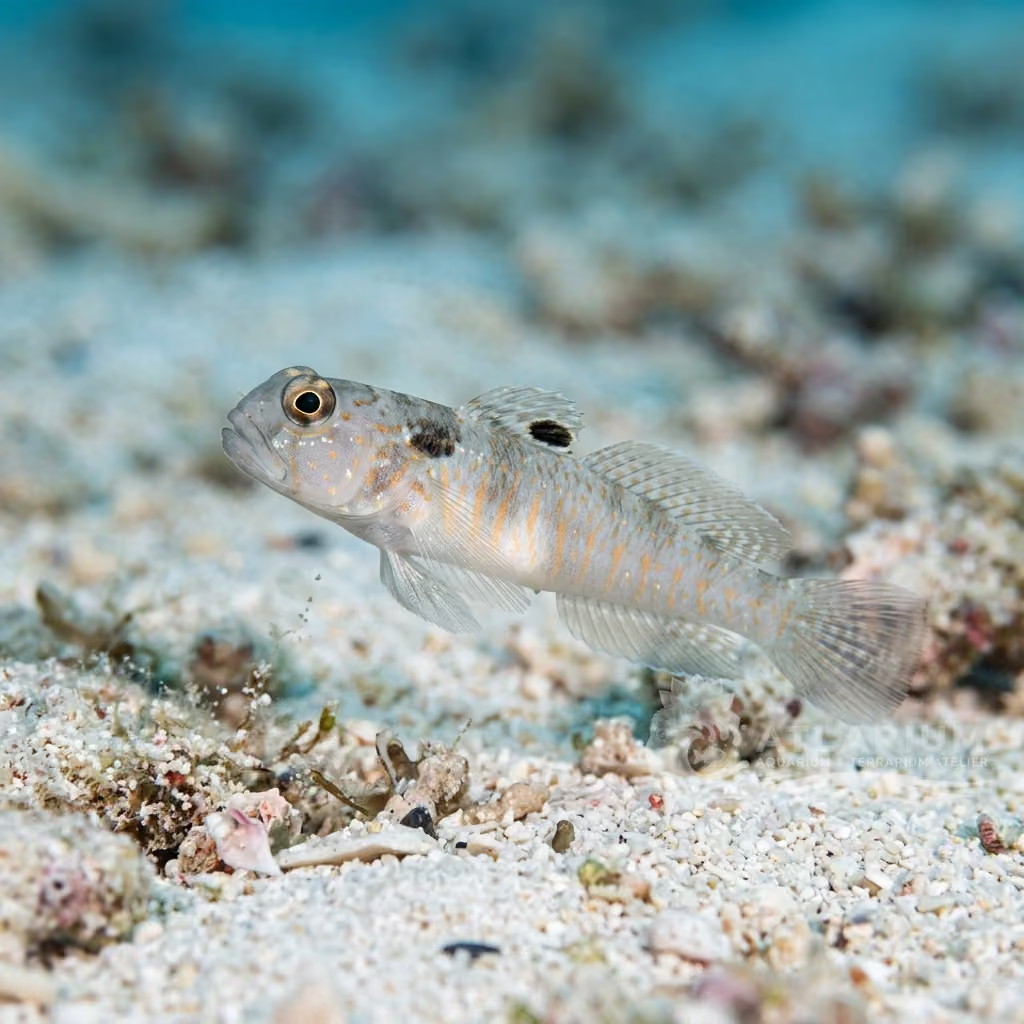
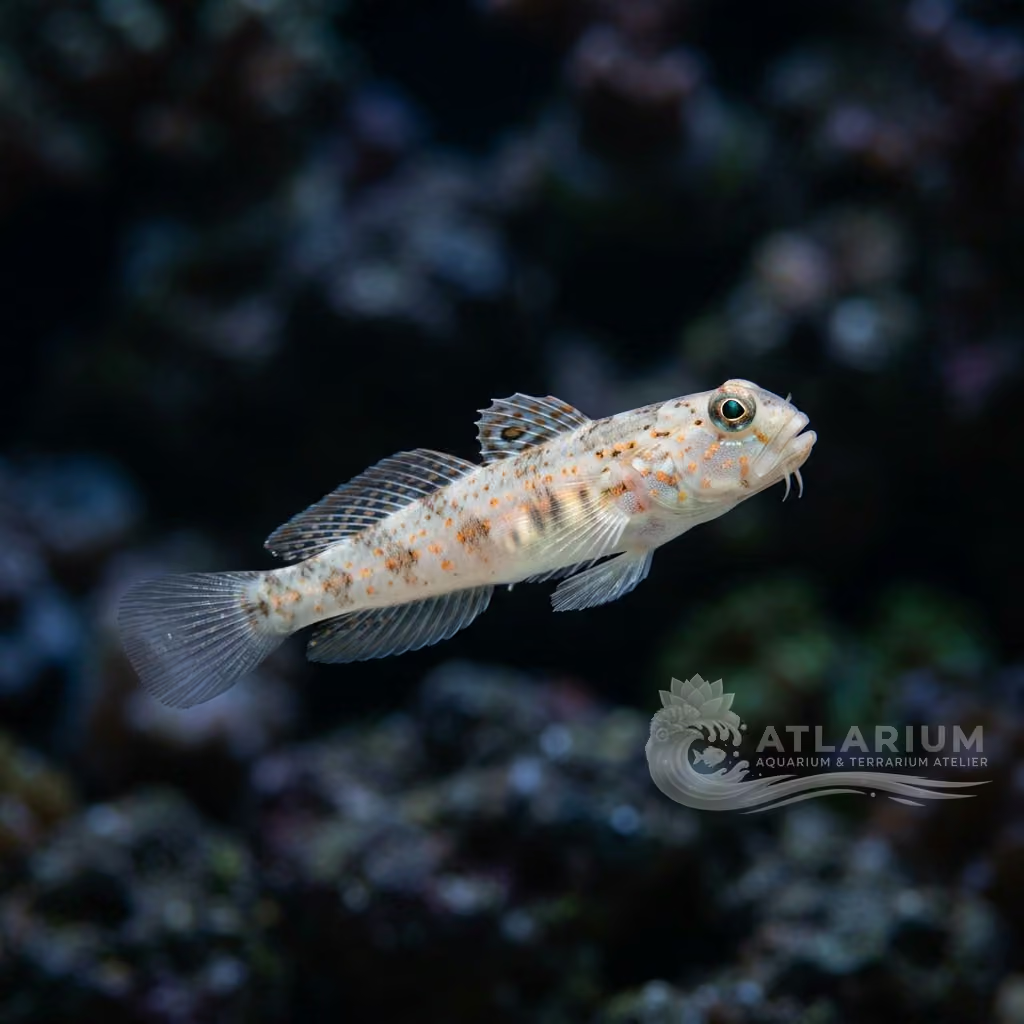
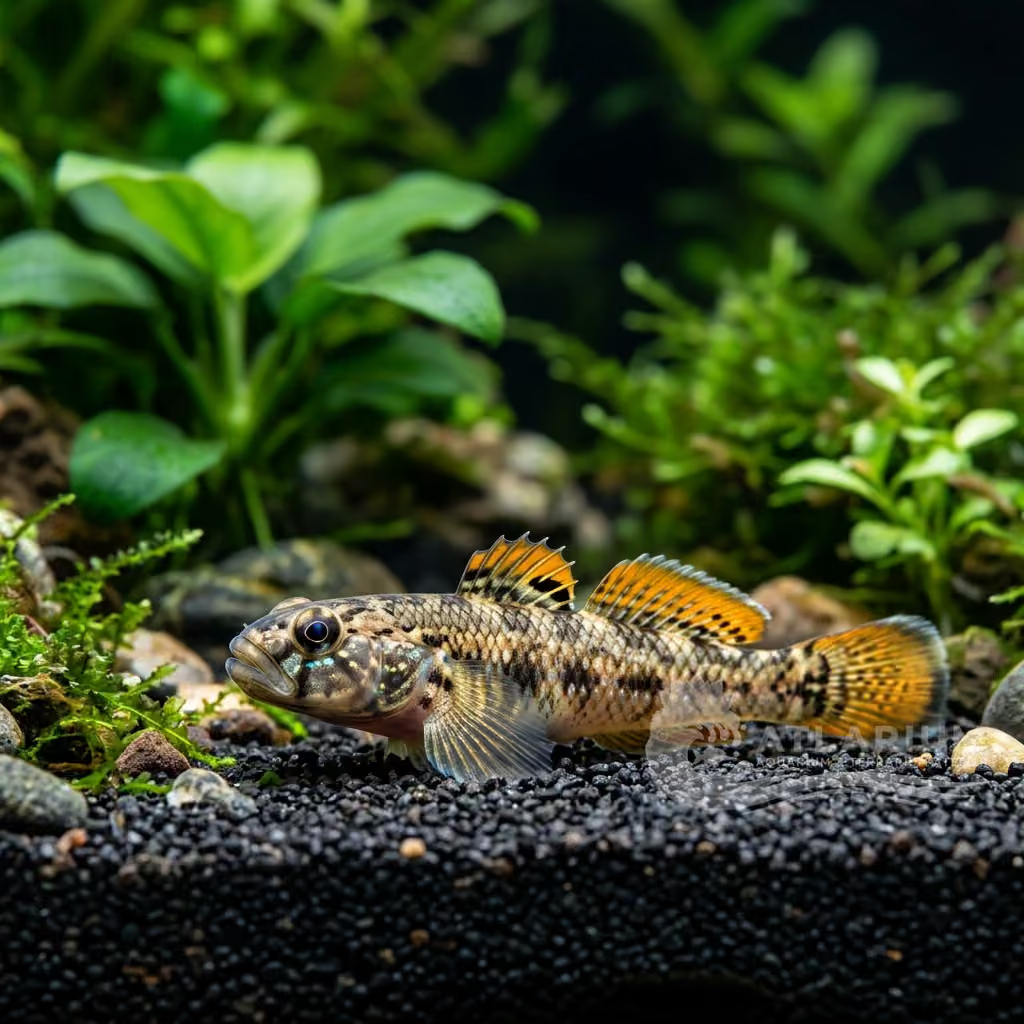
Coloration and Sexual Dimorphism: Features a cryptic coloration consisting of a sand-grey or light brown base body color, mottled with irregular dark brown and black spots along the flanks. Sexual dimorphism is subtle, but adult males typically develop longer and more pointed dorsal and anal fins compared to females.

Soins, reproduction et cohabitation
Aquarium Setup: Requires a large aquarium with a minimum volume of 250 liters and a wide footprint. The substrate must consist of fine sand to prevent injury when digging; decorate the tank with stable rocks and heavy driftwood pieces to establish visual boundaries and secure shelters.
Diet and Feeding: An opportunistic predator and strict carnivore. The diet should consist of fresh or frozen foods like prawns, krill, bloodworms, small fish, and clam meat; dry foods are rarely accepted, though sinking carnivore pellets can be offered.
Water Quality: Extremely hardy and adaptable, but prefers hard to moderately hard water with a pH range of 7.0 to 8.5. Maintain the water temperature between 20 and 28 °C; while it can survive in pure freshwater, maintaining low-salinity brackish water improves long-term health.
Compatibility and Cohabitation: Not suitable for standard community aquariums. It should only be housed with medium to large-sized midwater or surface-dwelling fish such as archerfish or larger cichlids; avoid small tankmates or other bottom dwellers that will be preyed upon or bullied.
Aquarium Breeding: Breeding in captivity is documented but difficult to trigger. They are cave spawners; the female deposits adhesive eggs on the roof of a cave or under a flat stone, which the male then fertilizes and guards aggressively until hatching occurs.
Risks and Diseases: Due to their bottom-dwelling habits and burrowing nature, they are susceptible to skin abrasions and bacterial infections if the substrate is coarse or sharp. Maintain excellent water filtration and regular substrate cleaning to minimize health risks.

Origine et répartition géographiques
This species is widely distributed across the Indo-Pacific region, from East Africa and the Red Sea to Northern Australia, Southern Japan, and the Philippines. It primarily inhabits coastal estuaries, brackish lagoons, tidal channels, and frequently enters freshwater rivers, preferring sandy or muddy substrates with plenty of cover.
Origine
Océans tropicaux et récifsAfrique et MadagascarAsie du Sud et du Sud-EstAsie de l'EstAustralie, Nouvelle-Guinée et Océanie

Profil de poisson
- Tempérament
- Territorial
- The Tank goby is an aggressive, territorial bottom-dweller that will fiercely defend its chosen space from any intruders. While they may ignore fish swimming high above them, they will attack any fish that enters their bottom territory. They are fascinating, bold fish with a lot of personality for a dedicated predator tank.
- Régime alimentaire
- Carnivore
- In the wild, they are voracious carnivores feeding on small fish, crustaceans, and aquatic insects. In captivity, they eagerly accept meaty foods such as earthworms, chunks of fish, shrimp, and large frozen foods like bloodworms. They rarely accept dry foods and require a protein-rich diet to thrive.
- Espérance de vie
- 2-5 years
- Taille adulte
- 30 cm
- Ratio des sexes
- Solitary
- Males generally grow slightly larger and have broader heads compared to females. They are highly territorial toward conspecifics, and males will often fight vigorously if kept together. It is strongly recommended to keep them singly unless breeding is attempted in a very large aquarium.
- Fréquence d'alimentation
- Twice daily
- Adult Glossogobius giuris should be fed a substantial meal every other day. Overfeeding is a common issue that can lead to health problems and water fouling. Ensure that all offered food is consumed within a few minutes to prevent it from rotting in the substrate.
- Charge biologique
- Extreme
- The Tank goby is a robust, predatory fish that produces a substantial bioload, especially as an adult. Their carnivorous diet leads to significant waste production. Adequate biological and mechanical filtration, coupled with regular gravel vacuuming and water changes, are necessary to prevent water parameter degradation.
- Courant
- Moderate
- They are highly adaptable and are found in various habitats from clear, fast-flowing streams to stagnant ponds. In the aquarium, a moderate water flow is generally preferred to maintain high oxygenation and sweep away detritus. Providing both areas of flow and calmer resting zones is ideal.
- Risque de saut
- No
- Reproduction
- Oviparous
- Breeding the Tank goby in a home aquarium has rarely been achieved. They are cave spawners where the female attaches eggs to the roof of a cave, and the male rigorously guards them. The resulting fry require microscopic live foods and are difficult to rear in standard freshwater setups.
- Compatibilité et compagnons
- With caution
- They are highly predatory and highly territorial, capable of swallowing surprisingly large fish. They should only be kept with fast-moving, robust fish that inhabit the middle and upper levels, and are clearly too large to be eaten. Keeping them with bottom-dwellers is not recommended due to severe territorial aggression.
- Niveau dans le bac
- Bottom
- As a true goby, they are strictly benthic, spending nearly all their time resting on or hovering just above the substrate. They require a soft, sandy bottom to prevent damage to their delicate bellies. They will claim a specific cave or hiding spot as their territory.

Modèles et paramètres scientifiques
FishBase
Fenêtre sur les données scientifiques officielles de l’espèce
FishBase v25.04Données synchronisées le : 15/06/2026
- Niveau trophique
- 3,7 ± 0,2 se
- Résilience
- Élevée (moins de 15 mois)
- Temps de génération
- 1,6 ans
- Singularité phylogénétique (PD50)
- 0.5
- Relation bayésienne longueur-poids
- a = 0.00759, b = 3.07
- VulnérabilitéVulnérabilité faible à modérée (26 / 100)

Espèces associées
Recommandations regroupées par proches parents, compagnons et soins similaires.