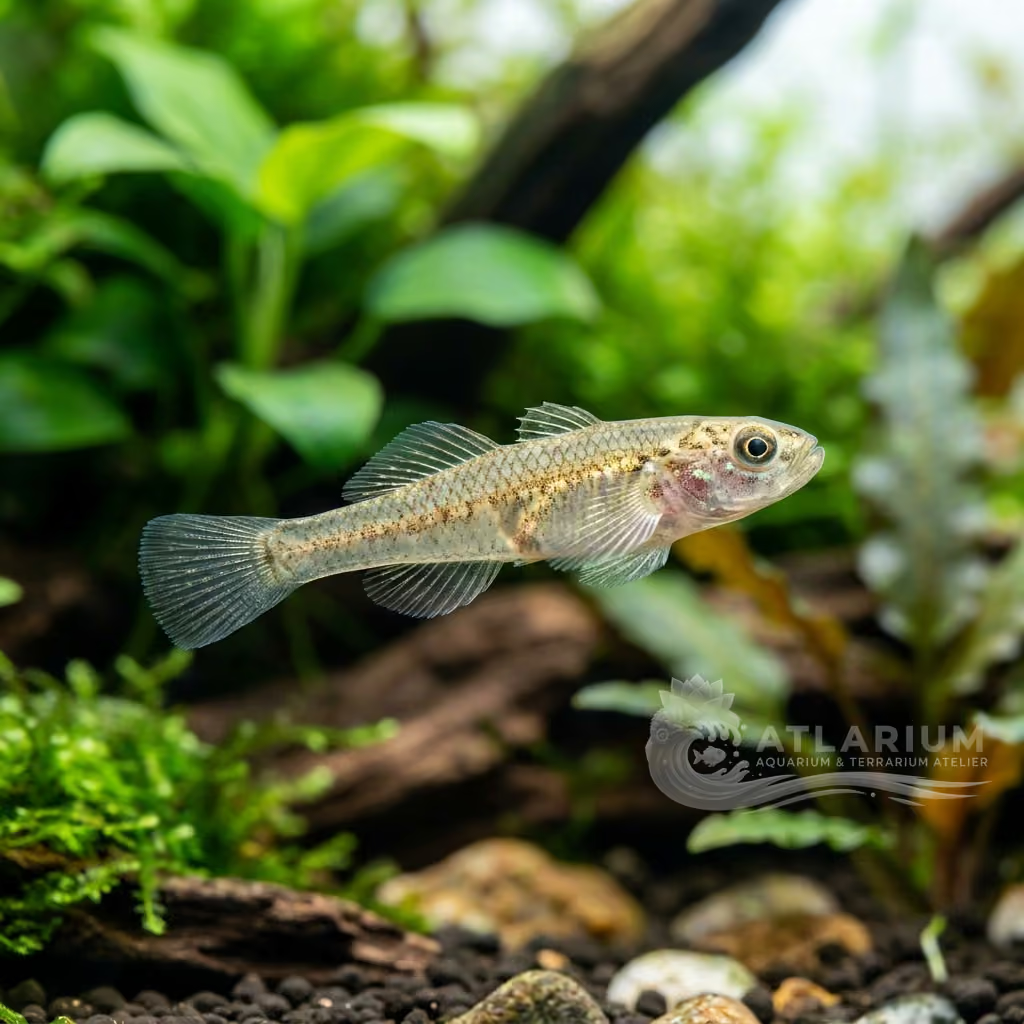
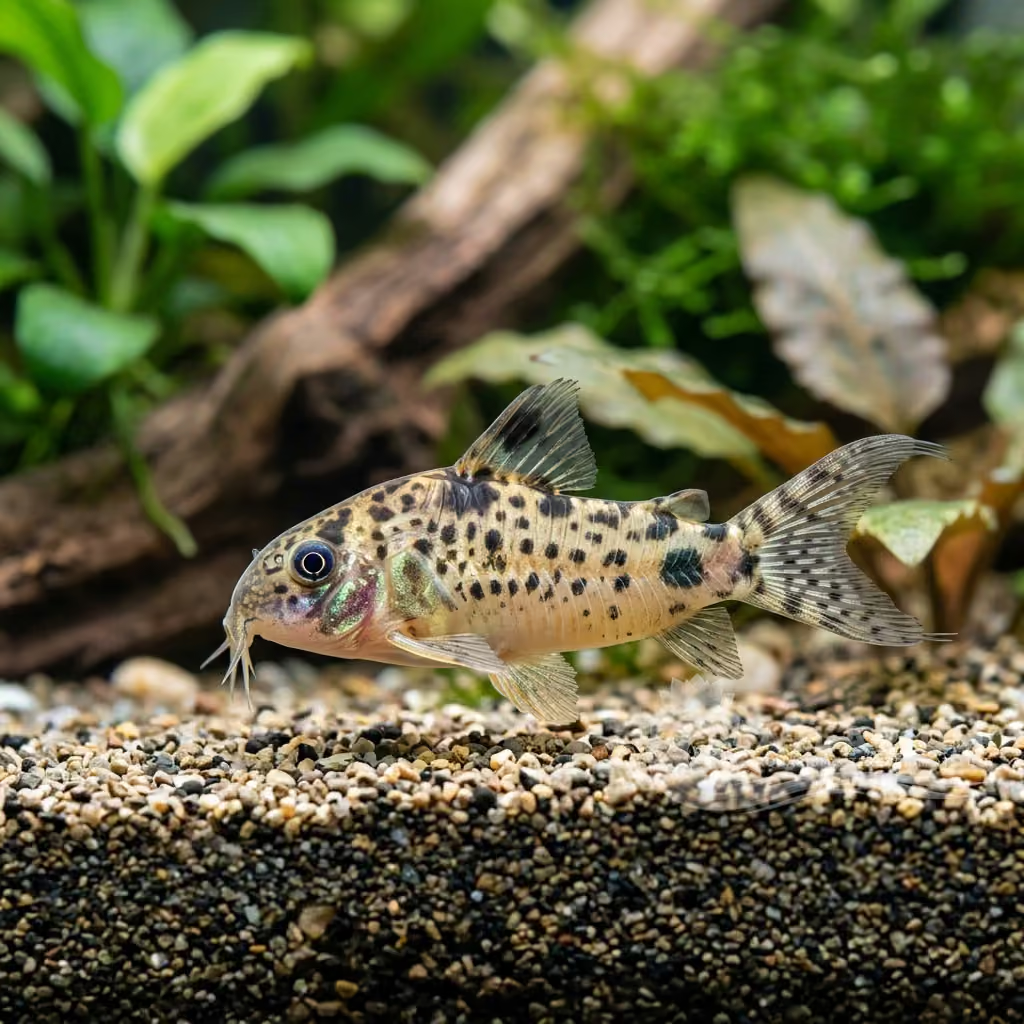
Feldmann's Tongue Sole
Cynoglossus feldmanni
This unusual freshwater flatfish buries itself in soft sand to ambush prey. Strictly carnivorous and nocturnal, it requires a 150L tank with deep, fine silica sand and a diet of sinking live or frozen foods.
Température de l’eau
22 - 28 °C
Valeur du pH
7 - 8
Type d'eau
Eau douce / Eau saumâtre
Niveau dans le bac
Fond
Taille adulte
25 cm
Volume minimal du bac
>= 200 L
Groupe minimal
>= 1
GH
4 - 15 dGH
KH
2 - 7 dKH
TDS
80 - 295 ppm
Conductivité
125 - 461 uS/cm

Description de l'espèce
Geographical Origin and Habitat: Cynoglossus feldmanni is a freshwater flatfish native to Southeast Asia. It is primarily distributed in the Mekong and Chao Phraya river basins, spanning across Thailand, Cambodia, Laos, and parts of Indonesia (specifically Sumatra and Borneo) and Malaysia. It inhabits slow-moving rivers, canals, estuaries, and freshwater lagoons with very soft sandy or muddy bottoms, where it can easily bury itself to avoid predators and ambush prey.
Taxonomy and Morphology: Belonging to the family Cynoglossidae (tongue soles) and the genus Cynoglossus, this species exhibits a highly asymmetrical and laterally compressed body. Both eyes are located on the left side of the head, and the mouth is curved and situated ventrally. Pectoral fins are absent, and the dorsal, anal, and caudal fins are fused into a continuous fin fringe around the body. Adults grow to about 15-20 centimeters.
Social Behavior: It is a solitary, benthic, and mostly nocturnal species. During the day, it spends almost all of its time buried in the sand with only its eyes protruding to scan for threats and food. It has a peaceful, reclusive temperament and ignores other tankmates entirely, provided they are not small enough to be viewed as food, showing no territorial aggression towards other species.
Coloration and Sexual Dimorphism: The eyed (upper) side of the body displays a highly effective camouflage pattern of sandy browns, greys, and irregular dark mottling that mimics the riverbed. The blind (under) side, which rests against the substrate, is plain whitish or light pink. There is no visible sexual dimorphism, and males and females cannot be reliably distinguished based on external characteristics.

Soins, reproduction et cohabitation
Aquarium Setup: Requires a specialized or quiet community aquarium of at least 150 liters. The single most important requirement is a deep bed (at least 5-7 cm) of very fine, smooth sand (such as silica sand). Coarse gravel or sharp substrates will cause physical abrasions to the fish's belly and eyes, quickly leading to fatal bacterial infections. The bottom area should be kept mostly open and free of rocks or heavy decor.
Diet and Feeding: This species is a strict carnivore and nocturnal predator. In captivity, it can be extremely difficult to feed, as it usually refuses dry flakes or pellets. It requires live or frozen foods that sink to the bottom, such as bloodworms, tubifex, small earthworms, brine shrimp, and blackworms. Feeding should occur after the aquarium lights are turned off, placing food close to where the sole is buried.
Water Quality: It demands clean, well-oxygenated water with stable parameters: temperature between 23°C and 28°C, pH range of 6.5 to 7.5, and water hardness (GH) of 5 to 15 dGH. While they can tolerate slightly brackish conditions, they thrive in pure freshwater. Regular water changes and efficient filtration are mandatory, but water flow should be kept low to moderate to prevent disturbing the sand bed.
Compatibility and Cohabitation: An entirely peaceful fish that is compatible with calm tankmates that occupy the middle and upper water columns, such as medium-sized tetras, rasboras, gouramis, or peaceful dwarf cichlids. Avoid housing them with aggressive or highly active bottom-dwellers (like loaches or territorial catfish) that might harass them, and do not keep them with very small fish or shrimp that could be eaten.
Aquarium Breeding: Breeding in home aquariums has not been documented. In the wild, they release pelagic eggs that drift in the water column. The larvae undergo a complex metamorphosis during their early development, during which the right eye migrates to the left side of the head, and the body flattens out before they settle onto the riverbed as juvenile flatfish.
Risks and Diseases: The primary risk is starvation due to its nocturnal feeding habits and reluctance to accept prepared foods, especially if kept with competitive tankmates. Bacterial skin infections are another common threat if the substrate is abrasive or dirty. Careful monitoring of food intake during night hours and a dedicated quarantine period are highly recommended.

Origine et répartition géographiques
Cynoglossus feldmanni is a freshwater flatfish native to Southeast Asia. It is primarily distributed in the Mekong and Chao Phraya river basins, spanning across Thailand, Cambodia, Laos, and parts of Indonesia (specifically Sumatra and Borneo) and Malaysia. It inhabits slow-moving rivers, canals, estuaries, and freshwater lagoons with very soft sandy or muddy bottoms, where it can easily bury itself to avoid predators and ambush prey.
Origine
Asie du Sud et du Sud-Est

Profil de poisson
- Tempérament
- Territorial
- The overall temperament of Cynoglossus feldmanni can be described as peaceful. Understanding their personality is vital for maintaining a peaceful and stress-free environment. They may exhibit unique behaviors when interacting with their surroundings or during feeding time. Careful consideration of their disposition leads to a more rewarding fishkeeping experience.
- Régime alimentaire
- Carnivore
- The natural diet of Cynoglossus feldmanni is primarily carnivorous. In captivity, they should be offered a varied selection of high-quality foods to meet their nutritional needs. Incorporating both dry commercial diets and frozen or live options will ensure optimal health and coloration. A varied diet prevents nutritional deficiencies.
- Espérance de vie
- 3-5 years
- Taille adulte
- 25 cm
- Ratio des sexes
- Solitary
- The ideal sex ratio for keeping Cynoglossus feldmanni is typically solitary. Keeping them in these numbers helps reduce intraspecific aggression and mimics their natural social structure. Providing ample hiding spots can further alleviate tension among dominant individuals. Always monitor the group dynamics when introducing new specimens.
- Fréquence d'alimentation
- Once daily
- Feeding Cynoglossus feldmanni should generally be done daily. It is important to provide only what they can consume in a few minutes to prevent leftover food from decaying. Establishing a regular feeding schedule helps keep the fish active and healthy. Adjust the frequency if you observe signs of undernourishment or overfeeding.
- Charge biologique
- High
- The bioload produced by Cynoglossus feldmanni is generally considered medium. This means that the filtration system must be adequately sized to handle their waste output. Regular water changes and tank maintenance are strongly recommended to keep the environment healthy. Failure to do so can result in poor water quality and stress the fish.
- Courant
- Strong
- In their natural habitat, Cynoglossus feldmanni experiences water flow that is low. Replicating this in the aquarium is crucial for their well-being and natural behavior. Appropriate water movement aids in oxygenation and prevents dead spots in the tank. Utilizing adjustable powerheads can help achieve the perfect balance.
- Risque de saut
- No
- Reproduction
- Oviparous
- Regarding reproduction, Cynoglossus feldmanni is known to be a unknown. Breeding them in a home aquarium requires specific water parameters and a dedicated setup. Providing the correct spawning media and conditioning the adults with high-quality foods will increase success. Raising the fry can be challenging and requires specialized microscopic foods initially.
- Compatibilité et compagnons
- Peaceful
- When it comes to compatibility, Cynoglossus feldmanni is characterized as peaceful. They should be housed with tank mates that share similar water requirements and temperament. Care must be taken not to include species that could easily become prey or outcompete them for food. Observation is key to ensuring a harmonious community.
- Niveau dans le bac
- Bottom
- In the aquarium, Cynoglossus feldmanni prefers to occupy the bottom level. Designing the aquascape to cater to this preference ensures the fish feel secure and display their best colors. Ensure that there is adequate swimming space and appropriate decor in their preferred zone. This vertical distribution also allows for careful selection of tank mates that occupy other levels.

Modèles et paramètres scientifiques
FishBase
Fenêtre sur les données scientifiques officielles de l’espèce
FishBase v25.04Données synchronisées le : 15/06/2026
- Niveau trophique
- 3,5 ± 0,37 se
- Résilience
- Élevée (moins de 15 mois)
- Singularité phylogénétique (PD50)
- 0.5
- Relation bayésienne longueur-poids
- a = 0.01023, b = 3.05
- VulnérabilitéVulnérabilité faible (21 / 100)

Espèces associées
Recommandations regroupées par proches parents, compagnons et soins similaires.