Spilurus corydoras
Corydoras spilurus
A sociable armored catfish from northern South America, active and peaceful. It requires soft, fine sand to protect its delicate barbels as it forages, making it perfect for community aquariums.
Température de l’eau
22 - 27 °C
Valeur du pH
6.5 - 7.5
Type d'eau
Eau douce
Niveau dans le bac
Fond
Taille adulte
6 cm
Volume minimal du bac
>= 80 L
Groupe minimal
>= 6
GH
5 - 15 dGH
KH
2 - 8 dKH
TDS
95 - 305 ppm
Conductivité
148 - 477 uS/cm

Description de l'espèce
Geographical Origin and Habitat: Corydoras spilurus is native to the coastal river basins of northern South America, specifically inhabiting the slow-flowing rivers, creeks, and coastal marshes of French Guiana and Suriname. They thrive in shaded waters with soft sandy bottoms covered in fallen leaf litter, organic debris, and decaying vegetation beneath the tropical forest canopy.
Taxonomy and Morphology: Belonging to the family Callichthyidae and the genus Corydoras, this species is characterized by its armored body consisting of two rows of overlapping bony plates instead of scales. They possess three pairs of sensitive barbels surrounding the mouth, which are crucial for detecting food buried in the soft substrate.
Social Behavior: Extremely peaceful, social, and gregarious. They must be kept in groups of at least 6 individuals of their own species to feel secure and exhibit natural behaviors. They spend most of their time actively shoaling along the bottom, searching for food and interacting harmlessly with other tankmates.
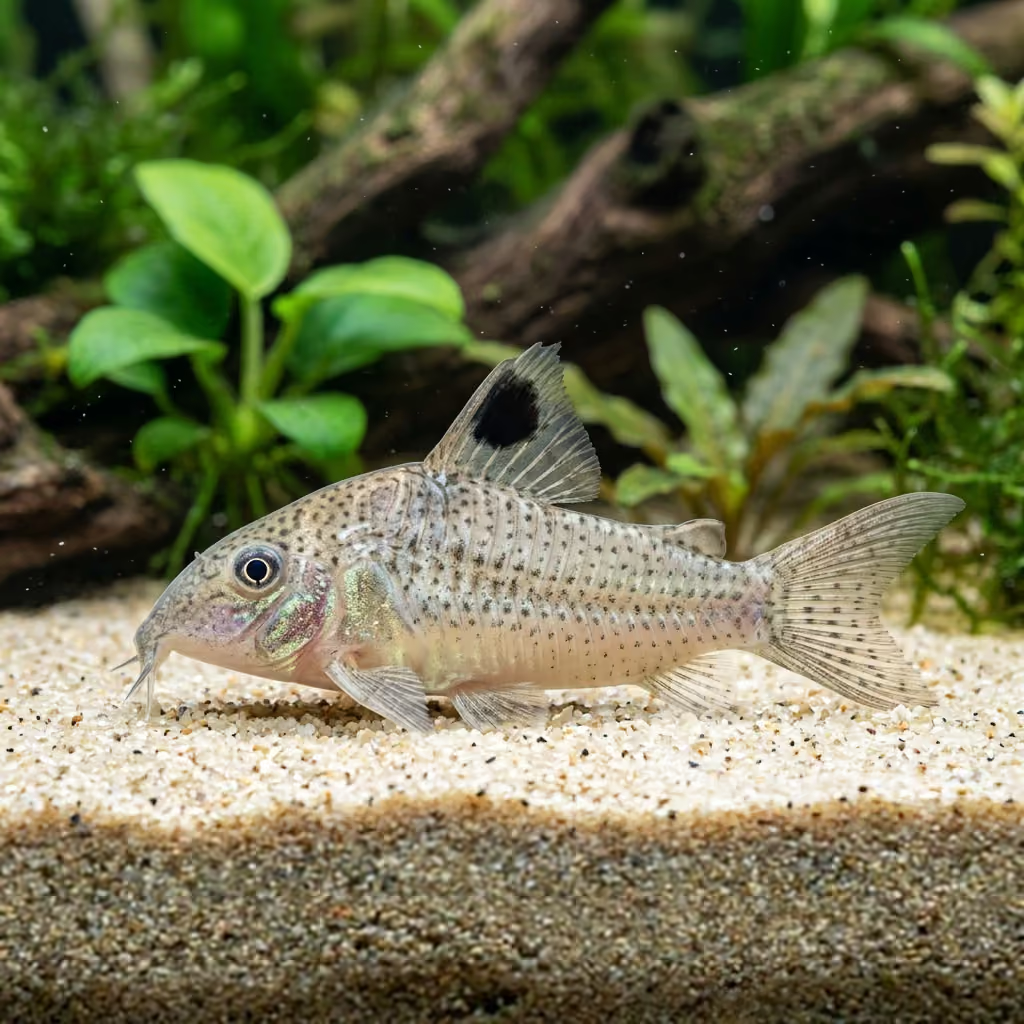
Coloration and Sexual Dimorphism: The body has a silvery-grey base color with subtle pinkish or golden highlights under direct light. A distinct dark spot is located at the base of the tail fin (caudal peduncle). Females are noticeably larger, wider, and more rounded when viewed from above, especially when carrying eggs.

Soins, reproduction et cohabitation
Aquarium Setup: Requires a tank of at least 60-80 liters with a large bottom footprint. The use of a smooth, fine sand substrate is mandatory; coarse or sharp gravel will erode and infect their delicate barbels. Provide plenty of hiding spaces using driftwood, dried beech leaves, and dense plantings like Cryptocoryne.
Diet and Feeding: An omnivorous bottom feeder. They should not be treated as scavengers that eat waste. Feed them high-quality sinking wafers, pellets, and supplement their diet with live or frozen foods such as bloodworms, tubifex, and brine shrimp to ensure they receive adequate nutrition and remain healthy.
Water Quality: Prefers soft, slightly acidic to neutral water. Keep water temperature at 22-26 °C, pH between 6.0 and 7.2, and general hardness at 4-12 °dGH. They are highly sensitive to poor water conditions, especially high levels of ammonia, nitrite, and nitrate at the substrate level, making regular vacuuming essential.
Compatibility and Cohabitation: An excellent choice for peaceful community tanks. Suitable tankmates include tetras, rasboras, guppies, dwarf cichlids, and freshwater shrimp. Avoid housing them with large, aggressive, or fast-swimming bottom dwellers that could outcompete them for food or inflict injuries.
Aquarium Breeding: Breeding is achievable and triggered by large cool water changes. During spawning, the pair forms a 'T-position' where the male fertilizes eggs held by the female. She then glues the eggs to flat surfaces like plant leaves or aquarium glass. Remove the parents to prevent them from eating the eggs.
Risks and Diseases: Barbels are prone to bacterial infections and erosion if kept on dirty or sharp substrates. They are highly sensitive to copper-based medications and salt treatments, which should be avoided or used with caution in a quarantine tank. Prone to ich (white spot disease) if subjected to sudden temperature drops.

Origine et répartition géographiques
Corydoras spilurus is native to the coastal river basins of northern South America, specifically inhabiting the slow-flowing rivers, creeks, and coastal marshes of French Guiana and Suriname. They thrive in shaded waters with soft sandy bottoms covered in fallen leaf litter, organic debris, and decaying vegetation beneath the tropical forest canopy.
Origine
Amazonie, Orénoque et Guyanes

Profil de poisson
- Tempérament
- Peaceful
- The temperament of Corydoras spilurus is exceptionally docile, making them entirely safe for peaceful and planted community setups. They are highly social animals and rely on the presence of conspecifics to exhibit their natural, confident behaviors. Aggression is virtually non-existent, even among competing males during intense spawning events.
- Régime alimentaire
- Omnivore
- As a benthic omnivore, Corydoras spilurus primarily feeds on small insects, worms, and crustaceans in the wild. In the aquarium, they readily accept high-quality sinking pellets, wafers, and live or frozen foods like bloodworms and daphnia. It is crucial to ensure food reaches the bottom, as they will not typically feed from the surface.
- Espérance de vie
- 3-5 years
- Taille adulte
- 6 cm
- Ratio des sexes
- School
- Corydoras spilurus is a highly gregarious fish that must be kept in groups of at least six individuals to feel secure and behave naturally. For breeding purposes, a sex ratio of two or three males per female is highly recommended. This ensures higher fertilization rates and closely mimics their natural schooling and spawning dynamics.
- Fréquence d'alimentation
- Twice daily
- It is recommended to feed Corydoras spilurus one to two times daily, offering only what they can consume within a few minutes. Because they are bottom feeders, night-time feeding can be beneficial to avoid competition from fast mid-water fish. A varied feeding schedule ensures optimal health, longevity, and vibrant coloration.
- Charge biologique
- Low to Medium
- The Corydoras spilurus produces a relatively low to moderate bioload, consistent with other members of its genus. Because it is a small, efficient scavenger, it helps keep the substrate clean of uneaten food. However, adequate biological filtration and regular maintenance are still necessary to process the waste of a proper school.
- Courant
- Strong
- This catfish prefers a gentle to moderate water flow that mimics the slow-moving streams and tributaries of its native habitat. While Corydoras spilurus appreciates well-oxygenated water, overly strong currents can easily exhaust them over time. Providing resting areas with minimal flow and ample cover is essential for their well-being.
- Risque de saut
- No
- Reproduction
- Oviparous
- Breeding Corydoras spilurus often involves providing a significant drop in water temperature and frequent water changes to simulate the rainy season. Females will lay adhesive eggs on plant leaves, aquarium glass, or other smooth surfaces after a complex mating dance. The parents exhibit no parental care and may consume the eggs, so removing them to a separate rearing tank is highly advisable.
- Compatibilité et compagnons
- Peaceful
- This species is extremely peaceful and makes an excellent addition to most community aquariums. Corydoras spilurus should be kept with other similarly sized, non-aggressive fish that will not outcompete them for food. They thrive in the company of small tetras, rasboras, and peaceful dwarf cichlids.
- Niveau dans le bac
- Bottom
- This species is an obligate bottom-dweller, spending nearly all of its time resting, exploring, or foraging along the substrate. Corydoras spilurus will continuously sift through fine sand using its sensitive barbels to locate hidden food particles. They only leave the bottom layer briefly to gulp surface air or when suddenly startled.

Modèles et paramètres scientifiques
FishBase
Fenêtre sur les données scientifiques officielles de l’espèce
FishBase v25.04Données synchronisées le : 15/06/2026
- Niveau trophique
- 3 ± 0,3 se
- Résilience
- Élevée (moins de 15 mois)
- Singularité phylogénétique (PD50)
- 0.5
- Relation bayésienne longueur-poids
- a = 0.02455, b = 3
- VulnérabilitéVulnérabilité faible (10 / 100)

Espèces associées
Recommandations regroupées par proches parents, compagnons et soins similaires.