Strawberry Rasbora
Boraras naevus
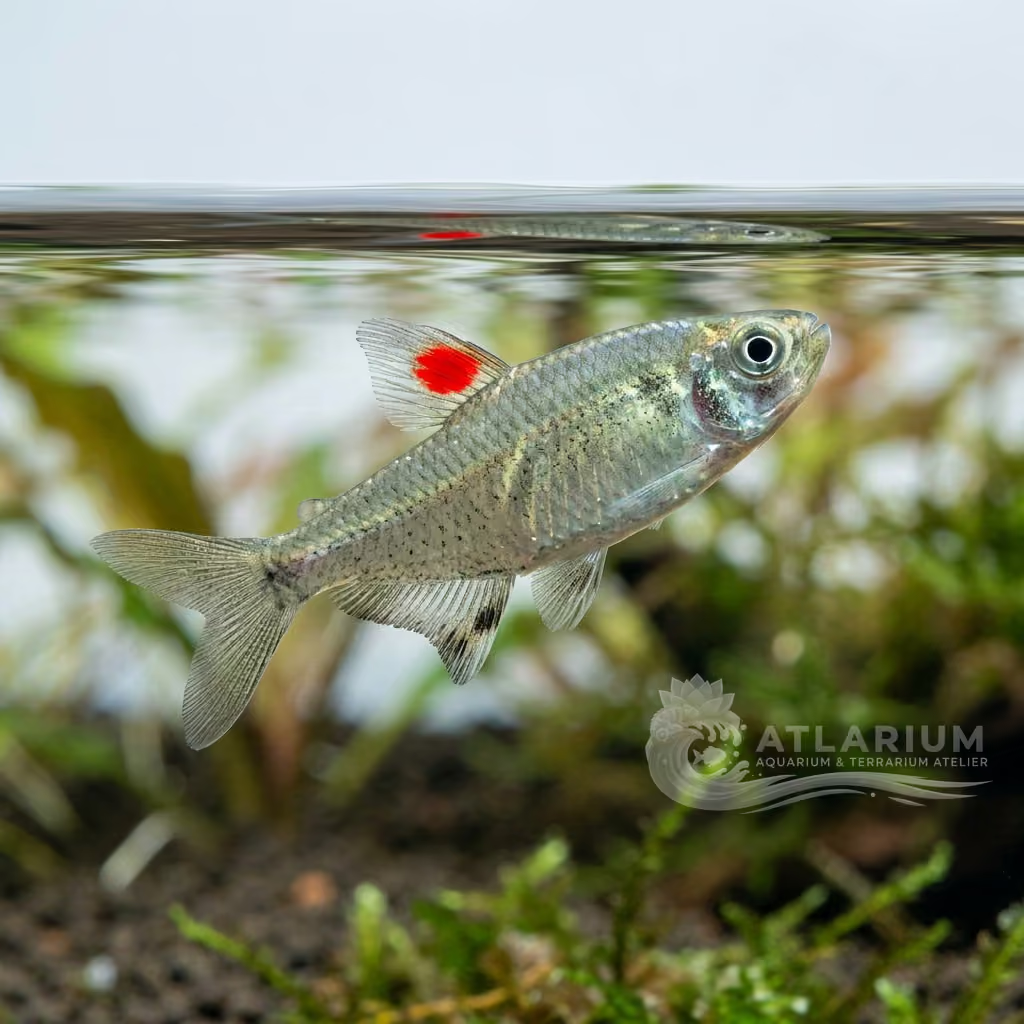
One of the most beloved nano-fish in modern aquascaping. Males boast an incredibly intense strawberry-red color decorated by a massive black spot on the flank. Perfect for aquascapers and shrimp tank enthusiasts.
Température de l’eau
22 - 28 °C
Valeur du pH
5 - 7
Type d'eau
Eau douce
Niveau dans le bac
Surface et milieu
Taille adulte
2 cm
Volume minimal du bac
>= 30 L
Groupe minimal
20
GH
1 - 10 dGH
KH
1 - 5 dKH
TDS
25 - 200 ppm
Conductivité
39 - 313 uS/cm

Description de l'espèce
Geographical Origin and Habitat: Described only in 2011, it is endemic to southern peninsular Thailand (Surat Thani province). Populates the clear but densely vegetated waters of limestone swamps, but also flooded plains and rural canals.
Taxonomy and Morphology: Strawberry Rasbora (Boraras naevus). "Naevus" (from Latin "blemish" or "spot") refers to the enormous and distinctive dark spot on the flank, much larger than in the similar B. maculata.
Social Behavior: Forms very large and close-knit schools. Males establish tiny temporary territories (often around a specific leaf) which they defend by flaring their fins and intensifying their colors, without ever injuring each other.
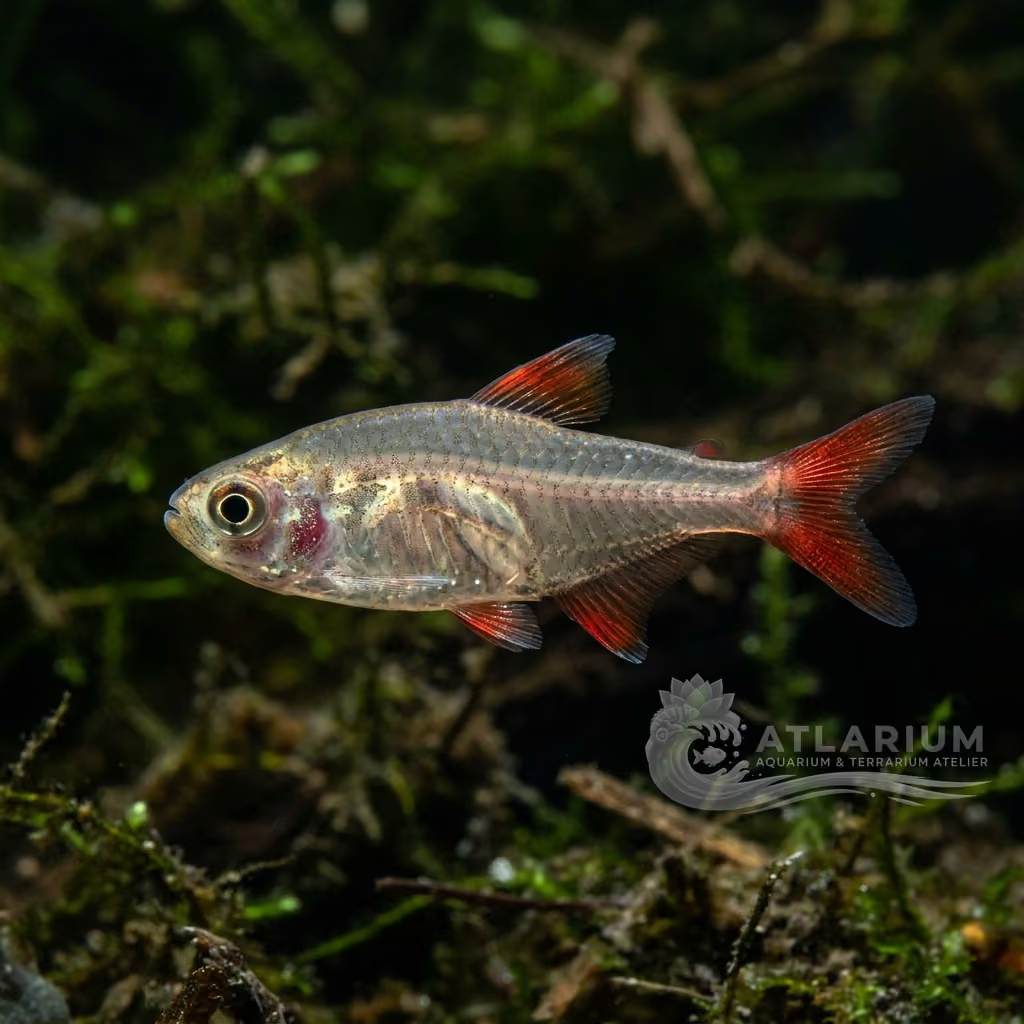
Coloration and Sexual Dimorphism: One of the most striking species. Healthy males are an incredible translucent strawberry-red with a colossal bluish-black spot on the flank, bordered in gold. Females are pastel orange and the lateral spot is noticeably smaller.

Soins, reproduction et cohabitation
Aquarium Setup: 30-40 liters (8-10 gallons) aquarium (for a group of 20 specimens). Appreciates medium soft waters but does not need the extreme pH values of peat bog Boraras. Setup with smooth rocks, Microsorum and abundant surface vegetation.
Diet and Feeding: Totally zooplanktivorous in nature. Requires diets based on microorganisms: excellent forager of Cyclops, Moina, microworms and Artemia nauplii. Reluctantly accepts hyper-fine granular dry food.
Water Quality: Less demanding than B. brigittae or B. merah, but still requires a mature and stable ecosystem. Detests "sterile" pristine waters: a "natural" aquarium with a slight accumulation of biofilm and mulm (fine detritus) is ideal.
Compatibility and Cohabitation: Perfect tankmate for Aquascaping aquariums dedicated to Neocaridina, snails and Microdevario. Suitable for cohabitation with Dario dario (Scarlet Badis), although the darios might occasionally prey on the fry.
Aquarium Breeding: Continuous daily spawning (continuous spawner). Dominant males attract the female under a leaf. Raising the offspring requires old, moss-rich tanks, providing tiny food like paramecia and infusoria.
Risks and Diseases: Relatively robust for its size, but a victim of osmotic shock if introduced abruptly into tanks that have not matured long enough. Thermal stress (water below 20°C / 68°F) causes the immediate collapse of the school.

Origine et répartition géographiques
Described only in 2011, it is endemic to southern peninsular Thailand (Surat Thani province). Populates the clear but densely vegetated waters of limestone swamps, but also flooded plains and rural canals.
Origine
Asie du Sud et du Sud-Est

Profil de poisson
- Tempérament
- Semi-aggressive
- Boraras naevus is an extremely peaceful and somewhat timid species that exhibits classic schooling behavior. Because of their tiny size, they are easily intimidated by larger or more boisterous tank mates. They spend their days swimming together in a coordinated fashion, which helps build their confidence. Males may occasionally display mock battles or territorial behavior when breeding, but these interactions are entirely peaceful and harmless.
- Régime alimentaire
- Omnivore
- In their natural habitat, Boraras naevus are micropredators feeding on tiny insects, zooplankton, and small worms. In an aquarium, their diet must reflect their small mouth size, requiring crushed flakes, micro-granules, or powdered foods. Providing regular meals of live and frozen items, such as baby brine shrimp or Daphnia, is highly recommended to maintain their health. A varied and high-quality diet is the key to bringing out their most intense red coloration.
- Espérance de vie
- 3-5 years
- Taille adulte
- 2 cm
- Ratio des sexes
- Group
- When stocking Boraras naevus, they should always be kept in mixed-sex groups of at least eight to ten individuals. In a proper school, the sex ratio naturally balances out, which reduces overall stress and shyness. Having multiple males in the group is highly beneficial, as it encourages them to display their best red coloration and perform harmless sparring behaviors. Keeping too few specimens or an unbalanced group can result in timid fish that remain hidden.
- Fréquence d'alimentation
- Twice daily
- Due to their high metabolism and small stomach capacity, Boraras naevus should be fed two to three times daily. Offering small portions that they can consume within a minute or two helps prevent overfeeding and water pollution. Feeding them multiple times a day also ensures that the sub-dominant individuals receive adequate nutrition. It is beneficial to schedule a fast day once a week to help clear their digestive systems.
- Charge biologique
- Low
- Due to their miniature size, Boraras naevus has an exceptionally low bioload. They produce very little waste, making them excellent candidates for small nano aquariums. However, because they are highly sensitive to fluctuating water parameters and built-up nitrates, they still require consistent, gentle filtration. A stable ecosystem with regular, small water changes is crucial to keep their environment clean and ensure their health.
- Courant
- Stagnant
- Boraras naevus naturally inhabits slow-moving swampy areas and stagnant blackwater environments in the wild. Consequently, they have a strong preference for weak water flow in the aquarium. Strong currents will stress these tiny fish, forcing them to exhaust themselves by constantly fighting the water movement. A gentle sponge filter or an adjustable filter with a spray bar is ideal to keep the current minimal.
- Risque de saut
- Yes
- There is a moderate to high risk of Boraras naevus jumping out of the aquarium, particularly when they are startled or introduced to a new environment. Because they swim in the upper water levels, any sudden movement near the tank can cause them to leap. To prevent tragic losses, a tight-fitting lid or cover slides are absolutely essential. Additionally, incorporating floating vegetation can help cover the water surface and reduce their urge to jump.
- Reproduction
- Oviparous
- Breeding Boraras naevus is relatively easy but requires a dedicated setup for high success rates. They are continuous egg scatterers that lay small batches of eggs daily among fine-leaved plants like mosses. They exhibit no parental care and will eagerly consume their own eggs if given the chance. To raise the fry, adults must be removed, and the tiny hatchlings should be fed micro-foods such as infusoria and paramecium.
- Compatibilité et compagnons
- Species only
- Because of their minuscule size, Boraras naevus is only compatible with small, peaceful tank mates. Excellent companions include dwarf freshwater shrimp, dwarf Corydoras, Otocinclus, and other peaceful nano fish. They should never be housed with larger or predatory species that could easily view them as food. Keeping them in a dedicated species-only aquarium is often the best way to see their natural, uninhibited behavior.
- Niveau dans le bac
- Top/Middle
- Boraras naevus is a species that primarily occupies the middle and upper levels of the water column. They are active swimmers within these zones, especially when they feel secure in a well-established school. To make them comfortable in the upper areas, the addition of floating plants is highly recommended to diffuse the light. They will rarely venture to the bottom of the tank unless they are searching for food or seeking shelter among low plants.

Modèles et paramètres scientifiques
FishBase
Fenêtre sur les données scientifiques officielles de l’espèce
FishBase v25.04Données synchronisées le : 15/06/2026
- Niveau trophique
- 2,8 ± 0,4 se
- Singularité phylogénétique (PD50)
- 0.5156
- Relation bayésienne longueur-poids
- a = 0.00891, b = 3.02
- VulnérabilitéVulnérabilité faible (10 / 100)

Espèces associées
Recommandations regroupées par proches parents, compagnons et soins similaires.