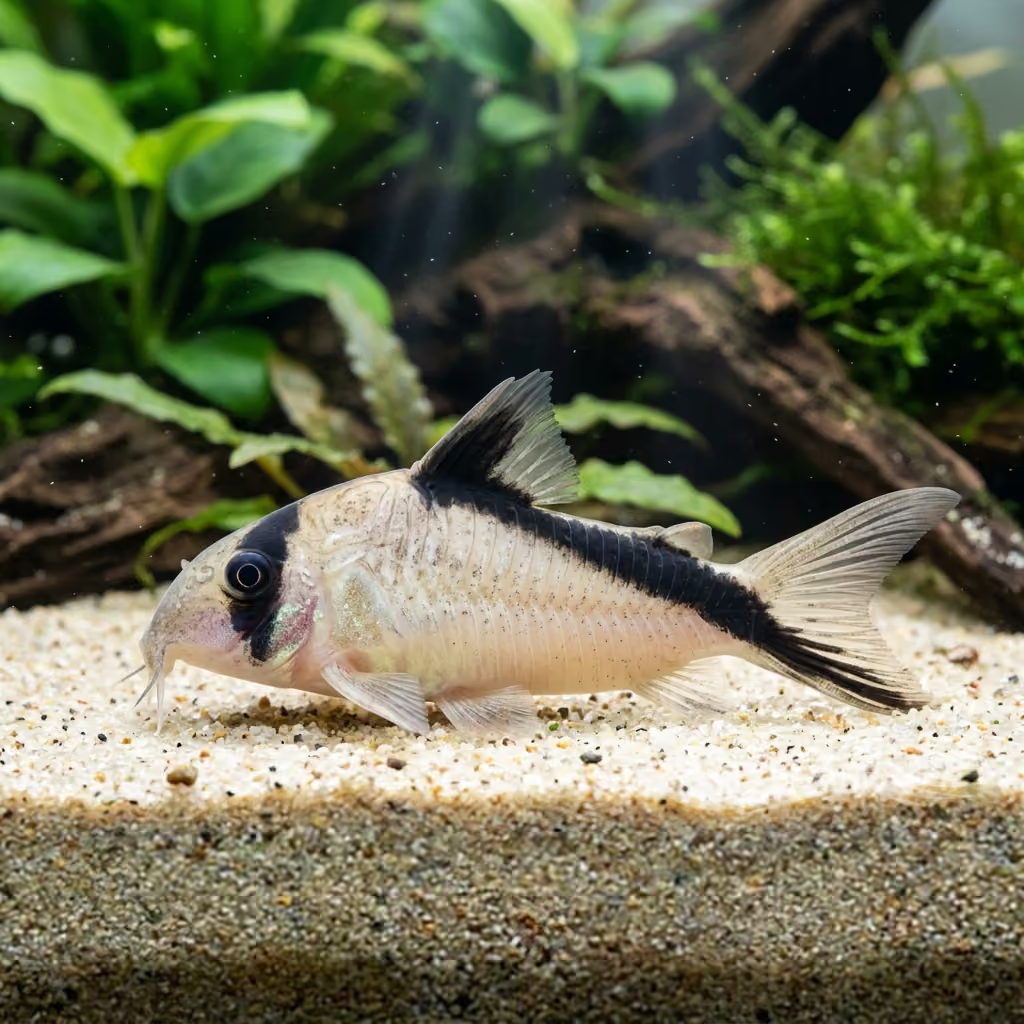
Striped Pike-Characin
Boulengerella lateristriga
A living torpedo designed for surface predation. Reaches 25 cm, featuring a long bony snout and immense speed. Stunning but incredibly skittish: requires massive tanks to prevent it from shattering its snout against the glass in a panic.
Température de l’eau
24 - 28 °C
Valeur du pH
5.5 - 7
Type d'eau
Eau douce
Niveau dans le bac
Surface et milieu
Taille adulte
25 cm
Volume minimal du bac
>= 300 L
Groupe minimal
>= 1
GH
1 - 10 dGH
KH
1 - 5 dKH
TDS
25 - 200 ppm
Conductivité
39 - 313 uS/cm

Description de l'espèce
Geographical Origin and Habitat: Amazon River basin (especially Rio Negro and Orinoco). Inhabits calm surface waters, often near banks covered with overhanging vegetation or among semi-submerged roots.
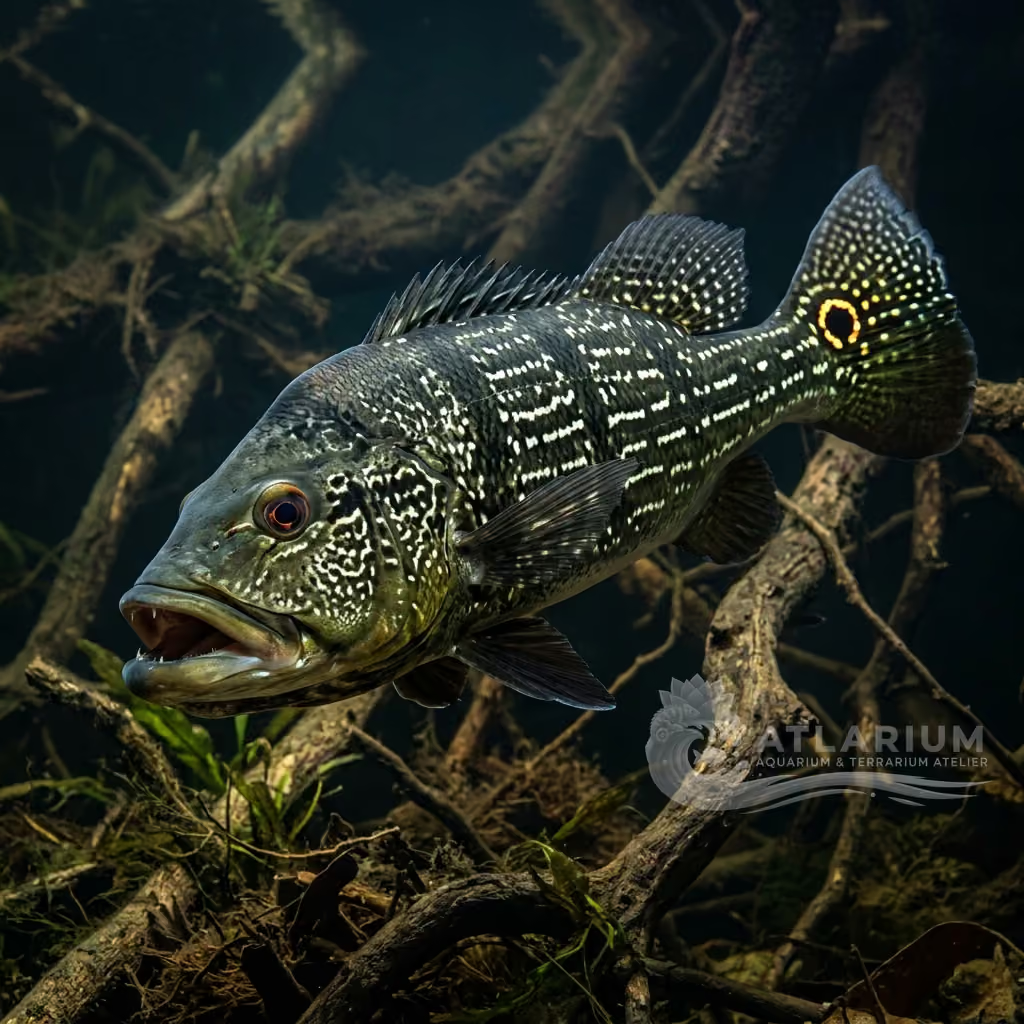
Taxonomy and Morphology: Striped Pike-Characin (Boulengerella lateristriga). Belonging to the Ctenoluciidae family. Tapered body, incredibly similar to a pike, with a pointed snout extended into a short fleshy rostrum. Reaches 25-26 cm (10 inches).
Social Behavior: Predominantly stationary ambush predator. Remains motionless just below the water surface, often tilted downwards. Peaceful with fish of its size, lives well alone or in small groups.
Coloration and Sexual Dimorphism: Silvery/gray-green background with a clear dark lateral stripe running from the tip of the snout to the base of the tail (hence "lateri-striga"). Mature females tend to be slightly rounder.

Soins, reproduction et cohabitation
Aquarium Setup: Tank at least 150 cm (60 inches) long. A sealed and heavy lid is indispensable, as they jump with extreme violence. Leave ample space for surface swimming, with floating plants (e.g. Pistia) to dim the light and provide shelter.
Diet and Feeding: Strict piscivore in nature. In the aquarium it must be accustomed to dead foods: frozen fish, shrimp, earthworms. Rarely accepts dry feeds. The use of live "feeder fish" is discouraged due to disease risks.
Water Quality: Prefers soft (GH 1-10) and slightly acidic (pH 5.5-7.0) waters, typical of South American rivers, although it tolerates neutral parameters. Excellent filtration required due to the polluting diet.
Compatibility and Cohabitation: Swallows any fish that fits in its mouth (up to 1/3 of its length). Suitable for community tanks with large bottom and mid-water fish (e.g. large Loricariids, Geophagus, Metynnis).
Aquarium Breeding: Extremely rare in captivity. They are believed to be egg scatterers among surface vegetation with no parental care.
Risks and Diseases: The fragility of the fleshy rostrum is the greatest danger: they tend to crash against the glass if frightened, causing fatal injuries to the snout. Sensitive to poor water conditions.

Origine et répartition géographiques
Amazon River basin (especially Rio Negro and Orinoco). Inhabits calm surface waters, often near banks covered with overhanging vegetation or among semi-submerged roots.
Origine
Océans tropicaux et récifsAmazonie, Orénoque et Guyanes

Profil de poisson
- Tempérament
- Semi-aggressive
- Although they are formidable predators, they are surprisingly peaceful and non-aggressive towards tankmates that are too large to be eaten. They are calm, passive ambush predators that prefer to remain motionless and blend in with their surroundings. However, they are also highly skittish and can easily injure themselves if housed with active, boisterous, or aggressive fish.
- Régime alimentaire
- Omnivore
- The Striped Pike-Characin is an obligate piscivore and carnivore, feeding primarily on smaller fish and insects in its natural habitat. In captivity, wild-caught specimens often require live foods such as river shrimp or bait fish to initiate feeding. With patience, they can be trained to accept dead alternatives like strips of fish fillet, whole prawns, mussels, and krill. Keepers should avoid feeding them mammalian or avian meats, as these contain fats they cannot properly digest.
- Espérance de vie
- 5-10 years
- Taille adulte
- 25 cm
- Ratio des sexes
- Group
- The Striped Pike-Characin is best kept in groups of three or more individuals rather than a specific male-to-female ratio. Because they are not easily sexed externally and do not exhibit territorial aggression towards their own species, keeping them in small groups helps distribute any minor squabbles and reduces stress. If a group cannot be housed due to tank size limitations, a single specimen can also be kept successfully.
- Fréquence d'alimentation
- Twice daily
- Adults should be fed once a day or every other day, as they have a relatively slow metabolism typical of ambush predators. Younger, growing individuals require more frequent feedings, usually once or twice a day, consisting of smaller portions. Overfeeding should be avoided to prevent water quality degradation and obesity-related health issues.
- Charge biologique
- Medium to High
- Due to its large adult size (reaching up to 25 to 40 cm) and strictly carnivorous diet, the Striped Pike-Characin produces a substantial biological waste load. Keepers must install robust filtration systems, such as canister filters or sumps, to handle the organic waste effectively. Regular weekly water changes of 30% to 50% are necessary to maintain low nitrate levels and optimal water quality. Providing adequate water volume is crucial to prevent the build-up of harmful toxins in the aquarium.
- Courant
- Stagnant
- This species prefers moderate water flow that mimics the slow-moving rivers and tributaries of their native Amazon and Orinoco basins. A gentle to moderate current helps keep the water well-oxygenated, which is vital for their respiratory health. Highly turbulent flow should be avoided, as they prefer calm areas with cover to rest and wait for prey.
- Risque de saut
- Yes
- Boulengerella lateristriga is an exceptional jumper and exhibits a very high risk of leaping out of the aquarium. They are highly skittish fish that can easily panic at sudden movements, loud noises, or lights turning on, causing them to bolt and jump. A tight-fitting lid or cover slides without any gaps are absolutely mandatory to prevent them from jumping out. Additionally, providing floating plants or dimming the lights can help reduce their startle response.
- Reproduction
- Oviparous
- There are no documented cases of successful reproduction of Boulengerella lateristriga in the home aquarium. They are not commercially bred, and all individuals available in the hobby are wild-caught. In nature, spawning is believed to occur during the rainy season when water levels rise, but replicating these conditions in captivity has proven extremely difficult.
- Compatibilité et compagnons
- Peaceful
- They are compatible with large, peaceful tankmates that cannot fit into their mouths, such as Geophagus, large catfish, Loricariids, and medium to large characins. Any fish small or slender enough to be swallowed will be treated as prey and consumed. Overly aggressive or highly active species should be avoided, as they will stress the skittish Pike-Characin and potentially cause it to collide with the aquarium glass.
- Niveau dans le bac
- Top/Middle
- This species is a pelagic surface-dweller, spending almost all of its time in the upper and middle levels of the water column. In the wild, they lurk near the surface under overhanging branches or floating vegetation to ambush passing prey. To make them feel secure, the aquarium should feature floating plants and tall structures that reach the surface, creating shaded areas where they can rest.

Modèles et paramètres scientifiques
FishBase
Fenêtre sur les données scientifiques officielles de l’espèce
FishBase v25.04Données synchronisées le : 15/06/2026
- Niveau trophique
- 4,2 ± 0,73 se
- Singularité phylogénétique (PD50)
- 0.5391
- Relation bayésienne longueur-poids
- a = 0.00355, b = 3.17
- VulnérabilitéVulnérabilité faible (21 / 100)

Espèces associées
Recommandations regroupées par proches parents, compagnons et soins similaires.