Spotted Pike-Characin
Boulengerella maculata
Lightning-fast, needle-jawed apex predator reaching 35 cm. A spotted surface-patrolling missile that swallows smaller fish whole, but is incredibly prone to breaking its snout against the glass when panicked.
Température de l’eau
24 - 28 °C
Valeur du pH
5.5 - 7.5
Type d'eau
Eau douce
Niveau dans le bac
Surface et milieu
Taille adulte
32 cm
Volume minimal du bac
>= 300 L
Groupe minimal
>= 1
GH
1 - 12 dGH
KH
1 - 6 dKH
TDS
25 - 240 ppm
Conductivité
39 - 375 uS/cm

Description de l'espèce
Geographical Origin and Habitat: Widely distributed in the Amazon and Orinoco basins. Prefers slow-flowing wooded streams and the marginal areas of large rivers surrounded by submerged forests.
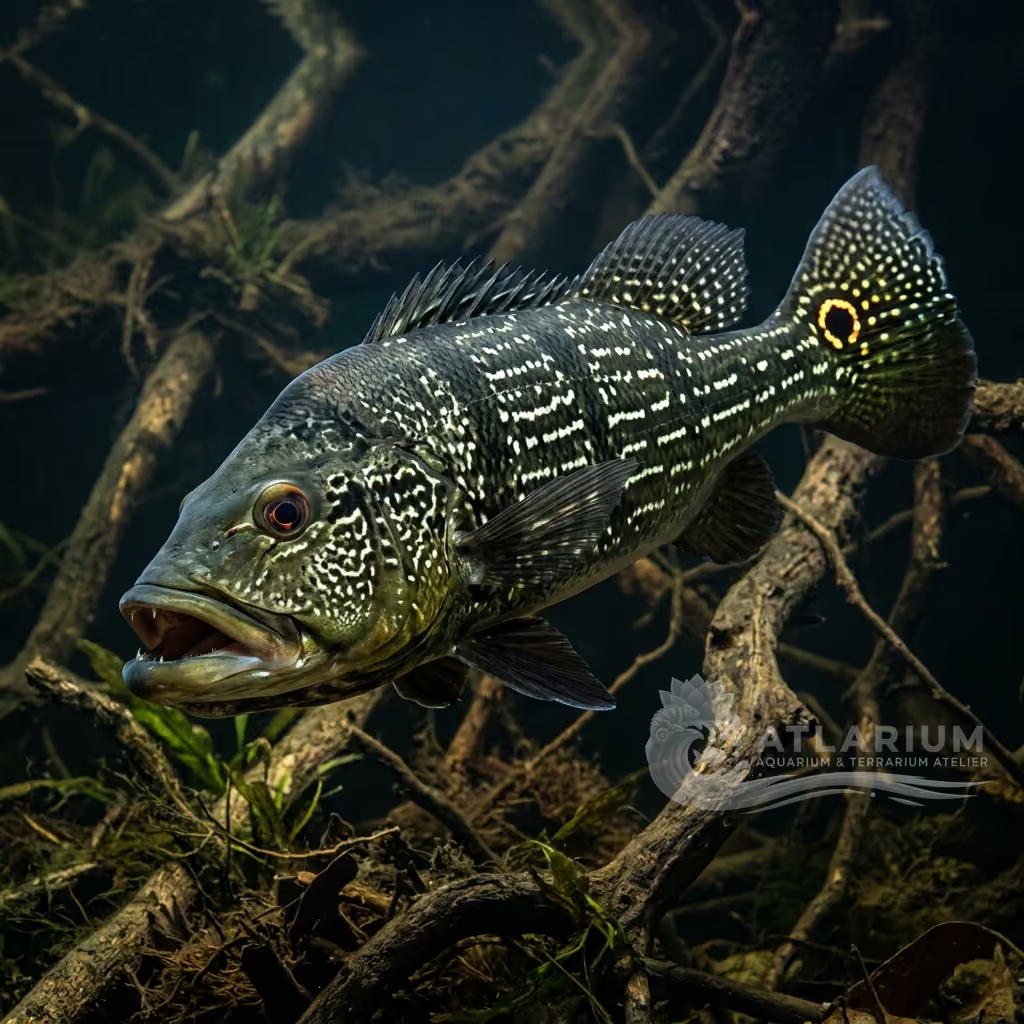
Taxonomy and Morphology: Spotted Pike-Characin (Boulengerella maculata). Similar to the lateristriga, but reaches larger sizes (over 30 cm / 12 inches in nature, often 25-28 in aquariums). The torpedo body and the fleshy appendage at the apex of the upper jaw are distinctive traits.
Social Behavior: Gregarious at a young age, becomes more solitary or tolerates small groups as an adult. Formidable but placid hunter for most of the time, slowly explores the surface.
Coloration and Sexual Dimorphism: Unlike the single stripe of the lateristriga, B. maculata presents a spectacular livery dotted with dozens of irregular black spots on a metallic silver background. Caudal fin often with lower reddish iridescences.

Soins, reproduction et cohabitation
Aquarium Setup: Huge tank (minimum 180x60 cm / 72x24 inches base) given the size and the speed of the sprint. Not too turbulent water, dimmed lights. Visual barriers (roots descending from above) help prevent panic attacks and crashes on the glass.
Diet and Feeding: Apex predator. Feeding requires dedication: it must be weaned to accept strips of white fish fillet, mussels, shelled shrimp and crickets. Some specimens accept floating sticks for large cichlids.
Water Quality: Amazonian fish that tolerates pH between 5.5 and 7.5 well. Sensitive to high nitrates: a sump filtration system or large external filters are essential to manage the organic load.
Compatibility and Cohabitation: Peaceful with non-ingestible tankmates. Perfect with large freshwater stingrays (Potamotrygon), large Characins (Myleus), large Eartheater Cichlids and Datnioides. Tapered fish (like small Tetras) will be ignored until they fit in its mouth.
Aquarium Breeding: Never successfully documented in amateur aquariums. Species that requires enormous volumes of water and complex monsoon simulations.
Risks and Diseases: Prone to jump out of the tank at the slightest nocturnal fright. "Broken snout" (infection of the fleshy appendage after an impact) is common and can lead to starvation and death.

Origine et répartition géographiques
Widely distributed in the Amazon and Orinoco basins. Prefers slow-flowing wooded streams and the marginal areas of large rivers surrounded by submerged forests.
Origine
Amazonie, Orénoque et GuyanesAmérique du Nord

Profil de poisson
- Tempérament
- Semi-aggressive
- Although they are formidable predators, they are generally peaceful towards fish that are too large to be considered food. They can be quite skittish and easily startled by sudden movements outside the tank, which may cause them to dash into the glass. Conspecifics may exhibit minor territorial disputes, which can be managed by providing enough space and visual barriers.
- Régime alimentaire
- Omnivore
- As dedicated carnivores and ambush predators, their diet in the wild consists almost entirely of smaller fish and terrestrial insects. In the aquarium, they should be fed high-quality meaty foods such as earthworms, prawns, mussels, and lancefish. While they prefer live food initially, they can often be trained to accept frozen foods with patience.
- Espérance de vie
- 8-12 years
- Taille adulte
- 32 cm
- Ratio des sexes
- Group
- While they do not have a strict sex ratio required for survival, it is best to keep them either singly or in a group of three or more individuals. Keeping them in groups helps distribute any conspecific aggression that may arise. In smaller numbers, dominant individuals may harass submissive ones, so a larger tank with ample cover is crucial for group success.
- Fréquence d'alimentation
- Twice daily
- Juvenile specimens require feeding once daily to support their rapid growth and development. Adults, however, should be fed less frequently, typically three to four times a week or every other day, to prevent obesity and maintain water quality. It is important not to overfeed them, as they have a relatively slow digestive process.
- Charge biologique
- Medium to High
- The Spotted Pike-Characin is a large predatory fish that produces a substantial amount of biological waste. To maintain optimal water quality, a powerful filtration system, such as a large canister filter or sump, is essential. Regular water changes of 30-50% weekly are highly recommended, as this species is sensitive to the buildup of nitrates and other organic pollutants.
- Courant
- Stagnant
- They prefer moderate water flow that mimics their natural riverine habitats in South America. The aquarium should have areas of gentle current where they can swim, alongside calmer zones where they can rest. Good oxygenation is also vital, which can be achieved through spray bars or powerheads.
- Risque de saut
- Yes
- The Spotted Pike-Characin is an exceptional jumper and can easily leap out of the aquarium when startled or chasing prey. A heavy, tight-fitting, and secure lid is absolutely mandatory to prevent escape and fatal accidents. Additionally, providing floating plants can help reduce their nervousness and lower the likelihood of jumping.
- Reproduction
- Oviparous
- Breeding the Spotted Pike-Characin in home aquaria is extremely difficult and largely undocumented. They are egg-scatterers, and successful spawning requires very large tanks with specific environmental triggers that are hard to replicate. Most specimens available in the aquarium trade are wild-caught.
- Compatibilité et compagnons
- With caution
- They are compatible only with large, robust, and non-aggressive tankmates that cannot fit into their mouths. Suitable companions include large catfish, medium-to-large cichlids, silver dollars, and other large characins. Avoid keeping them with small tetras, guppies, or any other small species, as they will quickly become prey.
- Niveau dans le bac
- Top/Middle
- This species is primarily a surface-dwelling to mid-water fish, spending most of its time hovering just below the water's surface. They often seek shelter under floating plants or overhanging décor, where they remain motionless while waiting for prey. The upper portion of the aquarium should have plenty of open swimming space combined with suitable top cover.

Modèles et paramètres scientifiques
FishBase
Fenêtre sur les données scientifiques officielles de l’espèce
FishBase v25.04Données synchronisées le : 15/06/2026
- Niveau trophique
- 4,2 ± 0,73 se
- Singularité phylogénétique (PD50)
- 0.5391
- Relation bayésienne longueur-poids
- a = 0.00295, b = 3.23
- VulnérabilitéVulnérabilité faible à modérée (29 / 100)

Espèces associées
Recommandations regroupées par proches parents, compagnons et soins similaires.