Amazon Puffer
Sphoeroides asellus
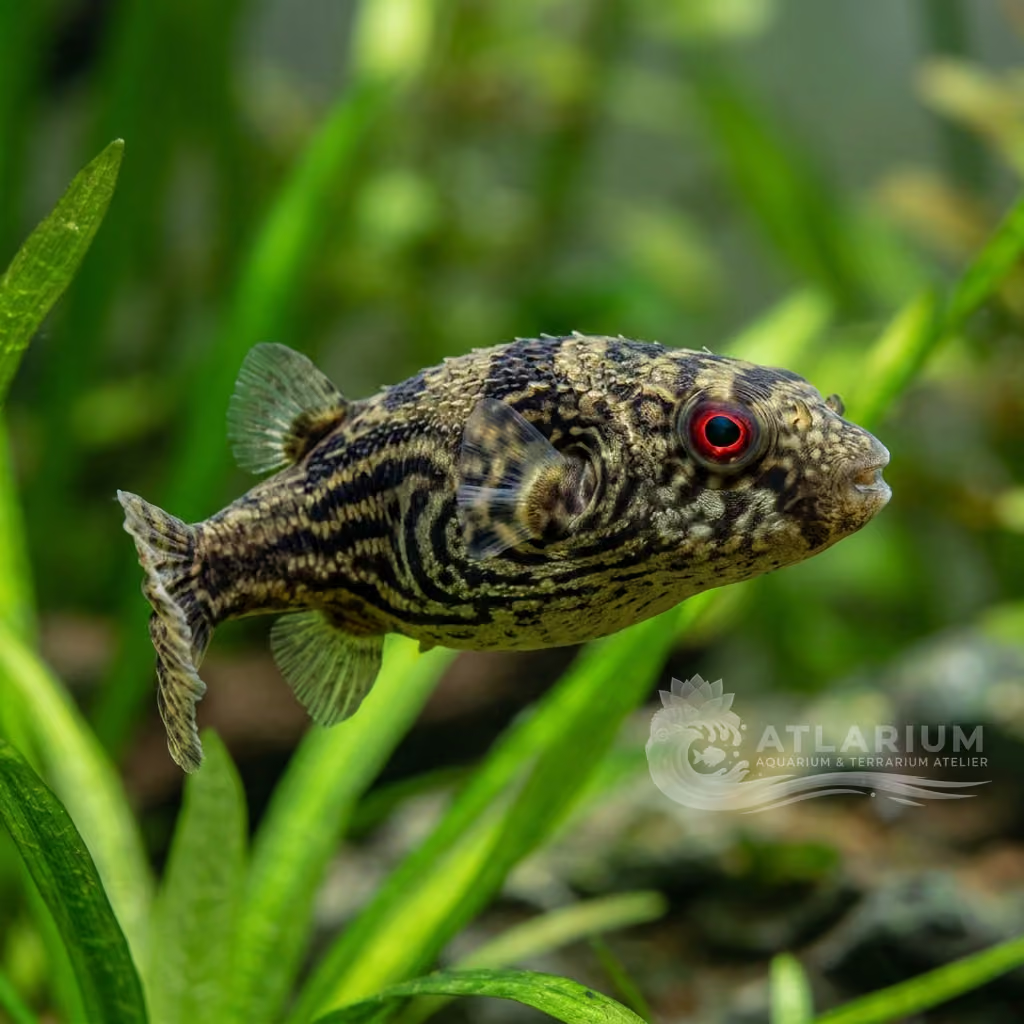
The Sphoeroides asellus (Amazon Puffer) is the friendly "anomaly" of the pufferfish family: it is one of the very rare puffers to be a true schooling fish, constantly in motion, and totally peaceful towards other species, making it an excellent guest for South American community aquariums. Unfortunately, its greatest quality clashes with its greatest flaw: the fused teeth grow at such an exorbitant rate that, even with a diet based on hard snails, the aquarist will periodically have to sedate the fish and manually file its teeth.
22 - 28 °C
5.5 - 7.5
Eau douce
Fond et milieu
8 cm
>= 150 L
>= 3
2 - 12 dGH
1 - 6 dKH
40 - 240 ppm
63 - 375 uS/cm

Description de l'espèce

Soins, reproduction et cohabitation

Origine et répartition géographiques
Origine

Profil de poisson
- Tempérament
- Active
- The Amazon Puffer is an active, curious, and schooling species that thrives when kept in groups of three to five specimens. Unlike solitary puffers, they exhibit schooling behavior and are constantly swimming and exploring the tank. They can become stressed and pace the glass if kept alone or in too small a tank.
- Régime alimentaire
- Carnivore
- They are carnivores that require hard-shelled foods to naturally wear down their rapidly growing teeth. Their diet must include live snails, unshelled shrimp, clam pieces, and crabs daily. They will not accept dry commercial foods, and failure to provide shelled foods will necessitate manual tooth trimming.
- Espérance de vie
- 8-10 years
- Taille adulte
- 8 cm
- Ratio des sexes
- Group
- Mixed groups of at least 3-5 specimens. They are extremely social.
- Fréquence d'alimentation
- Twice daily
- They should be fed once or twice daily, ensuring they receive hard-shelled prey items as a major component of their meals. Because they have a high metabolism and are constantly active, regular feedings are essential to keep them healthy. Monitor their tooth length closely during feeding times to ensure it remains manageable.
- Charge biologique
- Medium to High
- Medium-High (high metabolism and meaty wastes)
- Courant
- Strong
- They prefer moderate to strong water flow, which mimics the fast-flowing Amazon river systems they inhabit in the wild. Strong currents encourage their natural active swimming behavior and help keep the water highly oxygenated. Efficient filtration is also required to manage their messy feeding habits.
- Risque de saut
- Yes
- The Amazon puffer is known to be an active, curious swimmer that presents a moderate jump risk. Because they constantly patrol the tank and often swim vertically up and down the glass ("glass surfing"), they can accidentally propel themselves over the rim. This is particularly true if they are startled or if the water parameters drop below optimal levels. A tight-fitting lid or mesh top is highly recommended to prevent accidental leaps out of the aquarium.
- Reproduction
- Oviparous
- Reproduction in home aquariums is undocumented and believed to be impossible in captivity. In the wild, they are pelagic spawners that release eggs into river currents, which wash the larvae downstream to floodplains. The complex environmental cues and migratory patterns cannot be easily replicated in a home setup.
- Compatibilité et compagnons
- With caution
- They are one of the few community-safe pufferfish and can be kept in mixed groups or with fast-swimming tankmates like tetras and barbs. However, they are notorious fin-nippers and should not be housed with slow-moving or long-finned species. They will also hunt and consume any ornamental shrimp or snails in the tank.
- Niveau dans le bac
- Middle/Bottom
- Amazon puffers are highly active and utilize all levels of the water column, although they favor the mid-to-lower sections for hunting snails and crustaceans. They are constantly on the move, exploring decorations, plants, and the substrate for potential food sources. However, their curious nature frequently brings them to the upper levels, especially when begging for food from their keepers. A well-decorated tank that provides visual barriers across all depths is ideal for keeping them engaged.

Modèles et paramètres scientifiques
Fenêtre sur les données scientifiques officielles de l’espèce
- Niveau trophique
- 3,3 ± 0,51 se
- Résilience
- Élevée (moins de 15 mois)
- Singularité phylogénétique (PD50)
- 0.5
- Relation bayésienne longueur-poids
- a = 0.03162, b = 2.86
- VulnérabilitéVulnérabilité faible (10 / 100)

Espèces associées
Recommandations regroupées par proches parents, compagnons et soins similaires.