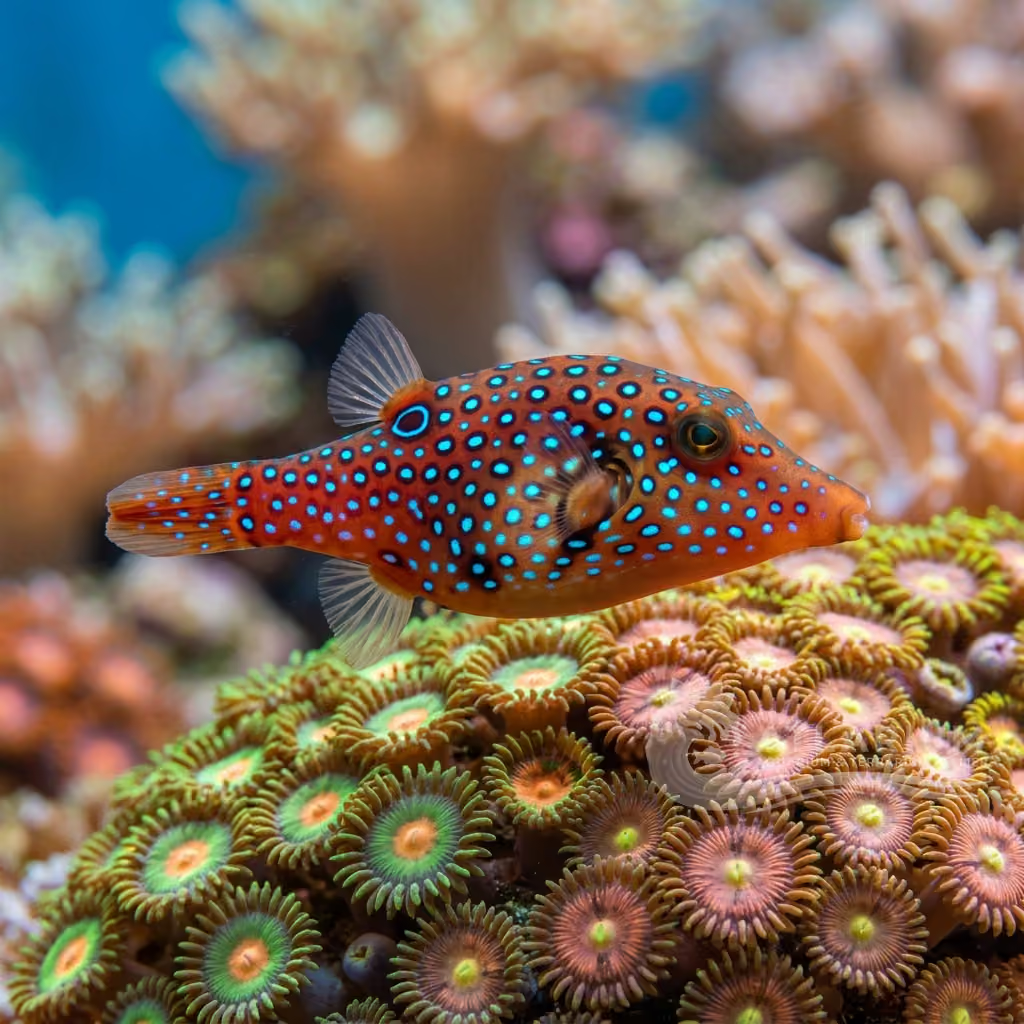
Bennett's sharpnose puffer
Canthigaster bennetti
Bennett's Sharpnose Puffer is a charming, inquisitive marine fish from the Indo-Pacific. It thrives in rock-filled setups but generates a high bioload, requiring powerful filtration.
Température de l’eau
22 - 27 °C
Valeur du pH
8.1 - 8.4
Type d'eau
Marin
Niveau dans le bac
Fond et milieu
Taille adulte
10 cm
Volume minimal du bac
>= 120 L
Groupe minimal
>= 1
KH
8 - 12 dKH

Description de l'espèce
Geographical Origin and Habitat:
Canthigaster bennetti, commonly known as Bennett's sharpnose puffer, is widely distributed throughout the tropical Indo-Pacific. Its range extends from the east coast of Africa to the Tuamotu Islands, reaching north to southern Japan and south to the Great Barrier Reef. It inhabits sheltered lagoons, sandy flats, and weed-rich inner reefs, often associated with seagrass beds at depths between 1 and 15 meters.
Taxonomy and Morphology:
This species belongs to the family Tetraodontidae and the subfamily Canthigasterinae (sharpnose puffers). It features a compact body, protruding eyes capable of independent movement, and a beak-like mouth formed by the fusion of its teeth. It lacks pelvic fins and has a smooth skin covered in tiny prickles that become erect when the fish inflates.
Social Behavior:
Canthigaster bennetti is a solitary and moderately territorial fish. It spends its time hovering slowly over the substrate, inspecting crevices for food. While generally peaceful toward unrelated fish, it can be aggressive toward other Canthigaster species. When threatened, it can inflate its body by sucking in water to deter potential predators.
Coloration and Sexual Dimorphism:
The coloration is complex and attractive: the body is greenish to brownish on the back, fading to white on the belly, and covered with numerous small iridescent blue or green spots. Radial blue lines extend from the eyes, and a distinct dark spot (ocellus) is present at the base of the dorsal fin. There is no visible sexual dimorphism between males and females.

Soins, reproduction et cohabitation
Aquarium Setup:
Requires an aquarium of at least 150 liters (approx. 40 gallons) equipped with open swimming space and plenty of live rock arranged to create caves and swim-throughs. The rocks provide foraging ground. Efficient filtration and a strong protein skimmer are essential, as puffers generate a significant bioload due to their messy feeding habits.
Diet and Feeding:
In the wild, it has an omnivorous diet consisting of algae, sponges, small gastropods, crustaceans, and polychaetes. In captivity, feed high-quality frozen foods like mysis, brine shrimp, whole unpeeled shrimp, and clams on the half shell to help wear down their continuously growing beak. Include algae sheets and spirulina-based preparations.
Water Quality:
Demands clean, highly oxygenated water. Maintain temperatures between 24°C and 28°C (75°F to 82°F), with pH between 8.1 and 8.4 and specific gravity stable between 1.021 and 1.025. Regular 10-15% weekly water changes are recommended to control nitrogenous waste. Copper levels must be monitored closely, as they do not tolerate copper medications well.
Compatibility and Cohabitation:
It is not considered reef-safe, as it may nip at the polyps of stony and soft corals, and will prey on small ornamental invertebrates like shrimp, snails, and crabs. It can coexist with active, medium-sized fish like surgeonfish, clownfish, and wrasses. Avoid slow-moving, long-finned tankmates, which the puffer may nip.
Aquarium Breeding:
There are no documented cases of successful captive breeding and larval rearing in home aquariums. In nature, they spawn on benthic substrates, followed by a planktonic larval stage in open water. Consequently, all specimens available in the aquarium trade are sustainably harvested from the wild.
Risks and Diseases:
Due to their lack of protective scales, they are highly susceptible to skin parasites such as Cryptocaryon irritans (ich) and Oodinium. Under extreme stress, they can secrete tetrodotoxin from their skin, which can poison tankmates if the puffer dies. A quarantine protocol for new arrivals is highly recommended.

Origine et répartition géographiques
Canthigaster bennetti, commonly known as Bennett's sharpnose puffer, is widely distributed throughout the tropical Indo-Pacific. Its range extends from the east coast of Africa to the Tuamotu Islands, reaching north to southern Japan and south to the Great Barrier Reef. It inhabits sheltered lagoons, sandy flats, and weed-rich inner reefs, often associated with seagrass beds at depths between 1 and 15 meters.
Origine
Océans tropicaux et récifsAfrique et MadagascarAsie de l'Est

Profil de poisson
- Tempérament
- Semi-aggressive
- Bennett's Sharpnose Puffer is generally peaceful toward most tank mates but can display moderate aggression and territoriality toward its own species or similarly shaped puffers. They are semi-aggressive fin-nippers, especially toward slow-moving or long-finned tank mates. They are curious and alert fish that spend most of their time actively exploring their environment.
- Régime alimentaire
- Omnivore
- In the wild, Canthigaster bennetti is an omnivore with a strong preference for filamentous green and red algae, supplemented by benthic invertebrates. In captivity, they should be fed a varied diet consisting of high-quality marine algae, nori, spirulina, and meaty foods such as mysis shrimp, krill, and chopped clams. Providing hard-shelled foods like small snails or unpeeled shrimp is crucial to naturally wear down their continuously growing teeth.
- Espérance de vie
- 5-8 years
- Taille adulte
- 10 cm
- Ratio des sexes
- 1:1 ratio
- Unlike many other toby puffers that form harems, Canthigaster bennetti is primarily a monogamous species. In the wild, they are typically found living solitary lives or in established pairs. In the home aquarium, they are best kept singly or as a verified male-female pair, as males will behave very aggressively towards other males.
- Fréquence d'alimentation
- Twice daily
- It is recommended to feed Bennett's Sharpnose Puffer small portions two to three times a day. Because puffers lack a true stomach and process food quickly, frequent small meals are much healthier than one large feeding. This feeding schedule also helps satisfy their constant grazing instinct and reduces the likelihood of destructive fin-nipping behavior.
- Charge biologique
- Medium
- Bennett's Sharpnose Puffer produces a moderate to high amount of waste relative to its small size due to its messy feeding habits. They tend to tear and shred meaty foods, releasing organic particulates into the water column. A high-quality filtration system, along with a robust protein skimmer and regular water changes, is necessary to keep nitrates and other nutrient levels in check.
- Courant
- Moderate
- Bennett's Sharpnose Puffer prefers moderate water flow within the aquarium. High-velocity jets can exhaust this species, as their puffing anatomy and unique swimming style using pectoral fins are not built for fighting strong currents. Providing some calmer zones with low flow behind rockwork allows them to rest comfortably, while moderate flow throughout the tank keeps the water well-oxygenated.
- Risque de saut
- Yes
- While not notorious jumpers compared to some wrasses or gobies, Bennett's Sharpnose Puffers can leap out of the tank when startled, stressed, or during nocturnal activity. A tight-fitting lid or mesh cover is highly recommended to prevent accidental escapes. Ensuring there are enough hiding places can also minimize stress and reduce the likelihood of jumping.
- Reproduction
- Oviparous
- Breeding Canthigaster bennetti in home aquariums is extremely difficult and rarely documented. In nature, spawning is highly seasonal, synchronized by temperature changes and semi-lunar cycles. Females deposit adhesive demersal eggs in nests prepared on sandy or algal substrates, which the male fertilizes. Rearing the tiny, delicate planktonic larvae represents a major challenge due to their complex nutritional requirements.
- Compatibilité et compagnons
- Reef safe with caution
- Bennett's Sharpnose Puffer is moderately compatible with active, quick-swimming fish of similar or larger size, such as wrasses, damsels, and larger tangs. They are not compatible with small, slow-moving species with long, flowing fins, as these will likely be targeted for fin-nipping. They are also not reef-safe, as they will readily consume small ornamental shrimp, snails, crabs, and may nip at hard and soft corals.
- Niveau dans le bac
- Middle/Bottom
- This species is mostly active near the bottom and middle zones of the aquarium, where it continuously inspects rocks, sand, and décor. They are benthic-oriented swimmers that hover closely over the substrate in search of algae and small invertebrates. Providing plenty of live rock with caves and tunnels at these lower levels will make them feel secure and encourage natural browsing behavior.

Modèles et paramètres scientifiques
FishBase
Fenêtre sur les données scientifiques officielles de l’espèce
FishBase v25.04Données synchronisées le : 15/06/2026
- Niveau trophique
- 2,5 ± 0,2 se
- Résilience
- Élevée (moins de 15 mois)
- Singularité phylogénétique (PD50)
- 0.5
- Relation bayésienne longueur-poids
- a = 0.03631, b = 2.88
- VulnérabilitéVulnérabilité faible (10 / 100)

Espèces associées
Recommandations regroupées par proches parents, compagnons et soins similaires.