Myers' Bloodfin
Brittanichthys myersi
Myers' Bloodfin is a diminutive, highly delicate tetra from Amazonian blackwater streams. It needs a strictly acidic, shaded aquarium with gentle filtration and a micro-crustacean diet.
Température de l’eau
24 - 28 °C
Valeur du pH
5 - 6.5
Type d'eau
Eau douce
Niveau dans le bac
Fond et milieu
Taille adulte
3,5 cm
Volume minimal du bac
>= 60 L
Groupe minimal
>= 6
GH
1 - 5 dGH
KH
1 - 5 dKH
TDS
25 - 125 ppm
Conductivité
39 - 195 uS/cm

Description de l'espèce
Geographical Origin and Habitat: Rio Negro basin (Brazil). Biotope almost identical to B. axelrodi: small shaded forest streams where leaf decomposition strongly lowers the pH.
Taxonomy and Morphology: Myers' Bloodfin (Brittanichthys myersi). Slightly larger than its congener B. axelrodi. Also endowed with the bizarre glandular caudal "hook" in adult males.
Social Behavior: Schooling micro-characin. Peaceful to the extreme. Lives hiding and swimming softly in mid-water, feeling secure only in groups of 10-15 specimens surrounded by refuges.
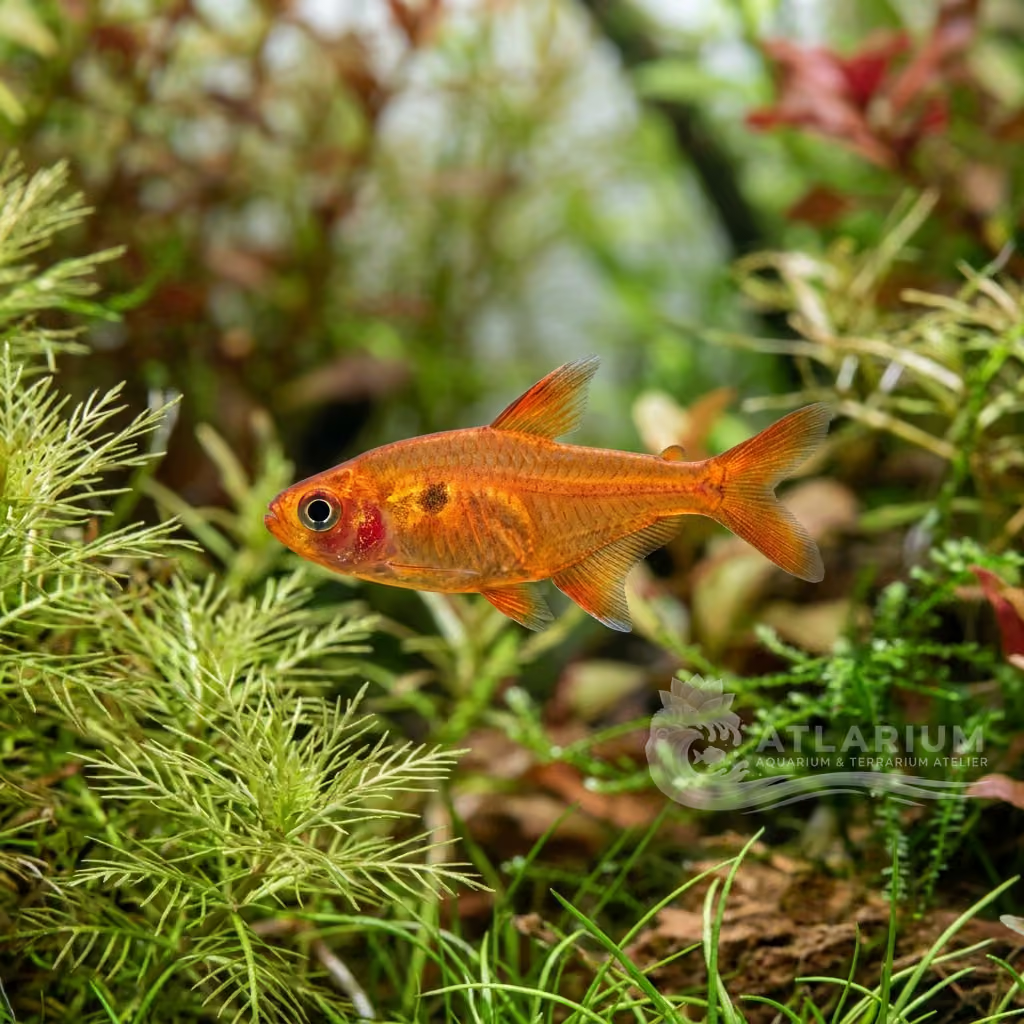
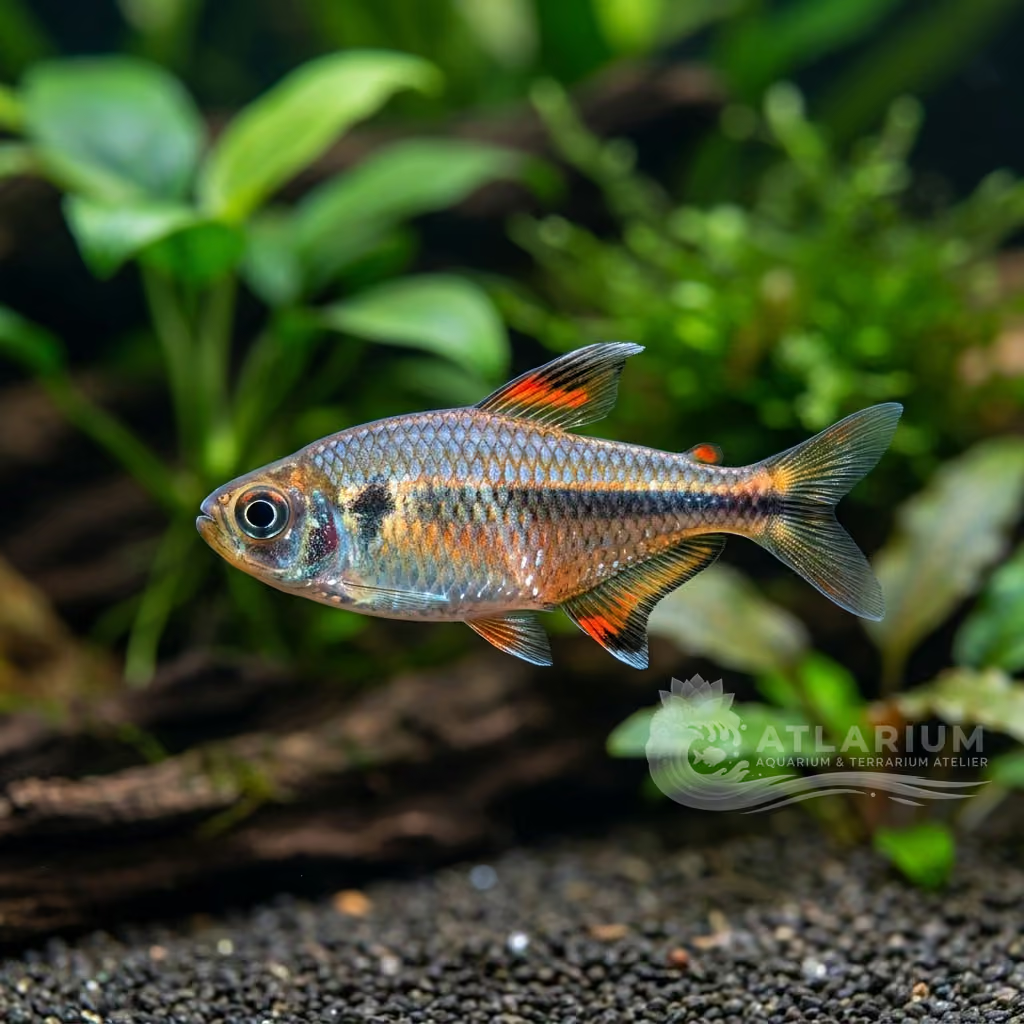
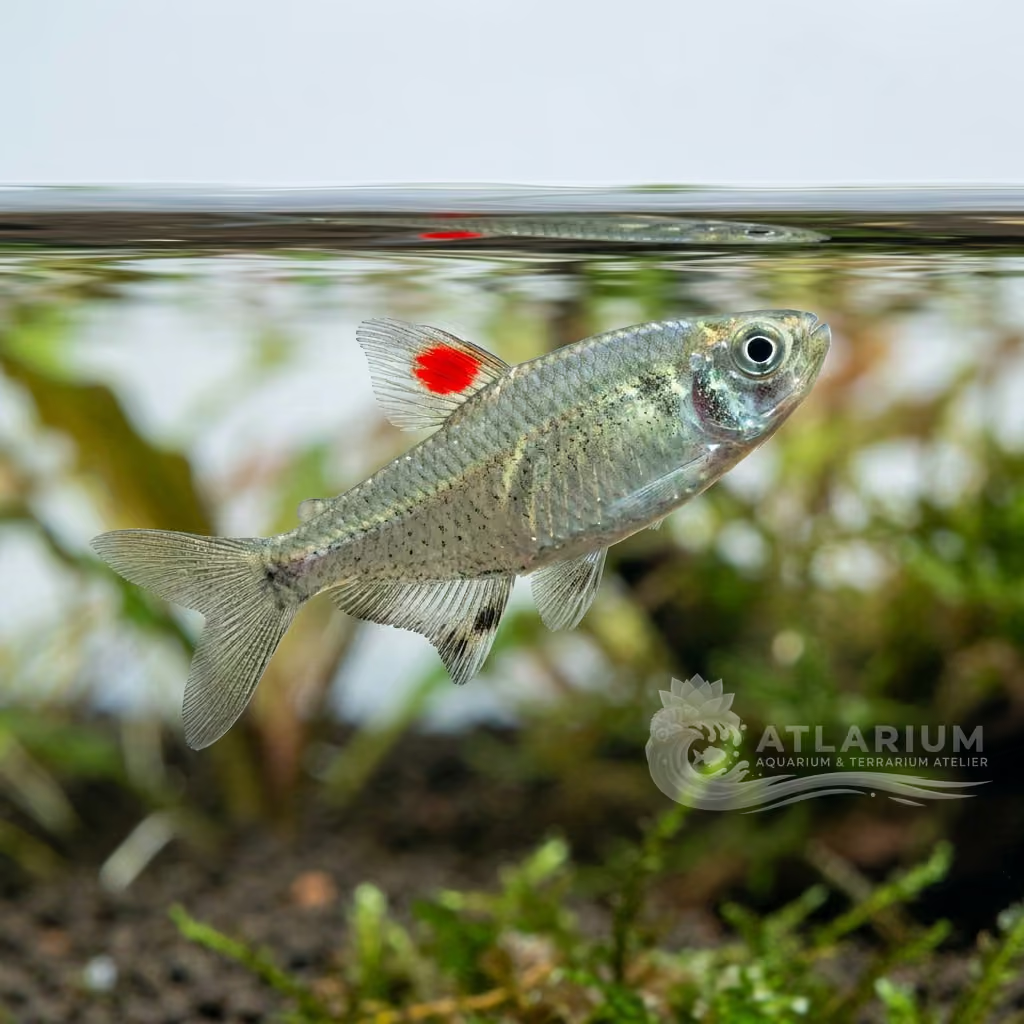
Coloration and Sexual Dimorphism: Similar to axelrodi, but the red coloration on the fins is more diffuse and nuanced, lacking the sharp contrast at the base. The body often has slight copper reflections. Males with gland/hook at the caudal base, females lack it and are more robust.

Soins, reproduction et cohabitation
Aquarium Setup: Pure Amazonian 60 cm (24 inches) aquarium. The use of acidic water, gentle filtration with active peat and tangled wood is indispensable. Avoid any direct or violent artificial light source.
Diet and Feeding: Diet based solely on micro-crustaceans, daphnia, rotifers and brine shrimp nauplii. Dry granules will be ignored unless crushed to the state of powder in water.
Water Quality: Vulnerable species. Common tap water is fatal. Requires only osmosis water remineralized with special salts and added to Catappa leaf extracts. Constant tropical temperatures (24-28°C / 75-82°F).
Compatibility and Cohabitation: Very weak fish in the face of food competition. Must only coexist with species of completely similar temperament and size: Paracheirodon innesi (Neon Tetras), Nannostomus or small shrimp.
Aquarium Breeding: Procedure in captivity unknown. A reliable account on the physiology of the curious caudal fin in the reproductive process and in the development of the larvae is missing.
Risks and Diseases: Very rare in the trade due to the extremely high mortality during exports. For extremely advanced aquarists able to maintain stable Blackwater tanks.

Origine et répartition géographiques
Rio Negro basin (Brazil). Biotope almost identical to B. axelrodi: small shaded forest streams where leaf decomposition strongly lowers the pH.
Origine
Océans tropicaux et récifsAmazonie, Orénoque et GuyanesAmérique du Nord

Profil de poisson
- Tempérament
- Semi-aggressive
- This species is exceptionally peaceful but highly timid and delicate. They are easily intimidated by larger or more active fish, which can lead to severe stress and starvation. It is essential to keep them in a dedicated species-only aquarium or alongside very peaceful nano-fish. They thrive best in quiet environments where they can display their natural schooling behaviors without disturbance.
- Régime alimentaire
- Carnivore
- In their natural habitat, they are micro-predators feeding on zooplankton, tiny insect larvae, and microscopic aquatic invertebrates. In the aquarium, they should be offered small live or frozen foods such as baby brine shrimp, cyclops, and daphnia. High-quality powdered or crushed dry foods may be accepted over time, but should not form the bulk of their diet. A varied diet of tiny, nutrient-dense foods is crucial to maintain their health and vibrant color.
- Espérance de vie
- 3-5 years
- Taille adulte
- 3.5 cm
- Ratio des sexes
- Group
- This species is shoaling and should be kept in mixed-sex groups of 8 or more individuals. A balanced sex ratio is ideal, though exact male-to-female ratios are not strictly required for their well-being. Keeping a larger group helps diffuse potential territorial behavior or mating pursuit stress among males. A school will exhibit more natural behavior and brighter coloration when kept in numbers.
- Fréquence d'alimentation
- Twice daily
- Due to their tiny size and fast metabolism, Brittanichthys myersi should be fed small quantities multiple times a day. Two to three daily feedings of tiny portions are ideal to prevent muscle wasting and maintain energy. Care must be taken not to overfeed, as uneaten food will quickly spoil their sensitive water environment. Providing food in small increments allows all individuals in the school to eat.
- Charge biologique
- Low
- Brittanichthys myersi is a tiny characin with an extremely low individual biological footprint. However, because they must be kept in groups of at least 8 to 10 individuals to feel secure, their collective bioload should be accounted for. They are highly sensitive to accumulation of organic waste, requiring robust filtration and consistent water quality. Regular small water changes are recommended over large, disruptive ones to maintain stable parameters.
- Courant
- Stagnant
- This species originates from slow-moving blackwater streams and flooded forest areas in the Rio Negro basin. Consequently, they require very gentle water flow in the aquarium, as strong currents will quickly exhaust them. Filtration should be adjusted or baffled to minimize surface and midwater agitation. Air-powered sponge filters or gentle hang-on-back filters with pre-filter sponges are highly recommended for their setup.
- Risque de saut
- Yes
- Like many small and agile characins, Brittanichthys myersi poses a moderate risk of jumping, especially when startled. They can easily leap out of open aquarium setups during water changes or when lights are turned on suddenly. A tight-fitting lid or a mesh cover is highly recommended to prevent accidental escapes. The inclusion of floating plants can also help deter jumping by providing surface cover.
- Reproduction
- Oviparous
- Brittanichthys myersi is a unique inseminating characin that exhibits internal fertilization. Males possess modified anal fin rays that form a specialized structure used to transfer sperm to the female. Females store the sperm and lay fertilized eggs later, a reproductive trait that distinguishes them from most other tetras. Breeding in captivity is extremely difficult and rarely documented, requiring pristine, extremely soft, and acidic blackwater conditions.
- Compatibilité et compagnons
- Species only
- This species is ideal for species-only setups or specialized nano blackwater aquariums. They should only be housed with very small, peaceful tank mates such as pygmy corydoras, small loricariids, or other gentle micro-characins. Larger, active, or boisterous fish must be strictly avoided as they will easily outcompete and stress this timid species. Keeping them with too many active species may cause them to remain hidden and waste away.
- Niveau dans le bac
- Middle/Bottom
- Brittanichthys myersi typically occupies the middle to lower regions of the water column. They prefer swimming among the dense foliage of plants and roots, rarely venturing to the surface. Providing floating plants will help shade the tank and encourage them to utilize the middle areas more actively. Their benthopelagic nature means they will spend most of their time darting through lower aquatic vegetation.

Modèles et paramètres scientifiques
FishBase
Fenêtre sur les données scientifiques officielles de l’espèce
FishBase v25.04Données synchronisées le : 15/06/2026
- Niveau trophique
- 3,1 ± 0,4 se
- Résilience
- Élevée (moins de 15 mois)
- Singularité phylogénétique (PD50)
- 0.75
- Relation bayésienne longueur-poids
- a = 0.00389, b = 3.12
- VulnérabilitéVulnérabilité faible (10 / 100)

Espèces associées
Recommandations regroupées par proches parents, compagnons et soins similaires.