White-seam betta
Betta albimarginata
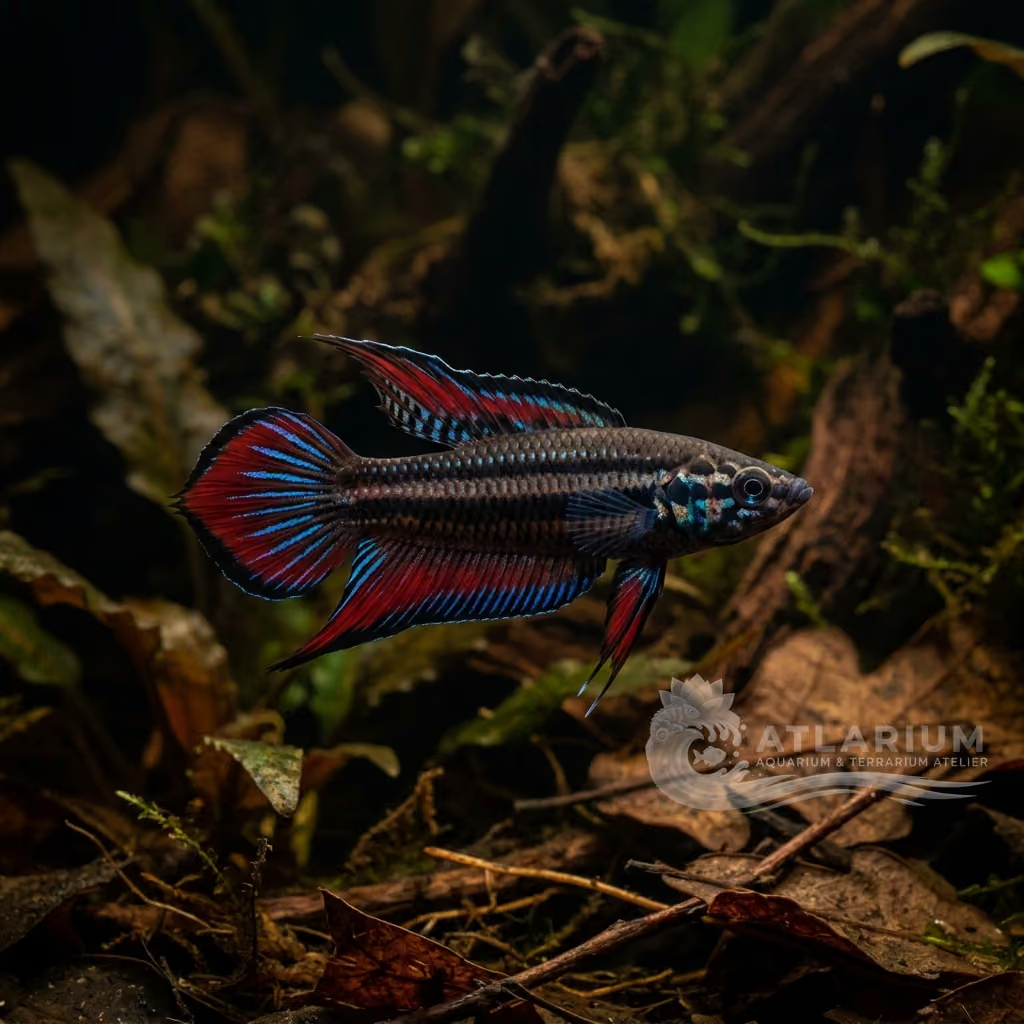
A wild betta from Borneo: a different world from commercial Betta splendens. Compact body with brilliant white-edged fins on a red-orange and black background — natural elegance without the exaggerated fins of pet store bettas. Paternal mouthbrooder: the male carries eggs in his mouth for 10–14 days. Requires very soft, acidic blackwater (pH 4.0–6.5). Peaceful and shy. Dried leaves and tannins essential. Lid mandatory: jumper.
Température de l’eau
24 - 28 °C
Valeur du pH
5.5 - 6.5
Type d'eau
Eau douce
Niveau dans le bac
Fond et milieu
Taille adulte
5 cm
Volume minimal du bac
>= 30 L
Groupe minimal
>= 2
GH
1 - 5 dGH
KH
1 - 2 dKH
TDS
25 - 95 ppm
Conductivité
39 - 148 uS/cm

Description de l'espèce
Geographical Origin and Habitat: Endemic to the Sebuku River basin in Indonesian Borneo (East Kalimantan). Exclusively populates very shallow swamp forest pools (often less than 10 cm / 4 inches of water), filled with mud, leaf litter and fallen branches in almost total shade.
Taxonomy and Morphology: White-Seam Fighter (Betta albimarginata). Belongs to the "wild" Betta complex. Thin, stocky and compact torpedo-shaped body, large head with a wide mouth suitable for oral incubation. Short fins, very dissimilar from the typical Betta splendens.
Social Behavior: Shy, reflective and. Unlike its domestic cousin, males live together peacefully (provided there are visual barriers and plenty of space) limiting themselves to spectacular displays in which they dilate their gills without injuring themselves.
Coloration and Sexual Dimorphism: Gorgeous velvety rust-red livery. The distinctive element (albimarginata) is the clear milk-white margin that borders all the dark fins of the male. Females are drab brownish-gray, camouflaged and slightly smaller.

Soins, reproduction et cohabitation
Aquarium Setup: Dedicated nano-aquarium (Biotope setup min. 50 cm / 20 inches). Dark amber water, very low light (filtered by floating plants), tangle of woods and a soft bed of Ketapang leaves. The water must be free surface (without current) and the tank sealed with a lid.
Diet and Feeding: Ambush micro-predator. Often refuses dry feeds or takes months to get used to them. MUST be fed with small live or frozen food: Daphnia, Artemia, Bloodworms, Grindal and drosophila.
Water Quality: "Blackwater" species. Demands extremely soft and acidic water produced by peat. Accumulations of pollutants are deadly. Like all Anabantoids it breathes air: a thermal shock between water and air above the tank will cause lethal pneumonia.
Compatibility and Cohabitation: To be kept in a single-species tank (Species Tank). Peacefully shares the aquarium only with very small Boraras or peaceful pangios. Put in "community tanks" it will die of terror, holing up until starvation.
Aquarium Breeding: Paternal mouthbrooders. After the embrace, the female collects the eggs and "spits" them to the male. He will hide, swelling his throat out of proportion, incubating the eggs for 12-18 days without feeding, then releasing 10-40 independent fry.
Risks and Diseases: Accidental ingestion of offspring: if an incubating male is frightened (sudden light, noises, rough water) he will swallow the eggs out of panic. They are also incredible jumpers: they pass through any crack in the lid.

Origine et répartition géographiques
Endemic to the Sebuku River basin in Indonesian Borneo (East Kalimantan). Exclusively populates very shallow swamp forest pools (often less than 10 cm / 4 inches of water), filled with mud, leaf litter and fallen branches in almost total shade.
Origine
Sélection et cultivarsAmérique centrale et CaraïbesAsie du Sud et du Sud-Est

Profil de poisson
- Tempérament
- Peaceful
- Unlike the well-known domestic *Betta splendens*, *Betta albimarginata* is a relatively peaceful and shy species that does not exhibit extreme conspecific aggression. While males will establish small territories and engage in harmless flaring displays to assert dominance, physical injuries are extremely rare in a well-structured tank. They are easily intimidated by active or boisterous fish, causing them to hide and refuse food. A peaceful, calm environment is essential to witness their natural behaviors and vibrant coloration.
- Régime alimentaire
- Micro-predator
- *Betta albimarginata* is a strict micropredator, feeding primarily on small insects, insect larvae, and zooplankton in its natural habitat. In the aquarium, they can be finicky eaters and often refuse dried flake foods, preferring live or frozen options instead. High-quality choices like daphnia, artemia, bloodworms, grindal worms, and mosquito larvae are excellent for their health. Over time, some individuals can be trained to accept tiny, high-quality sinking pellets, but their staple diet should remain rich in meaty, moisture-rich foods.
- Espérance de vie
- 3-5 years
- Taille adulte
- 5 cm
- Ratio des sexes
- 1:1 ratio
- *Betta albimarginata* can be kept in pairs, trios, or in larger groups if the aquarium is sufficiently sized and structured with plenty of hiding spots. A standard recommendation is a 1:1 male-to-female ratio or a slight female majority to distribute any spawning stress. If kept in a group, it is crucial to provide multiple caves and visual barriers to allow males to establish small territories without constant conflict. In smaller setups under 10 gallons, a single pair is the most successful and stress-free configuration.
- Fréquence d'alimentation
- Twice daily
- It is recommended to feed *Betta albimarginata* once or twice a day with small portions that they can consume within a few minutes. Because they are prone to bloating and constipation, it is beneficial to include a fasting day once a week to allow their digestive tract to clear. During breeding periods, feeding frequency for the female may be slightly increased, while the mouthbrooding male will not eat at all for the duration of the incubation. Careful observation during feeding ensures all individuals receive food without overeating or polluting the water.
- Charge biologique
- Low
- White-seam Bettas are small-bodied fish with a very low individual bioload, making them suitable for nano aquariums. However, they are highly sensitive to fluctuating water parameters and organic waste accumulation, requiring pristine water conditions. A gentle filtration system, such as a sponge filter, is ideal because it keeps the biological waste in check without creating strong currents that could stress the fish. Regular small water changes are recommended to maintain water quality without causing sudden parameter shifts.
- Courant
- Moderate
- Naturally inhabiting slow-moving forest streams and shallow peat swamps, *Betta albimarginata* prefers weak water flow in the aquarium. Strong currents can exhaust these small fish, causing severe stress, reducing their activity level, and disrupting their breeding behaviors. Filtration should be configured to provide gentle circulation, with air-powered sponge filters or hang-on-back filters with adjustable flow rates being the most suitable options. Adding dense vegetation and hardscape helps break up any residual currents, creating calm pockets of water where they can rest.
- Risque de saut
- Yes
- *Betta albimarginata* is an exceptional and agile jumper, capable of escaping through even the smallest openings in an aquarium cover. It is absolutely vital to secure the tank with a tight-fitting lid that leaves no gaps around filters, heaters, or cables. Keeping the water level a few inches below the rim provides an extra layer of safety, reducing the chances of a successful jump. Stress or poor water quality can increase their tendency to jump, making cover and proper parameters essential for their survival.
- Reproduction
- Mouthbrooder
- *Betta albimarginata* is a paternal mouthbrooder, and breeding them is relatively straightforward if correct water conditions are met. Spawning occurs after an elaborate courtship, during which the female releases eggs that are fertilized and then gathered by the male into his mouth. The male incubates the eggs for 10 to 15 days, during which he remains hidden and refuses all food. It is highly recommended to isolate the brooding male or ensure the tank is densely planted to protect the tiny, free-swimming fry when they are finally released.
- Compatibilité et compagnons
- Peaceful
- Due to their shy nature and small size, *Betta albimarginata* is best kept in a species-only setup, especially if breeding is the primary goal. If kept in a community tank, they should only be housed with very peaceful, quiet tankmates such as small rasboras, microdevario, small loaches, or pygmy corydoras. Avoid larger, active, or aggressive species that might outcompete them for food or stress them with fast swimming. Keeping them with other wild betta species is not recommended to prevent hybridization and territorial conflicts.
- Niveau dans le bac
- Middle/Bottom
- These bettas generally inhabit the bottom to middle zones of the water column, often hovering near leaf litter, roots, and low-lying vegetation. They are cautious fish that prefer to stay close to shelters, venturing to the upper water levels primarily during feeding times or when spawning. Providing floating plants or overhanging decorations helps secure the upper layers, encouraging them to explore more of the tank. In a bare setup, they will remain strictly near the bottom, seeking cover in any available dark spots.

Modèles et paramètres scientifiques
FishBase
Fenêtre sur les données scientifiques officielles de l’espèce
FishBase v25.04Données synchronisées le : 15/06/2026
- Niveau trophique
- 3,1 ± 0,4 se
- Résilience
- Élevée (moins de 15 mois)
- Singularité phylogénétique (PD50)
- 0.5
- Relation bayésienne longueur-poids
- a = 0.01, b = 2.97
- VulnérabilitéVulnérabilité faible (10 / 100)

Espèces associées
Recommandations regroupées par proches parents, compagnons et soins similaires.