Dwarf mouthbrooder betta
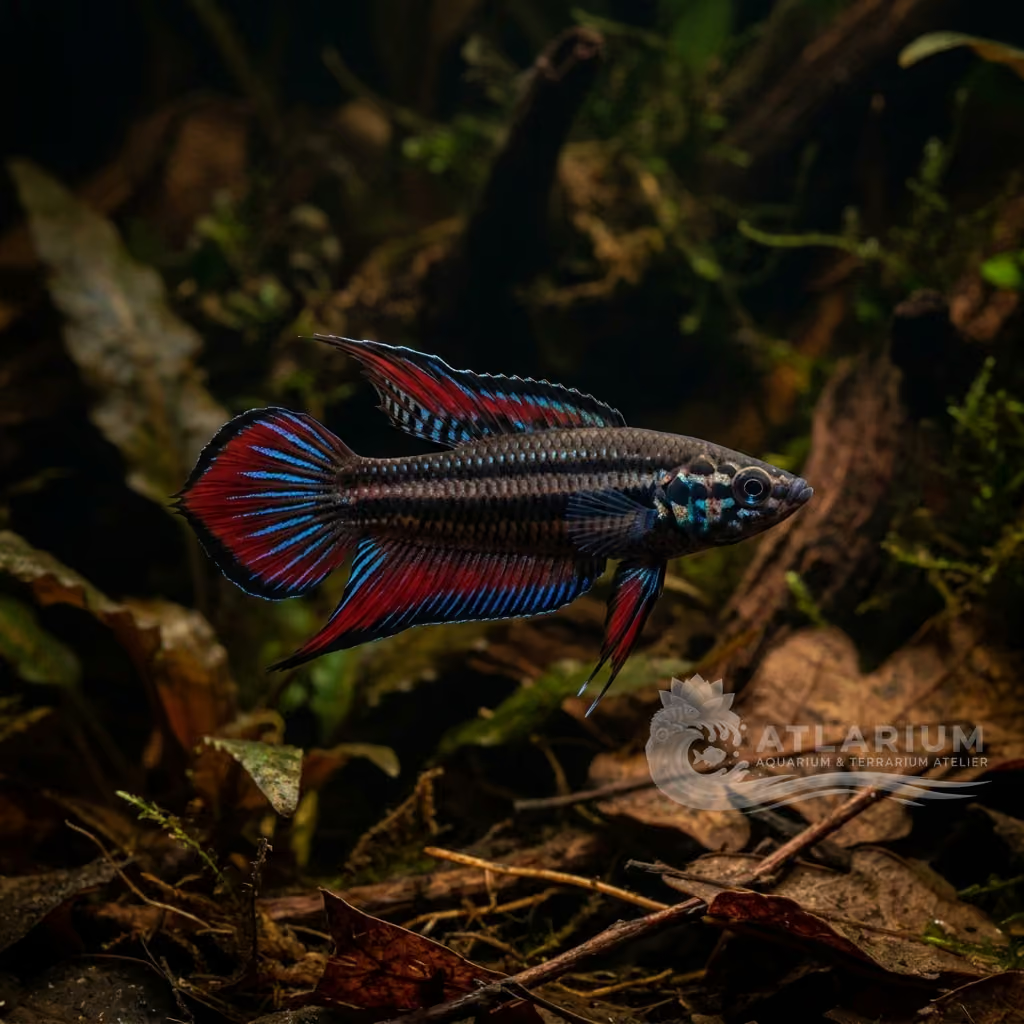
Betta dimidiata
A nano wild betta from Borneo (Kapuas basin): one of the smallest bettas (3.5–5 cm), also called 'Firefly Betta' for its luminous reflections. Paternal mouthbrooder like cousin B. albimarginata. Requires extremely soft, acidic blackwater. Sensitive to stress and sudden changes — slow acclimation mandatory for wild-caught specimens. Dried leaves and tannins create the ideal habitat and provide microorganisms for fry. Lid with humid air essential for labyrinth.
22 - 27 °C
4.5 - 6.5
Eau douce
Surface et milieu
5,5 cm
>= 30 L
>= 2
1 - 5 dGH
1 - 2 dKH
25 - 95 ppm
39 - 148 uS/cm

Description de l'espèce

Soins, reproduction et cohabitation

Origine et répartition géographiques
Origine

Profil de poisson
- Tempérament
- Semi-aggressive
- Betta dimidiata is a peaceful and somewhat shy species, displaying none of the extreme aggression found in domestic bettas. Males will engage in non-harmful gill-flaring and fin-spreading displays to establish hierarchy, but serious injuries are extremely rare. They are calm, slow-moving fish that prefer a quiet, dimly lit environment where they can feel secure. Because of their timid nature, they can easily become stressed if housed with highly active or aggressive tankmates.
- Régime alimentaire
- Carnivore
- In their natural habitat, these micro-predators feed primarily on small insects, insect larvae, and other aquatic invertebrates. In the aquarium, they should be offered a variety of live and frozen foods such as daphnia, artemia, and bloodworms to maintain health and color. Although they can eventually adapt to high-quality dry foods, they may initially ignore flakes or pellets. Overfeeding must be carefully avoided, as wild bettas are highly prone to obesity and related digestive issues.
- Espérance de vie
- 3-5 years
- Taille adulte
- 5.5 cm
- Ratio des sexes
- 1:1 ratio
- These bettas can be successfully kept in monogamous pairs or in small group settings. If kept in groups, a balanced ratio or a slightly higher number of females to males is recommended to distribute mild territorial behaviors. Unlike the aggressive Betta splendens, Betta dimidiata males are relatively peaceful toward one another, though minor dominance displays will occur. A tank size of at least 45x30 cm of base area is sufficient to establish territory for a single breeding pair or a small harem.
- Fréquence d'alimentation
- 2-3 times daily
- Betta dimidiata should ideally be fed small portions two to three times per day. This frequency mimics their natural foraging behavior and helps sustain their energy levels, especially during breeding cycles. Feeding small amounts multiple times also prevents water quality degradation from uneaten food. Fasting them for one day a week can be beneficial to support their digestive health and prevent issues like constipation or bloating.
- Charge biologique
- Low
- Betta dimidiata is a small species with a very low biological footprint, producing minimal waste. Due to their preference for sluggish, slow-moving waters, they are best kept with gentle air-powered sponge filters rather than strong power filters. Regular small water changes are essential to maintain high water quality, as they are sensitive to accumulating organic waste and nitrates. A heavily planted aquarium with botanical elements like leaf litter helps process biological waste while mimicking their natural blackwater habitat.
- Courant
- Moderate
- This species exhibits a strong preference for weak or sluggish water currents, reflecting their natural forest stream and pool habitats. Strong, turbulent currents will exhaust these slender fish and cause chronic stress, which suppresses their immune system. An air-powered sponge filter is highly recommended, as it provides adequate biological filtration without creating disruptive surface movement. The use of dense plantings and driftwood can also help break up any localized water currents.
- Risque de saut
- Yes
- This species is an exceptional jumper, capable of leaping through even the smallest gaps in the aquarium cover. It is absolutely critical to secure the tank with a tight-fitting lid or cover glass to prevent escape and subsequent death. Additionally, keeping the water level slightly lowered creates a humid air pocket above the water surface, which is vital for the development of their labyrinth organ. The addition of floating plants can also help cover the surface and deter jumping behaviors.
- Reproduction
- Mouthbrooder
- Betta dimidiata is a paternal mouthbrooder, which is a fascinating and relatively advanced reproductive strategy. During spawning, the couple performs a typical labyrinth embrace, after which the female collects the eggs and spits them toward the male, who carries them in his mouth. The male will incubate the eggs for 10 to 14 days, during which he does not eat and must not be stressed to prevent him from swallowing the brood. The resulting fry are large enough to accept microworms and artemia nauplii immediately after release.
- Compatibilité et compagnons
- Peaceful
- They are not suited for standard community aquariums and are best kept in a species-specific setup or with very peaceful, small companions. Appropriate tankmates include small, quiet cyprinids, miniature loaches, or peaceful catfish that share their soft, acidic water preferences. Avoid housing them with fast-moving, boisterous, or nippy species that would easily intimidate them and outcompete them for food. Keeping them in a dedicated tank allows them to display their full range of natural behaviors and facilitates successful breeding.
- Niveau dans le bac
- Top/Middle
- Betta dimidiata is primarily a middle-to-top dweller in the aquarium. As an anabantoid, it possesses a labyrinth organ that requires it to regularly swim to the surface to breathe atmospheric air. They also utilize floating plants and upper-level vegetation for shelter and resting spots. While they will occasionally explore the bottom to search for food among leaf litter, most of their activity and social interactions take place in the upper half of the water column.

Modèles et paramètres scientifiques
Fenêtre sur les données scientifiques officielles de l’espèce
- Niveau trophique
- 3,2 ± 0,4 se
- Résilience
- Élevée (moins de 15 mois)
- Singularité phylogénétique (PD50)
- 0.5
- Relation bayésienne longueur-poids
- a = 0.01, b = 2.97
- VulnérabilitéVulnérabilité faible (10 / 100)

Galerie d'images
Images sous licence liées à l'espèce ou, lorsqu'elles sont indiquées, au taxon représentatif le plus proche.

Espèces associées
Recommandations regroupées par proches parents, compagnons et soins similaires.