Chocolate Gourami
Sphaerichthys osphromenoides
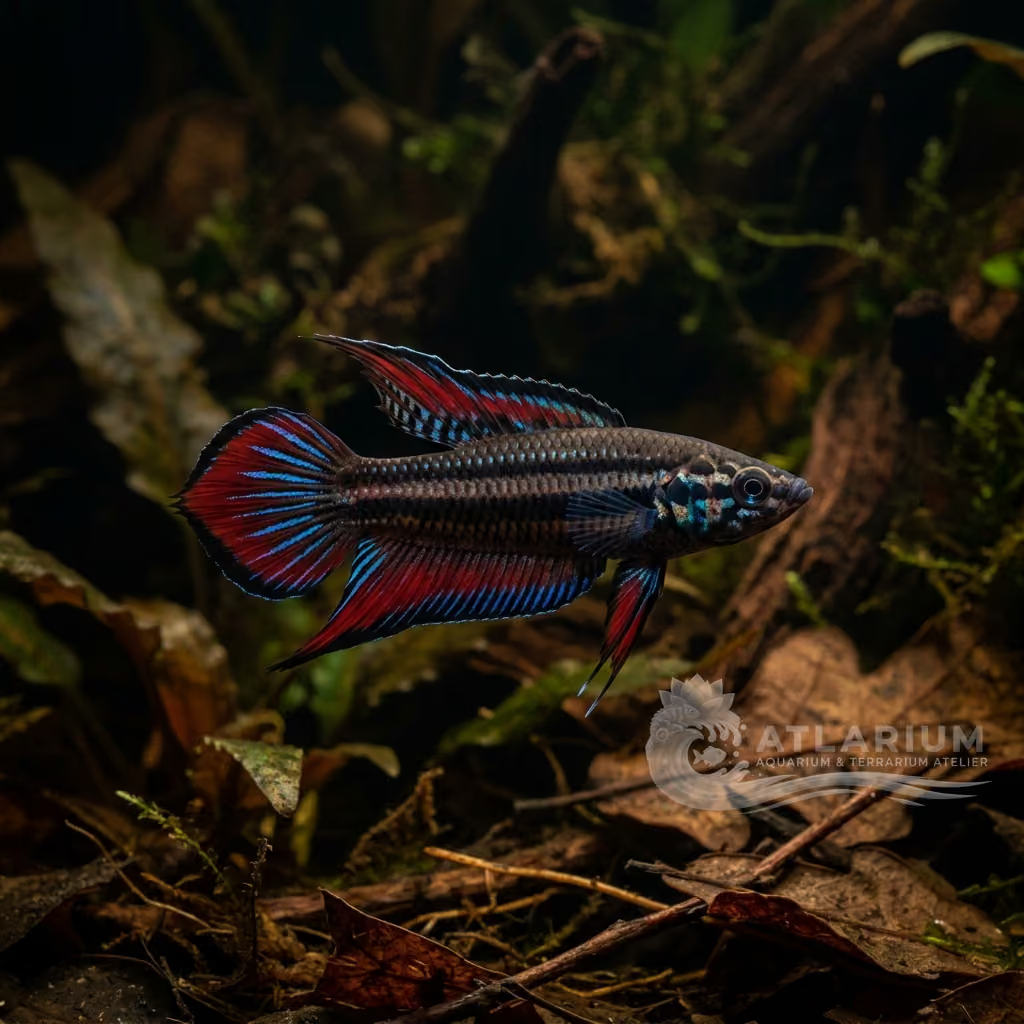
The delicate Chocolate Gourami demands pristine, extreme blackwater (pH 4.0-5.0). This shy, slow-moving micro-predator exhibits stunning chocolate coloration with delicate gold vertical bands.
Température de l’eau
24 - 28 °C
Valeur du pH
4 - 6
Type d'eau
Eau douce
Niveau dans le bac
Milieu
Taille adulte
6 cm
Volume minimal du bac
>= 60 L
Groupe minimal
>= 1
GH
0 - 5 dGH
KH
1 - 2 dKH
TDS
10 - 95 ppm
Conductivité
16 - 148 uS/cm

Description de l'espèce
Geographical Origin and Habitat: Native to remote peat swamps and flooded forests of Malaysia, Sumatra, and Borneo. Extreme water chemistry: black-tea colored from tannins, pH 3.5-5.0, unmeasurably soft. This environment is almost sterile with minimal bacterial load.
Taxonomy and Morphology: Osphronemidae (4-5 cm). Deeply compressed, almond-shaped body. Possesses a labyrinth organ to breathe atmospheric air, crucial for survival in stagnant peat swamps.
Social Behavior: Extremely shy, introverted, and slow-moving. Lives in small schools among dense vegetation. Needs a group of 6+ to feel secure; otherwise, it hides constantly and starves. True aggression is absent.
Coloration and Sexual Dimorphism: Strikingly elegant. Dark chocolate body crossed by 3 or 4 thin bright yellow/gold vertical bands. Reddish fin reflections. Males slightly more slender with a straighter lower jaw.

Soins, reproduction et cohabitation
Aquarium Setup: Mandatory biotope (60-80+ liters). ABSOLUTELY ZERO current (gentle sponge filters). Fine sand covered in a thick carpet of catappa leaves, alder cones, and peat. Dim lighting, floating plants. Dark tea-colored water.
Diet and Feeding: Very picky and slow. Often arrives emaciated. Generally refuses dry food. Requires live/frozen micro-prey: artemia nauplii, daphnia, cyclops. Fast tankmates will outcompete it and cause starvation.
Water Quality: THE MAIN HURDLE. Will not survive in tap water. Requires pure RO water: GH 0-2, KH ~0, pH 4.0-5.5. Very warm: 26-30°C. In neutral/hard water, its immune system collapses (it relies on the sterile acidic environment). Nitrates must be near zero.
Compatibility and Cohabitation: Species-only tank is ideal. Otherwise, only tiny, ultra-peaceful blackwater micro-fish (Boraras, Pangio). Any active fish will terrorize it.
Aquarium Breeding: A challenge for experts. Unlike many Gouramis, it is a maternal mouthbrooder. The female incubates eggs in her mouth for 10-14 days. Stress will cause her to swallow the brood.
Risks and Diseases: Extremely high mortality rate in the hobby due to inappropriate water. Rapidly develops fin rot, dropsy, and Velvet disease in tap water. Recommended ONLY for experts with mature blackwater setups.

Origine et répartition géographiques
Native to remote peat swamps and flooded forests of Malaysia, Sumatra, and Borneo. Extreme water chemistry: black-tea colored from tannins, pH 3.5-5.0, unmeasurably soft. This environment is almost sterile with minimal bacterial load.
Origine
Amérique du NordAsie du Sud et du Sud-Est

Profil de poisson
- Tempérament
- Semi-aggressive
- Behaviorally, the Chocolate Gourami is characterized as being shy and timid. They exhibit fascinating social dynamics that can be a true joy to observe in a well-planned display. While generally agreeable, unexpected aggression can sometimes occur if their fundamental environmental needs are not met. Providing adequate hiding spots and sufficient swimming space will go a long way in ensuring their temperament remains calm and manageable.
- Régime alimentaire
- Omnivore
- This species is known to be a micro-predator in its natural habitat, requiring a varied diet in captivity. To ensure optimal health and coloration, provide high-quality prepared foods alongside live or frozen options like brine shrimp or bloodworms. It is essential to match the food particle size to the fish's mouth structure to facilitate easy consumption. Regular rotation of dietary items will prevent nutritional deficiencies and keep the fish highly active.
- Espérance de vie
- 3-5 years
- Taille adulte
- 6 cm
- Ratio des sexes
- Group
- Maintaining an appropriate sex ratio is vital, and a balanced distribution of males and females often works best for the Chocolate Gourami. In many cases, keeping a ratio heavily skewed towards females can help disperse male aggression during the breeding season. It is important to monitor the group dynamics closely to quickly identify and isolate any bullied individuals. A well-structured environment with plenty of visual barriers will support a harmonious mixed-sex group.
- Fréquence d'alimentation
- Twice daily
- To mimic its natural foraging behavior, the Chocolate Gourami should be fed small portions two to three times a day. Overfeeding can lead to severe health issues and quickly degrade the water quality. It is crucial to only provide an amount of food that the fish can consume within a few minutes. Adjusting the feeding frequency based on the fish's age and activity level is a best practice for long-term care.
- Charge biologique
- Low to Medium
- Maintaining this freshwater species requires understanding its low bioload profile. The Chocolate Gourami will thrive when the filtration system is carefully matched to its specific waste production. Frequent testing of the water chemistry is highly recommended to ensure no dangerous spikes occur. Excellent water quality is the foundation for preventing disease and promoting a vibrant, active fish.
- Courant
- Stagnant
- In terms of water movement, the Chocolate Gourami thrives best in environments with very low flow. Replicating the hydrodynamic conditions of their native habitat is key to reducing stress and promoting natural behaviors. Powerheads or spray bars can be strategically placed to create adequate currents without overwhelming the fish. Careful placement of hardscape and plants can also provide sheltered resting zones away from the main flow.
- Risque de saut
- Yes
- Due to its energetic nature, the Chocolate Gourami carries a low probability of jumping out of an open-top aquarium. It is highly advised to secure the perimeter of the tank with a glass canopy or custom netting. Instances of leaping often happen at night or during sudden lighting changes, making a gentle sunrise/sunset lighting schedule beneficial. Maintaining exceptional water quality further discourages attempts to escape the enclosure.
- Reproduction
- Oviparous
- The reproductive strategy of the Chocolate Gourami involves being a paternal mouthbrooder. Breeding this species in captivity can be a rewarding challenge that requires dedicated conditioning of the broodstock. Specific triggers such as changes in temperature, diet, or water chemistry are often necessary to induce spawning. Once breeding occurs, specialized care for the fry, including appropriately sized live foods, is critical for their survival and development.
- Compatibilité et compagnons
- Species only
- The Chocolate Gourami is known to be best in species-only or with very peaceful micro-fish when integrated into a carefully planned setup. They tend to exhibit the best colors and natural behaviors when kept with species of a similar temperament. Aquarists must be cautious to provide enough visual barriers if housing them with semi-aggressive tankmates. Overall, a well-thought-out stocking plan will yield a beautiful, drama-free aquatic display.
- Niveau dans le bac
- Middle
- This species is predominantly a mid to bottom dweller within the aquarium setup. Providing the appropriate spatial layout with open swimming areas or dense vegetation where they feel secure is highly beneficial. By understanding their preferred depth, aquarists can carefully select complementary species that occupy other regions of the tank. This spatial separation helps to reduce competition for food and minimizes unnecessary territorial disputes.

Modèles et paramètres scientifiques
FishBase
Fenêtre sur les données scientifiques officielles de l’espèce
FishBase v25.04Données synchronisées le : 15/06/2026
- Niveau trophique
- 3,2 ± 0,41 se
- Résilience
- Élevée (moins de 15 mois)
- Singularité phylogénétique (PD50)
- 0.5625
- Relation bayésienne longueur-poids
- a = 0.01995, b = 3.01
- VulnérabilitéVulnérabilité faible (10 / 100)

Galerie d'images
Images sous licence liées à l'espèce ou, lorsqu'elles sont indiquées, au taxon représentatif le plus proche.

Espèces associées
Recommandations regroupées par proches parents, compagnons et soins similaires.