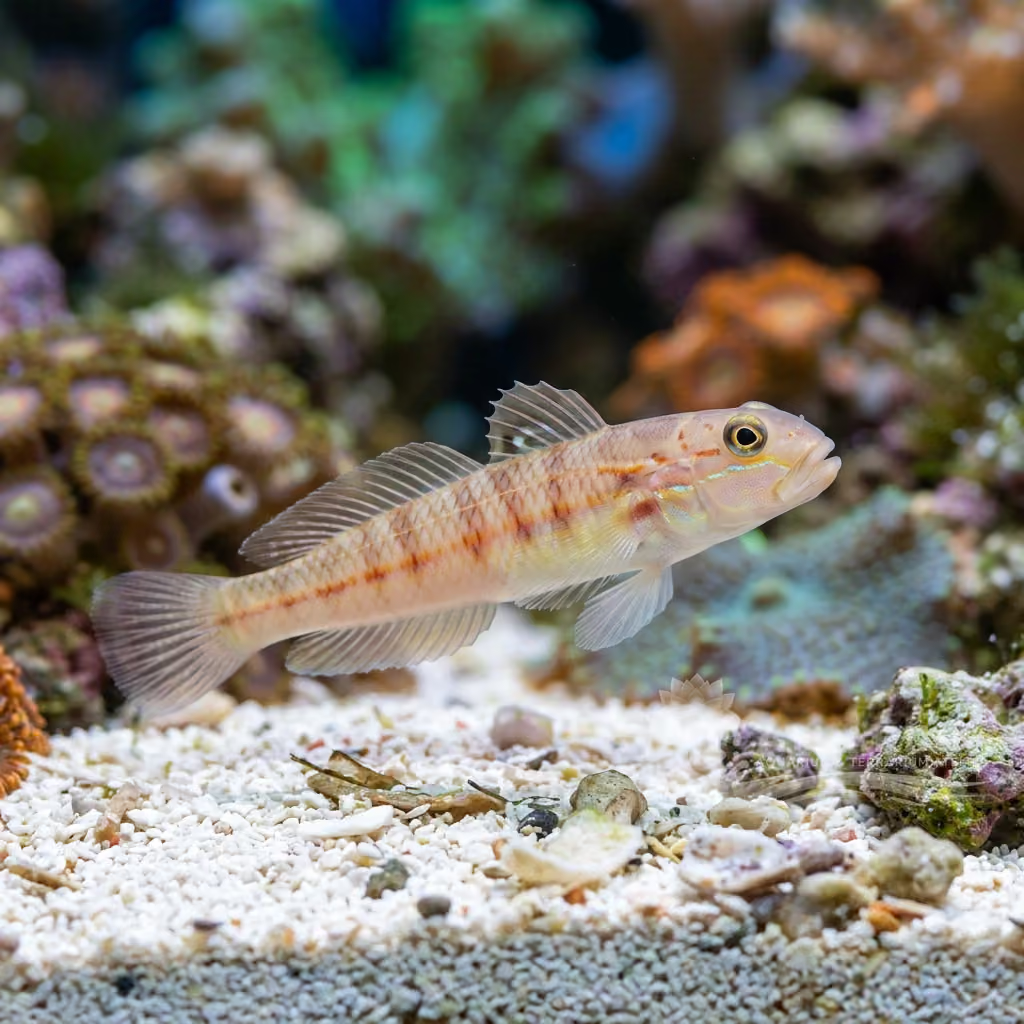
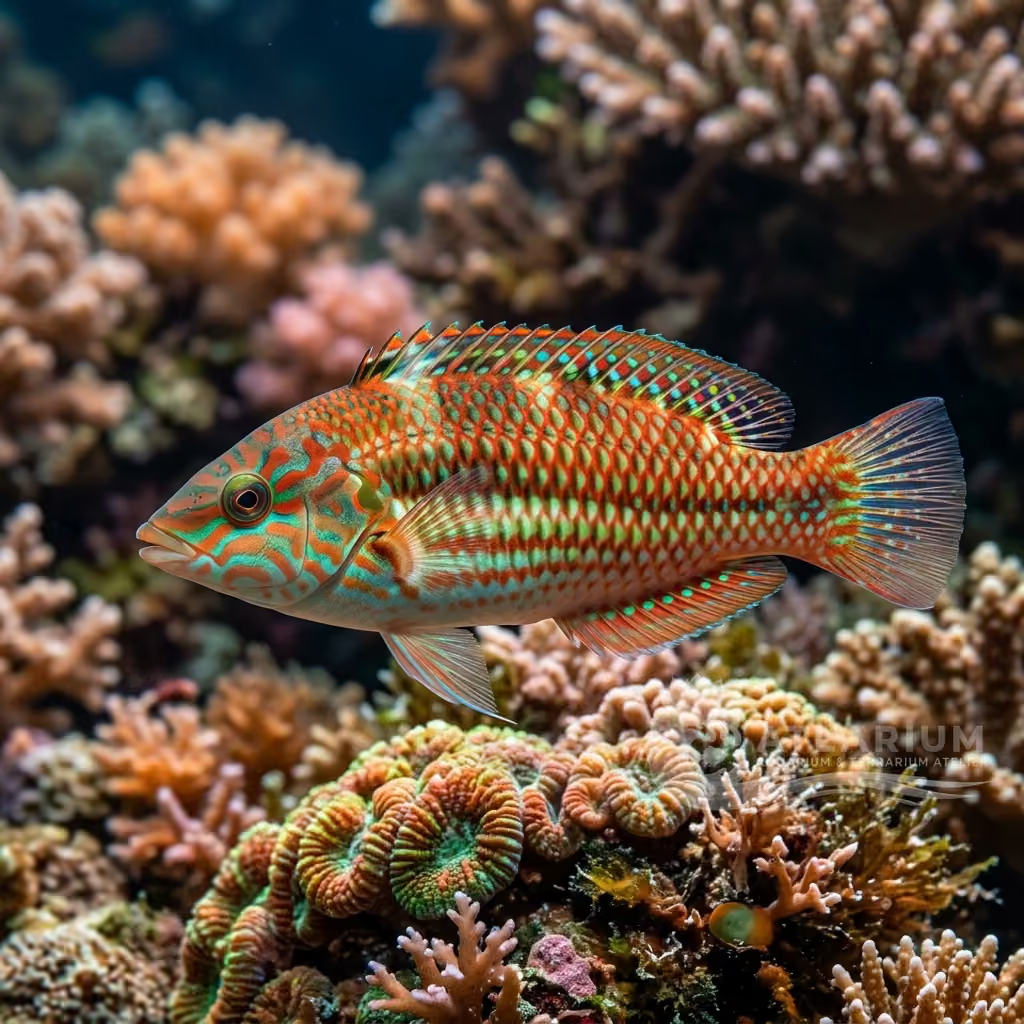
Blue assessor
Assessor macneilli
The blue assessor is a fascinating cave-dweller known to swim completely upside down. With its dark navy-blue body, this peaceful carnivore thrives in small reef tanks loaded with dark overhangs.
Température de l’eau
22 - 27 °C
Valeur du pH
8.1 - 8.4
Type d'eau
Marin
Niveau dans le bac
Tous les niveaux
Taille adulte
7 cm
Volume minimal du bac
>= 100 L
Groupe minimal
>= 1
KH
8 - 12 dKH

Description de l'espèce
Geographical Origin and Habitat:
This fish lives along the Great Barrier Reef in Australia and the Coral Sea. It inhabits deep outer reefs, finding shelter in dark caves, crevices, and shaded vertical walls.
Taxonomy and Morphology:
Belongs to the Plesiopidae family. It features an elongated, laterally compressed body with large eyes adapted to low light. It reaches a maximum length of 6-7 cm when fully grown.
Social Behavior:
A very peaceful, shy, and cryptic species that lives in small groups inside rocky caves. It does not bother corals or other fish, making it ideal for quiet reef aquariums.
Coloration and Sexual Dimorphism:
The coloration is a solid, deep navy blue covering the entire body. The fins are edged with brilliant electric blue lines. No obvious external sexual dimorphism is present.

Soins, reproduction et cohabitation
Aquarium Setup:
Requires a tank of at least 80-100 liters with plenty of live rock forming arches, deep caves, and shaded zones. A lid is mandatory to prevent the fish from jumping out.
Diet and Feeding:
Feeds on zooplankton. In the aquarium, it accepts frozen mysis, brine shrimp, and lobster eggs. Once acclimated, it consumes high-quality micro-granules fed near its cave.
Water Quality:
Keep marine parameters stable: temperature 22-26 °C, pH 8.1-8.4, and specific gravity 1.020-1.025. Low nitrates and an efficient protein skimmer are required.
Compatibility and Cohabitation:
Compatible with corals and benthic invertebrates. Can live with peaceful fish like gobies, cardinalfish, and small wrasses. Avoid aggressive or fast-swimming tankmates.
Aquarium Breeding:
They are paternal mouthbrooders. The male carries and incubates the egg mass in its mouth for about 10-15 days until hatching. Fry must be fed with rotifers.
Risks and Diseases:
Sensitive to acclimation stress and starvation if kept with overly voracious fish. Acclimate slowly and ensure it gets enough food near its hiding spot.

Origine et répartition géographiques
This fish lives along the Great Barrier Reef in Australia and the Coral Sea. It inhabits deep outer reefs, finding shelter in dark caves, crevices, and shaded vertical walls.
Origine
Océans tropicaux et récifsAsie de l'EstAustralie, Nouvelle-Guinée et Océanie

Profil de poisson
- Tempérament
- Peaceful
- Extremely peaceful and somewhat shy. Do not keep with large aggressive fish. They need a calm environment to thrive.
- Régime alimentaire
- Carnivore
- Planktivores that feed on small suspended prey. Provide cyclops, small mysis, and high-quality micro-pellets. They enjoy frequent small feedings.
- Espérance de vie
- 9-15 years
- Taille adulte
- 7 cm
- Ratio des sexes
- Group
- Can be kept in small groups or pairs. Provide enough rockwork to establish territories. Groups are fascinating to observe.
- Fréquence d'alimentation
- Twice daily
- Feed small amounts two to three times a day. They will pluck food from the water column. Ensure the pieces are small enough for their mouths.
- Charge biologique
- Low
- Assessors have a very low bioload. They are small and do not produce much waste. Perfect for smaller reef tanks.
- Courant
- Strong
- Prefer low to moderate flow. They often swim upside down under ledges. Too much flow can keep them hiding.
- Risque de saut
- Yes
- They can jump through small openings. A tight lid is necessary. They may dart to the surface if chased.
- Reproduction
- Mouthbrooder
- They are mouthbrooders, which is unique. Males carry the eggs in their mouths until they hatch. Captive breeding has been successfully accomplished.
- Compatibilité et compagnons
- Reef safe
- Very peaceful and completely reef safe. Excellent companions for small, timid fish. They will not bother corals or invertebrates.
- Niveau dans le bac
- All levels
- They stay near rock overhangs and caves. Often seen swimming vertically or upside down. They rarely venture into open water.

Modèles et paramètres scientifiques
FishBase
Fenêtre sur les données scientifiques officielles de l’espèce
FishBase v25.04Données synchronisées le : 15/06/2026
- Niveau trophique
- 3,4 ± 0,2 se
- Résilience
- Élevée (moins de 15 mois)
- Singularité phylogénétique (PD50)
- 0.625
- Relation bayésienne longueur-poids
- a = 0.01047, b = 2.89
- VulnérabilitéVulnérabilité faible (10 / 100)

Espèces associées
Recommandations regroupées par proches parents, compagnons et soins similaires.