Eriocaulon sp. "Goiás"
Eriocaulon sp. "Goiás"
A spectacular rare plant from the soft waters of the Brazilian highlands. It strictly requires extremely strong lighting and consistent CO2 supply for photosynthesis.
Water Temperature
20 - 28 °C
pH Value
4.5 - 7
Water type
Freshwater
Light
High
CO2
High
GH
0 - 10 dGH
KH
0 - 7 dKH

Species description
Geographical Origin and Habitat: Comes from the state of Goiás in Brazil. It grows in extremely soft, acidic, and clear oligotrophic waters, often in sandy areas exposed to direct sunlight along the waterways of the Brazilian highlands.
Taxonomy & Genetics: It is part of the Eriocaulaceae family and the genus Eriocaulon. It is a species not yet formally described, known by the name of its region of origin. It has a highly specialized genetics for living in mineral-poor waters.
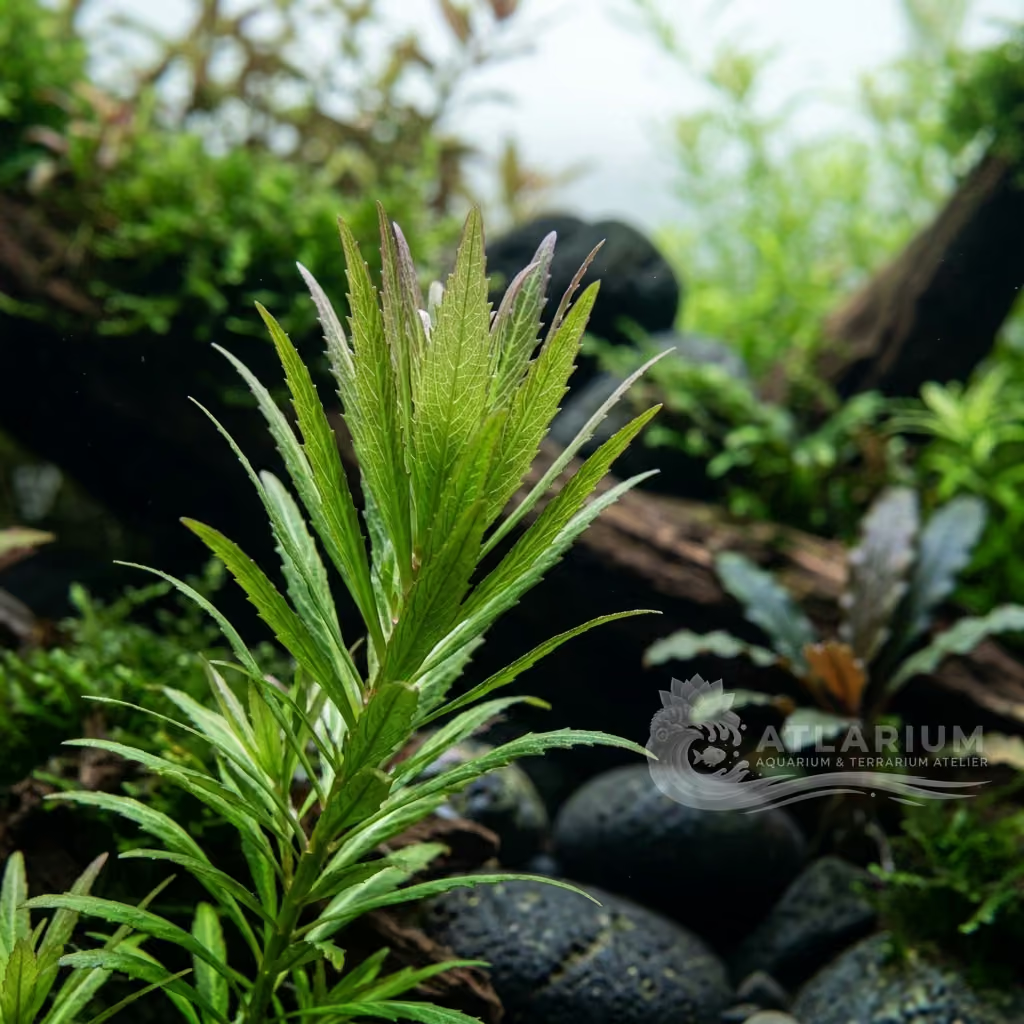
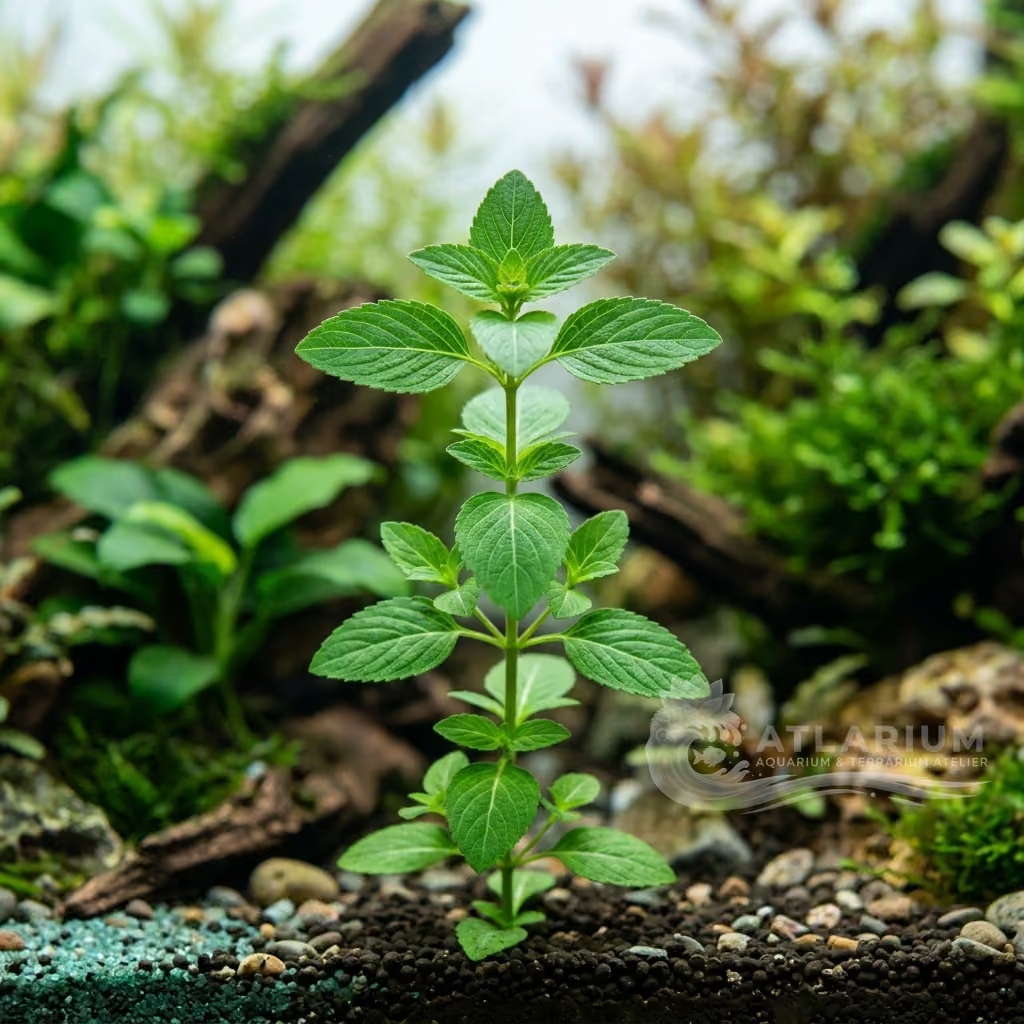
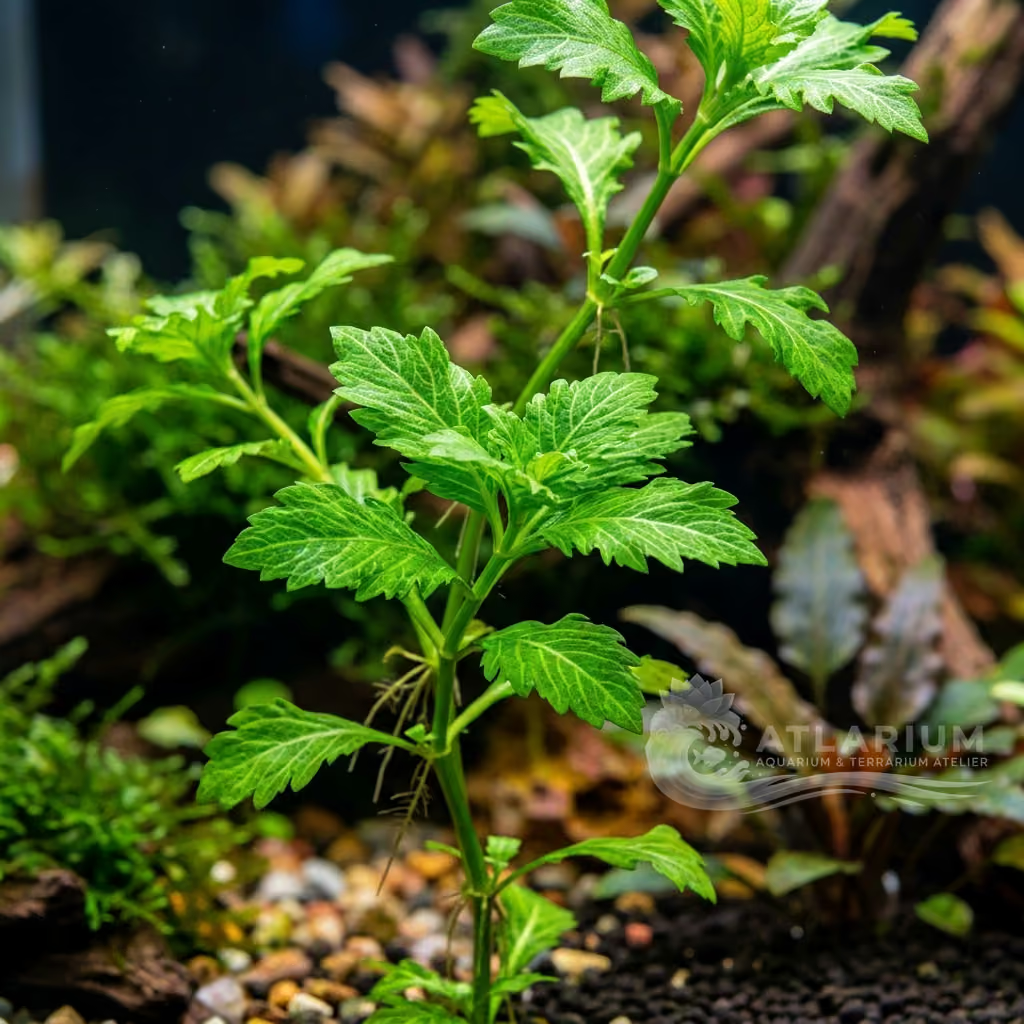
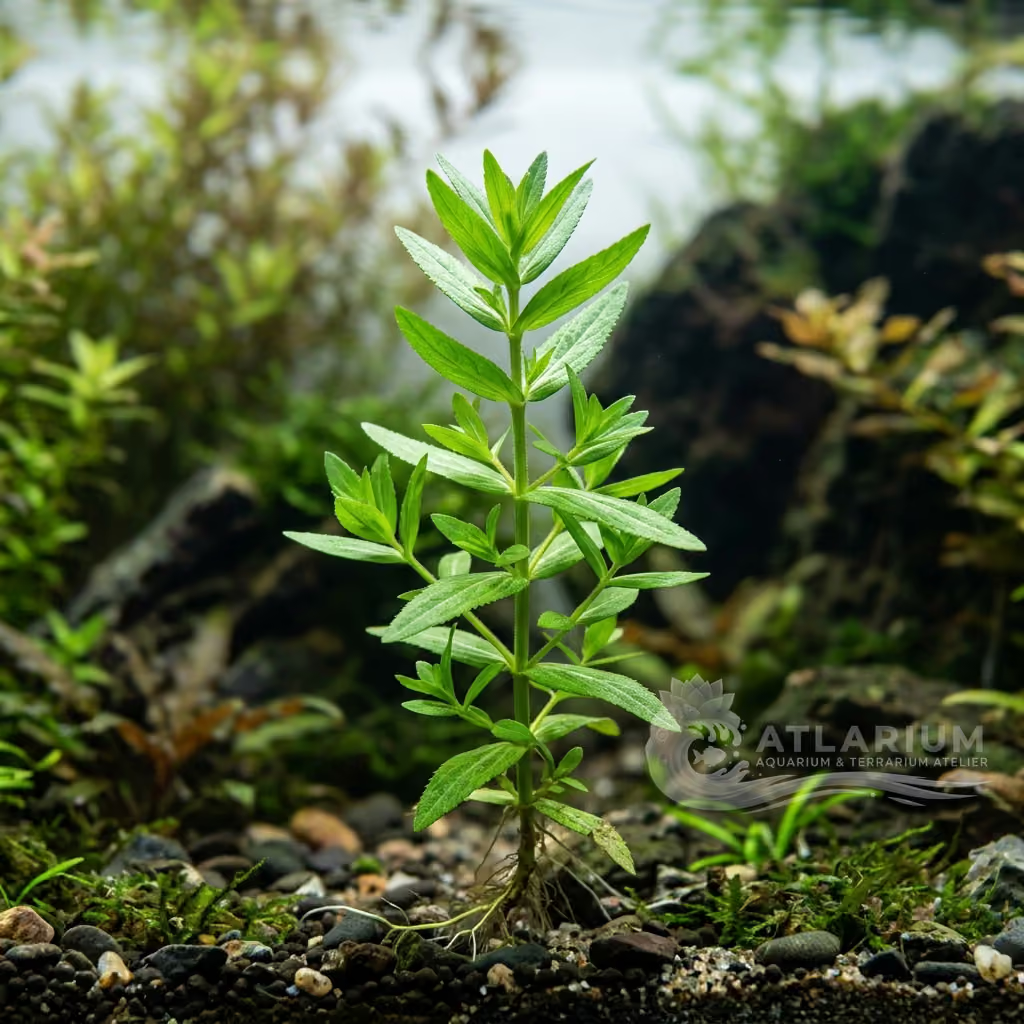
Physical Structure: It develops a very rigid and flattened leaf rosette that grows almost flush with the ground. The leaves are thick, lanceolate, and curved downwards, arranged in concentric circles that form a perfect geometric star.
Color & Texture: It has an intense emerald green coloration. The texture is leathery and rigid, very different from the softness of other aquatic plants, which makes it immediately recognizable.

Care, breeding and tankmates
Lighting & CO2: Requires extremely strong lighting. CO2 must be consistently supplied at medium-high levels to support its photosynthesis and general health.
Nutrition & Substrate: A fertilized, acidic substrate is a mandatory requirement. The roots draw most of the nutrients from the substrate; adding tabs rich in iron and phosphates is recommended.
Water Chemistry: Prefers very soft (KH 0-2) and highly acidic water (pH 4.5-6.5). Water conductivity must be kept low. Temperature between 20 and 28 °C.
Space Management & Placement: Place in the foreground or midground. Given its compact size and very slow growth, it is suitable for small spaces, but requires free space around it.
Pruning: Pruning is almost non-existent. Carefully remove old or damaged leaves at the periphery of the rosette to maintain aesthetic appearance.
Risks & Diseases: It is one of the most demanding plants. A sudden increase in water hardness or pH can lead to the rapid collapse of the plant and melting of the leaves.

Geographic origin and distribution
Comes from the state of Goiás in Brazil. It grows in extremely soft, acidic, and clear oligotrophic waters, often in sandy areas exposed to direct sunlight along the waterways of the Brazilian highlands.
Origin
Extra-Amazon South America

Plant profile
- Placement
- Midground
- It is typically used as a striking accent plant in the foreground to midground. Ensure it is placed in an open area where it won't be overshadowed by faster-growing surrounding plants.
- Botanical form
- Rosette
- It forms a rigid rosette with slightly broader and greener leaves compared to E. cinereum. Over time, mature specimens can develop a small, thick stem-like base.
- Growth
- Slow
- This is a relatively slow-growing plant. It takes its time to form a substantial rosette and settle into a new environment, requiring patience from the aquascaper.
- Substrate
- High
- Eriocaulon sp. "Goiás" requires a deeply enriching, slightly acidic substrate environment to support its rigorous growth and complex root system. An active aqua soil that buffers the pH and provides abundant macronutrients is the ideal choice for cultivating this rare specimen. A substrate depth of 6-8 cm is highly recommended, giving its substantial roots ample room to spread, anchor, and feed. Ensuring the soil remains loose and highly fertile is key, as this plant depends heavily on its roots to uptake the minerals necessary for its distinctive appearance.
- Column fertilization
- Recommended
- It thrives with consistent liquid dosing of micro and macro elements. While it feeds heavily from the roots, CO2 injection and liquid nutrients are highly recommended for optimal development.
- Root fertilization
- None
- It relies heavily on root nutrient uptake. Planting in a rich aquasoil and providing regular replenishment with root tabs are key to its long-term success.
- Trimming
- Occasional
- Minimal trimming is needed. The primary maintenance involves simply plucking away older, deteriorating leaves near the base to prevent algae buildup and maintain a tidy appearance.
- Propagation
- Cuttings
- It propagates by producing offsets or splitting the crown when mature. Carefully divide the small plantlets from the mother plant using a sharp blade and replant them.
- Sensitivity
- Moderate
- It is prone to melting during the initial acclimation phase or if subject to sudden parameter shifts. It demands soft, acidic water and unshaded, intense lighting to thrive.
- Layout role
- Midground
- It serves as an excellent structural accent or focal point in the foreground. Its distinct geometric shape adds immense visual interest and contrast to typical carpeting plants.

Related species
Recommendations grouped by close relatives, companion choices, and similar care.