Encyclopaedia
PlantFreshwaterIntermediate
©AI Generated·Proprietary
Echinodorus 'Großer Bär'
Echinodorus 'Großer Bär'
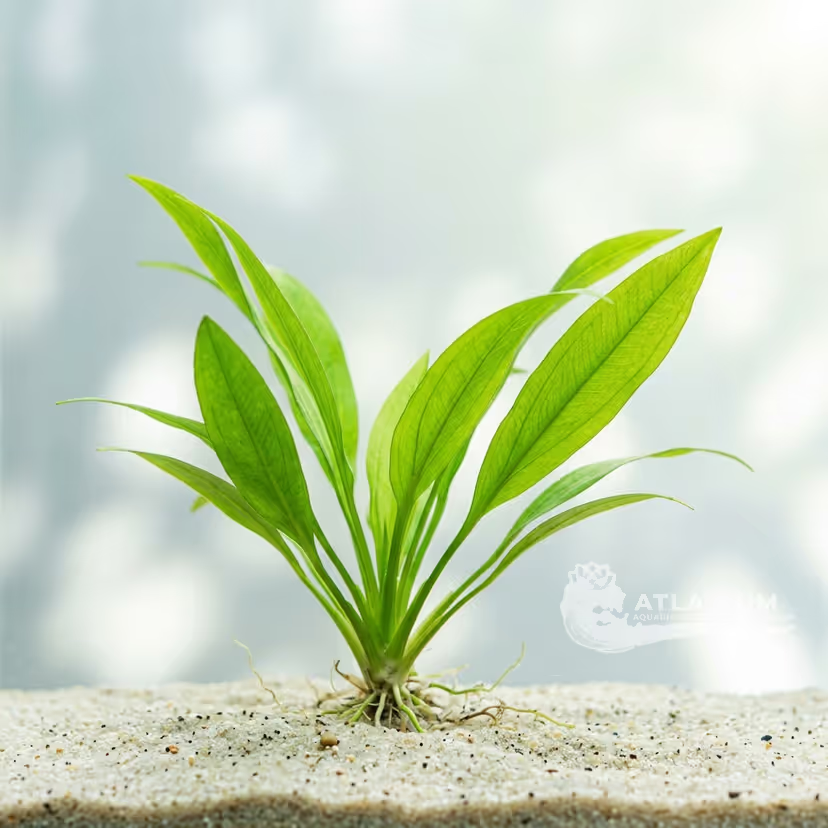
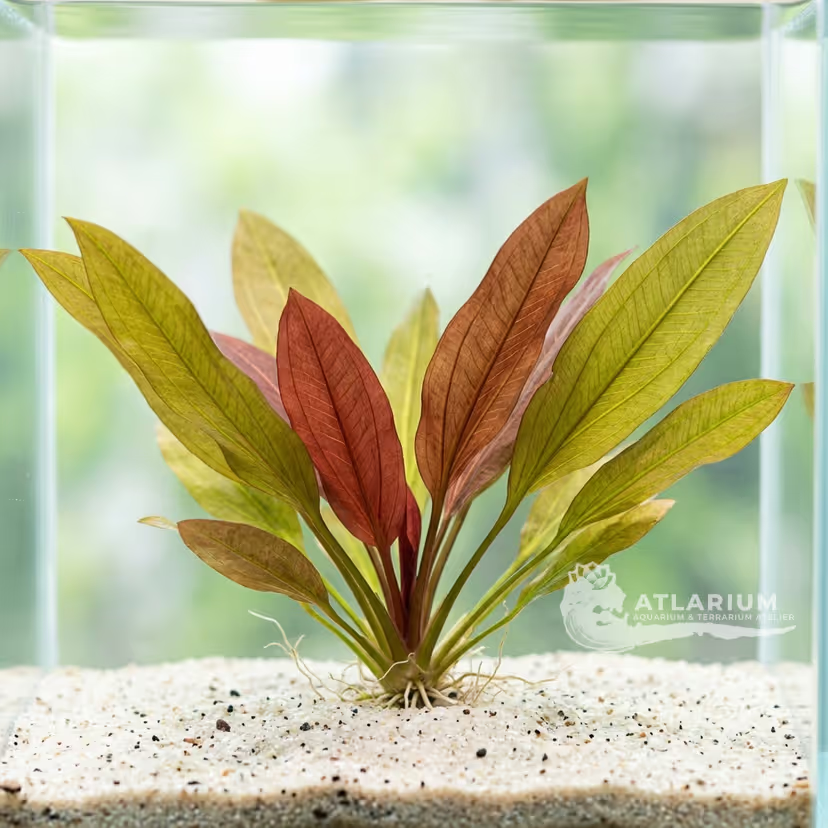
Echinodorus 'Großer Bär' (Great Bear) is an exceptionally robust, legendary hybrid with profoundly red, deeply saturated mature leaves structured like thick leather.
Class:Liliopsida
Order:Alismatales
Family:Alismataceae
Genus:Echinodorus
Species:Echinodorus 'Großer Bär'
Share
Check out Echinodorus 'Großer Bär' on Atlarium
Water Temperature
20 - 28 °C
pH Value
6 - 8
Water type
Freshwater
Light
Medium
CO2
Low
Expected height
40 cm
Expected width
25 cm
GH
4 - 20 dGH
KH
0 - 21 dKH
Species description
Geographical Origin and Habitat: This absolute titan of a botanical cultivar does not exist in the wild. Echinodorus "Großer Bär" (Great Bear) is an exceptionally rare, legendary commercial hybrid created specifically for the high-end aquarium trade by elite aquatic nurseries in Germany. It was aggressively crossbred from massive wild South American Amazon Sword stock to produce a visually dominating, heavily red-pigmented giant. In the aquarium, it behaves perfectly like a wildly resilient, deeply rooted, massive amphibious rosette plant.
Taxonomy & Genetics: Scientifically classified within the Alismataceae family, the "Great Bear" is a highly prized, elite "giant" cultivar in the global aquascaping hobby, acting as the massive older sibling to the famous "Kleiner Bär." Taxonomically, it is an extremely complex hybrid. Genetically, it completely inherited the explosive, gigantism-like growth traits of the largest wild Amazon Swords. Furthermore, its genetics force the extreme, continuous production of highly concentrated dark-red and rusty-bronze anthocyanin pigments across its massive leaves.
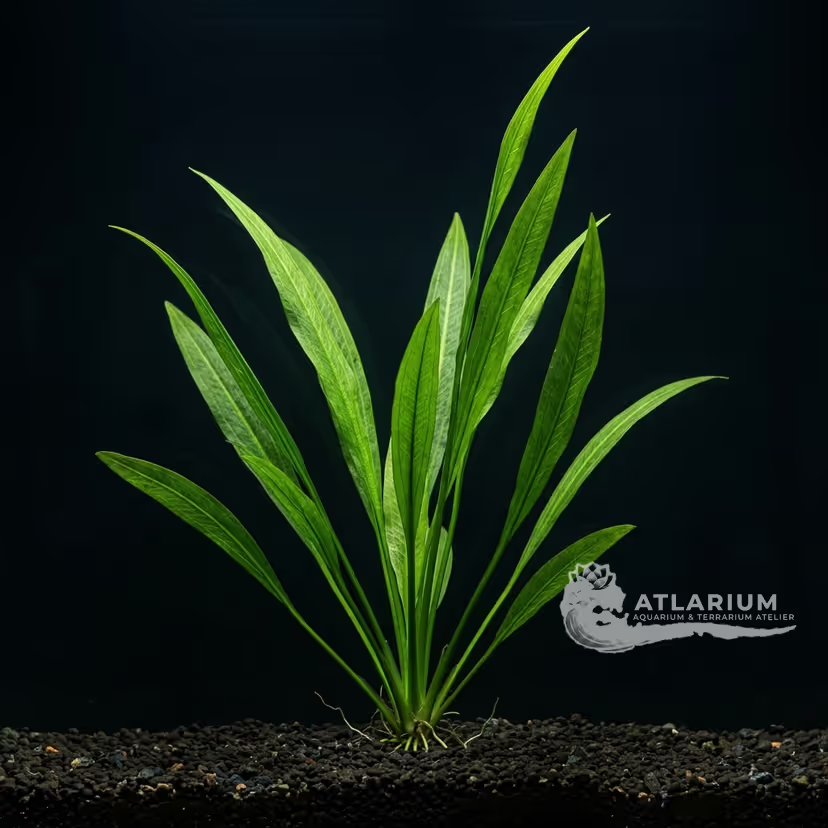
Physical Structure: The architectural structure of the "Great Bear" sword is overwhelmingly dominant, violently heavy, and gracefully sprawling. It is a gigantic rosette plant completely lacking vertical stems. The foundation is a massive, incredibly thick, tuberous subterranean rhizome that deploys an aggressive, deep-reaching white root system capable of shattering pots. The leaves erupt from the crown on distinct, incredibly thick, rigid petioles. The foliage is the defining structural feature: strictly broadly ovate, monstrously huge (capable of exceeding 40-50 cm).
Color & Texture: The coloration is distinctly commanding, intensely rich, and heavily saturated. Grown submerged under intense lighting, the massive upper leaf surface erupts as a blindingly vibrant, glowing rusty-red or deep copper. As the massive leaves age and get pushed outward, they transition into a very dark, moody, deeply saturated reddish-bronze or dark olive. The texture is intensely rigid, heavily leathery, and deeply "bullate" (hammered/dimpled) across the entire massive leaf surface, feeling exactly like thick, heavy, textured leather.
Care, breeding and tankmates
Lighting & CO2: It is a massive, heavily pigmented titan that demands colossal amounts of energy. While it will technically survive in low-light aquariums, its spectacular genetics will completely fail; the massive leaves will lose their rusty-red color, fade to a dull muddy green, and stretch aggressively upward. To unlock its spectacularly massive, sprawling rosette shape, heavily hammered texture, and blindingly bright bronze/red colors, blasting, high-intensity LED lighting is absolutely mandatory. Pressurized CO2 drastically accelerates its massive growth.
Nutrition & Substrate: As a colossal, elite Amazon Sword hybrid, the "Great Bear" is a terrifyingly aggressive, obligate root feeder. Its massive root system strictly demands a very deep (minimum 10 cm / 4 inches), highly mature, heavily nutrient-dense substrate. It absolutely demands premium aquasoil heavily enriched with iron and macro-nutrient root tabs directly beneath the massive tuber to fuel its intense red/bronze pigmentation. If starved of root nutrients, the giant red leaves will quickly turn pale, turn violently yellow, and dissolve.
Water Chemistry: Originating from highly stabilized German nursery conditions, it is practically invincible regarding standard water parameters. It thrives effortlessly in heated tropical aquariums (22-28°C) and is exceptionally adaptable, comfortably tolerating both soft, acidic blackwater and rock-hard, highly alkaline tap water (pH 6.0 - 8.0). The single most critical environmental requirement is absolute chemical stability. It drastically prefers stable, unchanging parameters over perfectly optimized ones. It demands strong water flow to clean its dimpled leaves.
Space Management & Placement: Due to its absolute monstrous size (capable of reaching 40-50 cm in height and diameter), massive, hammered ovate leaves, and commanding red/bronze color, "Great Bear" is strictly a solitary, dominant centerpiece for very large aquariums (minimum 300 liters). It MUST be planted singularly, completely isolated in the exact center background. Because it grows as a massive, sprawling rosette, it will rapidly form a breathtaking, impenetrable dark-red umbrella that aggressively shadows and violently chokes out any smaller plants placed nearby.
Pruning: Pruning is a simple, massive, and highly necessary procedure. Never attempt to trim the incredibly thick, dimpled leaves in half; the cut edge will instantly turn black, rot, and destroy the aesthetic. To prune dead, yellowing, or excessively massive older leaves that are shadowing the entire tank, you must reach down to the absolute base of the massive rosette and cleanly slice the incredibly thick petiole directly at the crown. It rarely spreads via runners; instead, it slowly forms a massive, impenetrable core.
Risks & Diseases: The absolute greatest threat to the "Great Bear" sword is Green Spot Algae (GSA) and nutrient starvation. Because the massive, heavily dimpled, dark-red leaves are long-lasting and broad, they act as massive landing pads for devastating Green Spot Algae if phosphate levels drop or light is too intense without adequate CO2. Once GSA aggressively spots the massive leaves, it cannot be cleaned off and ruins the deep bronze coloration. If root nutrients are exhausted, the colossal plant will violently cannibalize itself.
Geographic Origin and Distribution
This absolute titan of a botanical cultivar does not exist in the wild. Echinodorus "Großer Bär" (Great Bear) is an exceptionally rare, legendary commercial hybrid created specifically for the high-end aquarium trade by elite aquatic nurseries in Germany. It was aggressively crossbred from massive wild South American Amazon Sword stock to produce a visually dominating, heavily red-pigmented giant. In the aquarium, it behaves perfectly like a wildly resilient, deeply rooted, massive amphibious rosette plant.
Origin
Selective breeding and cultivars
Varietà da Selezione / Cultivar
Plant profile
- Placement
- No verified data available
- Botanical form
- No verified data available
- Growth
- No verified data available
- Substrate
- No verified data available
- Column fertilization
- No verified data available
- Root fertilization
- No verified data available
- Trimming
- No verified data available
- Propagation
- No verified data available
- Nutrients
- No verified data available
- Sensitivity
- No verified data available
- Layout role
- No verified data available
Image gallery
Licensed images linked to the species or, when marked, to the closest representative taxon.
Related species
Recommendations grouped by close relatives, companion choices, and similar care.