Encyclopaedia
InvertebrateTerrestrialEasy
©AI Generated·Proprietary
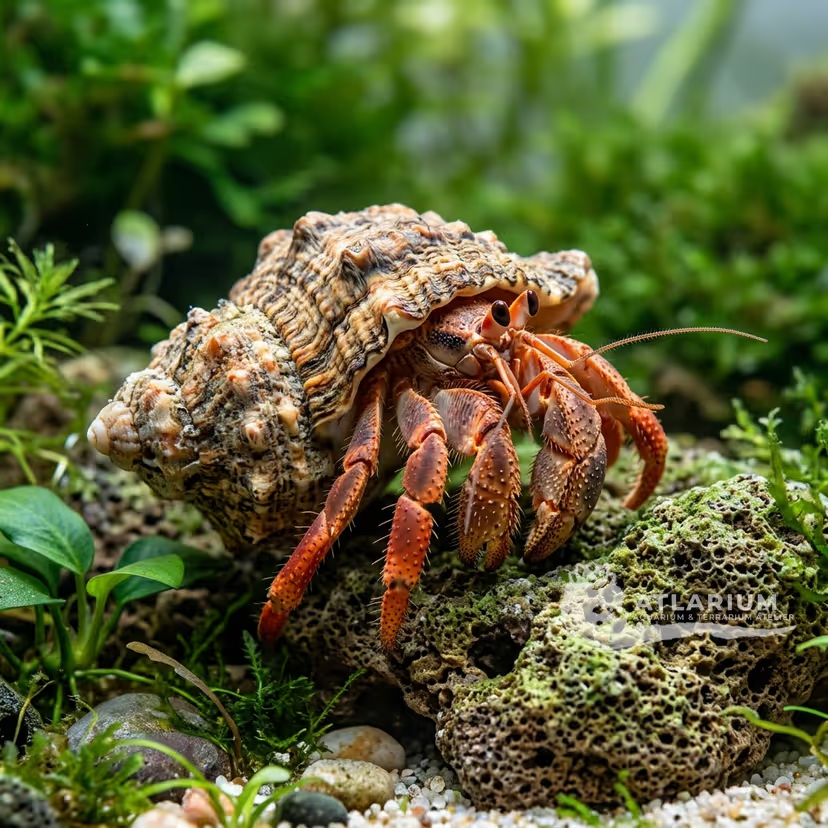
Indonesian land hermit crab
Coenobita violascens
A striking terrestrial hermit crab that develops deep violet coloration as an adult. It prefers very high humidity and requires deep substrate, fresh and saltwater, and elongated spiral shells.
Class:Malacostraca
Order:Decapoda
Family:Coenobitidae
Genus:Coenobita
Species:Coenobita violascens
Share
Check out Indonesian land hermit crab on Atlarium
Environment
Terrestrial
Minimum group
>= 3
Species description
Geographical Origin and Habitat: Coenobita violascens is widely distributed along the tropical coastlines of the Indo-Pacific, including East Africa, Indonesia, the Philippines, Thailand, and southern Japan. It inhabits sandy beaches, mangrove forests, estuaries, and damp coastal forests near the sea. Unlike some other land hermit crabs, this species prefers environments with consistently high humidity and access to muddy or mangrove-dominated areas.
Taxonomy: Belonging to the family Coenobitidae and the genus Coenobita. There are no artificial color breeds or domestic lines of this species, and captive specimens represent the wild genetic populations. It is morphologically characterized by elongated eyes on laterally compressed eyestalks and a left cheliped (claw) that is significantly larger than the right.
Social Behavior: This is a highly social, gregarious animal that lives in large colonies containing hundreds of individuals in the wild. In captivity, they must be kept in groups of at least 3-5 specimens to prevent stress and loneliness. They are primarily nocturnal. While peaceful, they will occasionally squabble or fight over coveted empty snail shells, which are vital for their protection.
Coloration and Sexual Dimorphism: Juveniles start with a pale, brownish, or greyish-white coloration. As they mature, adults develop a solid purple, lavender, or deep violet-brown color on their limbs and carapace, with bright red or orange antennae. Sexual dimorphism is not outwardly visible on the shell; sex is determined by locating the genital openings (gonopores) on the underside of the rear legs.
Care, breeding and tankmates
Tank Setup: A spacious terrarium measuring at least 80x40x40 cm is required for a small group. The substrate must consist of a moist mix of play sand and coconut fiber (ratio of 5:1), at least 15-20 cm deep (or three times the height of the largest crab) to allow safe burrowing for molting. Provide climbing branches, cork bark, and plenty of empty, clean snail shells of various sizes.
Diet and Feeding: An omnivorous scavenger. The diet should be highly varied, including fresh fruits, vegetables, leaf litter (oak or Indian almond leaves), high-quality dry fish foods, dried shrimp, and unseasoned meat or fish. A constant source of calcium, such as cuttlebone or crushed eggshells, is crucial. Avoid any foods treated with pesticides or artificial preservatives.
Water Quality: Requires two separate water dishes: one for dechlorinated freshwater and one for saltwater (prepared using aquarium-grade marine salt at a specific gravity of 1.022). Dishes must be deep enough for the crabs to submerge their shells to replenish their internal water reserves, but must feature safety steps or plastic mesh ramps to prevent drowning.
Compatibility and Tankmates: Can be housed with other peaceful Coenobita species of similar size. Do not house with predators or active terrestrial animals that could disturb them, particularly during molting. Clean-up crew organisms like isopods and springtails are excellent tankmates, as they consume leftover organic waste and help prevent mold growth.
Aquarium Breeding: Breeding in captivity is exceptionally difficult and rarely achieved. The female releases fertilized eggs into ocean water, where they hatch as planktonic larvae (zoea). These larvae require marine conditions and specialized feeding before metamorphosing into megalopa and eventually transitioning to land in search of a tiny shell.
Risks and Diseases: The primary risk is a failed molt due to low humidity (which must be kept at 75-85% via daily misting) or shallow substrate. Disturbing a buried crab will lead to stress, limb loss, or death. Heavy metal poisoning from tap water is another common risk. Maintain a warm air temperature between 25°C and 28°C.
Geographic Origin and Distribution
Coenobita violascens is widely distributed along the tropical coastlines of the Indo-Pacific, including East Africa, Indonesia, the Philippines, Thailand, and southern Japan. It inhabits sandy beaches, mangrove forests, estuaries, and damp coastal forests near the sea. Unlike some other land hermit crabs, this species prefers environments with consistently high humidity and access to muddy or mangrove-dominated areas.
Origin
Selective breeding and cultivarsNorth AmericaAfrica and MadagascarSouth and Southeast AsiaEast AsiaTropical oceans and reefs
Invertebrate profile
- Diet
- No verified data available
- Ecological role
- No verified data available
- Life expectancy
- No verified data available
- Adult size
- No verified data available
- Jump risk
- No verified data available
- Shock sensitivity
- No verified data available
- Calcium and minerals
- No verified data available
- Molting
- No verified data available
- Reproduction
- No verified data available
- Compatibility & tankmates
- No verified data available
Image gallery
Licensed images linked to the species or, when marked, to the closest representative taxon.
Related species
Recommendations grouped by close relatives, companion choices, and similar care.