Encyclopaedia
InvertebrateTerrestrialEasy
©AI Generated·Proprietary
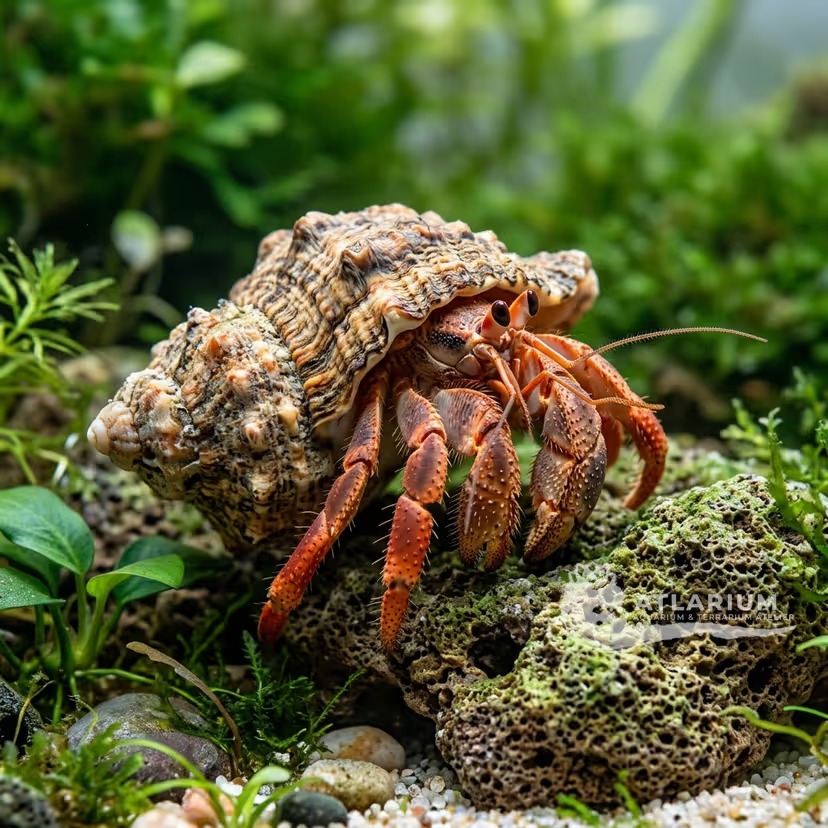
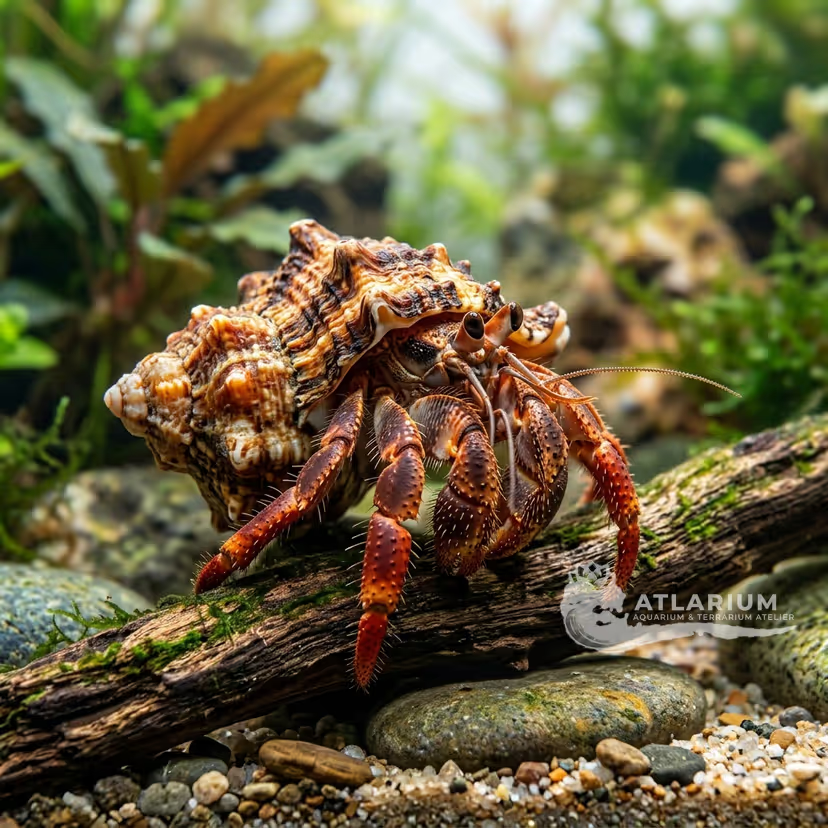
Caribbean Land Hermit Crab
Coenobita clypeatus
The Caribbean land hermit crab, or purple pincher, is a popular terrestrial crustacean requiring high humidity and access to both fresh and salt water.
Class:Malacostraca
Order:Decapoda
Family:Coenobitidae
Genus:Coenobita
Species:Coenobita clypeatus
Share
Check out Caribbean Land Hermit Crab on Atlarium
Environment
Terrestrial
Minimum group
>= 3
Species description
Geographical Origin and Habitat: Coenobita clypeatus is native to the tropical regions of the Western Atlantic Ocean, widely distributed throughout the Caribbean, Florida, the Gulf of Mexico, and the northern coast of South America. Unlike marine hermit crabs, it is a terrestrial species that inhabits coastal forests, inland scrublands, and sandy beaches. However, it remains dependent on proximity to the ocean for hydration and reproduction.
Taxonomy: Belonging to the family Coenobitidae, which comprises all terrestrial hermit crabs, it is a decapod crustacean with a soft, asymmetric abdomen that must be protected inside a gastropod shell. Adults can reach substantial sizes, with legs extending up to 8 to 10 centimeters, requiring larger shells as they mature over their long lifespan.
Social Behavior: It is a highly social and gregarious animal that lives in large colonies in the wild. It exhibits nocturnal habits, spending the hot daylight hours hidden under damp logs, leaf litter, or rocks to prevent dehydration. In captivity, they display a curious and active temperament, climbing branches and exploring their enclosure. They should never be kept alone.
Coloration and Sexual Dimorphism: The coloration of adults ranges from brick red to a deep, dark purple-brown. Its most defining morphological feature is its left claw, which is significantly larger than the right and displays a vibrant purple or lavender hue (giving it the name 'purple pincher'). This large claw is used for defense and to block the shell's aperture. External sexual dimorphism is not prominent.
Care, breeding and tankmates
Tank Setup: Requires a specific terrarium (often called a 'crabitat') of at least 60 to 80 liters for a small group. The substrate is the most critical element: it must be at least 15 cm deep (or three times the height of the largest crab) composed of a moist mixture of play sand and coconut fiber to allow burrowing and underground molting. Add climbing branches and cork bark hideouts.
Diet and Feeding: An opportunistic omnivore and scavenger. The diet should be highly varied, including fresh fruits (coconut, mango, apples), leafy greens, dried oak leaves, nuts, protein sources (dried shrimp, fish, hard-boiled eggs), and calcium sources like crushed cuttlebone. Never offer foods containing preservatives, table salt, or copper.
Water Quality: It is vital to provide two separate, shallow water dishes deep enough for the crabs to submerge but equipped with ramps or rocks to prevent drowning. One dish must contain dechlorinated fresh water, and the other must contain salt water (prepared using marine aquarium salt). Maintain relative humidity between 75% and 85% through daily misting.
Compatibility and Tankmates: Coexists peacefully with other land hermit crabs of the genus Coenobita. They must not be housed with reptiles, amphibians, or predatory arthropods. It is essential to provide a wide variety of empty gastropod shells (such as Turbo or Cittarium pica) of various sizes to prevent shell-fighting among the crabs.
Aquarium Breeding: Breeding in captivity is exceptionally difficult and rarely achieved. In the wild, females return to the ocean to release eggs, which hatch into marine planktonic larvae. These larvae must undergo several aquatic molts before developing into terrestrial megalopae that migrate to land, a life cycle that cannot be simulated at home.
Risks and Diseases: Dehydration is the primary cause of death, resulting from low humidity. Land hermit crabs breathe through modified gills that must remain moist, and dry air will cause them to suffocate. Mite or mold infestations can be prevented by keeping the enclosure clean and spot-cleaning waste. Never dig up a buried crab that is molting.
Geographic Origin and Distribution
Coenobita clypeatus is native to the tropical regions of the Western Atlantic Ocean, widely distributed throughout the Caribbean, Florida, the Gulf of Mexico, and the northern coast of South America. Unlike marine hermit crabs, it is a terrestrial species that inhabits coastal forests, inland scrublands, and sandy beaches. However, it remains dependent on proximity to the ocean for hydration and reproduction.
Origin
Tropical oceans and reefsExtra-Amazon South AmericaCentral America and CaribbeanNorth AmericaEast Asia
Invertebrate profile
- Diet
- No verified data available
- Ecological role
- No verified data available
- Life expectancy
- No verified data available
- Adult size
- No verified data available
- Jump risk
- No verified data available
- Shock sensitivity
- No verified data available
- Calcium and minerals
- No verified data available
- Molting
- No verified data available
- Reproduction
- No verified data available
- Compatibility & tankmates
- No verified data available
Image gallery
Licensed images linked to the species or, when marked, to the closest representative taxon.
Related species
Recommendations grouped by close relatives, companion choices, and similar care.